In the Age of AI Agents, Will AI Payment Be the Next 'QR Code'?
 05/28 2026
 443
443
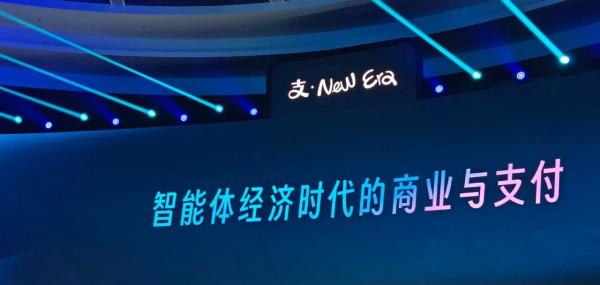
By focusing on Agents and Tokens, how far can Ant Group take 300 million AI Pay transactions?
As AI begins to transform our lifestyles, payment becomes the critical link in determining whether AI can achieve a closed-loop transaction ecosystem.
Today, we can already initiate purchases and complete payments with a single sentence through AI assistants like QianWen and JoyAI. Compared to the internet era, in addition to simpler interaction methods, how else can AI Payment make it more convenient and personalized for users and merchants?
At the Alipay AI Payment Ecosystem Conference held on May 26, Alipay presented its full-stack AI payment system, a solution born out of the needs of the AI Agent era—featuring four products: AI Pay, AI Receive, AI Wallet, and Token Pay.
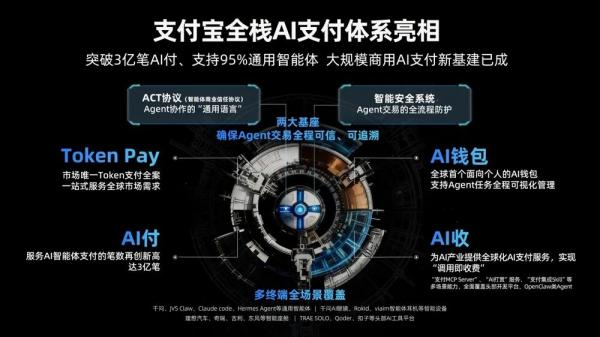
Building on channel expansion, the AI Wallet stands out for enabling users to manage AI-powered payment behaviors conveniently, such as setting per-transaction limits or allocating funds for AI to spend freely—all customizable via AI. Another key feature targets current Token consumption scenarios, partnering with MiniMax and StepFun to open Token recharge channels for AI model companies, helping large model firms establish a business platform.
But are these the final forms of AI-era payments? During the post-conference sharing session, Alipay executives most frequently mentioned, 'We haven’t thought that far ahead.'
Similar to the internet era, when Alipay piloted offline payments and promoted merchant QR codes, which later became a new payment method, no one could have predicted its success beforehand. In the AI era, amid the rapid rise of AI Agents and Token consumption, no one can predict in advance what the ultimate AI-era payment product will look like.
After establishing a phased AI payment system, Alipay is destined to continue exploring more possibilities.
Payment Providers Must Lead the Race in the AI Era
From 'raising virtual shrimp' to 'raising virtual horses,' with everyone having an AI Agent, it not only accelerates the growth of AI Agents but also turns Token consumption into an exponentially growing business.
Amid the AI Agent boom, a competition around AI Payment has emerged in recent months:
In China, JD.com, Ant Group, and Baidu have each launched payment solutions for AI Skill monetization. JD.com introduced voice-enabled 'JD AI Pay.' Overseas, Google not only unveiled an AI shopping agent at its I/O conference but also introduced an open-source payment protocol, AP2, partnering with over 60 financial institutions.
The core of the competition among major players in AI Payment revolves around two key tasks: first, integrating AI Payment into software and hardware to facilitate consumers; second, developing payment agents and protocols to create monetization channels for merchants/developers, laying the foundation for an AI monetization ecosystem.
From a consumer perspective, the initial implementation of AI Payment begins with software and hardware integration:
On the software side, payments previously required manual initiation and confirmation. Now, with AI assistants, purchases and payments can be completed automatically through conversation. JD AI Pay's voice purchasing and Alipay's integration with QianWen, Taobao, and other apps all simplify the purchasing process.
Next is the evolution of payment terminals, expanding from smartphones to AI glasses, smart cockpits, and other intelligent devices, further broadening the scenarios where AI Payment can be applied: On AI glasses, users can complete payments simply by 'looking' at a product; in smart car cockpits, users can book tickets, reserve hotels, or order takeout using voice commands.
Although some intelligent terminal products are still evolving, we can already see the potential for AI Payment integration:
'In the past, paying while driving required rolling down the window to scan a QR code. Now, with onboard cameras, the car can automatically scan the code as it passes, interact with the in-car agent, and proactively complete the payment,' said Li Jiajia, Co-President of Ant Group's Digital Payment Business Group.
In the words of Ant Group CEO Han Xinyi, payment decision-making is shifting from humans to Agents. With the expansion of Agent channels, the penetration rate of AI Pay continues to rise.
After integrating with QianWen, Alipay's AI Pay has seen initial success. Li Jiajia stated that at least 90% of the 300 million AI Pay transactions came from QianWen, with the remaining 10% from other ecosystem products.
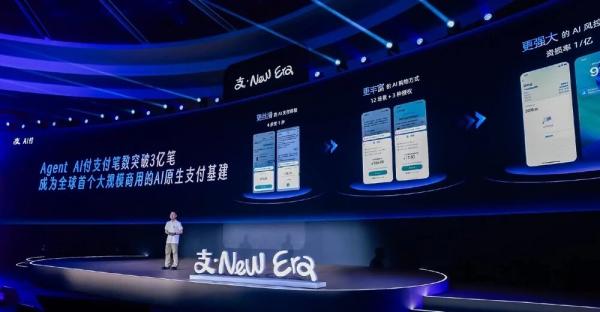
With the recent exponential growth in Token consumption, user demand has also doubled. Li Jiajia mentioned that in the past two months, AI Pay usage has increased by 200 million transactions, effectively doubling.
As people begin to consciously use AI Agents for purchases and payments, technological changes often require the integration of multiple ecosystems. Payment providers undoubtedly see opportunities in this.
'Different technological evolutions bring unique commercial service demands, leading to distinct experiences and C-end user interactions. These differences require support from payment providers,' Li Jiajia said.
The current AI Payment ecosystem resembles an untapped frontier. The participation of JD.com, Baidu, and Ant Group aims to address the common challenge of AI lacking payment infrastructure: Without payment infrastructure in the ecosystem, developers cannot monetize through AI, leading to a reluctance to continue contributing over time; consumers cannot pay conveniently and securely, with each additional step potentially reducing payment conversion success rates.
After achieving 300 million AI Pay transactions, Alipay and others aim to further consolidate their channel advantages, turning 300 million into 1 billion or even 10 billion transactions by expanding channels and building a complete AI Payment ecosystem.
Are Agents and Tokens the Ultimate Answer for AI Payment?
Betting on Agents, Alipay's AI Payment product suite not only expands AI Pay penetration but also introduces new attempts.
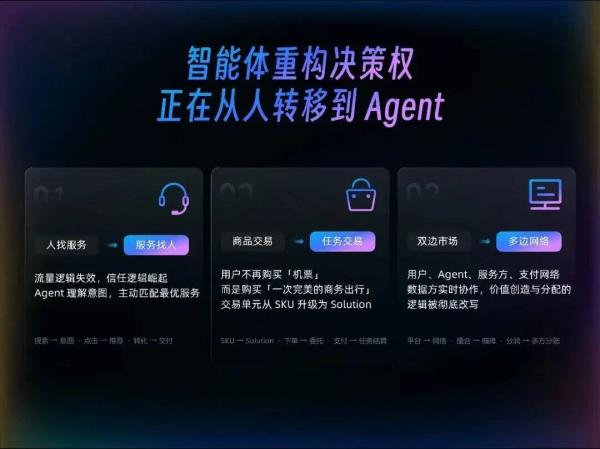
Starting with AI Pay and AI Receive, their key upgrades focus on coverage, increasing AI Pay's penetration in software products and intelligent terminals.
At the conference, Alipay announced that AI Pay now supports 95% of general-purpose AI Agent frameworks, including QianWen, JVS Claw, Claude code, Hermes Agent, and others, and has integrated with leading AI tool platforms like TRAE SOLO, Qoder, and Kouzi. On the hardware side, it has partnered with multiple intelligent terminal products, including QianWen AI glasses, Rokid, Future Intelligence AI earphones, Li Auto, Chery, Geely, and Dongfeng smart cockpits. Alipay has made significant attempts in supporting AI Payment software frameworks and new intelligent hardware.

AI Receive consolidates Alipay's continuously updated services, including previous offerings like Payment MCP Server and Payment Integrated Skill, further facilitating transactions between AI Agents and enabling merchants and developers to monetize easily through Agents.
Beyond enhancing payment experiences across different product tiers with AI Pay, for users, AI Pay may represent a more personalized payment model.
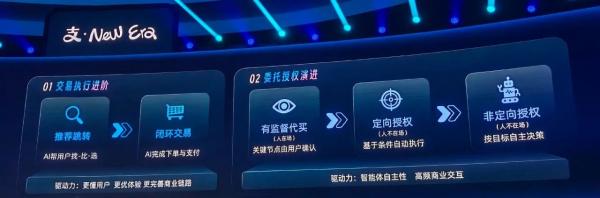
Zhu Lin, General Manager of AI Payment at Ant Group, outlined AI Pay's authorization models for users and different scenarios at the event:
In addition to single-transaction confirmation, there is conditional authorization, where users can set custom rules, such as purchasing certain physical goods on Taobao for amounts under 200 yuan, allowing payment after confirmation. This effectively hands control of the rules to the user. Another model is quota authorization, where users can allocate a sum to an Agent, say 1,000 yuan, which can be used within that limit. The former resembles 'small-amount password-free payments,' while the latter can be seen as granting AI a 'line of credit.'
'In different scenarios, we give users choice and control directly, adapting to their needs,' Zhu Lin said.
Beyond refining AI Receive and AI Pay, Alipay's two new products this time are AI Wallet and Token Pay.
If AI Pay addresses how AI can spend money on behalf of users, AI Wallet tackles user management of Agents. Within AI Wallet, users can batch-manage AI Pay-authorized Agent tasks, such as those from QianWen. Overall, AI Wallet functions like an AI assistant + Agent manager, capable of retrieving every AI Pay record and analyzing spending habits.
Beyond locking in Agents as payment entities, as the 'fuel' for Agents, Alipay refers to Tokens as value carriers and is targeting this business.
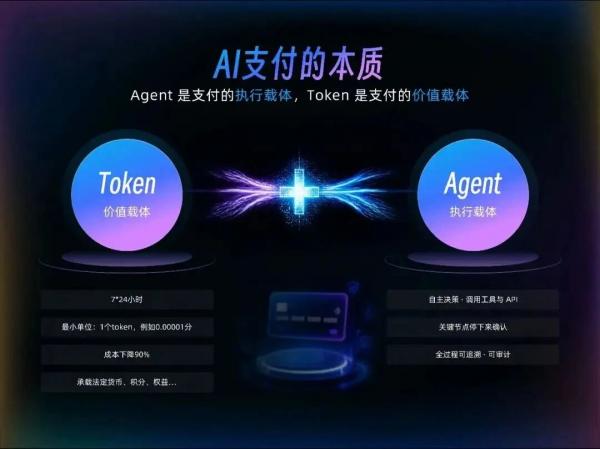
In this release, Alipay's Token Pay also represents a new attempt in the payment industry. According to Alipay, it is the only model payment solution currently on the market, targeting major model firms to meet global user demands for subscriptions, recharges, and marketing. Alipay officially announced partnerships with MiniMax and StepFun.
This time, Alipay aims to accelerate AI Pay's growth in line with the current AI boom by focusing on Agent and Token scenarios.
Zhuang Pan, Dean of Ant Group Research Institute, stated at the conference that Token consumption is set for exponential growth, with an estimated 300-fold increase by 2030, reaching 2.2 billion active AI Agents performing 400 trillion tasks annually.
Backed by QianWen, Alipay's AI Pay has demonstrated its growth potential. With 300 million AI Agent payments, 95% framework coverage, and a doubling of AI Pay transactions in the past two months—these figures highlight Alipay's first-mover advantage in the AI Payment space.
However, challenges remain for Alipay. Currently, around 90% of Alipay's AI Pay transactions still rely on the QianWen ecosystem. Whether it can achieve true exponential growth depends on whether Alipay's integrated payment ecosystem can continue to expand and whether the commercialization of AI Agents truly arrives this year.
Regardless of the outcome, Alipay must act swiftly, replicating the success of QR codes in the AI era—first laying the groundwork and then seeing if the wind will follow.
-
Ofilm Teams Up with ADSensE to Propel Large-Scale Deployment of All-Solid-State LiDAR Powered by ADS6311 Chip!
-
![]()
Loss of 2.5 Billion Yet Facing Strong Demand for Shares? Another Battle for Control of Lianchuang Electronics
-
![]()
Huawei’s Enjoy Series Flies Off the Shelves, Prompting Xiaomi to Double Down on Budget Smartphones
-
![]()
Beijing Hyundai's Top Executive Criticizes Industry Disorder: Certain Brands Treat Customers as Beta Testers
-
![]()
The domestic mobile phone market has declined for five consecutive quarters! Huawei defies the trend with significant growth: maintains its top market share
-
Annual Revenue Surpasses 3 Billion: An Automotive Trim 'Little Giant' Makes Its Debut on the Beijing Stock Exchange
-
![]()
The Space Force Wants to Spend $30 Billion on Rocket Launches: Is Trump Doubling Down, and Is SpaceX the Big Winner?
-
![]()
Going Crazy! One out of Every Three Plug-in Hybrids Sold in Europe is a Chinese Vehicle