Multimodal Perception-Enhanced Robotic Arms Struggle to Secure Profits
 05/28 2026
 511
511
Robotic Arms: Where Do Profits Lie?
Light industrial robots, essentially 'robotic arms,' excel in agile grasping, precision assembly, and rapid sorting on production lines across the food and beverage, daily chemical and beauty care, and 3C electronics industries.
Driven by servo motors and reducers, these robots leverage control systems to process multi-dimensional signals in real-time from visual sensors, six-axis force sensors, and other inputs. This forms a closed-loop system of 'perception-decision-execution,' enabling them to complete complex tasks such as vision-guided grasping and force-controlled precision packaging.
In recent years, with the integration of AI large models, multimodal perception, and embodied intelligence, robotic arms have evolved from rigid machines to intelligent agents capable of perception, decision-making, and action.
Faced with this transformation, the capital market's response has been swift. Recently, Zhejiang EffiBot Intelligent Technology Co., Ltd. (hereinafter referred to as EffiBot Technologies), a leading player in China's light industrial robot sector, listed on the Hong Kong Stock Exchange. Its public offering was oversubscribed nearly 15,000 times, and its opening price surged by 79%, marking a moment of glory. However, dramatically, within just a few trading days, nearly all of the first-day gains were wiped out.
On one hand, the sector is ablaze with enthusiasm; on the other, leading stocks are experiencing high openings and low closings. Behind this tension between market fervor and fundamental realities, what structural opportunities and practical dilemmas does the light industrial robot sector reveal?
01 Technological Revolution: From 'Optional' to 'Essential'
Looking at the recent timeline, China's light industrial robot market has grown from RMB 12.3 billion in 2020 to RMB 20.9 billion in 2024, with a compound annual growth rate of 14.2%. It is expected to surpass RMB 53.1 billion by 2030.
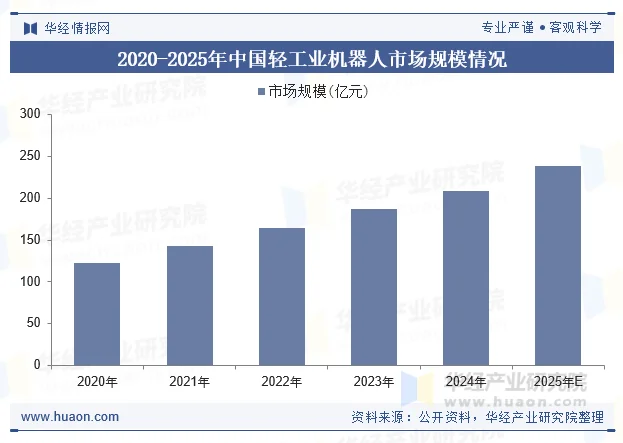
In just a few years, these robots have transformed from 'specialized equipment' at the periphery of production lines to a core carrier of intelligent manufacturing—a role shift that far exceeds expectations. One driving force behind this is the inflection point in labor supply, coupled with the demand for flexible production, which is accelerating the transition of light industrial robots from a 'nice-to-have' to a 'survival essential.'
According to data from the National Bureau of Statistics, by the end of 2025, the proportion of the population aged 65 and above had risen to 15.9%. The working-age population (aged 15-64) decreased from 74.5% to 67.7% between 2010 and 2025 and is projected to fall to about 59% by 2050, indicating China's transition from a demographic dividend phase to a demographic burden phase.
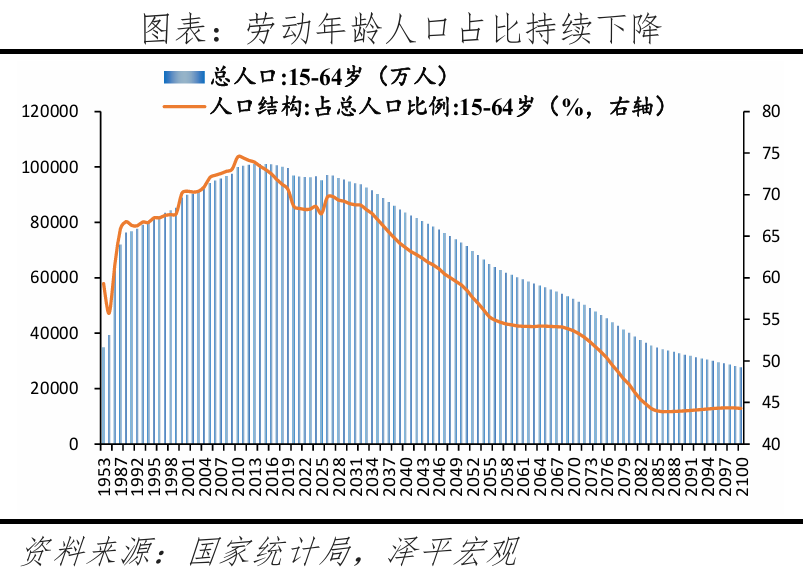
Meanwhile, the labor shortage in manufacturing continues to widen, with a new generation of workers unwilling to engage in repetitive production line work, making recruitment and retention increasingly challenging for enterprises.
The '2025 China Manufacturing Talent Supply and Demand Report' mentions that 83.7% of manufacturing enterprises above a certain scale face varying degrees of skilled worker shortages. The average recruitment cycle has lengthened from 28 days in 2020 to 67 days in 2025, with recruitment costs soaring by 156%. Under the dual pressures of rising labor costs and recruitment difficulties, the shift of light industrial robots from a 'nice-to-have' to a survival essential seems inevitable.
Additionally, the small-batch, multi-variety flexible production model driven by new consumption demands higher requirements for rapid production line adjustments, which traditional heavy automation struggles to meet flexibly.
Data shows that in 3C electronics manufacturing, multi-variety, small-batch orders account for over 70%, with traditional production lines experiencing up to 45% equipment idle time due to changeover delays. Light-load, high-precision light industrial robots precisely fill this gap.
Take EffiBot Technologies as an example: in the food and beverage sector, its Bat series parallel robots have been continuously operating on Dong-E-E-Jiao's production lines for nearly eight years, handling the packaging of Taohuaji Ejiao cakes. In the daily chemical and beauty care sector, its six-axis robots are deployed in the automatic capping of spray products, with two robots working in tandem to accommodate four bottle sizes ranging from 50ml to 300ml, capping at a rate of no less than 110 per minute.
Lightweight desktop robots like the Aubo i5 collaborative robotic arm support multi-formula storage management and one-click product model switching, allowing the same production line to manufacture mobile phone motherboards in the morning and switch to wearable product components in the afternoon.
Evidently, light industrial robots, with their high flexibility, rapid deployment capabilities, and low retrofitting costs, are better suited to meet the flexible production needs of production lines.
Increased market demand, in turn, drives industry advancement, with more food and beverage and 3C electronics companies no longer satisfied with purchasing a single robotic arm but expecting suppliers to provide 'plug-and-play' standardized line solutions. Thus, the light industrial robot sector is accelerating its evolution from 'single-category' to 'full-scenario systems.'
For example, EffiBot Technologies now offers a full range of industrial robots and core components for the light industry, including parallel robots, SCARA robots, small six-axis robots, AGV robots, wafer handling robots, robot controllers, general controllers, and vision systems, forming a competitive edge in 'body + core systems + solutions.' The competitive rules in the light industrial robot sector seem to be quietly rewritten.
What truly qualitatively transforms this competition is the reshaping of technological boundaries by AI large models and embodied intelligence, enabling light industrial robots to evolve from 'fixed-program robotic arms' to 'perception-decision-action intelligent agents.'
For instance, sensing the opportunity, EffiBot Technologies has established an integrated 'brain, eyes, hands, feet' technological system, independently developing the Gorilla and Kingkong series control and vision systems. In 2025, it officially launched the embodied intelligent robot 'Hongjun,' featuring a bionic dual-arm + lifting column + mobile chassis design, equipped with EffiBot Technologies' self-developed YiBrain system integrating a large and small brain architecture, capable of adapting to cross-scenario, cross-job mixed operations such as precision assembly and logistics handling.
Evidently, the sector is integrating AI large models, multimodal perception, and adaptive control technologies, redefining industry technological thresholds and competitive entry tickets.
Looking back, at the intersection of labor substitution, system collaboration, and intelligent leapfrogging, light industrial robots are no longer an 'option' on production lines but are becoming a 'must-answer question' reshaping manufacturing logic.
02 The 'Paradox' of High Growth and High Losses
The industry's prosperity does not equate to the survival reality of players in the sector.
When we shift the lens from the grand narrative of technological transformation to corporate financial statements, a less glamorous but sufficiently real contradiction emerges: a tense disjunction between the 'capital enthusiasm' and 'profitability reality' in the light industrial robot sector.
The most visual profile (intuitive cross-section) of this disjunction lies precisely in the stock price rollercoaster surrounding EffiBot Technologies' listing.
On its listing day, May 18, EffiBot Technologies closed at HK$53.75, up 76.23%, with trading volume exceeding HK$550 million and a total market capitalization of approximately HK$14 billion.
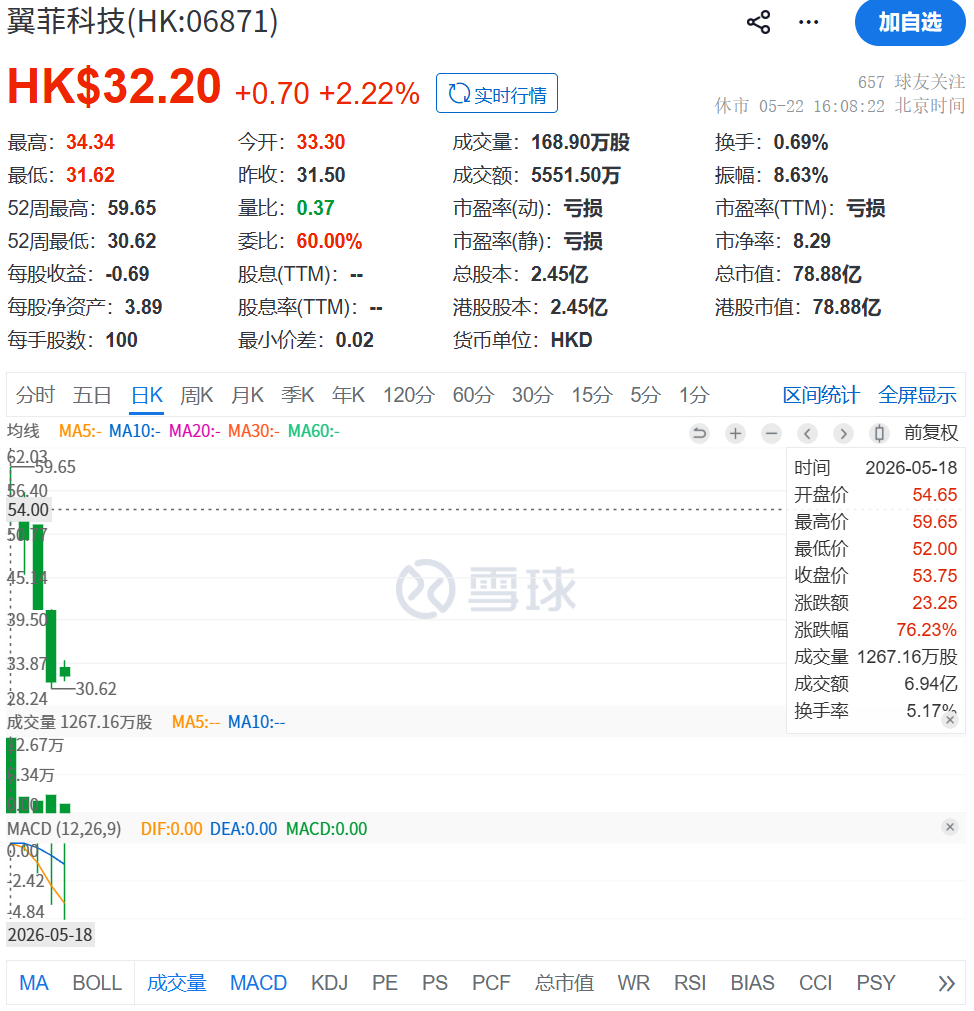
However, after surging nearly 80% on opening and enjoying a moment of glory, nearly all of the gains were wiped out within just a few trading days. By the 22nd, EffiBot Technologies had fallen approximately 40%, with the first-day gains largely erased, currently trading just about 5.6% above its issue price.
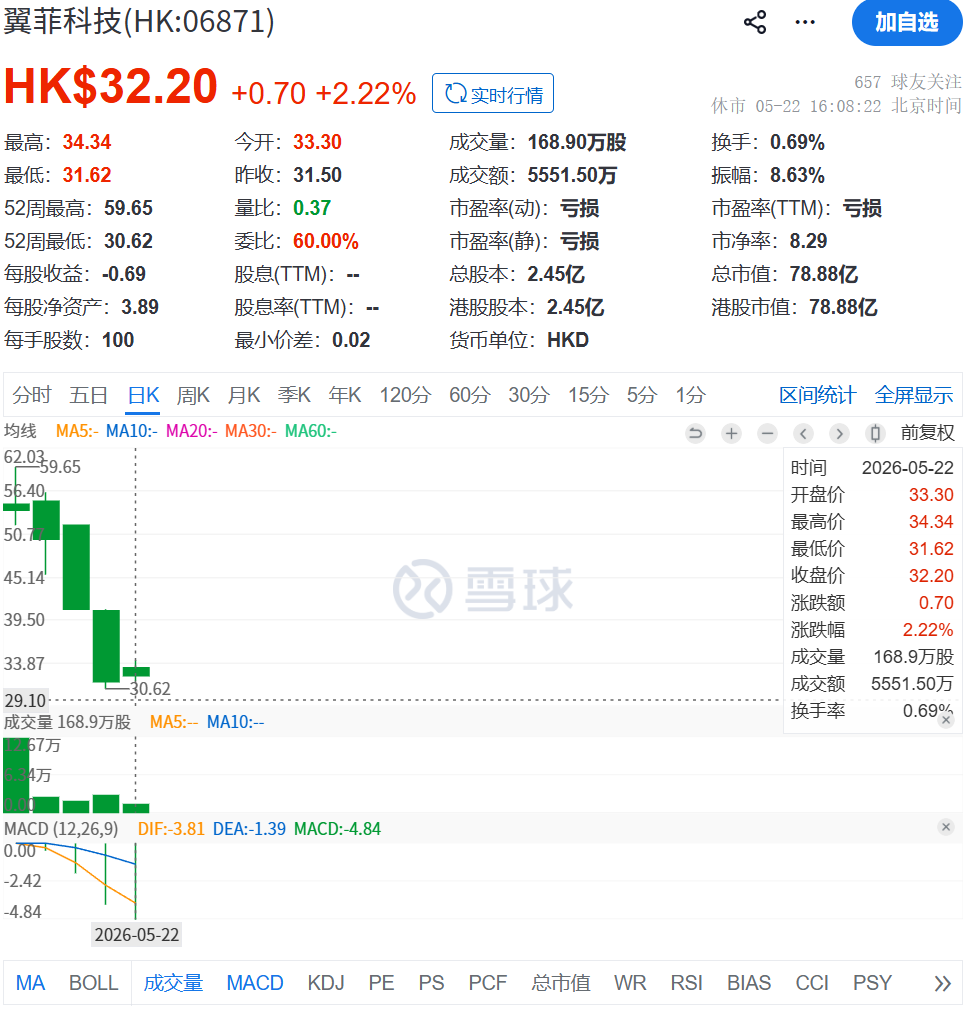
Behind the stock price's high opening and low closing lies a more glaring paradox—revenue growth and widening losses are occurring simultaneously in this sector.
According to a report by HK Stock Decode, synthesizing data from 10 industrial robot companies—Aubo Robotics, Woan Robot, Geek+, Ubtech, Kiva Systems, Youibot, Rokae, Wiibot, EffiBot Intelligent, and Huayan Robot—the average revenue growth rate for 2025 was approximately 38.56%.
EffiBot Technologies' prospectus shows that from 2023 to 2025, its revenue climbed from RMB 201 million to RMB 387 million, with a compound annual growth rate of 38.8%, surpassing the industry average. 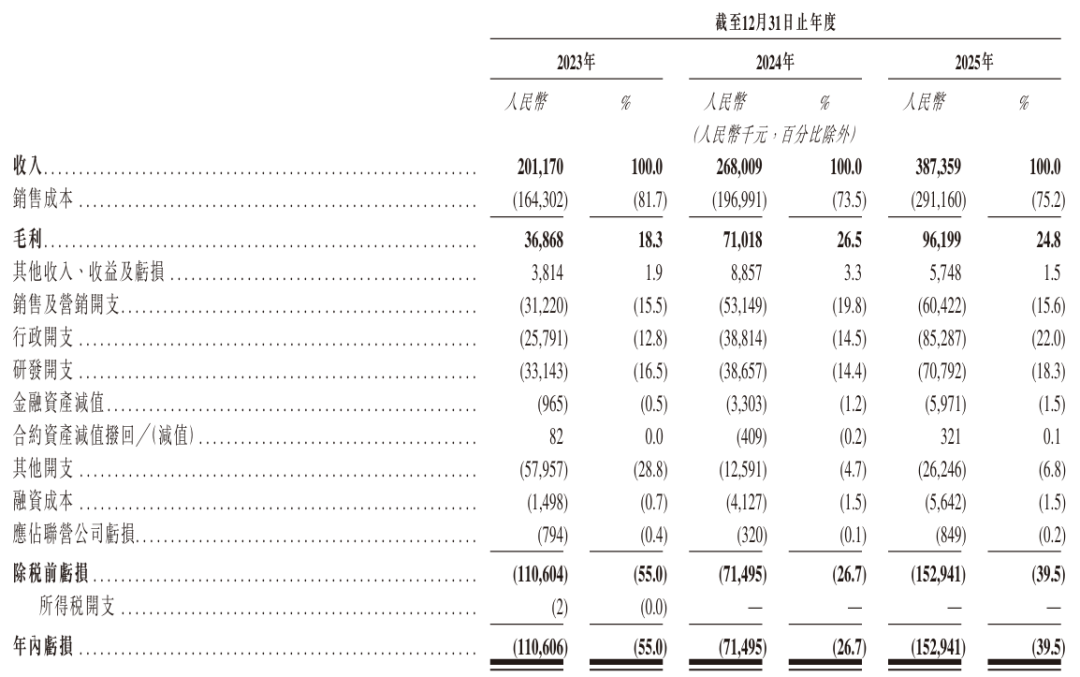
However, the net profit picture is starkly different. During the same period, EffiBot Technologies' net losses were RMB 111 million, RMB 71 million, and RMB 153 million, respectively, with losses widening by 114.8% in 2025, trapped in (caught in) a spiral of revenue growth and widening losses, far from actual profitability.
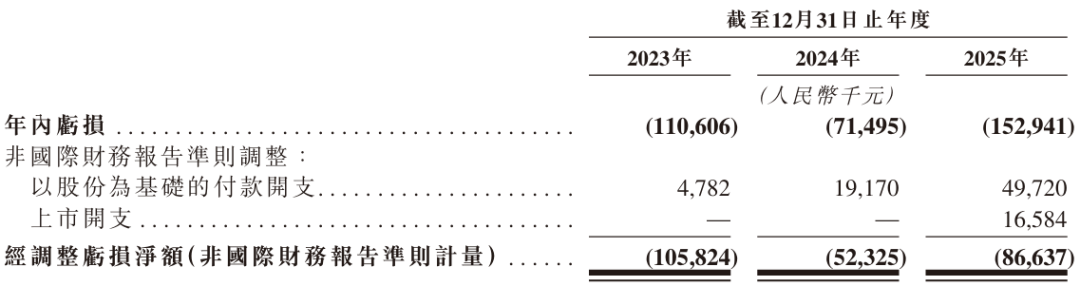
High expenses on the cost side and an incomplete profit model are the sharp knives cutting through this paradox.
In 2025, EffiBot Technologies' R&D expenditure increased by 83.1% year-on-year to RMB 70.792 million, accounting for 18.3% of revenue, while non-recurring expenses such as share-based payments and listing-related costs further amplified the loss scale. From 2023 to 2025, the company's net cash flow from operating activities was –RMB 86.749 million, –RMB 69.582 million, and –RMB 180 million, respectively, negative for three consecutive years, with the 2025 net outflow expanding by 162.3% year-on-year, leaving ending cash and equivalents at approximately RMB 51.12 million. The company explicitly stated that it would continue to record net losses in 2026.
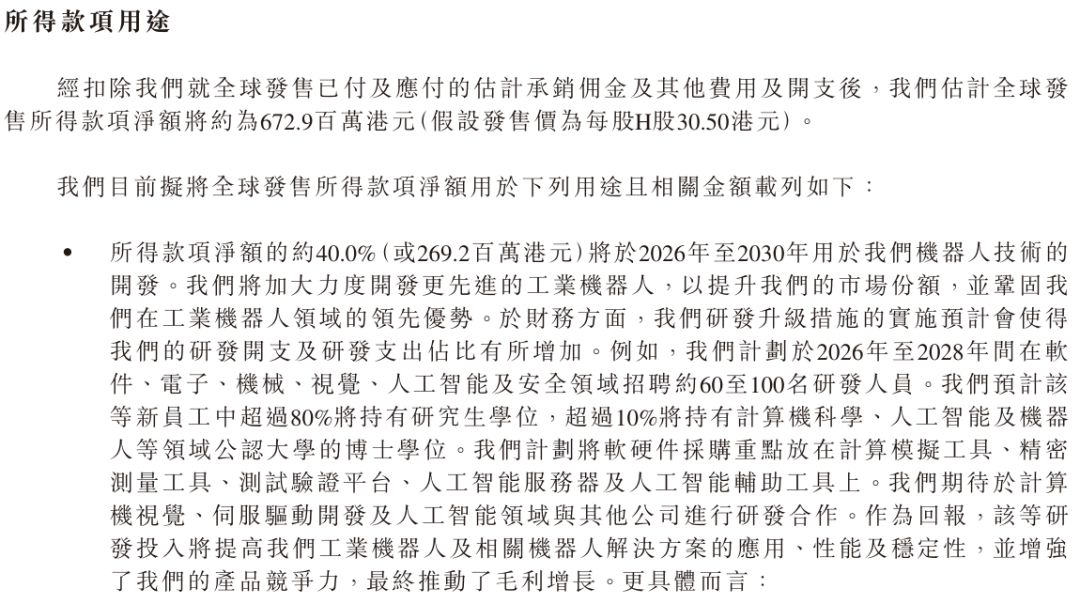
Meanwhile, its issuance plan lacked cornerstone investors and a greenshoe option, with net proceeds of HK$673 million and a market capitalization of HK$7.47 billion, corresponding to a 2025 PS ratio of about 17.2 times, a relatively high valuation. Against a backdrop of sustained losses, such pricing undoubtedly amplified the psychological gap in the secondary market.
Notably, the profitability dilemma is not unique to EffiBot Technologies but a shared challenge across the industry.
Horizontally comparing, industry profitability is sharply divided. Estun Automation recorded 2025 revenue of RMB 4.888 billion and net profit of RMB 45 million, just turning a profit. Siasun Robot reported revenue of RMB 4.122 billion but a net loss attributable to shareholders widening to RMB 398 million, trapped in (caught in) a dilemma of 'selling more, losing more.'
Against this industry backdrop, EffiBot Technologies serves as a wake-up call for the entire sector, its losses reflecting the collective growing pains of the light industrial robot sector—who isn't burning money for tomorrow?
In other words, as players in the sector accelerate to capture market share, who can first carve out a profitable path in the money-burning race will truly cross the divide.
03 Capital Feast or Halftime Whistle?
A wide industry runway does not guarantee that every player will reach the finish line smoothly.
While the logic of labor substitution and the rigid demand for flexible production have propelled light industrial robots to center stage, and AI large models and embodied intelligence have injected new narrative fuel into the sector, one might ask: How many players will complete the race?
The answer perhaps lies in the sector's competitive landscape.
A notable phenomenon is that the light industrial robot sector is exhibiting a typical 'Matthew effect,' with market concentration continuously shifting toward leading players.
In the SCARA robot segment of the light industry, Inovance Technology leads with a 25% market share, while its servo system market share reaches as high as 32%. Estun Automation dominates the small six-axis robot segment with loads <20kg, holding a 10% market share. According to the latest data from MIR DATABANK, Estun ranked first in robot shipments in the Chinese market in 2025 (including all domestic and foreign brands), becoming a core driver of sustained growth in China's industrial robot market.
In contrast, EffiBot Technologies ranked fourth among Chinese light industrial robot and solution providers by 2025 revenue, with a market share of only about 1.4%, according to Frost & Sullivan. In this 'giants feast, strong get stronger' landscape, the situation (plight) of smaller, later-starting players is evident.
However, the presence of giants does not mean there are no gaps. In the highly fragmented light industrial sector, differentiated deep cultivation remains a significant breakthrough.
It's important to note that a distinctive feature (distinct characteristic) of light industrial scenarios is that loads are typically under 20 kilograms, but application scenarios are extremely diverse, such as food packaging, daily chemical capping, 3C assembly, and pharmaceutical sorting—each industry and even each customer has unique demands, creating survival space for differentiated competition.
For example, EffiBot Technologies has succeeded by 'tailoring solutions to customer needs' in niche segments (niche areas) like 3C electronics, food and beverage, and healthcare. Perhaps it is this approach of 'diving in first, then going deep' that has secured its fourth-place position in a competitive sector.
Ultimately, the light industrial robot industry is replete with both compelling narratives and a multitude of participants. However, in a landscape where industry giants capitalize on their scale and newcomers aggressively spend to capture market share, the true competitive edge does not reside in mere technological novelties. Instead, it lies in the ability to transform distinctiveness into a sustainable competitive barrier and to convert cash burn into a steady stream of positive cash flow.
EffiBot Technologies' initial public offering (IPO) represents just a minor milestone in the broader evolution of the light industrial robot sector, transitioning from a conceptual stage to a capitalized market. This event underscores the overarching theme of 'machines replacing humans,' a narrative propelled by technological advancements, while simultaneously revealing the inherent profitability dilemma that accompanies rapid growth. For every company operating within this sector, the genuine challenge has only just commenced.
Ultimately, the market will revert to a state of rationality, where the true value emerges after the superficial elements are stripped away.
* Images are sourced from the internet. Should any copyright infringement be identified, please contact us for prompt removal.
-
Ofilm Teams Up with ADSensE to Propel Large-Scale Deployment of All-Solid-State LiDAR Powered by ADS6311 Chip!
-
![]()
Loss of 2.5 Billion Yet Facing Strong Demand for Shares? Another Battle for Control of Lianchuang Electronics
-
![]()
Huawei’s Enjoy Series Flies Off the Shelves, Prompting Xiaomi to Double Down on Budget Smartphones
-
![]()
Beijing Hyundai's Top Executive Criticizes Industry Disorder: Certain Brands Treat Customers as Beta Testers
-
![]()
The domestic mobile phone market has declined for five consecutive quarters! Huawei defies the trend with significant growth: maintains its top market share
-
Annual Revenue Surpasses 3 Billion: An Automotive Trim 'Little Giant' Makes Its Debut on the Beijing Stock Exchange
-
![]()
The Space Force Wants to Spend $30 Billion on Rocket Launches: Is Trump Doubling Down, and Is SpaceX the Big Winner?
-
![]()
Going Crazy! One out of Every Three Plug-in Hybrids Sold in Europe is a Chinese Vehicle