This Is Unexpected: Even Microsoft Can't Keep Up with Token Costs
 05/29 2026
 628
628
In the realm of AI, Tokens serve as the fundamental unit, known in Chinese as "word tokens."
Each interaction with AI requires the consumption of Tokens, which essentially means that the GPU/TPU must execute a matrix operation. It's akin to using an electrical appliance, which consumes electricity in the process.
The more Tokens consumed, the deeper the AI's thinking process, the more steps it takes, and the longer the content it generates.

For quite some time, certain companies, in an effort to demonstrate their commitment to AI, even adopted Token consumption as a key performance indicator (KPI). If employees used fewer Tokens, it was perceived as a lack of seriousness towards utilizing AI, potentially leading to bonus deductions.
Conversely, high Token usage was seen as a sign of more extensive AI utilization and greater conscientiousness in work, often resulting in rewards.
However, as time passed, people began to sense that something was amiss. Recently, a significant news story emerged: even Microsoft, a tech giant, could no longer sustain the costs of Tokens and had to revoke Claude Code access for many employees, thereby limiting their indefinite Token consumption.
It's worth noting that just half a year ago, Microsoft was actively encouraging the use of AI, providing Claude Code to engineers, designers, and product managers, and urging them to leverage it boldly to enhance work efficiency and streamline workflows for potential further improvements.
So, what prompted this change in mindset after just six months? What transpired?
In reality, Microsoft conducted a cost-benefit analysis and discovered that this approach was financially untenable. Apart from incurring substantial expenses, it offered no tangible benefits to the company.
Some analysts pointed out that if a Microsoft employee, earning $500,000 annually, consumed $5,000 to $10,000 worth of Tokens per month after being granted Claude Code access, and their output increased by 20%, it might initially appear effective.
However, with increased AI usage, employees might become overly reliant on it, potentially leading to monthly Token costs soaring to $50,000 in the future.
Simultaneously, since Tokens were being used to augment existing work, the risk of AI replacing these jobs was minimal, as AI merely served as an assistant rather than a replacement.
Consequently, for Microsoft, costs continued to escalate without any corresponding decrease.
What compounded the issue was that Microsoft's market had already reached its saturation point. Higher output from engineers did not necessarily translate into increased product sales. Whether it was Windows, Office, or cloud computing products, sales remained stagnant.
This meant that, despite AI-driven efficiency improvements, Microsoft's revenues would not see a significant uptick and would remain at previous levels, while costs continued to rise. What was the solution?

Thus, Microsoft decided to revoke Token usage rights for the majority of its employees, effectively preventing them from utilizing AI further, as it had become a financial black hole. No matter how affluent a company is, such reckless spending is unsustainable.
It is anticipated that numerous companies will follow in Microsoft's footsteps, where Token consumption surges, efficiency and output appear to improve, but product sales and revenues remain stagnant. This scenario only leads to escalating costs without a corresponding increase in revenues, rendering Token consumption ineffective.
Therefore, the use of Tokens is not about quantity alone; it also hinges on the return on investment and the ultimate benefits. What are your thoughts on this matter?
-
Ofilm Teams Up with ADSensE to Propel Large-Scale Deployment of All-Solid-State LiDAR Powered by ADS6311 Chip!
-
![]()
Loss of 2.5 Billion Yet Facing Strong Demand for Shares? Another Battle for Control of Lianchuang Electronics
-
![]()
Huawei’s Enjoy Series Flies Off the Shelves, Prompting Xiaomi to Double Down on Budget Smartphones
-
![]()
Beijing Hyundai's Top Executive Criticizes Industry Disorder: Certain Brands Treat Customers as Beta Testers
-
![]()
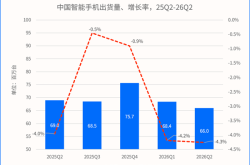
The domestic mobile phone market has declined for five consecutive quarters! Huawei defies the trend with significant growth: maintains its top market share
-
Annual Revenue Surpasses 3 Billion: An Automotive Trim 'Little Giant' Makes Its Debut on the Beijing Stock Exchange
-
![]()
The Space Force Wants to Spend $30 Billion on Rocket Launches: Is Trump Doubling Down, and Is SpaceX the Big Winner?
-
![]()
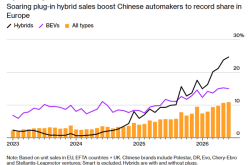
Going Crazy! One out of Every Three Plug-in Hybrids Sold in Europe is a Chinese Vehicle