6.8 Trillion! How Can AI Carve Up China's Industrial Supply Chain Pie?
 05/29 2026
 473
473
"AI Accelerates the Evolution of China's Industrial Supply Chain"
6.8 trillion yuan!
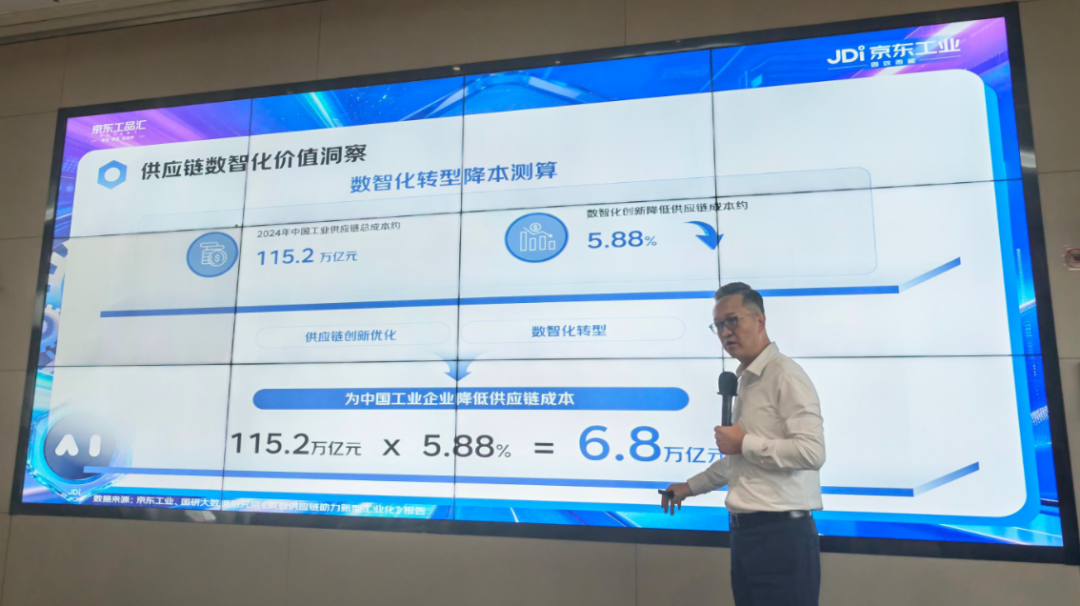
This figure was repeatedly mentioned by JD Industrial executives at the product launch event for the AI Procurement Assistant on May 20—a theoretical cost-saving potential calculated by JD Industrial in collaboration with the National Research Institute for Big Data, achievable through the digital and intelligent (AI) transformation of China's industrial supply chain.
The highlight of the event was the AI Procurement Assistant product—Gong Xiaozhi—targeted at small and medium-sized manufacturing enterprises. It claims to enable procurement staff to complete the entire process of industrial product selection, price comparison, and ordering "just by speaking and taking photos."
Behind this lies the long-standing efficiency pain points and the urgent need for comprehensive transformation in China's industrial supply chain.

The 6.8 Trillion Yuan Market Opportunity
Let's first answer a question: How much does China's industrial sector spend on supply chains annually?
The answer: 115.2 trillion yuan (2024). This is equivalent to 85% of the national GDP (134.91 trillion yuan) for that year.
So, if all enterprises across the entire industrial chain achieve digital and intelligent transformation, how much cost savings could be realized?
The answer: 6.8 trillion yuan.
Of course, this is an idealized figure. According to the research report *Digital Supply Chain Empowers New Industrialization*, jointly released by JD Industrial and the National Research Institute for Big Data last year, a single enterprise achieving digital and intelligent supply chain transformation is expected to reduce costs by 5.88% annually. Based on this calculation, if all enterprises across the entire industrial chain complete digital and intelligent transformation, a cost-saving space of 6.8 trillion yuan could be unlocked.
Relevant executives from JD Industrial also admitted that 6.8 trillion yuan is an "ideal value" because "it's impossible for all enterprises to achieve digital and intelligent transformation simultaneously."
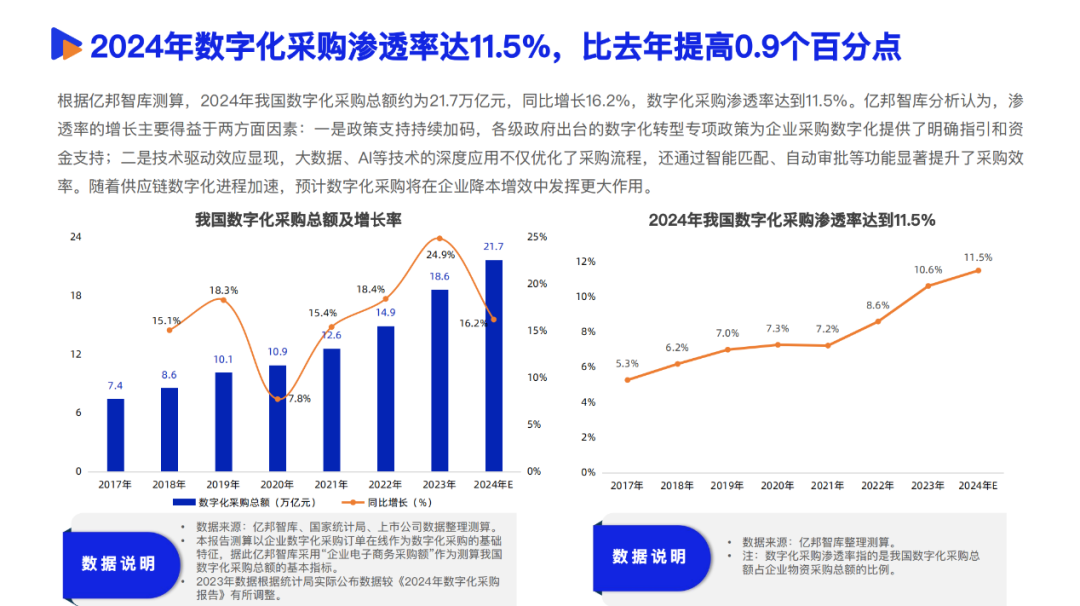
The reality gap is evident. According to the *2025 Digital Procurement Supply Chain Development Report*, jointly released by Ebrun Think Tank, the Public Procurement Branch of the China Federation of Logistics & Purchasing (CFLP), and the Digital Procurement Branch of the CFLP (in preparation), China's total digital procurement volume was approximately 21.7 trillion yuan in 2024, with a penetration rate of only 11.5%.
Among over 60 million enterprises nationwide, more than 100 central and state-owned enterprises have established digital procurement platforms, accounting for 70%. However, small, medium, and micro enterprises (SMEs), which make up over 95% of the total, mostly still rely on traditional procurement models. These SMEs contribute over 60% of the national GDP and over 80% of urban employment, yet their supply chain digital and intelligent levels lag far behind those of large enterprises.
Many factors contribute to this gap: limited funds make it difficult to afford the high implementation costs of SaaS software and systems; a lack of professional digital talent means many enterprises don't even have a dedicated IT department. Deeper obstacles stem from the inherent complexity of the industrial products sector.
The head of JD Industrial's SMB business pointed out that industrial product procurement has long faced three major challenges: difficulty in selection, difficulty in price comparison, and difficulty in management. The root cause of all three issues lies in the severe lack of standardization in the industry.
China boasts the most comprehensive industrial system globally, with all 41 major industrial categories, 207 medium categories, and 666 sub-categories. This results in an extremely fragmented and complex industrial product landscape. Relevant executives from JD Industrial mentioned in interviews with media outlets such as Lansha Finance that the JD Industrial platform alone has over 3,000 end-level categories, 80% of which lack unified national or industry standards. Many product models, specifications, and parameters are set by manufacturers themselves, leading to hundreds of different models for products with the same function. Mislabeling is also a serious issue.
This chaos creates significant difficulties for procurement. For example, a seemingly ordinary bearing can have vastly different performance outcomes due to subtle differences in size, precision, and material. This requires procurement staff to possess deep professional knowledge and spend considerable time searching for the right model among a vast array of products. A wrong choice could halt production lines and cause substantial losses.
Price comparison is equally challenging. SMEs, with their smaller procurement volumes and weaker bargaining power, can only gather price information by comparing multiple suppliers, making it difficult to assess supplier qualifications and product quality. Moreover, many procurement staff handle multiple roles and lack the time and expertise to deeply understand the supply chain, leading to persistently high procurement costs and hard-to-eliminate gray areas.
"Management difficulty" is an even more widespread pain point. Most SMEs lack a perfect (well-established) procurement management system, with procurement records scattered across Excel spreadsheets, paper documents, and even WeChat chat logs. Enterprises struggle to track annual spending across different categories or identify waste and inefficiencies in the procurement process.
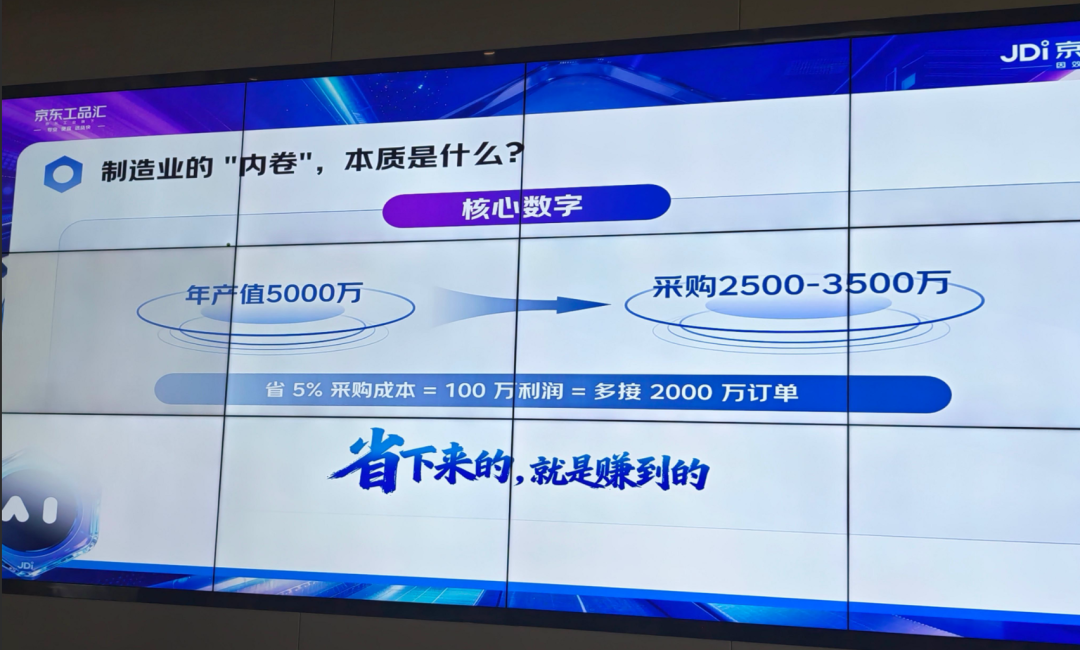
The head of JD Industrial's SMB business shared a set of data: For an equipment manufacturing enterprise with annual revenue of 50 million yuan, procurement costs typically account for 50%-60% of total costs, while net profit margins often range from only 5%-15%. If digital and intelligent supply chains can reduce procurement costs by 5%, it could save over 1 million yuan in profit—equivalent to the earnings from 20 million yuan in additional transactions.

AI Accelerates the Evolution of China's Industrial Supply Chain
AI is considered one of the key solutions to these industry-wide challenges. Policy signals are clear: In 2025, the Ministry of Commerce, along with eight other departments, issued the *Special Action Plan for Accelerating the Development of Digital Supply Chains*, setting a goal to establish a digital supply chain system in key industries and sectors by 2030 and cultivate 100 leading enterprises. China's 15th Five-Year Plan also calls for "enhancing the autonomy and controllability of industrial chains" and "promoting the digital and intelligent transformation of manufacturing." Digital supply chains have become a critical lever for balancing development and security and activating new quality productivity.
Against this backdrop, JD Industrial launched the AI Procurement Assistant, powered by its proprietary industrial large model and tailored specifically for industrial product procurement scenarios. The operational leader of JD Industrial's Gongpinhui platform introduced three key features of the "AI Procurement Assistant": it gets smarter with use, self-iterates, and is built specifically for industrial products.
"Getting smarter with use" means the system remembers the context, preferences, and decision-making logic of each procurement scenario, allowing it to proactively anticipate needs in future uses, evolving from a mere tool into a personalized assistant. "Self-iteration" addresses the slow update cycles of traditional software—every user interaction becomes training data for the model, enabling continuous improvement through each interaction.
"Built specifically for industrial products" is the core differentiator of the AI Procurement Assistant. General-purpose large models have significant shortcomings in handling industrial product selection. For example, when a user asks whether a certain seal can be used in a steam pipeline, a general model might simply "recommend consulting an expert." In contrast, the AI Procurement Assistant can leverage JD Industrial's accumulated industry data and knowledge to provide direct answers, including recommendations for alternative models, domestic brand substitutions, and automatic breakdown and matching of bills of materials (BOMs).
In terms of specific functions, the AI Procurement Assistant covers the entire pre-sale, in-sale, and after-sale process. At the launch event, several scenarios were demonstrated: identifying damaged spare parts through photos and placing orders directly, bulk uploading lists for automatic product matching, finding alternative models for discontinued materials, and automatically configuring a list of components based on vague budgetary needs. Throughout these processes, users only need to "speak, take photos, or upload files."
The operational leader of JD Industrial's Gongpinhui platform stated: "Our benchmark is not general-purpose large models or e-commerce platforms. Our competitor is the tacit knowledge accumulated in the minds of master technicians in industrial product manufacturing over the past 100 years."
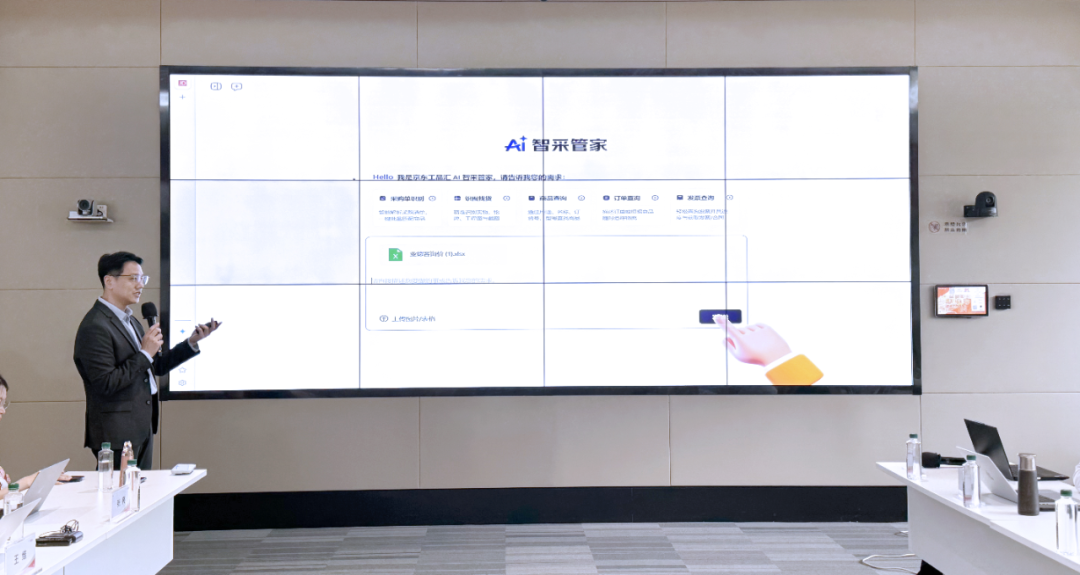
When it comes to practical applications, the AI Procurement Assistant brings not just isolated efficiency gains but optimization across the entire supply chain. The head of JD Industrial's SMB business summarized the core value brought by AI in three phrases: making product selection no longer a specialized task, making price comparison no longer a cost-intensive task, and making account management no longer a troublesome task.
Specifically, AI achieves knowledge democratization, price transparency, and product standardization. It enables procurement staff without professional backgrounds to obtain expert-level selection advice through natural language interactions; it provides users with price references based on real historical transaction data rather than just listed prices; and it helps enterprises manage material archives by categorizing functionally similar products from different brands and models, thereby reducing SKU counts and supply chain complexity.
According to JD Industrial's internal testing data, the AI Procurement Assistant can improve procurement efficiency by over 60% in complex procurement scenarios.

The Business Logic Behind "Free"
Notably, JD Industrial has positioned the AI Procurement Assistant's core target users as SMEs and is offering the basic SaaS version free of charge to these enterprises. This decision is driven by both business logic and practical challenges.
China currently has over 60 million enterprises, 95% of which are SMEs, accounting for 60% of the 6.8 trillion yuan in supply chain cost-saving potential. This represents a vast market opportunity. A relevant executive from JD Industrial used a vivid metaphor: Supply chain digital and intelligent transformation for large leading enterprises is like building the main arteries of an organ, but if the capillaries—the SMEs—are weak, the entire organ will suffer from ischemia. SMEs in the manufacturing sector are the capillaries of this supply chain system.
This is also a key reason why JD Industrial offers the AI Procurement Assistant for free to SMEs. As explained by a relevant executive from JD Industrial, JD Industrial is not a SaaS software company but an AI-driven supply chain technology and services company. Its monetization logic lies in supply chain and commodity transactions—enterprises complete product selection through the AI Procurement Assistant and then place orders on the JD Industrial platform.
Financial data validates the commercial value brought by AI. According to Q1 2026 financial results, JD Industrial achieved revenue of 5.66 billion yuan, up 25.3% year-over-year; adjusted net profit was 229 million yuan, up 54.4% year-over-year. The profit growth rate significantly outpaced revenue growth, indicating that AI-driven efficiency improvements are already translating into profit gains.
In 2025, JD Industrial's total revenue reached 23.95 billion yuan, up 17.4% year-over-year; adjusted net profit was 1.13 billion yuan, up 5.3% year-over-year; transaction volume from key enterprise clients was 16.5 billion yuan, up 26.5% year-over-year. The full-year transaction volume retention rate for key enterprise clients in 2025 was 116.6%, meaning existing clients not only stayed but also increased their procurement volumes.
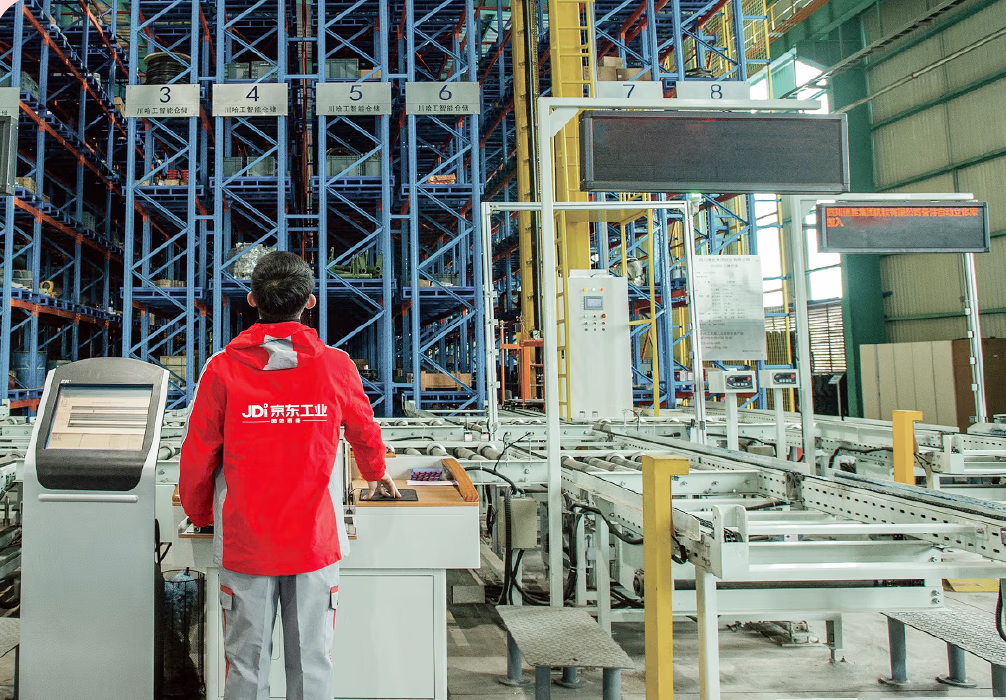
More compelling data comes from the conversion rate comparison of AI customer service. A relevant executive from JD Industrial revealed to media outlets such as Lansha Finance that the new customer conversion rate for purely human customer service is about 15%, while AI-driven automated customer replies achieve a conversion rate of 33.7%—a net increase of 55% attributed to AI. This demonstrates that AI not only improves efficiency but also directly generates new revenue, validating its real value in enhancing quality and efficiency in industrial scenarios.
However, we must also view these data objectively. Currently, AI's contribution to JD Industrial's revenue remains relatively small and is concentrated in relatively simple scenarios like customer service and recommendations. When it comes to more complex procurement decisions and supply chain management, AI's role is still limited. Additionally, the research and training of large models require sustained, massive investments.

The Next Phase of China's Industrial Supply Chain
Looking further ahead, JD Industrial envisions the future of supply chains evolving from B2B (business-to-business) to A2A (agent-to-agent).
This transformation is already underway but follows a layered path: Large conglomerates have begun building internal AI agents and experimenting with commodity queries through JD Industrial's "Gongpin Cha" interface—an early form of A2A. A relevant executive from JD Industrial predicts that within the next one to two years, A2A models between large enterprises will see substantial implementation. For SMEs lacking the capability to develop their own agents, they can directly use JD Industrial's SaaS-based agent services to indirectly access this capability.
At a broader level, China's manufacturing sector is at a critical juncture transitioning from "big" to "strong." Data shows that in 2025, China's industrial added value reached 41.7 trillion yuan, with manufacturing added value at 34.7 trillion yuan, accounting for about 25% of GDP—maintaining its global lead for the 16th consecutive year.
However, scale advantages do not equate to resilience advantages. Against a backdrop of complex and volatile external environments and rising production factor costs, supply chain agility, flexibility, and autonomy have become new benchmarks for measuring manufacturing competitiveness.
The head of JD Industrial's SMB business stated: "The golden age of manufacturing will not be won by 'selling cheaper' but by being more efficient and generating higher industrial added value." He extended this logic to a broader perspective: Releasing the 6.8 trillion yuan in supply chain cost-saving potential can free up resources for production, R&D, and iterations in industrial chains and production processes. "I believe that as every manufacturing enterprise improves its production processes, R&D capabilities, and product strength, China's national power and overall supply chain resilience will be enhanced," he said.
-
Ofilm Teams Up with ADSensE to Propel Large-Scale Deployment of All-Solid-State LiDAR Powered by ADS6311 Chip!
-
![]()
Loss of 2.5 Billion Yet Facing Strong Demand for Shares? Another Battle for Control of Lianchuang Electronics
-
![]()
Huawei’s Enjoy Series Flies Off the Shelves, Prompting Xiaomi to Double Down on Budget Smartphones
-
![]()
Beijing Hyundai's Top Executive Criticizes Industry Disorder: Certain Brands Treat Customers as Beta Testers
-
![]()
The domestic mobile phone market has declined for five consecutive quarters! Huawei defies the trend with significant growth: maintains its top market share
-
Annual Revenue Surpasses 3 Billion: An Automotive Trim 'Little Giant' Makes Its Debut on the Beijing Stock Exchange
-
![]()
The Space Force Wants to Spend $30 Billion on Rocket Launches: Is Trump Doubling Down, and Is SpaceX the Big Winner?
-
![]()
Going Crazy! One out of Every Three Plug-in Hybrids Sold in Europe is a Chinese Vehicle