Farewell to Consecutive Years of Losses, Aiming for 14 Billion in Revenue: Is Kingdee's AI Transformation a Redemption or a Gamble?", "Kingdee, AI Transformation, Lingji, Profitability, Challenges", "
 05/29 2026
 613
613
Edited by: Deep Dive Atom Studio
On May 20, 2026, an AI summit in Shenzhen became the focal point of the enterprise services circle. Kingdee officially launched its enterprise AI-native operating system, Lingji, symbolizing a new world surrounded by AI with the metaphor of 'giving roses to others.' Xu Shaochun, Chairman and CEO of the Group, made a bold assertion: the most competitive individuals in the future will not be solely carbon-based humans or silicon-based intelligence but carbon-based humans adept at leveraging silicon-based capabilities, which he defined as 'Lingji beings.'

This high-profile launch event was a declaration of Kingdee's full commitment to AI. Xu Shaochun reiterated his ambition to recreate another Kingdee through AI transformation over the next five years, aiming to double revenue to 14 billion yuan by 2030, with AI+SaaS and AI-native revenue each accounting for half.
However, behind the fanfare, Kingdee's core challenge remains unchanged: not whether to adopt AI but how to transform AI from an 'add-on' to the 'core,' thoroughly reconstructing its technological foundation, delving deep into core business scenarios, and addressing talent and organizational gaps. For this veteran vendor just emerging from losses, AI is both a redemption to navigate cycles and a life-or-death examination—a double-edged sword hanging overhead.
Is Kingdee, Now Profitable, Facing Its Best Opportunity?
'Kingdee in the South, Yonyou in the North' represents the duopoly of China's enterprise management software. According to IDC data, Kingdee International focuses on 'cloud-native + AI-native' dual technology routes, with pure cloud-native architecture as its core competitiveness (competitive edge). In the second half of 2025, its customer base grew by 42%, adding over 60,000 SME clients, with a 23% penetration rate in the Pearl River Delta's electronics manufacturing sector.
Yet, despite its parallel reputation with Yonyou and significant growth, Kingdee has long been plagued by losses. From 2021 to 2024, its net profit attributable to shareholders was -302 million, -3.89 billion, -2.10 billion, and -1.42 billion yuan, respectively. Yonyou's figures for the same period were 708 million, 219 million, -967 million, and -2.061 billion yuan. Amid Yonyou's massive losses, Kingdee's deficits seemed more tolerable.
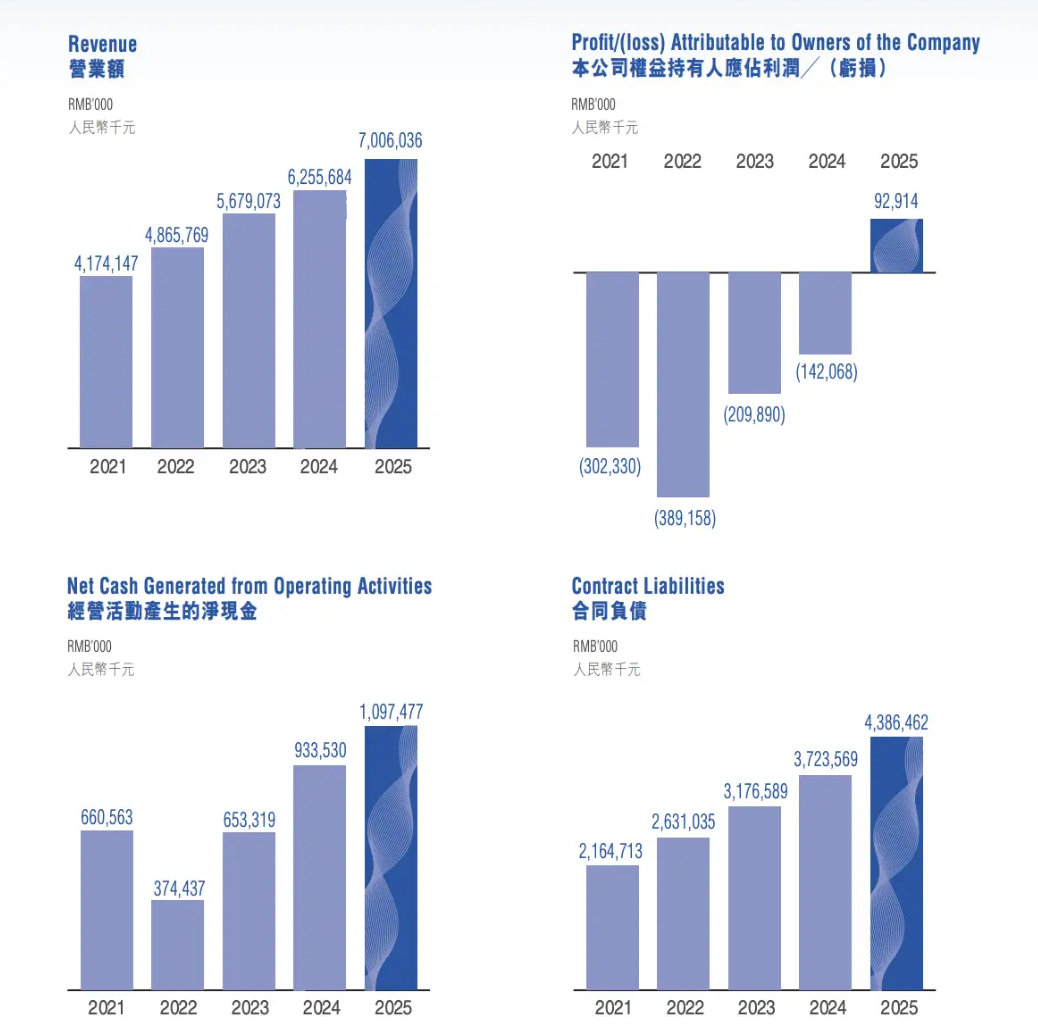
The turning point came in 2025. Kingdee's total revenue reached 7.006 billion yuan, up 11.99% year-on-year; net profit attributable to shareholders was 92.914 million yuan, marking its first profit after five years of losses; adjusted net profit was 232 million yuan, with operating cash flow reaching 1.097 billion yuan, a 17.83% increase, significantly improving the health of its core business cash flow.
So, the question arises: Has Kingdee, now profitable, truly turned the corner?
From an operational standpoint, Kingdee's revenue grew steadily from 4.174 billion yuan in 2021 to 7.006 billion yuan in 2025. Although growth slowed in 2024 and 2025, it remained above 10%. More critically, in 2025, its net cash from operating activities reached 1.097 billion yuan, a 17.83% increase, indicating steady progress in its core business.
However, Kingdee still faces financial pressures and fragile profitability. Alongside its improving main business, its liabilities also rose. Total liabilities increased from 3.284 billion yuan in 2021 to 6.377 billion yuan in 2025, with current liabilities rising from 3.083 billion yuan to 5.638 billion yuan, including 1.757 billion yuan in accounts payable and other obligations, an 18.08% increase. Meanwhile, in 2025, its cash and bank deposits totaled 3.797 billion yuan, a 9.05% decrease from 2024. Kingdee remains under significant financial strain.
Although Kingdee has started to turn a profit, its adjusted net profit margin is just 3.3%, leaving little room for error. More critically, this profitability relies heavily on cost-cutting and efficiency gains, with its workforce reduced from 12,000 in 2025 to 11,294.
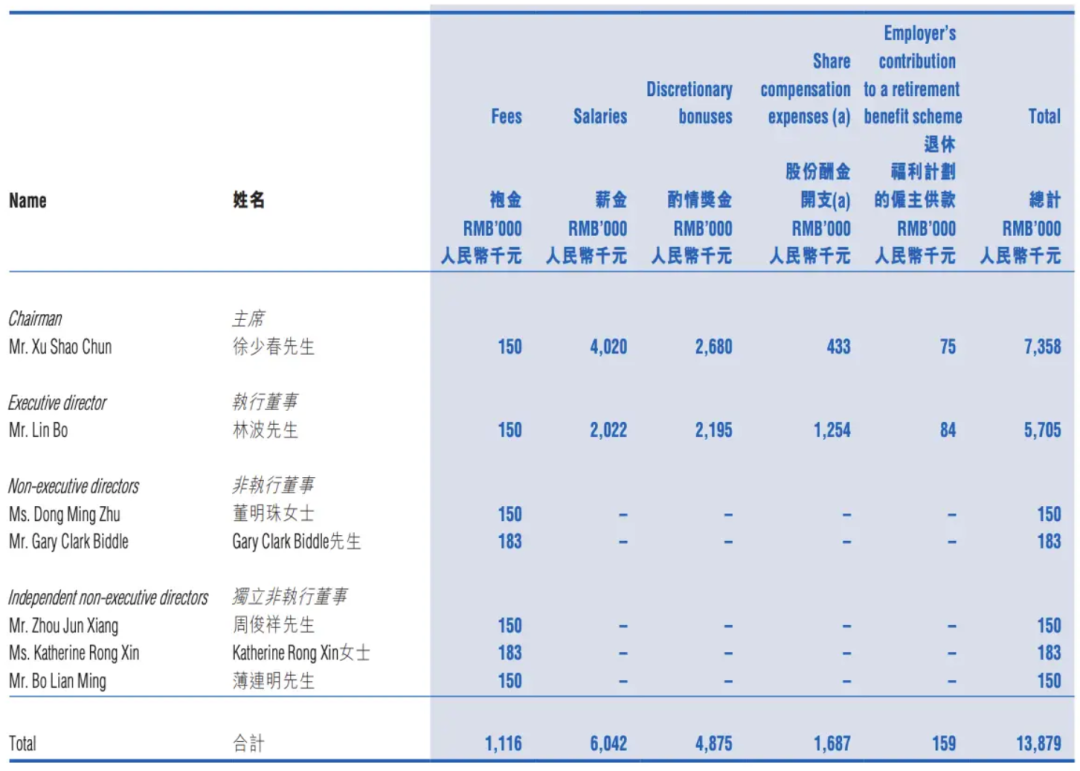
Notably, as Kingdee's business grew, management salaries slightly declined. In 2025, total director compensation was 13.879 million yuan, a 0.88% decrease from 2024. Xu Shaochun's compensation was 7.358 million yuan, an 8.94% decrease, while Executive Director Lin Bo's compensation was 5.705 million yuan, an 11.74% increase.
Meanwhile, Kingdee's breakthrough in the high-end market remains slow, and its international presence is nearly nonexistent. Super-large state-owned enterprises and multinationals are still dominated by competitors like SAP, Oracle, and Yonyou. Kingdee's Cloud Galaxy and Xinghan (high-end product lines) generated 1.940 billion yuan in revenue in 2025, a 28% increase, but only accounted for 27.7% of total revenue, highlighting the difficulty of breaking through high-end barriers. Internationalization is even weaker: overseas revenue accounted for just over 1% in 2025, and even doubling it would barely move the needle, with the 3-5 year goal of 5-10% still out of reach.
Additionally, Kingdee's growth momentum is slowing, with traditional businesses lagging. Cloud services revenue growth dropped from over 30% in previous years to around 10% in 2025, while traditional businesses like implementation, consulting, and maintenance grew by just 5.4%. Under a high base, growth pressures are mounting, necessitating a new engine for breakthroughs.
Profitability has given Kingdee breathing room for AI transformation, but it is far from complacent. This turnaround resembles 'stopping the bleeding' rather than a 'cure,' with AI as its only lever to break through growth bottlenecks and reshape competitiveness.
Kingdee's Over-Optimism on AI: From Cloud Transformation to AI Breakthrough, Ambitions and Shortcomings Coexist
China has seen cases of entrepreneurs smashing objects to symbolize resolve, with Xu Shaochun's destruction of a central server in 2014 being one such example, solidifying Kingdee's commitment to the cloud. From 2019 to 2025, Kingdee's cloud services revenue surged from 1.314 billion yuan to 5.782 billion yuan, a 340.03% increase, contributing 82.5% of its revenue.
Xu Shaochun has never lacked transformational courage. Now, he defines AI transformation as Kingdee's fourth 'life-or-death battle,' adopting an even firmer stance than during the cloud shift. To this end, he outlined four 'musts' for enterprise AI transformation: a unified AI operating system as a lever, cultivating 'Lingji beings' as pioneers, adopting an AI-native mindset, and full commitment from top leadership. Lingji is the core carrier (vehicle) of this transformation.
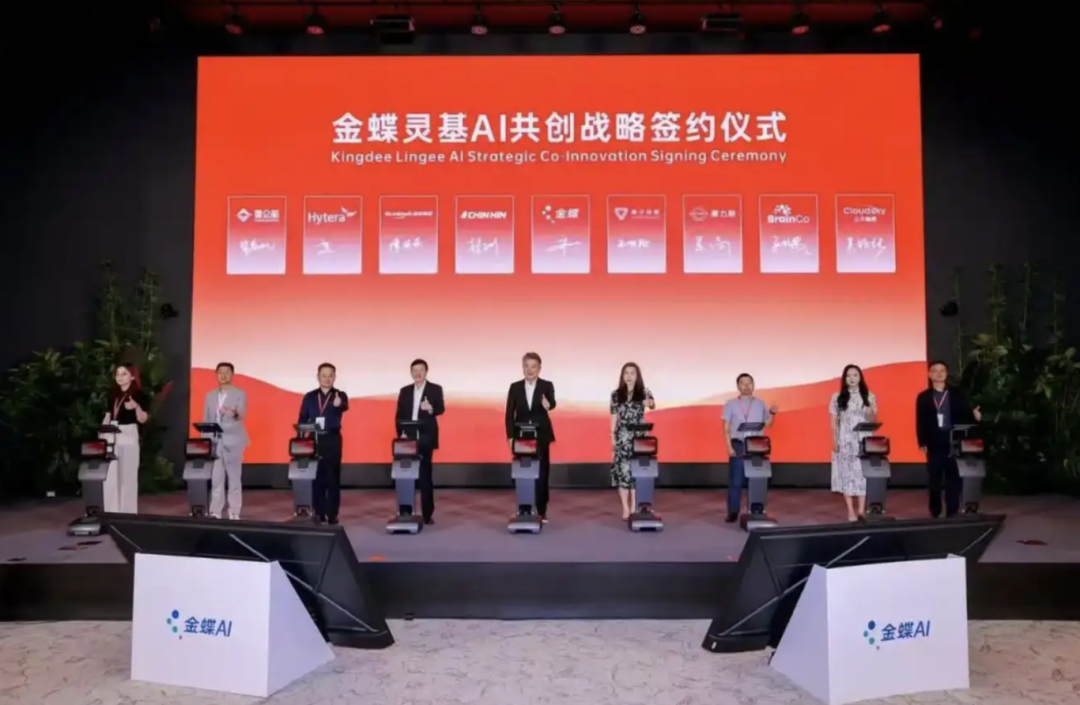
Leveraging AI technology, enterprises can undergo a comprehensive efficiency revolution. AI integration in R&D shortens development cycles, while in micro-market scenarios, processes like bookkeeping, invoicing, and tax filing see significant efficiency gains, with internal cost reductions being particularly notable. By building differentiated product systems with AI capabilities, Kingdee can leverage its over 30 years of enterprise management experience to erect scenario-based barriers that general-purpose large models cannot replicate, further strengthening market competitiveness. At the AI summit, Kingdee not only formed a strategic partnership with Jieyue Xingchen but also collaborated with eight prototype clients, including Zhenxing Group and Seres, on co-creating AI solutions with Lingji.
Simultaneously, AI can drive upgrades to existing business models, moving beyond single subscription models to explore new forms like intelligent agents and digital employees, opening broader growth avenues for enterprises.
Today, the enterprise-grade AI market is developing along dual tracks. Large clients, driven by data privacy, compliance, and cautious decision-making, show low acceptance of AI products, while the difficulty in quantifying AI application effects leads to weak willingness to pay and long project implementation cycles across client types, making AI business a short-term revenue pillar unlikely.
In 2025, Kingdee signed AI contracts worth 356 million yuan, targeting 1 billion yuan in 2026. However, with long monetization cycles and weak willingness to pay, the short term remains an 'investment phase.' Beneath the idealistic blueprint, reality appears stark, with Kingdee facing numerous challenges in AI advancement.
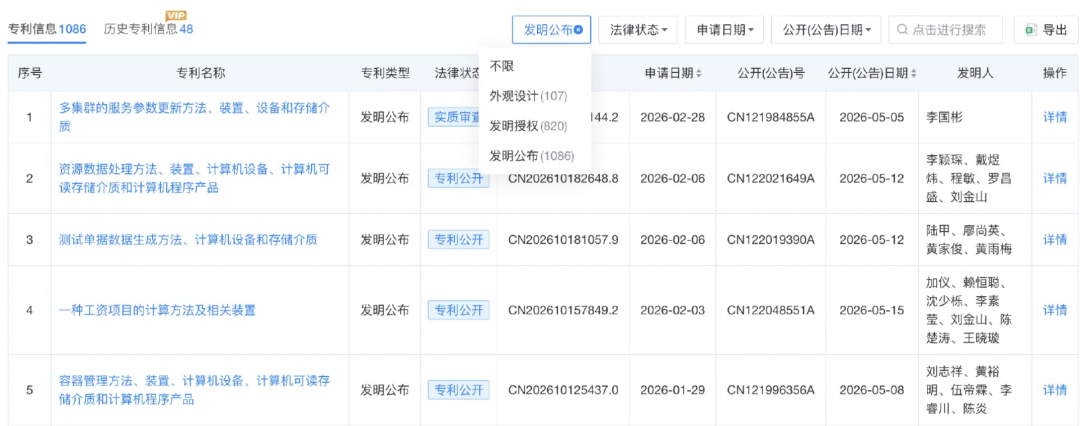
In 2025, Kingdee's R&D investment was 1.494 billion yuan, a 1.32% decrease year-on-year. Tianyancha data shows that Kingdee Software (China) Co., Ltd. holds 820 granted invention patents (796 valid), 1,086 published invention projects (457 under review, 629 invalid). Yet, AI requires sustained investment, with large model technology iterating rapidly—often updating every few months. Continuous funding and technical input are essential to keep pace, and R&D contraction exposes Kingdee to significant technological lag risks.
Beyond that, AI's new models clash with Kingdee's existing traditional business models, with original SaaS subscription models and AI-derived novel billing and service models mutually hindering each other, creating resistance in the self-disruptive transformation process.
More critically, Kingdee's competitors have now upgraded to giants like OpenAI, Microsoft, and Alibaba Cloud. These vendors directly offer financial and HR automation plugins at low or no cost, eroding Kingdee's pricing power for AI value-added services, intensifying the risk of SME client loss, and putting continuous pressure on enterprise average revenue per user and client renewal rates.
For Kingdee, AI is never about icing on the cake but a last-ditch effort. The cloud transformation took a decade to stop the bleeding; AI transformation offers even less time. If AI cannot swiftly transition from an 'add-on' to the 'core,' the newly profitable Kingdee may again face growth stagnation.
AI as a Double-Edged Sword: Redemption and Risk, Kingdee's Key to Breakthrough
Xu Shaochun's vision of 'Lingji beings' and 'recreating Kingdee' outlines an ideal AI-era landscape: humans return to creative decision-making, AI handles execution, and organizations self-evolve. But for this ideal to materialize, Kingdee must overcome three gaps to transform AI from concept to core competitiveness (competitive edge).
The Lingji system is deeply tied to Kingdee's existing SaaS business, but traditional process-driven systems and AI intention-driven models inherently conflict. To truly transform, Kingdee must undertake comprehensive technological reconstruction, building an AI-native foundation, fully adapting original ERP capabilities to intelligent agent logic, and making AI the system's core rather than an add-on.
Delving deep into core business scenarios is key to defending Kingdee's moat. General-purpose large models lack understanding of professional logics in enterprise services like financial compliance, supply chain management, and manufacturing—areas where Kingdee has accumulated unique advantages over years. The company must focus on high-value sectors, refine vertical intelligent agents tailored to industry needs, and erect scenario-based barriers competitors cannot surmount.
In ecosystem layout and funding, Kingdee must balance moderate (moderate) increases in AI-related R&D investment based on current profitability, focusing on core directions like model adaptation, intelligent agent engineering, and security compliance to avoid sustained R&D declines. Simultaneously, it must Find it right (identify) its positioning, rely on ecological partnerships for collaboration (synergistic) development, avoid direct competition with top tech giants, and firmly hold its ground in the application-layer market.",
-
Ofilm Teams Up with ADSensE to Propel Large-Scale Deployment of All-Solid-State LiDAR Powered by ADS6311 Chip!
-
![]()
Loss of 2.5 Billion Yet Facing Strong Demand for Shares? Another Battle for Control of Lianchuang Electronics
-
![]()
Huawei’s Enjoy Series Flies Off the Shelves, Prompting Xiaomi to Double Down on Budget Smartphones
-
![]()
Beijing Hyundai's Top Executive Criticizes Industry Disorder: Certain Brands Treat Customers as Beta Testers
-
![]()
The domestic mobile phone market has declined for five consecutive quarters! Huawei defies the trend with significant growth: maintains its top market share
-
Annual Revenue Surpasses 3 Billion: An Automotive Trim 'Little Giant' Makes Its Debut on the Beijing Stock Exchange
-
![]()
The Space Force Wants to Spend $30 Billion on Rocket Launches: Is Trump Doubling Down, and Is SpaceX the Big Winner?
-
![]()
Going Crazy! One out of Every Three Plug-in Hybrids Sold in Europe is a Chinese Vehicle