What Kind of Scientific Spirit Should We Reclaim Amidst the AI Boom?
 06/01 2026
 462
462
Author / Daoge
Source / Jiedian Finance
Perhaps no technological advancement in human history has sparked such immense controversy as AI, with cheers for progress echoing as loudly as voices of opposition.
Dario Amodei, CEO of Anthropic, one of today's hottest AI companies, has publicly warned multiple times over the past year about AI's impact on the job market. He not only predicted that 'AI could eliminate 50% of entry-level jobs within the next 1 to 5 years' but also stated at the 2026 Davos Forum that AI might eventually 'take over software engineering work end-to-end.'
Amid AI's rapid advancement, some Hollywood screenwriters and actors initiated a 148-day strike that reverberated globally, with a core demand to limit the 'invasion' of tools like ChatGPT into the film and creative industries.
On one side, the tech industry fervently pursues AI's efficiency revolution; on the other, non-tech professionals genuinely fear an AI-driven unemployment wave.
Why do some panic while others support AI? What jobs will AI eliminate? How should people rationally view AI? Perhaps at no other moment in humanity's technological journey has scientific spirit and independent thinking been more needed than today.
The recently held 2026 Sohu Technology Annual Forum provided a rare opportunity for in-depth AI discussions and reshaping scientific cognition (cognition). This marks Sohu's eighth consecutive tech forum, expanding from initial 5G focus to encompass fundamental sciences, applied sciences, AI, and other fields.
'Twenty years ago, people talked about the knowledge economy. Now, it's truly here because of AI, with everyone acquiring new skills,' Zhang Chaoyang, Sohu's founder, chairman, CEO, and physics PhD, told media. He further asserted that fundamental sciences have become more critical today than ever.
While reviewing scientists and topics at the 2026 Sohu Tech Forum, Jiedian Finance noted its AI focus alongside heightened attention to fundamental sciences, featuring sessions like '100 Years of Quantum Mechanics' and 'From Twin Primes to Zero Conjecture,' even inviting world-class mathematician Zhang Yitang to deliver a 'math lesson.'
Undeniably, Sohu's annual tech forum stands out among domestic media platforms for its scientific literacy.
'Fuck AI!'
This expletive, hurled by renowned Mexican filmmaker Guillermo del Toro into a microphone after a public screening at the Cannes Film Festival, erupted into cheers and applause, voicing global film industry sentiments toward AI.
Domestically, AI's impact first surfaced in online video platforms and short drama sectors. On April 20, 2026, iQIYI announced signing over 100 artists into an AI talent pool, sparking backlash and controversy.
In short dramas, Seedance 2.0's emergence threatens to disrupt live-action productions with AI-generated content's efficiency and cost-effectiveness.
AI alarms the global film industry due to its potential to replace screenwriters, actors, and even directors.
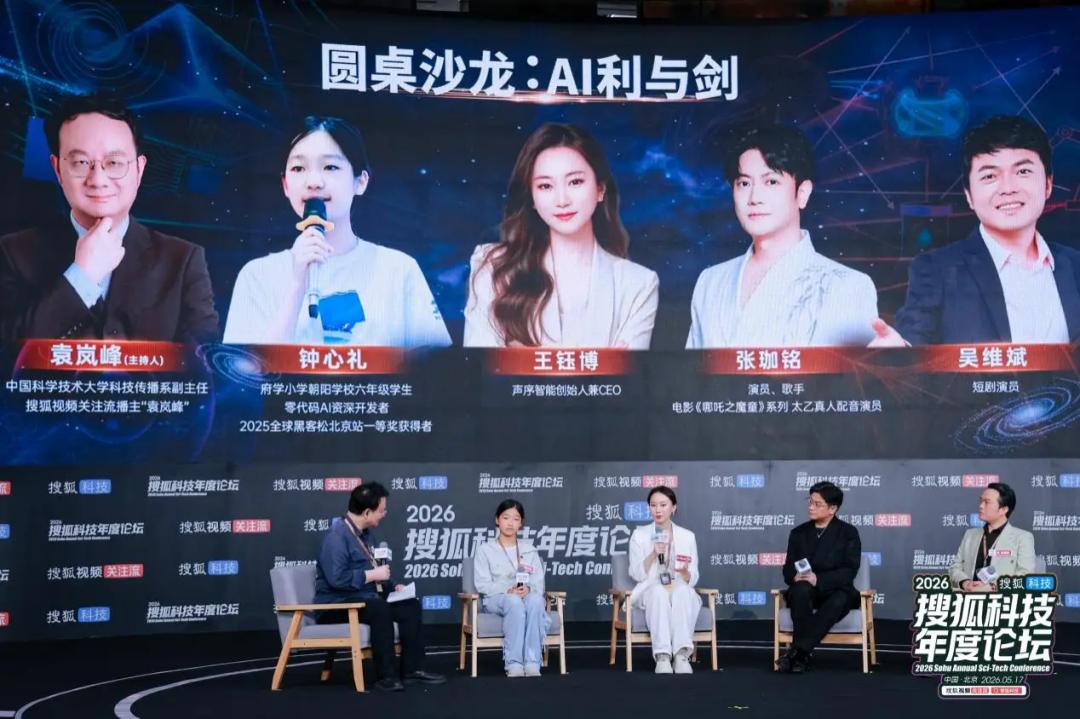
The 2026 Sohu Tech Forum invited two film industry actors for discussions. Zhang Jiaming, voice actor for Taiyi Zhenren in the 'Ne Zha' series, argued that voice acting involves artistic creation and emotional states beyond AI replication unless it possesses self-awareness.
Wu Weibin, a short drama actor affected by unemployment, believed AI could replace actors but wouldn't fully supplant them, envisioning a coexistence scenario. 'Can AI replace actors? Definitely. Will it? Definitely not. It's like choosing between Android and iOS,' Wu said.
Indeed, future societies and industries may see AI and humans coexisting.
The AI industry has entered the trillion-token era, advancing geometrically across digital and physical realms, permeating production and daily life regardless of opposition from graduates or artists.
Over the past two years of AI model explosions led by DeepSeek, ChatBot applications like ChatGPT, Doubao, Qianwen, and Kimi have become daily fixtures.
Paradoxically, as people 'turn to AI for answers,' they often gain emotional reassurance rather than genuine insights. Amid AI tool proliferation, independent thinking becomes invaluable.
This phenomenon drew scientist attention at the 2026 Sohu Tech Forum.
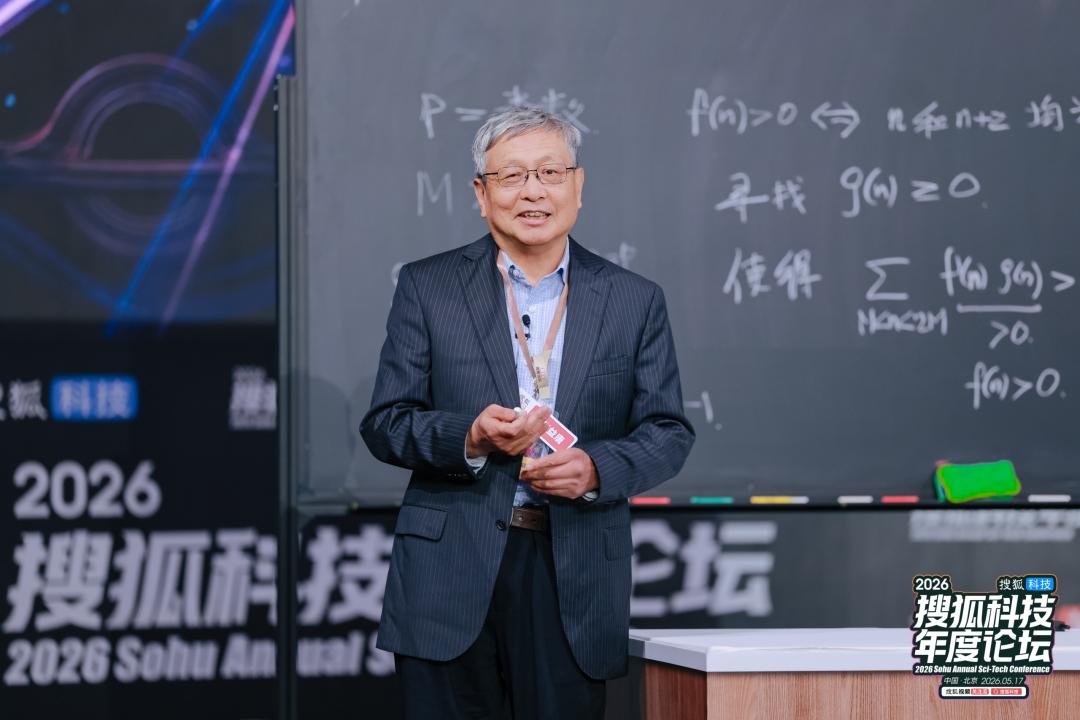
Mathematician Zhang Yitang shared an AI 'embarrassment' during his lecture 'From Twin Primes to Zero Conjecture: Recent Breakthroughs in Fundamental Mathematics.' Unable to create PPTs, he tried AI, which failed to grasp prime numbers but excelled at flattery. 'It praised me so extravagantly that I blushed,' Zhang joked, amusing the audience.
Zhang Chaoyang echoed this sentiment, stating that AI provides results without logical derivation, emphasizing the need for hands-on practice and original thinking over smart tool dependency.
As AI evolves from ChatBot to Agent era, its societal and productivity impacts intensify. Li Di, Nextie founder/CEO and 'father of Microsoft Xiaoice,' stressed studying high-level cognitive agent interactions to maintain human independence, warning against herd stupidity and adverse selection.
In April 2026, Chery Automobile's announcement of strategic controlled nuclear fusion (controlled nuclear fusion) 'artificial sun' R&D sparked heated debate over its authenticity or mere investor storytelling.
Fortunately, the 2026 Sohu Tech Annual Forum invited Tsinghua University's Tan Yi, associate professor of engineering physics and StarRing PolyEnergy founder/chief scientist, for nuclear fusion insights.
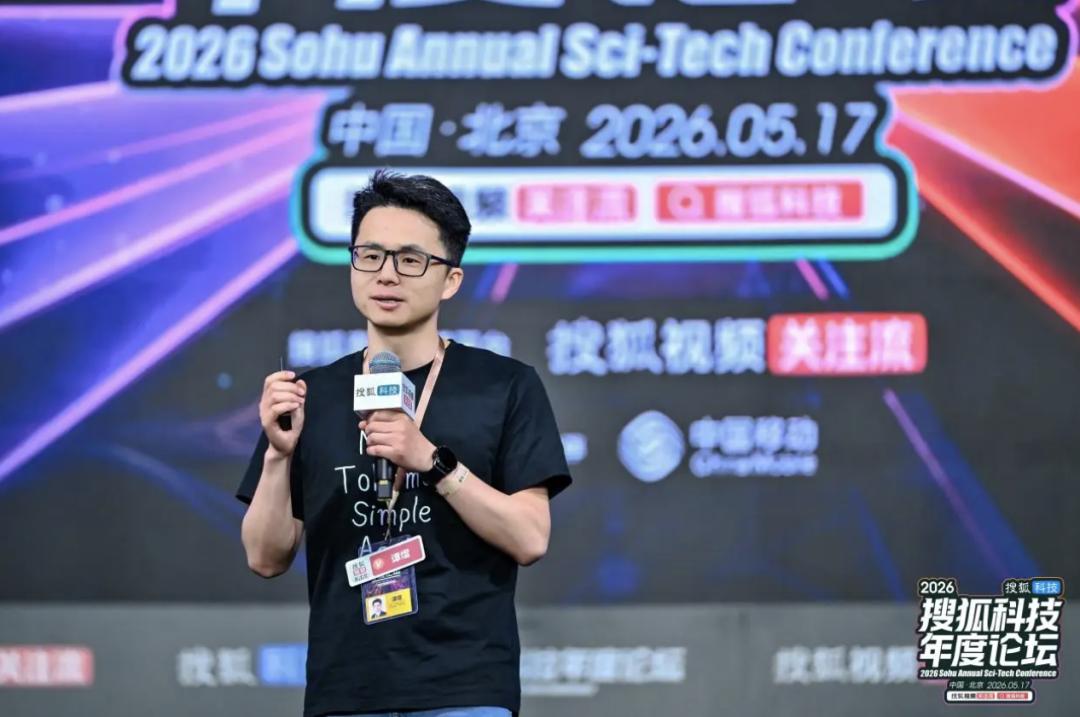
'Fusion energy has an economic indicator called the fusion triple product—essentially temperature, density, and energy confinement time,' Tan explained.
Since the 1950s' first recorded experiments, scientists narrowed the gap to desired fusion reactor levels by the 1990s through 40 years of effort.
'After 2020, venture capital accelerated fusion device construction. Now, a new generation appears every 2-3 years, with 3-4 fusion reactors built shortly,' Tan said, envisioning 'a 2030s evening when household electricity comes from fusion plants.'
Through his accessible explanation, audiences grasped humanity's near-term physical plasma fusion proximity and venture-driven commercialization.
Without platforms like Sohu's tech forum, public understanding of fusion energy and controlled nuclear fusion would remain superficial and speculative.
'Yesterday's science becomes today's technology. The first technological revolution stemmed from Newtonian mechanics, the second from electromagnetism, and the third from quantum mechanics and relativity,' said Sun Changpu, theoretical physicist, Chinese Academy of Sciences member, and China Academy of Engineering Physics graduate school founding dean, at the 2026 forum.
Sun's words elucidate the intrinsic link between scientific truth and technological innovation. Obscure research today may become pivotal technology tomorrow, often requiring generations of silent study.
Beyond fusion, the 2026 forum covered lunar exploration, global warming, bone histology, and other frontiers, blending human relevance with scientific inspiration.
The recent 'girl hit on tactile paving (sidewalk for the blind)' controversy—initially evoking sympathy for the blind girl and anger toward the cyclist, then revealing a staged video after police investigation—highlights AI's role in fabricating content.
AI's image generation advances make 'fabrication' easier, posing new challenges in verifying image/video authenticity. AI video infringement (infringement) and celebrity likeness issues frequently emerge.
Amid AI's information ecosystem reshaping and public opinion volatility, mainstream media's professionalism and scientific spirit become content credibility cornerstones.
Jiedian Finance considers Sohu a benchmark in truth-seeking among mainstream platforms, evident in two key areas:
1. Content authenticity. Sohu prioritizes 'following streams' over recommendation algorithms in video content, fostering genuine social platforms amid information cocoons.
2. Long-term real-world engagement. While offline events boost media influence, Sohu maintains uniqueness amid homogenization. Its annual tech forum, now in its eighth year, invites lesser-known scientists, focusing on knowledge dissemination over traffic conversion.
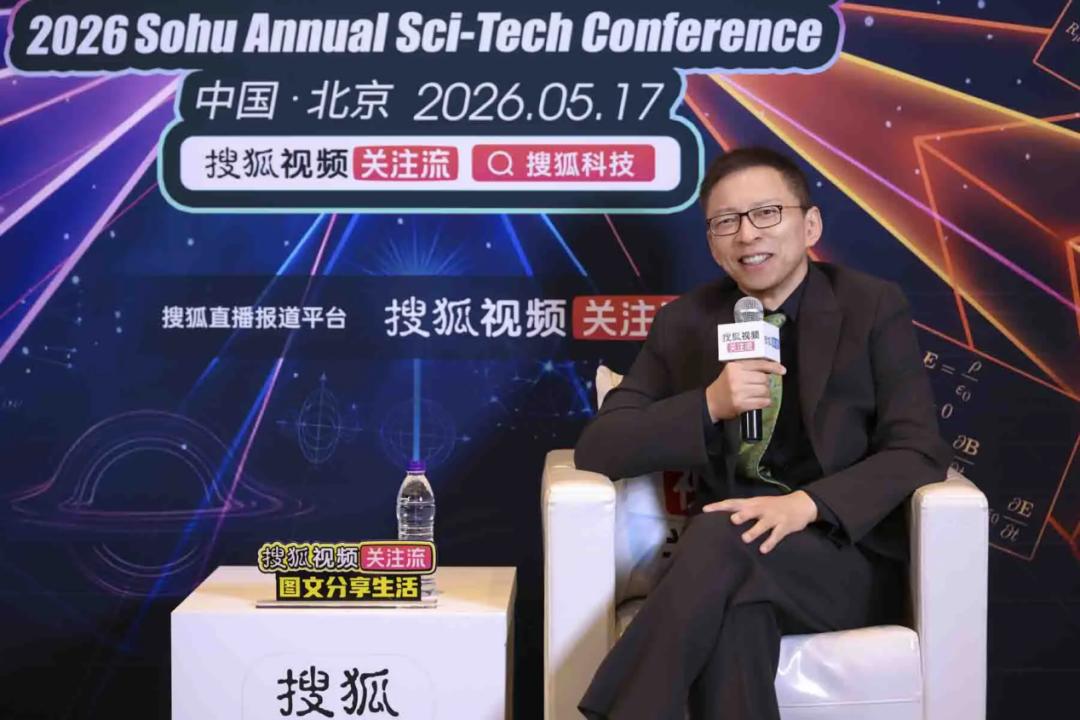
'Zhang Chaoyang's Physics Class,' initially perceived as casual, has sustained over 280 sessions, becoming a lasting IP and embodying Sohu's long-termism.
'In the AI era of information transparency, authenticity emerges from sincerity and persistence,' Zhang said.
Through years of scientific knowledge dissemination, Sohu exemplifies rationality, truth-seeking, and responsibility as an established media platform.
In an era of attention scarcity and excess, Sohu cultivates a healthy, human-centric platform ecosystem. Amid AI and information explosions, its media integrity shines uniquely.
-
Ofilm Teams Up with ADSensE to Propel Large-Scale Deployment of All-Solid-State LiDAR Powered by ADS6311 Chip!
-
![]()
Loss of 2.5 Billion Yet Facing Strong Demand for Shares? Another Battle for Control of Lianchuang Electronics
-
![]()
Huawei’s Enjoy Series Flies Off the Shelves, Prompting Xiaomi to Double Down on Budget Smartphones
-
![]()
Beijing Hyundai's Top Executive Criticizes Industry Disorder: Certain Brands Treat Customers as Beta Testers
-
![]()
The domestic mobile phone market has declined for five consecutive quarters! Huawei defies the trend with significant growth: maintains its top market share
-
Annual Revenue Surpasses 3 Billion: An Automotive Trim 'Little Giant' Makes Its Debut on the Beijing Stock Exchange
-
![]()
The Space Force Wants to Spend $30 Billion on Rocket Launches: Is Trump Doubling Down, and Is SpaceX the Big Winner?
-
![]()
Going Crazy! One out of Every Three Plug-in Hybrids Sold in Europe is a Chinese Vehicle