Xiaohongshu's Strategic Play: The World Cup Frenzy Meets the AI Revolution
 06/01 2026
 485
485
Author | Lucky
The broadcasting rights for the 2026 USA-Canada-Mexico World Cup have been secured not by a mainstream internet video platform but by a grassroots community platform, Xiaohongshu.
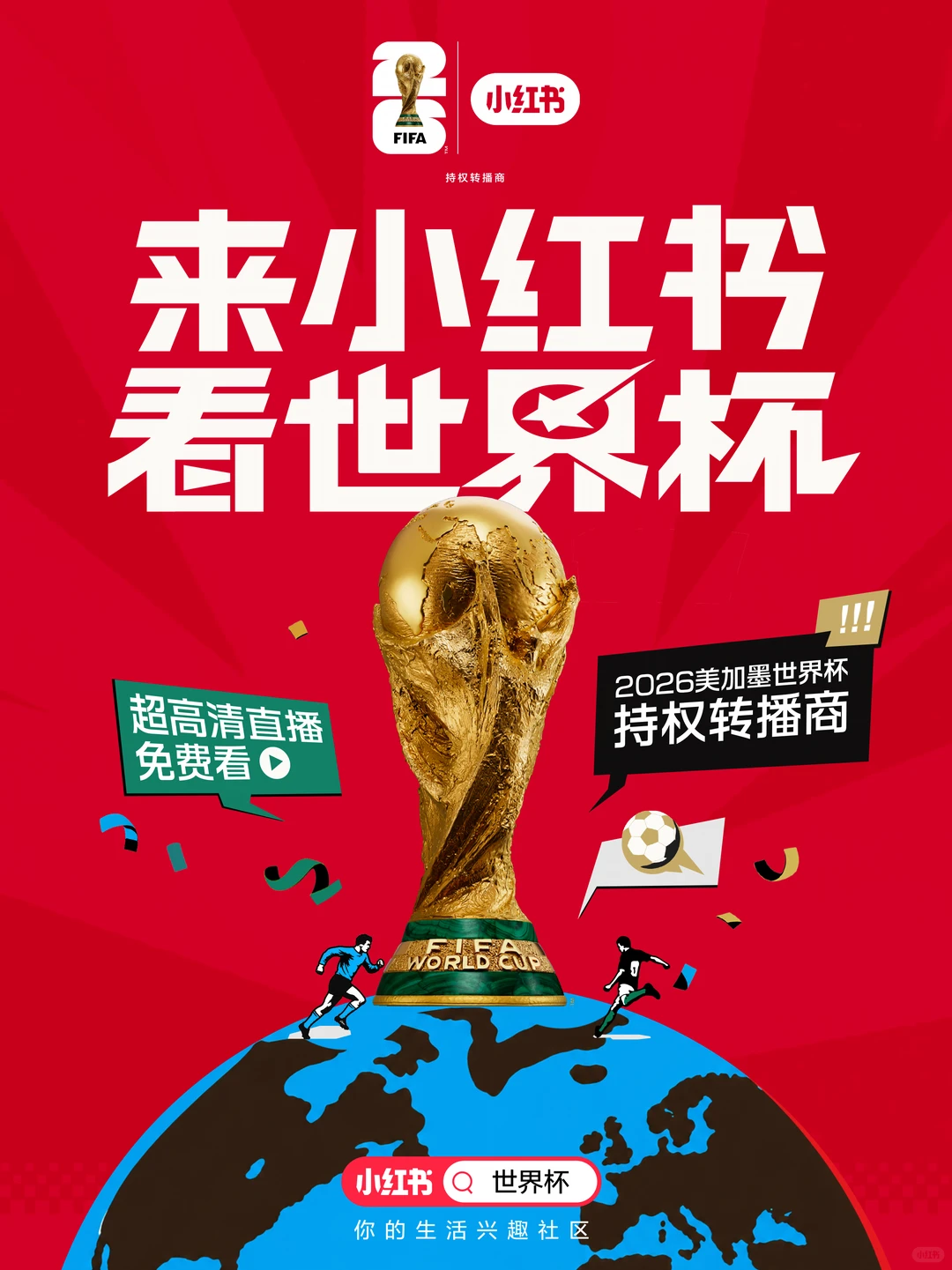
Image source: Xiaohongshu
On May 28, 2026, Xiaohongshu officially announced its partnership with China Media Group (CMG), becoming the rights-holding broadcaster for the 2026 USA-Canada-Mexico World Cup and a strategic partner for live broadcasts of top-tier events. All 104 matches will be available to users free of charge, featuring ultra-high-definition live streams with full-end screen casting capabilities.
Reports indicate that, aside from CMG's own platforms and Migu Video, Xiaohongshu is the sole holder of live broadcasting, rebroadcasting, and short video rights for the USA-Canada-Mexico World Cup within the Chinese internet sphere.
As a quadrennial global sporting spectacle, the World Cup not only captures national attention but also serves as a barometer for changes within the Chinese internet industry.
In recent years, with the rise of mobile internet, content distribution channels have shifted from traditional television and PC portals to streaming platforms and then to short video apps. Correspondingly, since 2014, the internet broadcasting rights for the World Cup have gradually loosened, moving away from exclusive control by CMG to being acquired by platforms like Youku and Douyin.
Now, with the maturation of AI technology, the tech industry stands at another inflection point. Against this backdrop, Xiaohongshu's acquisition of the USA-Canada-Mexico World Cup rights is primarily aimed at capturing the new generation's attention. However, its deeper strategic goal may be to counter the disruptive wave of AI technology.
The widespread adoption of AI assistants has significantly altered how users acquire information and consume content, posing a disruptive challenge to Xiaohongshu. By doubling down on top-tier events like the World Cup, Xiaohongshu aims to solidify its position as a core content gateway.
01 Xiaohongshu and Baidu: Diverging Paths in the AI Era
As a rare high-quality content community in China's mobile internet landscape, Xiaohongshu has traditionally served as a crucial entry point for users' life and consumption decisions, significantly diverting Baidu's search traffic and user attention.
According to Zhou Tian Financial News, in Q4 2024, Xiaohongshu's average daily searches reached approximately 600 million, doubling from mid-2023. At that time, Baidu's average daily searches were around 1 billion, meaning Xiaohongshu's search volume exceeded half of Baidu's.
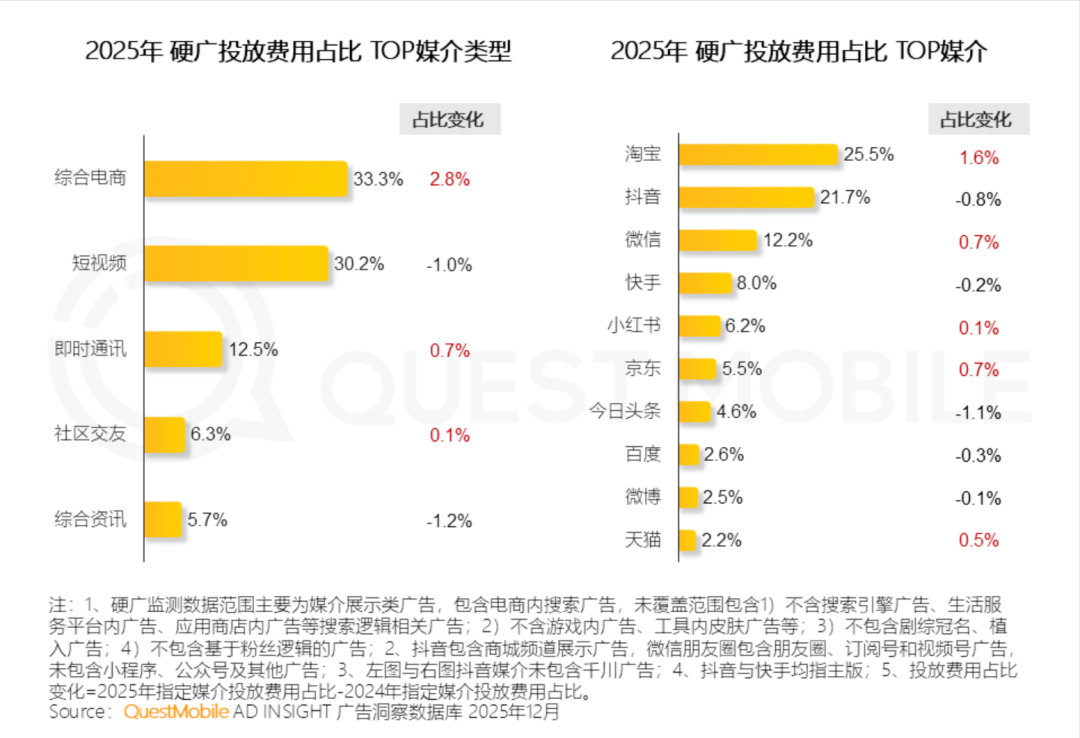
Image source: QuestMobile
Having secured a core entry point in the mobile internet landscape, Xiaohongshu has become a vital platform for ad distribution. QuestMobile data reveals that in 2025, among the top 15 media platforms in China for hard advertising spend, Xiaohongshu held a 6.2% share, ranking fifth—3.6 percentage points higher than Baidu.
Thanks to substantial ad placements by numerous advertisers, Xiaohongshu's performance has steadily improved. Official data shows that in 2025, Xiaohongshu's revenue reached approximately 42 billion yuan, a 40% year-over-year increase, with advertising revenue accounting for about 32 billion yuan, or 76%.
However, with the gradual maturation of AI technology, AI assistants with higher retrieval efficiency have begun to take over users' search needs, significantly impacting Xiaohongshu's market position.
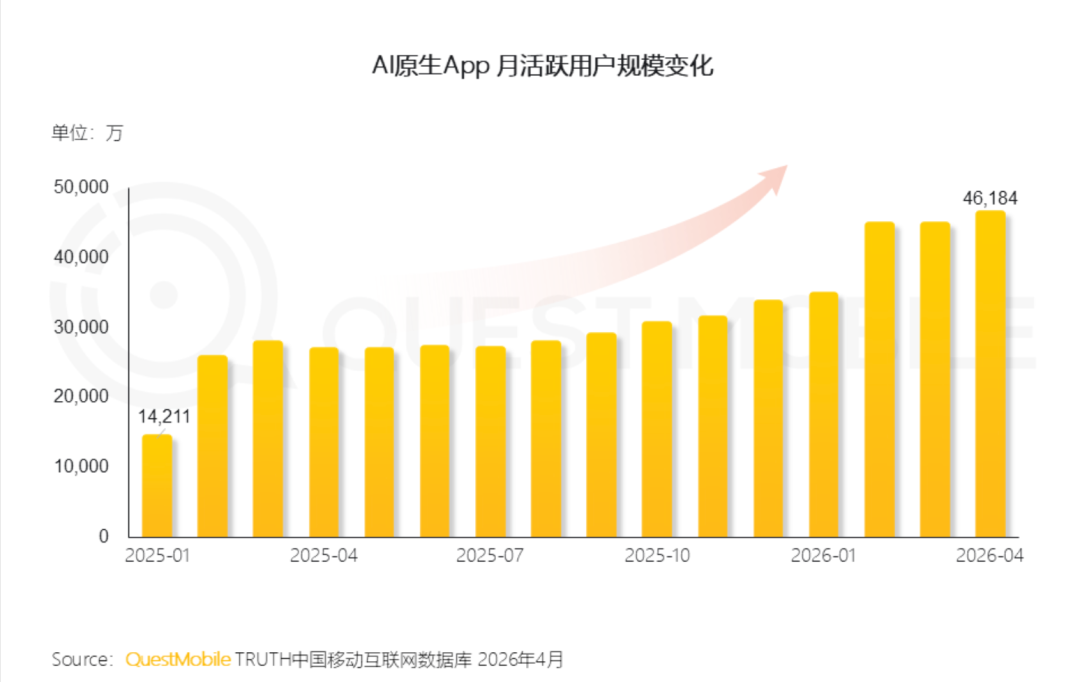
Image source: QuestMobile
QuestMobile data shows that from January 2025 to April 2026, the monthly active users of AI-native apps grew from 142 million to 462 million, while the average monthly usage frequency increased from 38 to 91 times, gradually becoming the primary touchpoint for users to acquire information.
As more users turn to AI assistants for information retrieval, the appeal of traditional search products has declined. QuestMobile data indicates that in April 2026, the average monthly usage frequency of search engine apps was 38 times, with an average monthly usage duration of 340.2 minutes, representing year-over-year declines of 18.8% and 11.8%, respectively.
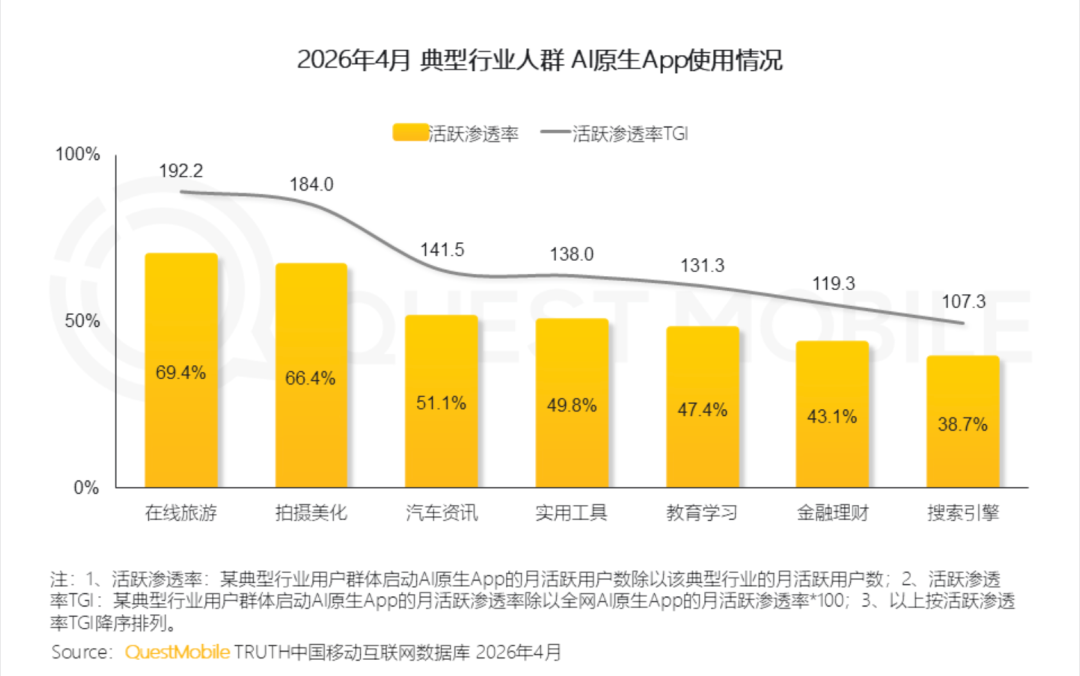
Image source: QuestMobile
QuestMobile points out that, due to their strong information integration capabilities, AI assistants are naturally suited for high-decision-cost, high-information-entropy scenarios. As of April 2026, the penetration rates of AI-native apps in the online travel, photo beautification, and automotive information industries were 69.4%, 66.4%, and 51.1%, respectively.
It's crucial to note that Xiaohongshu's core competitiveness lies in helping users make informed decisions based on authentic experience content. AI assistants, by more efficiently meeting users' information retrieval needs, naturally weaken Xiaohongshu's commercial value as a content decision gateway. According to Huxiu, in Q4 2025, Xiaohongshu's advertising revenue declined by 18% year-over-year.
Ultimately, Xiaohongshu's rapid rise in the mobile internet era stemmed from its ability to integrate vast amounts of long-tail information within an increasingly siloed content ecosystem, efficiently meeting users' retrieval needs. However, fundamentally, the underlying logic of Xiaohongshu's search function is no different from the traditional search engine model of matching keywords and presenting content.
As AI assistants evolve from "information porters" to "information processors," the underlying logic of the search industry is being rewritten. Both traditional search engines like Baidu and platforms like Xiaohongshu, which rose to prominence through their content ecosystems, are inevitably facing the challenge of being disrupted by AI.
02 Securing World Cup Rights: Xiaohongshu's Bid to Attract More Users
Although Xiaohongshu's search advantage has been weakened in the AI era, its existing user base remains substantial due to its high-quality community content. According to LatePost, Xiaohongshu currently has over 170 million daily active users and over 400 million monthly active users.
However, with smartphones reaching saturation, China's mobile internet industry has entered a mature phase. QuestMobile data shows that as of March 2026, China's mobile internet monthly active users stood at 1.276 billion, with the year-over-year growth rate dropping from over 2% to 1.4% in the past year.
Against the backdrop of an approaching industry ceiling, Xiaohongshu's user growth is inevitably destined to hit a bottleneck. Official data shows that Xiaohongshu's monthly active users surpassed 100 million in September 2020, 200 million in December 2021, and reached 312 million in 2023. A longitudinal comparison reveals that Xiaohongshu's user growth rate has gradually slowed in recent years.
In this context, Xiaohongshu's primary goal in securing the World Cup rights is undoubtedly to leverage the event to reach a broader audience and expand its traffic base.
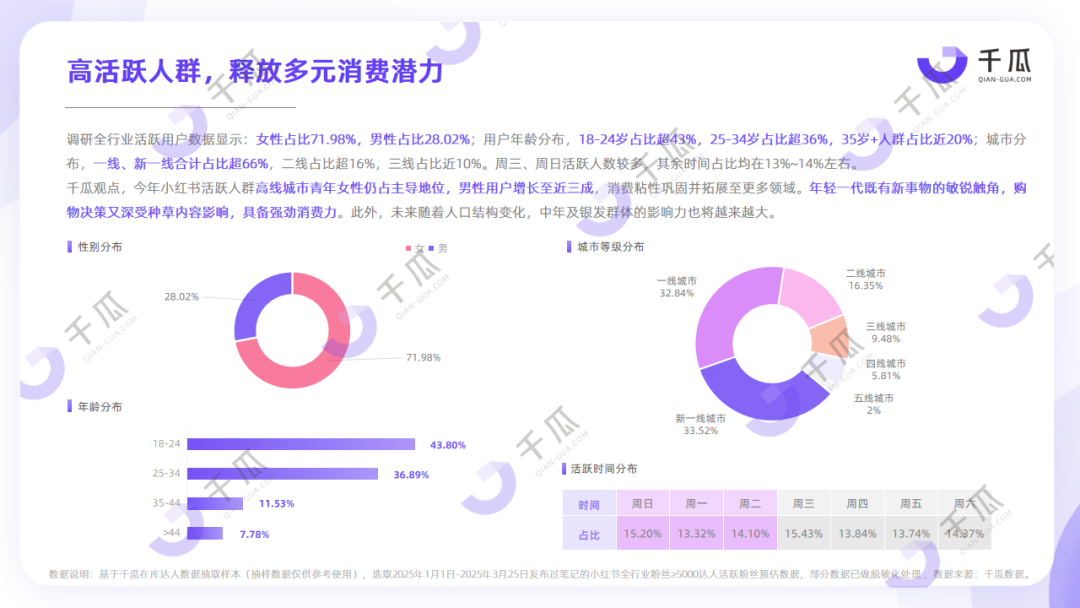
Image source: QianGua Data
QianGua Data shows that in 2025, female users accounted for 71.98% of Xiaohongshu's platform, while male users accounted for only 28.02%, indicating a relatively homogeneous user structure. By securing the USA-Canada-Mexico World Cup rights, Xiaohongshu hopes to attract a vast number of male users and achieve a more balanced gender distribution.
Indeed, based on the experiences of Youku and Douyin, the World Cup can drive massive new-generation traffic to internet platforms.
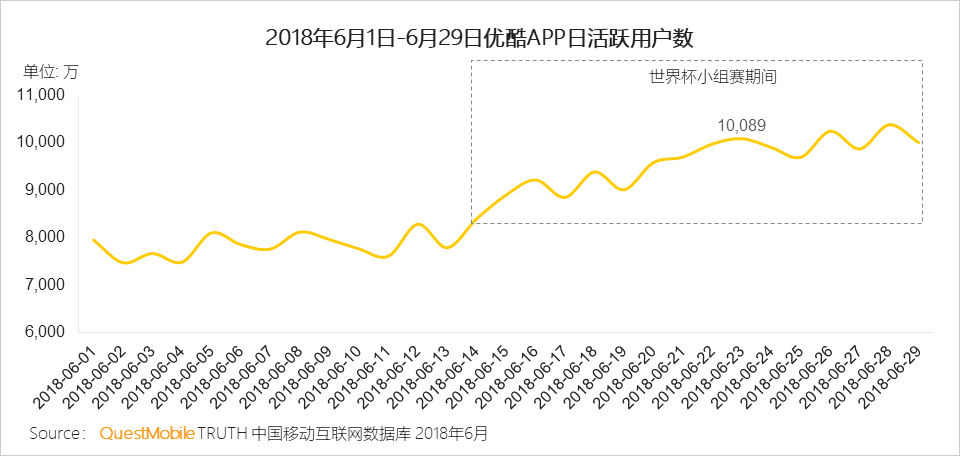
Image source: QuestMobile
QuestMobile data shows that after the start of the 2018 Russia World Cup group stage, Youku's daily active users surpassed 100 million, a 22% increase compared to the non-competition period in June, with peak average usage duration reaching 50.4 minutes, a 9.8% increase from the non-competition period in June.
Similarly, official data shows that during the 2022 Qatar World Cup, Douyin's cumulative live match viewership reached 10.6 billion, with users generating 1.3 billion total live interactions and 4.92 million participants in the "watch and chat" activity.
It is foreseeable that, driven by the USA-Canada-Mexico World Cup, Xiaohongshu's traffic volume may reach new heights.
More importantly, the World Cup brings not only new users but also new interest circles. As a UGC content community, Xiaohongshu hopes to leverage the World Cup to cultivate more vertical content ecosystems, further expand its content boundaries, enhance user stickiness, and thereby resist the impact of AI assistants.
03 Xiaohongshu's March into the AI Era: The World Cup is Not a Panacea
Looking back at the experiences of Youku and Douyin, the World Cup, with its nationwide influence, can indeed instantly drive massive traffic to internet platforms, but it cannot "guarantee" a company's success.
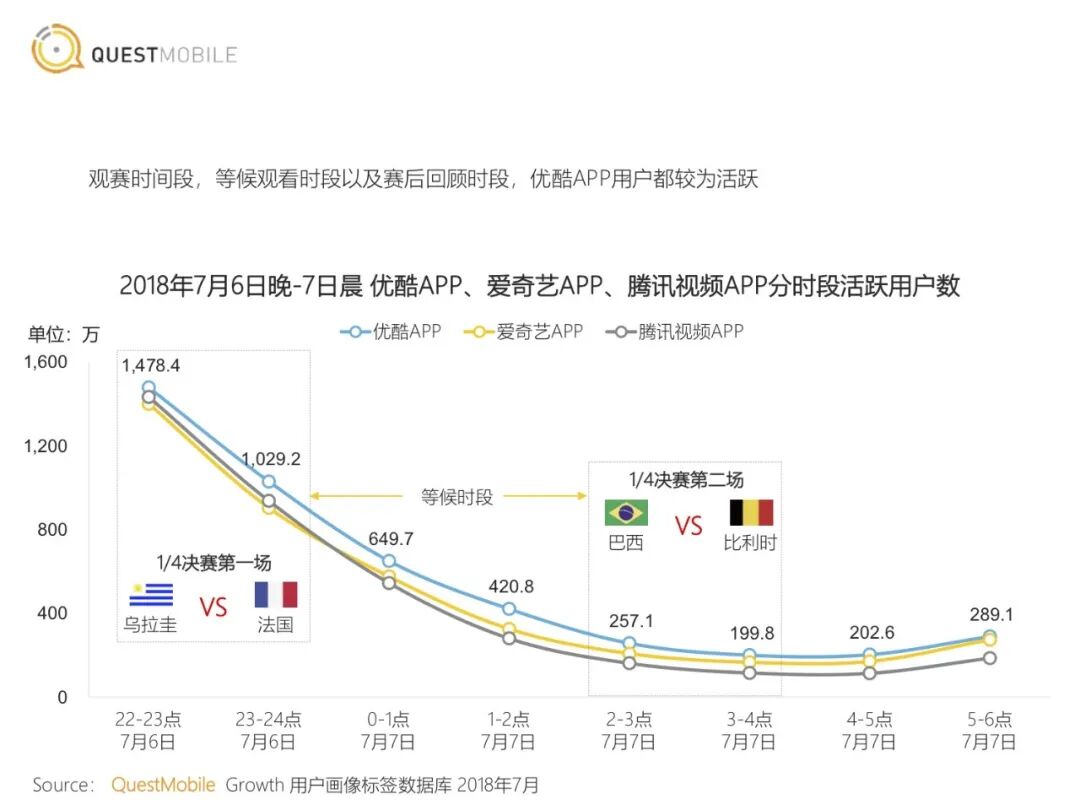
Image source: QuestMobile
For example, although Youku's daily active users briefly surpassed Tencent Video and iQiyi during the 2018 World Cup, it has long since fallen out of the center of China's streaming media landscape.
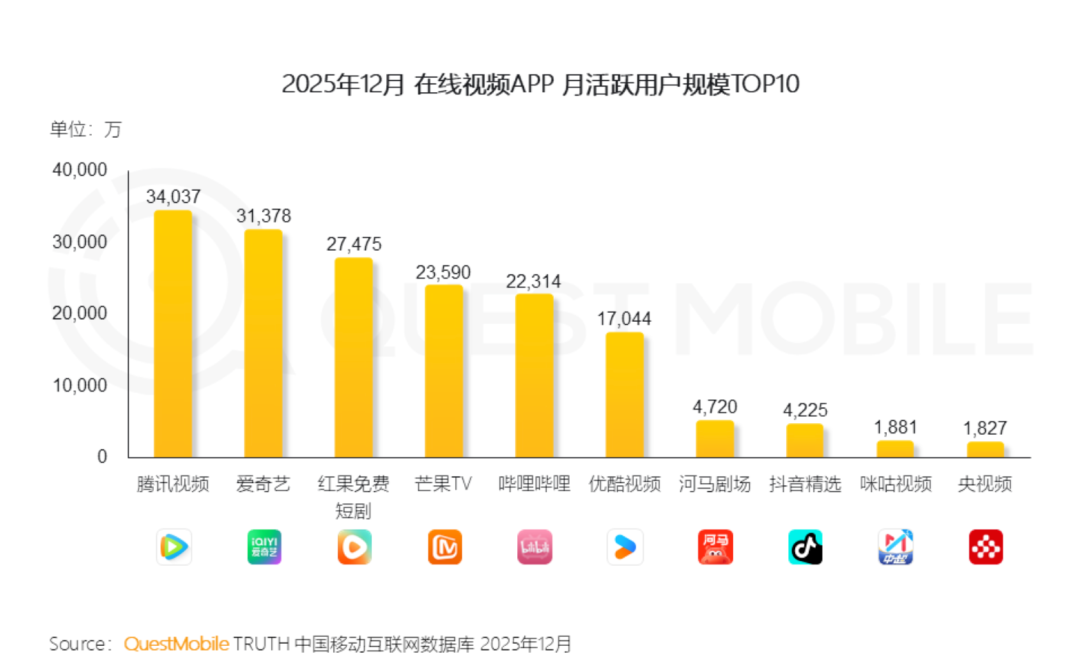
Image source: QuestMobile
QuestMobile data shows that in December 2025, among the top 10 online video apps in China by monthly active users, Youku ranked sixth with 170 million monthly active users, not only lagging behind Tencent Video and iQiyi but even surpassed by Hongguo Free Short Drama and Bilibili.
The reason is that the World Cup, similar to the Spring Festival Gala, can provide fertile traffic for internet platforms, but if the enabled products lack competitiveness, the traffic will come and go quickly.
Farsight previously pointed out in "Eleven Years of Internet Spring Festival Gala Marketing: Spending 18 Billion, Why No More 'WeChat Red Envelope Moments'?" that the reason WeChat Red Envelopes could quickly sweep the market during the Spring Festival Gala was not because of the Gala's inherent "magic" but because WeChat's social infrastructure was already mature, and users' demand for sending and receiving red envelopes objectively existed.
Now, with the AI era gradually arriving, mere traffic scale is no longer the moat for internet products. AI assistants are expected to become the new era's gateway through more efficient content distribution methods. This is why major internet giants are enhancing their AI assistants' information retrieval and "one-sentence task completion" capabilities.
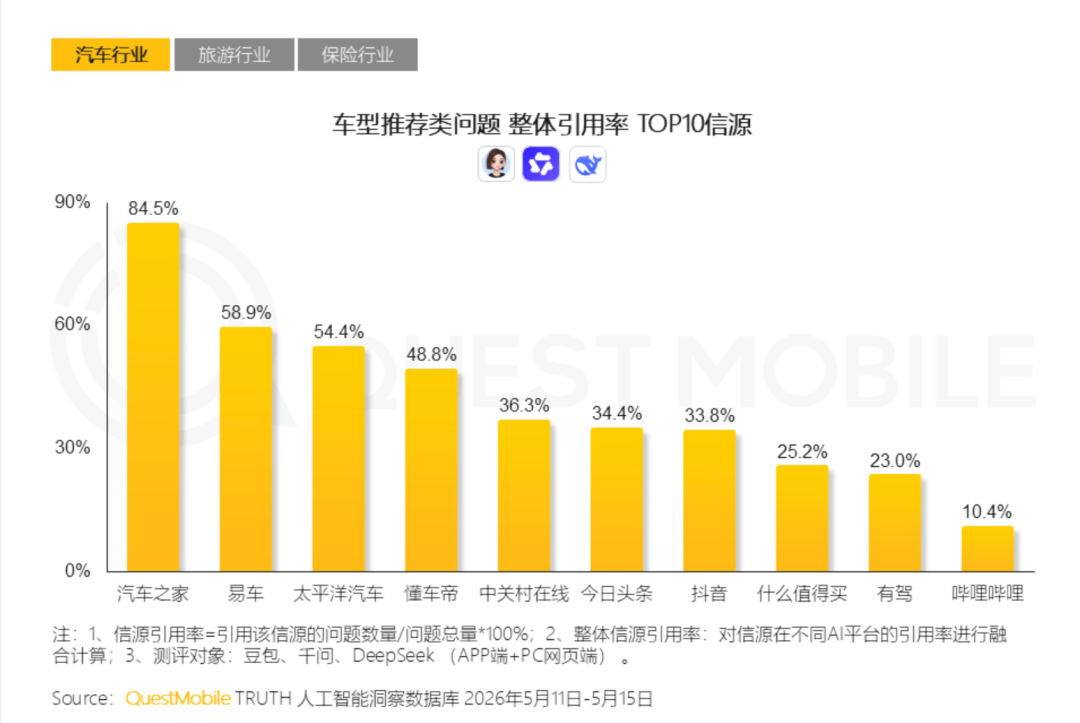
Image source: QuestMobile
QuestMobile points out in its research report that when answering questions about car model recommendations, destination discovery, and insurance awareness, none of the top 10 information sources cited by the three major platforms—Doubao, DeepSeek, and Qianwen—included Xiaohongshu.
This indicates, on the one hand, that Xiaohongshu's content ecosystem has not yet formed a deep connection with the knowledge systems of mainstream AI assistants; on the other hand, it also shows that AI can more efficiently integrate long-tail information across the internet industry, weakening Xiaohongshu's advantages.
Although Xiaohongshu is also strengthening its AI capabilities, as a "mid-tier internet company," its investable funds are far less than those of internet giants like Alibaba, ByteDance, and Tencent due to limitations in scale and resource endowment. At the same time, lacking the support of diversified business systems such as e-commerce, cloud computing, and local services, Xiaohongshu's internal resources are relatively limited, with AI exploration primarily focused on local optimizations within its existing community ecosystem, making it difficult to deliver revolutionary user experiences.
Thus, while World Cup rights can bring Xiaohongshu a round of significant traffic dividends after the mobile internet enters a mature competition phase, they cannot help it secure a "ticket" to the AI era.
The World Cup can bring attention but cannot reshape productivity; it can create traffic peaks but cannot determine the direction of the technological cycle. As AI assistants become the core distribution hub, the World Cup alone cannot help Xiaohongshu transform its content advantages into irreplaceable service capabilities and ecological value.
For Xiaohongshu, the real challenge is no longer how to acquire more users but how to remain an irreplaceable part of the process as AI redefines information distribution and decision-making chains. Only when the value created by the platform cannot be easily replicated by AI will Xiaohongshu be able to navigate the next technological cycle.
Interactive Topic
Do you think Xiaohongshu's acquisition of World Cup rights is a good move? Why or why not?
This article is original content from Farsight and is prohibited from reproduction without authorization.
-
Ofilm Teams Up with ADSensE to Propel Large-Scale Deployment of All-Solid-State LiDAR Powered by ADS6311 Chip!
-
![]()
Loss of 2.5 Billion Yet Facing Strong Demand for Shares? Another Battle for Control of Lianchuang Electronics
-
![]()
Huawei’s Enjoy Series Flies Off the Shelves, Prompting Xiaomi to Double Down on Budget Smartphones
-
![]()
Beijing Hyundai's Top Executive Criticizes Industry Disorder: Certain Brands Treat Customers as Beta Testers
-
![]()
The domestic mobile phone market has declined for five consecutive quarters! Huawei defies the trend with significant growth: maintains its top market share
-
Annual Revenue Surpasses 3 Billion: An Automotive Trim 'Little Giant' Makes Its Debut on the Beijing Stock Exchange
-
![]()
The Space Force Wants to Spend $30 Billion on Rocket Launches: Is Trump Doubling Down, and Is SpaceX the Big Winner?
-
![]()
Going Crazy! One out of Every Three Plug-in Hybrids Sold in Europe is a Chinese Vehicle