Profits Slide, Yet Xiaomi Holds Strong Cards
 06/01 2026
 585
585
Written by Lian Shan
Source: Bowang Finance
Lei Jun remains a social media sensation, known for the viral "Are you OK" meme and humorous earphone remarks, showcasing his flair for capturing public attention. However, financial realities are unyielding—Xiaomi's Q1 revenue reached RMB 99.1 billion, a 10.9% decline year-on-year, marking its first revenue drop in three years and ending a streak of five consecutive quarters surpassing RMB 100 billion. Adjusted net profit also fell by 43.1% to RMB 6.1 billion.
The capital market responded with tangible action. Stock prices felt the heat post-earnings, with market capitalization retreating sharply from all-time highs.
Yet, the numbers tell only part of the story. Smartphone shipments dipped, but average selling prices (ASPs) soared to a record high. IoT revenue declined, but gross margins improved sequentially. The automotive segment is still burning cash, but 80,000 deliveries are no small feat. More critically, Xiaomi boasts 1.1 billion AIoT devices and a top-five global AI ranking.
In essence, Xiaomi stands at the crossroads of two cycles: a memory price hike cycle nearing its end and an AI investment cycle just beginning. Short-term profits are under pressure, but the high-stakes gamble remains firmly in play.
01 The "Late Spring Chill" of Memory Price Hikes
On the evening of Xiaomi's Q1 2026 earnings release, the capital market's sentiment could be summed up in two words: confusion.
Revenue of RMB 99.1 billion, down 10.9% year-on-year, marked Xiaomi's first revenue decline in three years and ended a streak of five consecutive quarters exceeding RMB 100 billion. Quarterly profit plummeted 56.5% to RMB 4.7 billion; adjusted net profit fell 43.1% to RMB 6.1 billion. Frankly, these figures would keep any management team awake at night.
Interestingly, on the same day as the earnings release, Xiaomi announced a HKD 20 billion share buyback plan. With less cash on hand, why increase spending? Let's revisit this later.
02 The Truth Behind Eroding Gross Margins
Who's to blame for the profit collapse?
Lu Weibing pointed to core components, particularly memory chips, during the earnings call.
According to TrendForce, DRAM contract prices surged 93–95% quarter-on-quarter in Q1 2026, while NAND Flash prices jumped 55–60%. Compared to Q1 2025, memory prices for the same configurations nearly quadrupled. A smartphone with 12GB+512GB configuration saw memory costs rise by approximately RMB 1,500. Memory's share of a smartphone's bill of materials (BOM) soared from 10–15% to 20–30%, nearing 40% for mid-to-low-end models.
In short, memory is the "Achilles' heel" for smartphone makers—high exposure, sharp increases, and unavoidable costs.
Xiaomi's Q1 2026 earnings revealed a smartphone gross margin of just 8.8%, down 2.3 percentage points year-on-year. What does this mean? For every smartphone sold, gross profit was less than 9% of the selling price. Rising memory prices devoured profits directly.
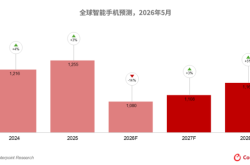
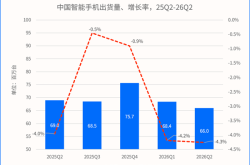
The entire industry is under pressure. IDC data shows global smartphone shipments fell 4.1% year-on-year in Q1 2026, breaking a streak of ten consecutive quarters of growth since mid-2023. TrendForce forecasts a 10–13% decline in smartphone production for the full year, the worst contraction in a decade. Even giants like Apple and Samsung are feeling the pinch.
But here's a detail many overlooked: Xiaomi's Q1 smartphone gross margin, while low, actually rebounded from 8.3% in Q4 2025. Amid higher memory costs, margins held steady or improved, indicating Xiaomi's efforts in product mix optimization and channel management. This isn't passive surrender—it's finding a path forward in adversity.
03 Volume Decline, Price Surge: Xiaomi's Strategic Shift
Smartphone shipments hit 33.8 million units, down 8 million year-on-year (19.2% decline). Alarming at first glance, but this reflects Xiaomi's deliberate strategy.
Lu Weibing admitted during the call that Xiaomi proactively curbed shipments and channel inventory for mid-to-low-end products. Why? Entry-level models were hardest hit by memory price hikes, with some sub-RMB 1,000 phones nearing negative margins. Selling at a loss isn't sustainable.
On the flip side, ASP rose to RMB 1,310, up 8.2% year-on-year, hitting a record high. Premium smartphones accounted for 23.5% of total shipments in China.
Together, these data points paint a clear picture: Xiaomi is deliberately reducing low-margin models to focus on the premium market. Unable to fully pass memory costs to consumers, it upgraded its product mix to offset cost pressures. This is a "quality over quantity" gamble—short-term scale suffers, but long-term brand positioning improves.
04 IoT and Autos: Mixed Fortunes
Smartphones aren't the only segment under pressure. IoT and consumer product revenue fell 23.7% year-on-year to RMB 24.7 billion in Q1, driven by fading domestic consumption subsidies and spillover memory costs. But a positive sign emerged: gross margins improved sequentially, indicating scaling efficiencies. International revenue also hit a record high. The IoT base remains stable.
The real breath-holder is autos. SU7 deliveries reached 80,800 units, a respectable figure amid industry-wide sales declines. However, the new business segment incurred an operating loss of RMB 3.1 billion in Q1, signaling the early "money-burning" phase of scaling up.
RMB 3.1 billion for 80,000 units implies a loss of ~RMB 38,000 per vehicle. Compared to Tesla's early days, this burn rate is restrained. The challenge is that Xiaomi must now juggle three fronts: smartphones battling memory costs, IoT repairing margins, and autos burning cash to scale. The ammunition drain across these battlefields is immense.
Q1 R&D spending hit RMB 9 billion, up 33.4% year-on-year. Where did this go? Partly autos, partly AI. Essentially, Xiaomi is using smartphone cash flow to "fund" the futures of autos and AI. The stakes are high, and so is the pressure.
05 Spring Will Come, But First, Survive
Lu Weibing was blunt: This memory price hike is a "super cycle," and no major correction is expected soon. However, he offered a timeline—starting in Q3 2026, memory prices will shift from sharp increases to gradual rises, with narrower margins.
In other words, the coldest days aren't over, but the late spring chill won't last forever.
The question is: How to endure? Wait for memory prices to fall? That's passive. Xiaomi's answer is clear: AI.
During the Q1 call, management dubbed AI the smartphone industry's largest growth opportunity, with a five-year vision to "connect people, vehicles, and homes via AI." This sounds like a strategic slogan, but when paired with profit fluctuations, it reveals Xiaomi's true calculus—short-term resilience against memory cycles through premiumization and operational efficiency, mid-to-long-term growth via AI. Memory hikes are cyclical and will pass; AI's transformation of consumer electronics is just beginning.
Xiaomi now stands at the crossroads of two cycles: a declining memory cycle and a nascent AI cycle. AI is the new story Xiaomi wants to tell.
06 The Net Woven by 1.1 Billion Devices
Short-term profit pressure, auto losses, and soaring R&D costs are real. But if you dismiss Xiaomi based on Q1 profit volatility, you might miss its most imaginative asset: AI.
More precisely, a full AI ecosystem.
First, a number: 1.1 billion.
According to Xiaomi's Q1 2026 earnings, its AIoT platform connected 1.1 billion devices, solidifying its global lead.
What does 1.1 billion devices mean? It's not just about sales volume. Xiaomi has woven the world's largest smart hardware network—from your morning smart speaker to robot vacuums, air purifiers, smart locks, office lamps, cameras, and outlets. These devices, though scattered, operate on a single platform.
This is IoT's ultimate form: not standalone hits, but interconnected everything. Over a decade, Xiaomi has extended this network to hundreds of millions of households globally. While competitors debate "to do or not to do smart homes," Xiaomi has already linked 1.1 billion devices.
This network is the bedrock of Xiaomi's AI strategy.
But Xiaomi's AI story extends beyond IoT.
Publicly, Xiaomi's self-developed MiMo large model ranks top five globally and second in China (after DeepSeek) on LiveBench, a respected benchmark.
Interestingly, many still label Xiaomi a "hardware company"—selling phones, TVs, robot vacuums. This tag has stuck for years. Yet MiMo's performance proves Xiaomi's AI chops are no joke. Ranking top five globally isn't achieved through mere spending. LiveBench's credibility means Xiaomi excels in core algorithms, compute scheduling, and data engineering.
Hardware is Xiaomi's face; AI is its heart.
Of course, technical prowess means little without investment.
Xiaomi plans to invest RMB 60 billion in AI R&D from 2022–2026. For context, Xiaomi's 2025 annual net profit was in the hundreds of billions. Committing such sums to AI shows seriousness.
Q1 data reinforces this commitment. R&D spending hit RMB 9 billion, up 33.4% year-on-year, with growth sustained across quarters. Amid profit pressure, Lei Jun chose to double down on R&D rather than retreat.
Frankly, not every leader would make this choice. Short-term financials or long-term competitiveness? Xiaomi chose the latter.
How will this RMB 60 billion be spent? Xiaomi's AI strategy hinges on three pillars: AI Phone × AI Car × AIoT.
Smartphones are the gateway. The Xiaomi 15 series integrates HyperAI, with AI permeating core scenes like photography, voice assistants, and system optimization. AI activates the moment you pick up the phone.
Autos unlock new scenarios. The SU7's smart cockpit and end-to-end autonomous driving essentially transplant smartphone AI capabilities to four wheels. While driving, AI perceives, decides, and learns in real time. This scenario holds even greater value than smartphones—users pay for reliable AI when safety is at stake.
IoT forms the ecological base. Behind 1.1 billion devices lie vast data, scenarios, and user habits. AI-powered smart homes transcend "remote control" to truly understand you—preferred temperatures, wake-up times, cleaning schedules. This "seamless intelligence" is the smart home's zenith.
Three endpoints, data interoperability—this is Xiaomi AI's true value. Alone, each segment faces rivals. Together, few globally can match this synergy.
Yet, AI's promise doesn't mask reality: it's still burning cash.
Q1 auto operating losses hit RMB 3.1 billion, with R&D at RMB 9 billion—totaling over RMB 12 billion. Profit pressure is inevitable. Lu Weibing reiterated AI as Xiaomi's core strategy for the next decade, implying no immediate profit returns from AI.
Does the capital market have patience? That's the question.
From "hardware company" to "AI ecosystem company," Xiaomi seeks a narrative upgrade. Whether this becomes reality depends on two factors: sustained technical leadership and capital willingness to stay the course.
Technically, MiMo's top-five global ranking, growing 1.1 billion IoT devices, and a three-endpoint framework provide a solid foundation.
What about capital? Lei Jun and Lu Weibing recognize investor anxiety, evidenced by the massive buyback and proactive engagement with Stock Connect inclusion. Xiaomi is signaling confidence with cash—and asking investors for patience.
Xiaomi's AI ace is firmly in hand.
07 HKD 20 Billion Buyback: Confidence and Anxiety
Xiaomi's management is clearly rattled.
The company announced a HKD 20 billion share buyback plan. This is no small figure—Xiaomi's Q1 2026 earnings show cash reserves of ~RMB 120 billion, with the buyback representing 17% of total cash. In essence, Xiaomi is betting real money on its stock's value.
The market, however, isn't convinced.
Publicly, Xiaomi President Lu Weibing has repeatedly stated that current stock prices are "severely undervalued." The language is direct, the posture humble, yet prices remain stagnant. Management sees undervaluation; the market fears further declines—this is the current standoff.
Frankly, Xiaomi's position is awkward.
Short-term numbers are unflattering. Adjusted net profit fell 43% year-on-year in Q1 2026, though the RMB 6.1 billion absolute figure isn't low industry-wide. But trends matter, and memory price hikes continue squeezing hardware margins, while AI investments devour cash flow. Naturally, the capital market asks: When will returns materialize?
Yet, dig deeper, and the picture shifts. ASPs keep hitting records, the AIoT platform retains its global lead, MiMo cracks the global top five, and auto deliveries hit 80,000. These metrics suggest structural resilience.
Xiaomi's dilemma isn't "survival" but "proving itself in the AI era."
The HKD 20 billion buyback signals confidence, but signals alone don't suffice. Representing 17% of cash reserves, the plan underscores management's belief, but fulfillment hinges on whether AI investments translate to tangible revenue and profits in coming quarters. Lu Weibing calls the stock undervalued; the market demands evidence, not rhetoric.
Xiaomi's aces remain, but the window is narrowing.
Its hardware empire is stable, AI narratives are compelling, and autos unlock new growth. Yet, simultaneously fighting three battles tests the balance between burning cash and regenerating it.
Thus, the HKD 20 billion buyback reflects both confidence and anxiety.
Confidence stems from RMB 120 billion in cash reserves, granting Xiaomi room to experiment. Anxiety arises because even management can't ignore the market's harsh valuation. But capital markets are unforgiving, recognizing only numbers, not narratives.
Xiaomi is like a ship sailing in the right direction, but it is also facing strong winds and waves. Whether it can reach the shore smoothly will be answered in the next two or three quarters.
-
Ofilm Teams Up with ADSensE to Propel Large-Scale Deployment of All-Solid-State LiDAR Powered by ADS6311 Chip!
-
![]()
Loss of 2.5 Billion Yet Facing Strong Demand for Shares? Another Battle for Control of Lianchuang Electronics
-
![]()
Huawei’s Enjoy Series Flies Off the Shelves, Prompting Xiaomi to Double Down on Budget Smartphones
-
![]()
Beijing Hyundai's Top Executive Criticizes Industry Disorder: Certain Brands Treat Customers as Beta Testers
-
![]()
The domestic mobile phone market has declined for five consecutive quarters! Huawei defies the trend with significant growth: maintains its top market share
-
Annual Revenue Surpasses 3 Billion: An Automotive Trim 'Little Giant' Makes Its Debut on the Beijing Stock Exchange
-
![]()
The Space Force Wants to Spend $30 Billion on Rocket Launches: Is Trump Doubling Down, and Is SpaceX the Big Winner?
-
![]()
Going Crazy! One out of Every Three Plug-in Hybrids Sold in Europe is a Chinese Vehicle