We Tried Hu Yanbin's Vibe Coding App: The Concept is Solid, Yet the Details Need Refinement
 06/02 2026
 474
474
Creating an App is Simple, Sustaining It is Challenging.
"Addressing issues as we go."
Hu Yanbin shared this message on Xiaohongshu, accompanied by a snapshot of himself coding on a computer. At that moment, few understood what kind of technical glitch a musician would need to tackle. However, on May 30th, he officially unveiled 'YanHuo,' a fan community app entirely developed by his own efforts.
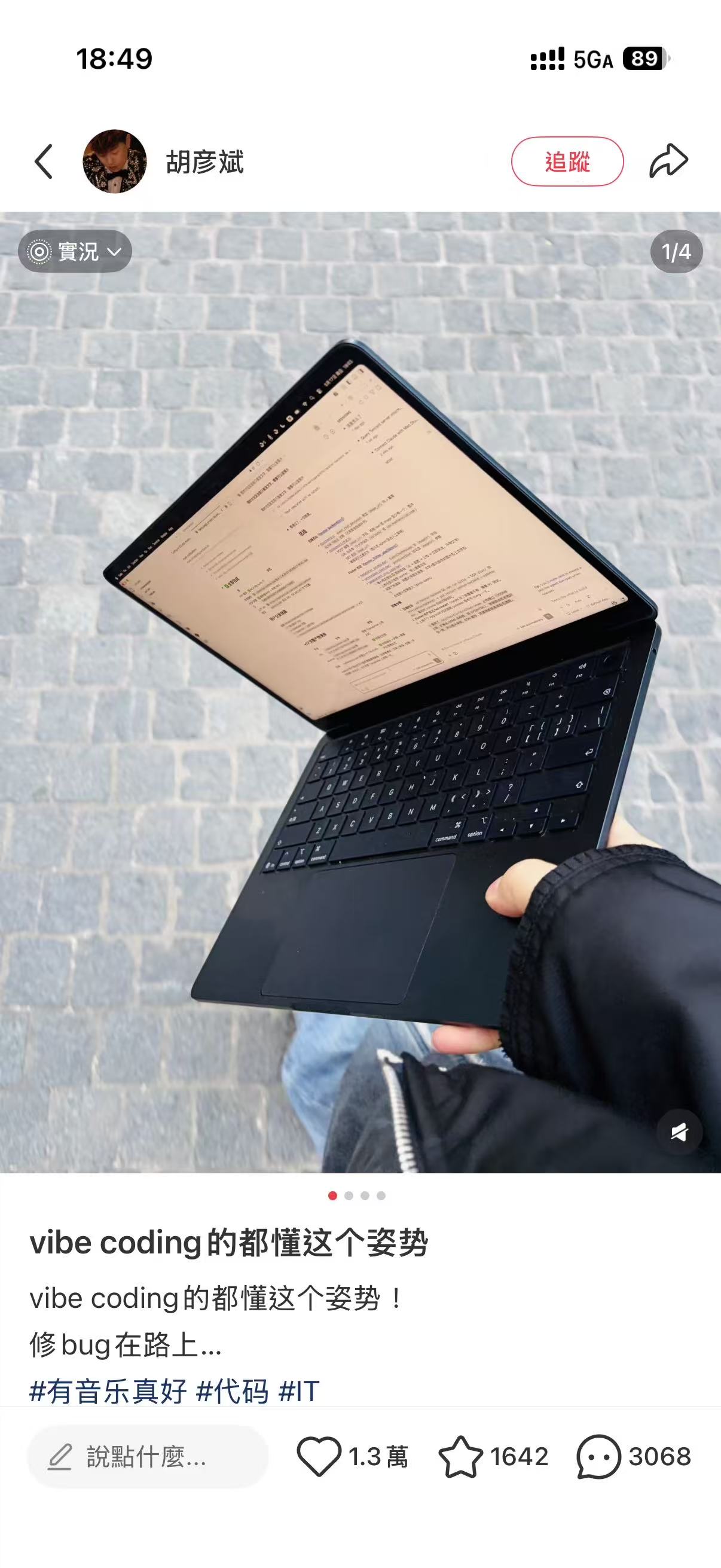
(Image Source: Xiaohongshu)
Fan community apps are not a novel concept—both Jay Chou and JJ Lin have launched their own official apps. The notion of celebrities in the entertainment industry having their own dedicated platforms is hardly groundbreaking. But 'YanHuo' stands out. It wasn't outsourced to a development team by the studio; instead, Hu Yanbin constructed it from the ground up over a month, providing instructions to AI one sentence at a time.
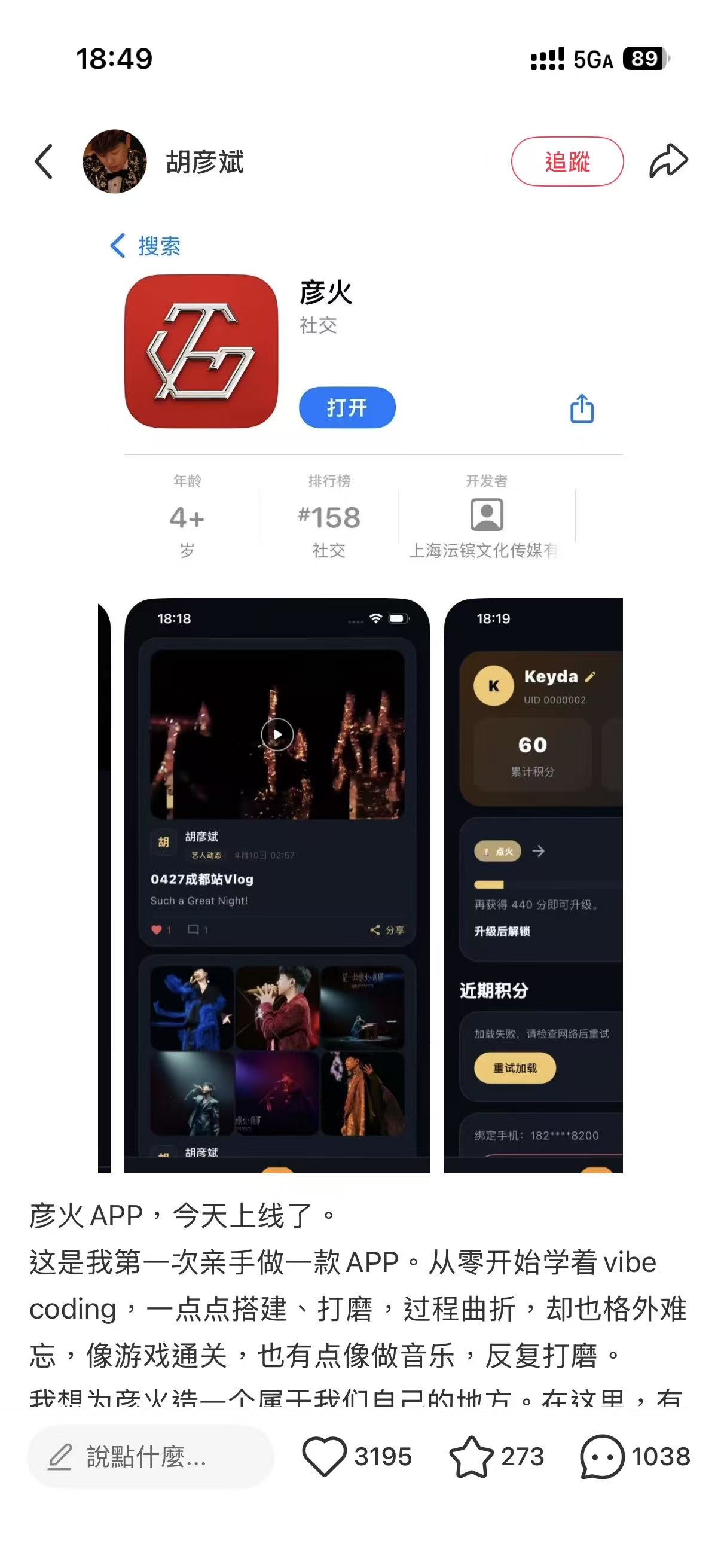
(Image Source: Xiaohongshu)
The toolkit he used wasn't overly complex: VS Code combined with Claude Code, representing one of the most prevalent Vibe Coding setups today. For a singer-songwriter in the Chinese music scene, a contestant on 'Singer 2026' who charges by the minute, taking the initiative to learn coding and develop an app demonstrates his unwavering dedication to his fans.
But joking aside, the real query arises: Can an app constructed by someone with no coding background, utilizing AI, truly be functional? How many glitches does it harbor? Moreover, if celebrities can genuinely build their own community apps, will they still need to allocate substantial funds to maintain a dedicated team for this purpose?
Hu Yanbin's Venture into Fan Community App Development: Promising Concept, Rough Execution
The product positioning of 'YanHuo' is unmistakably clear. It's not a general-purpose content app for casual users but a specialized fan community centered entirely around Hu Yanbin. The login page features tour visuals, and new users can log in via phone verification code or browse as guests to explore the tour map. Once inside, you'll notice that the fundamental structure of a fan app is largely in place.
For instance, the homepage boasts an artist news feed with likes, comments, and sharing capabilities. The event calendar clearly outlines program recordings and tour locations. The tour map archives fans' concert attendance records. There's also a comprehensive fan growth system where users earn 'Light' by checking in, progressing from 'Micro Flame' to 'Star Fire.' The content vault allows users to unlock exclusive photos, music, and videos with points. Beyond these features, tasks, friend invitations, a store, badge walls, profile frames, and even interactive features like 'Little Tiger' AI chat, 'Wishing Tree,' and 'A Letter to Yanbin' are all included.
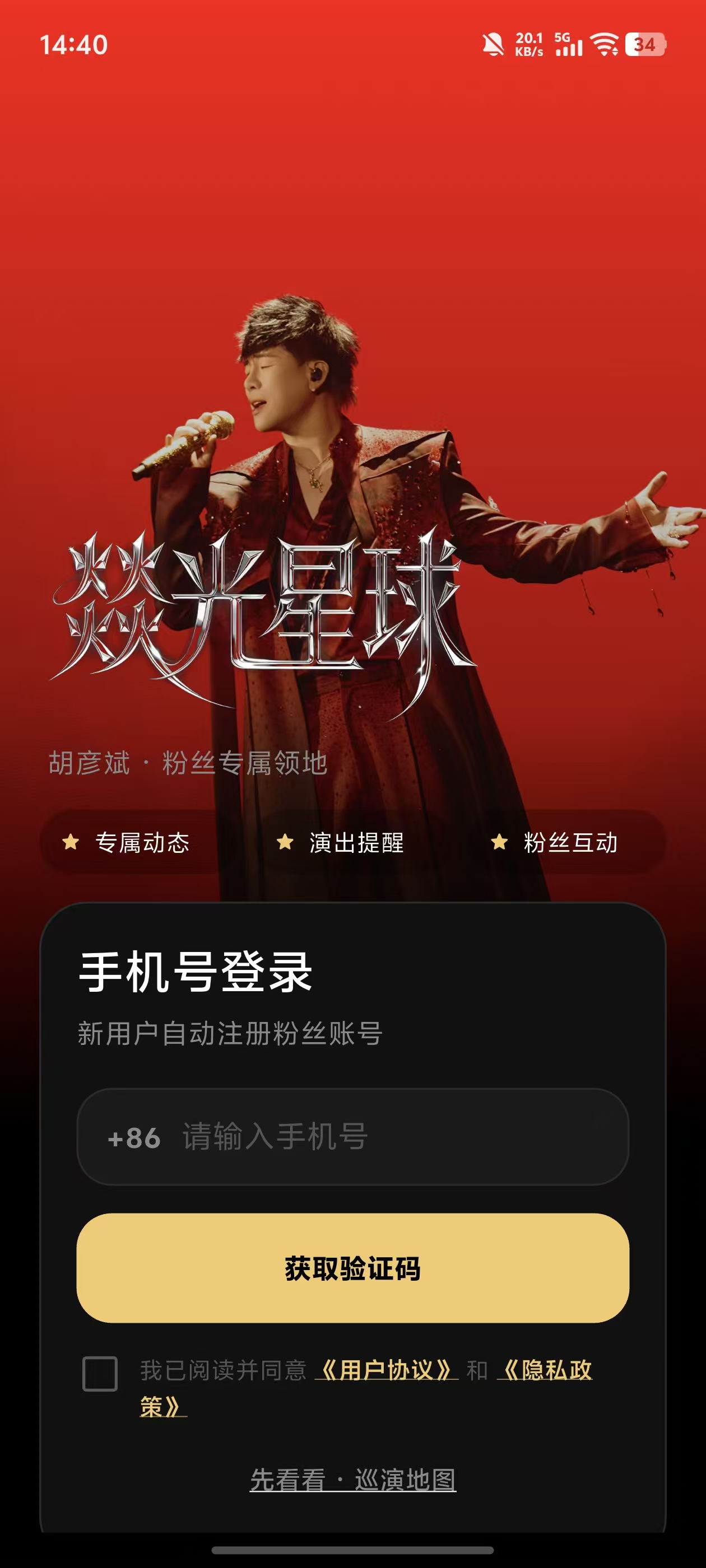
(Image Source: YanHuo App)
The strength of this setup lies in its direct translation of an artist's vision for interacting with fans into a tangible product. Hu Yanbin himself stated at launch that he aimed to create 'our own place' for YanHuo, where fans could ask him questions, stay updated on his news and announcements, and engage in meaningful communication across screens. The concept bears some resemblance to 'Bubble,' used by K-pop idol groups, except this is a community developed by the artist himself.
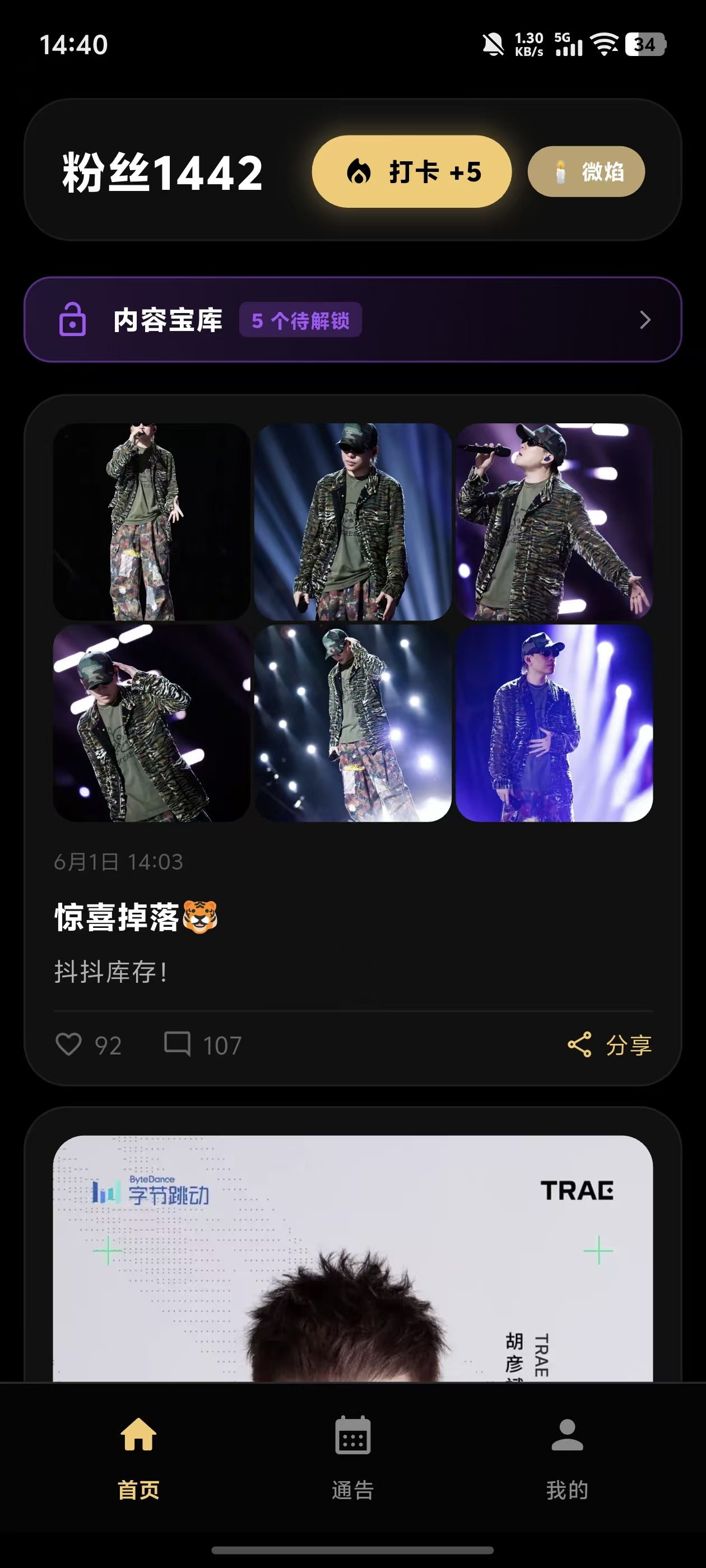
(Image Source: YanHuo App)
However, the issue remains: A correct direction doesn't guarantee flawless execution.
The most apparent sign of this is in the visuals. Launching 'YanHuo' evokes a sentiment that overseas developers have repeatedly joked about: the 'Vibe Coding default aesthetic'—black background, large rounded cards, purple glowing borders, an icon on the left, two lines of text in the middle, and an arrow on the right. YanHuo adopted a black-and-gold color scheme and incorporated artist visuals, but the templated feel persists.
In truth, this uniformity doesn't necessarily stem from a specific framework. It's because when detailed visual requirements aren't provided, AI tends to automatically select a 'modern, complete, and error-proof' UI. In other words, functions are swiftly translated into a product, but the 'AI-generated' flavor in the design language remains evident. Nevertheless, Hu Yanbin has always been upfront—he's using Vibe Coding, not claiming to be a seasoned developer.
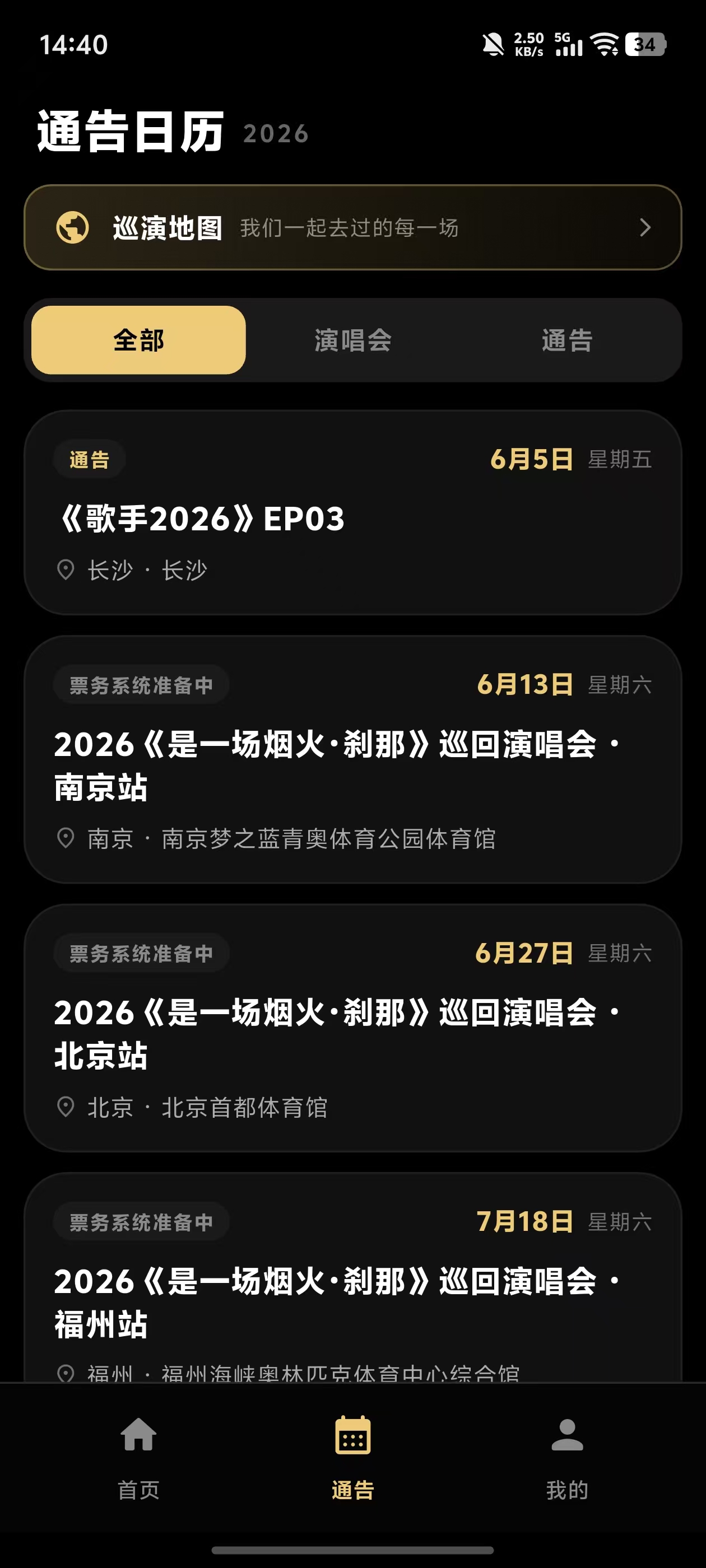
(Image Source: YanHuo App)
The Android version currently requires direct APK downloads from the official website and isn't available in major Android app stores. For average users, the installation steps coupled with system security warnings pose an additional hurdle. The iOS version did secure App Store approval but is currently only accessible in the China region. Secondly, the overall concept feels somewhat cluttered—terms like 'Light,' 'Points,' 'Micro Flame,' 'Star Fire,' and 'Badges' are all jumbled together, necessitating new users to invest time in deciphering the rules.
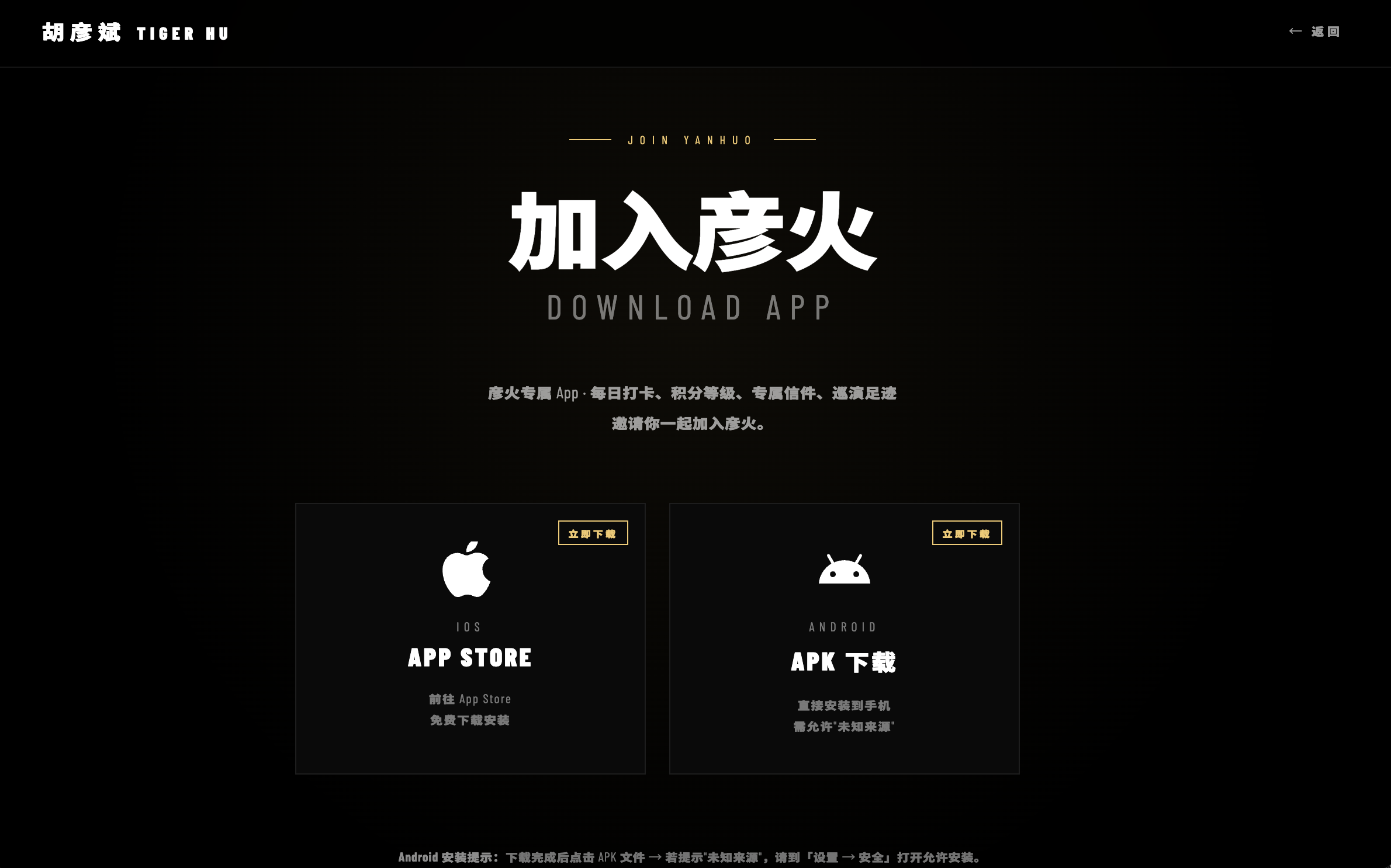
(Image Source: YanHuo App Official Website)
Additionally, while the app is brimming with entry points, some features are still under development. For example, the concert page directly states 'Ticketing system in preparation,' and much of the content vault requires points to unlock. Whether the initial content reserves are sufficient and how quickly points accumulate will directly determine whether fans continue to sign in.
The biggest concern for fan community apps isn't a lack of features—it's an inability to handle traffic. The fanbase of an idol singer operates on a vastly different scale from a tool app built by an independent developer. During events like new song releases or tour ticket sales, a sudden surge in concurrent users could easily overwhelm the backend. Crashes, freezes, and loading failures—basics that professional teams must resolve before launch—are precisely what Vibe Coding is most likely to overlook. The fact that Hu Yanbin himself is still publicly 'fixing bugs' suggests the launch version is riddled with issues, both minor and major.
In essence, AI can assist in building the functions, but whether it can withstand real-world scenarios is another matter. 'YanHuo' currently feels more like a functional prototype than a polished, battle-tested product. It proves that one person can independently transform an idea into an app, but how usable it is? That's probably a judgment call for true fans.
Anyone Can Build an App, but the Real Challenge Lies in 'Launching'
In the past, creating a fan app for celebrities was a time-consuming process. It required the studio to take the lead, involving product managers, designers, developers, and operators. Any feature adjustment meant demand meetings, scheduling, and re-quoting for outsourced work. Months passed, and costs mounted—not just in monetary terms but also in time and communication overhead.
Vibe Coding revolutionizes this frontend dynamic. While an artist using AI to build an app may not replace a full professional team, they can swiftly turn 'how I want to interact with fans' into a clickable prototype. This slashes demand communication and trial-and-error costs by more than half while accelerating iteration. For celebrities, there's a deeper consideration: Platforms like Weibo and Douyin constantly alter their traffic distribution rules, effectively making artists work for the platforms. A self-owned app enables them to consolidate schedules, content, membership systems, and fan feedback into their own domain—a long-term asset.
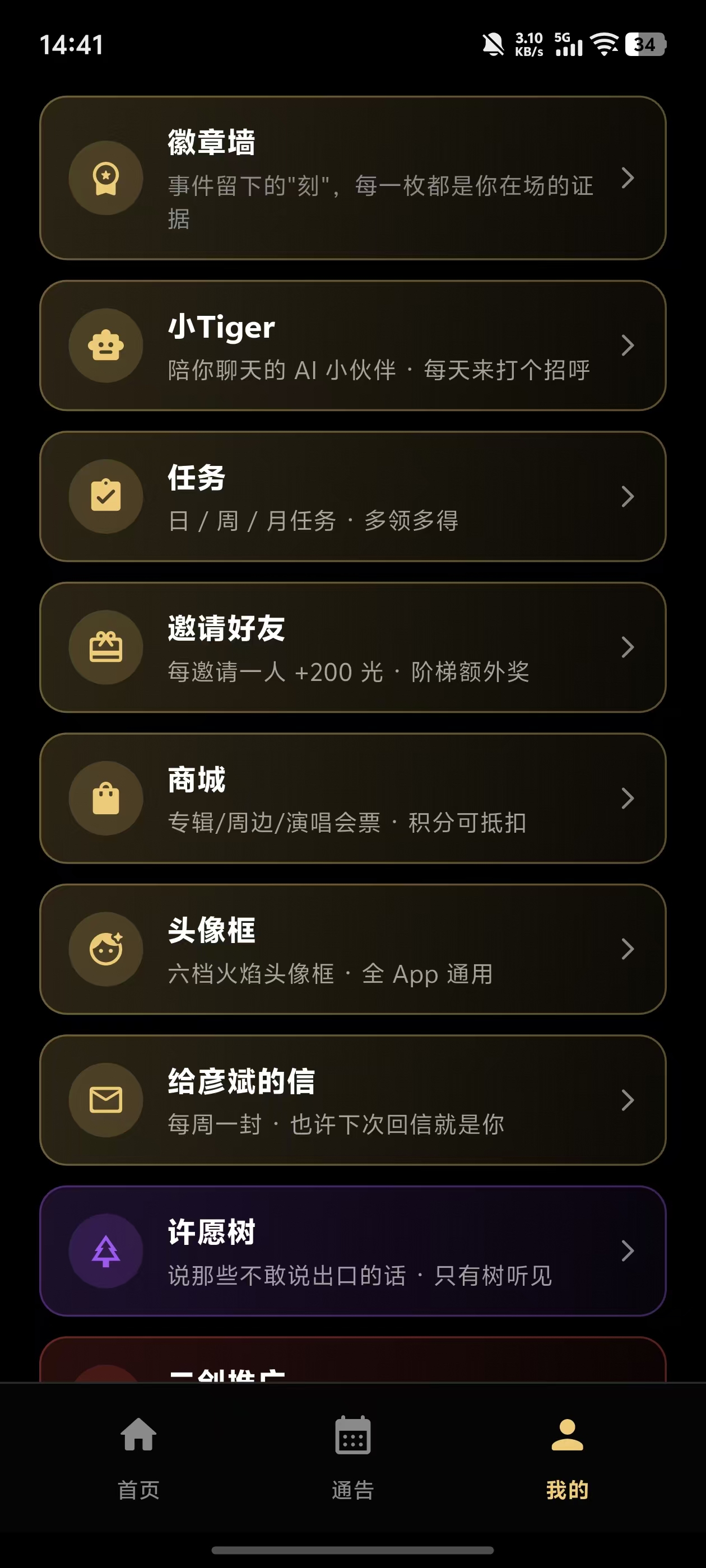
(Image Source: YanHuo App)
This is why even someone as time-constrained as Hu Yanbin was willing to invest over a month in learning Vibe Coding. He's not betting on saving outsourcing costs but on the ability to turn ideas directly into products.
But bets aside, one aspect Vibe Coding can't alter yet is the launch process.
Many assume that because 'YanHuo' is on the App Store, anyone can replicate the feat—but that's a misunderstanding. Between a codebase and an app available in stores lies not technology but a web of compliance barriers: Apple developer accounts, app review processes, software copyrights, ICP filings, content compliance, and user data compliance. Each is a genuine process with genuine requirements.
This is evident in 'YanHuo' itself—its Android version still relies on direct APK downloads from the official website and hasn't entered major Android app stores. Successfully launching across channels is the most team-intensive and unavoidable step. A community app also entails content moderation responsibilities, which require a company entity to shoulder. Beyond Hu Yanbin's coding, his team's efforts in securing filings, developer accounts, and deployment were crucial to getting 'YanHuo' online.
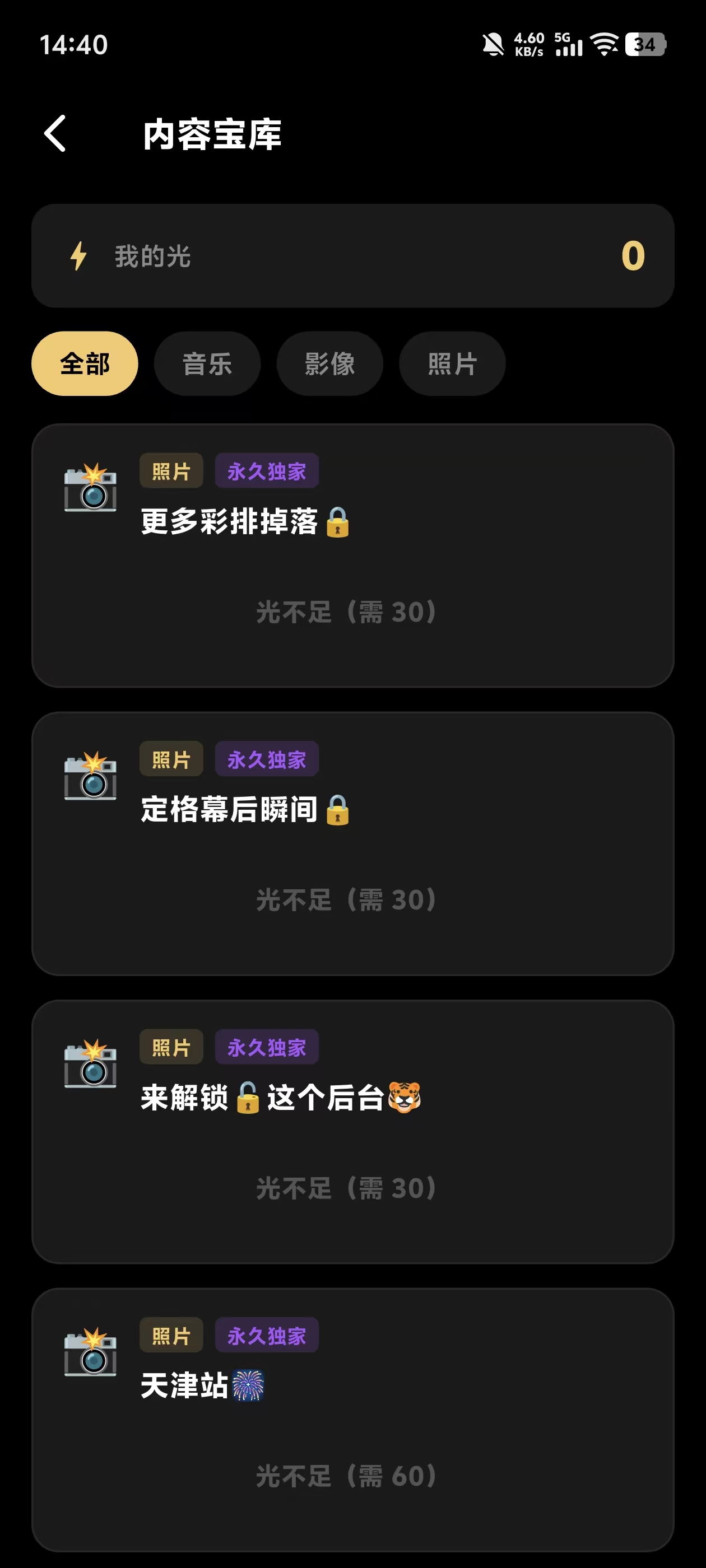
(Image Source: YanHuo App)
Vibe Coding has indeed brought the barrier to 'building an app' nearly to zero—the era of everyone Vibe Coding is here. But the barrier to 'launching your own app' hasn't diminished at all. In fact, with stricter compliance, it's even higher. Many app store channels now require developers to commit that no AI technology was used in building the app—a requirement that immediately disqualifies many individual developers using Vibe Coding.
Final Thoughts
Returning to the original question: Do celebrities still need to allocate substantial funds for fan apps?
If the goal is 'turning an idea into a usable prototype,' then yes, those costs can be saved. An artist who understands their fans, coupled with AI tools, can compress months of demand communication into weeks. But if the goal is 'stably and compliantly operating a product,' then the team's costs remain unavoidable—and as user numbers grow, they'll only increase.
The value of 'YanHuo' lies not in its perfection but in blazing a new trail. It demonstrates that artists can personally define how they interact with fans without outsourcing this most intimate matter. As for its current glitches, they'll improve through iteration.
Of course, Vibe Coding lowers the barrier to 'creation,' not 'launch.' The gap between these two remains a hurdle most can't overcome. So while Vibe Coding can bring many ideas to life, whether more people can utilize them is still a major question—even for celebrities, let alone ordinary developers.
AIVibeCodingLargeModelVibeApp
Source: Leikeji
Images in this article come from: 123RF Royalty-Free Library Source: Leikeji
-
Ofilm Teams Up with ADSensE to Propel Large-Scale Deployment of All-Solid-State LiDAR Powered by ADS6311 Chip!
-
![]()
Loss of 2.5 Billion Yet Facing Strong Demand for Shares? Another Battle for Control of Lianchuang Electronics
-
![]()
Huawei’s Enjoy Series Flies Off the Shelves, Prompting Xiaomi to Double Down on Budget Smartphones
-
![]()
Beijing Hyundai's Top Executive Criticizes Industry Disorder: Certain Brands Treat Customers as Beta Testers
-
![]()
The domestic mobile phone market has declined for five consecutive quarters! Huawei defies the trend with significant growth: maintains its top market share
-
Annual Revenue Surpasses 3 Billion: An Automotive Trim 'Little Giant' Makes Its Debut on the Beijing Stock Exchange
-
![]()
The Space Force Wants to Spend $30 Billion on Rocket Launches: Is Trump Doubling Down, and Is SpaceX the Big Winner?
-
![]()
Going Crazy! One out of Every Three Plug-in Hybrids Sold in Europe is a Chinese Vehicle