AI-Powered Photo Editing is All the Rage! Is GPT Image 2 Being Overused, Leading to a Surge in ‘Photo Deception’?
 06/02 2026
 645
645
AI photo editing—not to be confused with AI drawing.
In April 2026, OpenAI officially launched GPT Image 2, ushering in a new era of AI-generated imagery with enhanced language support, greater precision, and improved reasoning capabilities. Shortly after its release, Leikeji conducted in-depth testing and evaluation.
Initial impressions reveal that GPT Image 2 outperforms models like Nano Banana in terms of image generation stability. While other models tend to distort facial features in images with multiple faces, GPT Image 2 only exhibits significant ‘face-swapping’ after numerous modifications.
Given GPT Image 2's stability, could it serve as a ‘personal studio’?
The answer is affirmative. Indeed, numerous bloggers on overseas social platforms such as X have already adopted GPT Image 2 for photo editing. Unlike traditional AI ‘photo deception’ techniques or professional AI photo editing software like Pixel Cake, which offer minor touch-ups, these GPT Image 2 ‘studios’ offer a middle ground. Ideally, you can still recognize yourself in the photos, yet these ‘photos’ are indeed ‘fabricated’ by GPT.
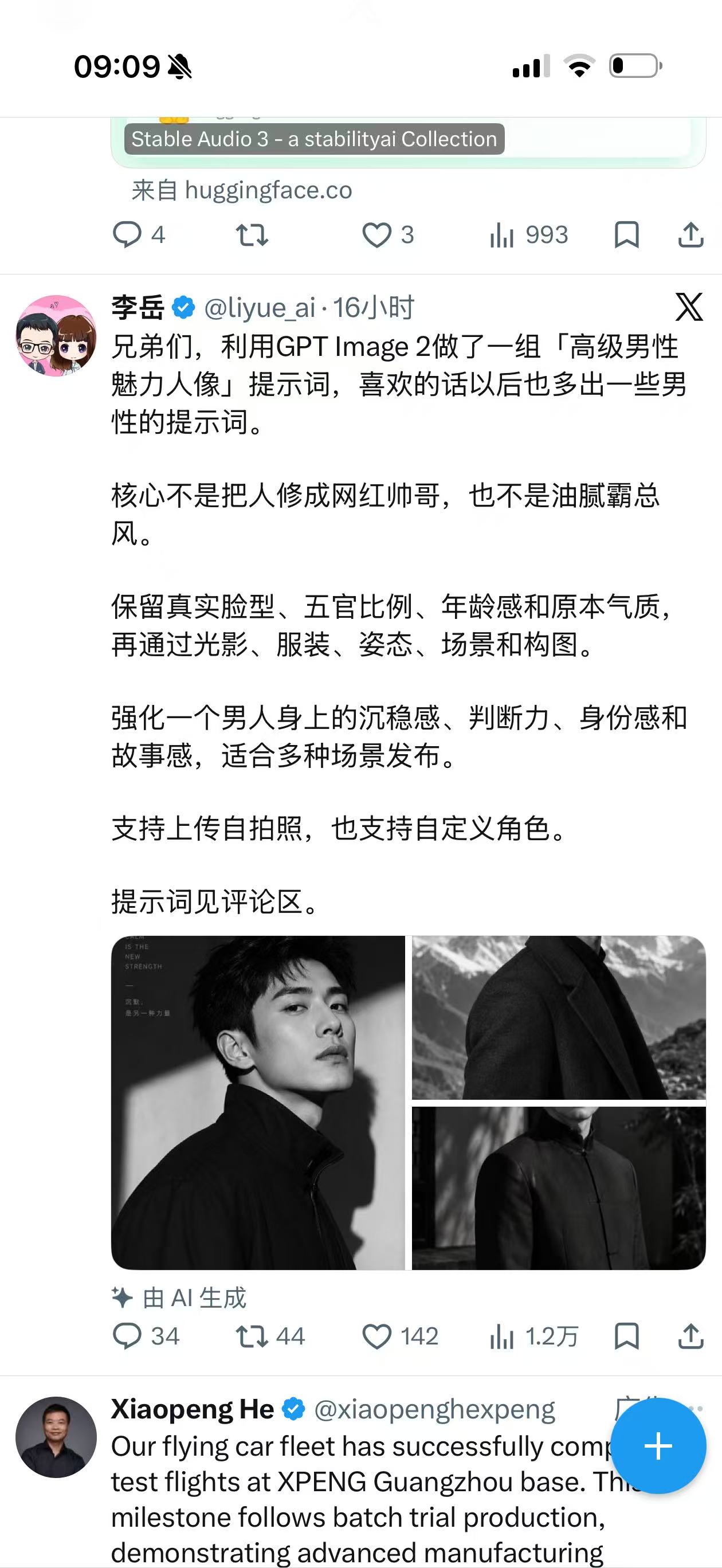
Image source: Leikeji
Perplexed? Let's examine the results directly.
Transforming a Selfie into a ‘Magazine Cover’
To showcase the capabilities of an AI ‘studio,’ we first need an ‘original photo.’ Here, Leikeji opted for GPT to generate a disheveled selfie of a 40-year-old Chinese man.
The image portrays a tired-looking individual with messy hair and beard, resembling someone who has just completed a 24-hour shift. Such a photo would likely deter passengers if used for ride-hailing registration, let alone for job hunting.
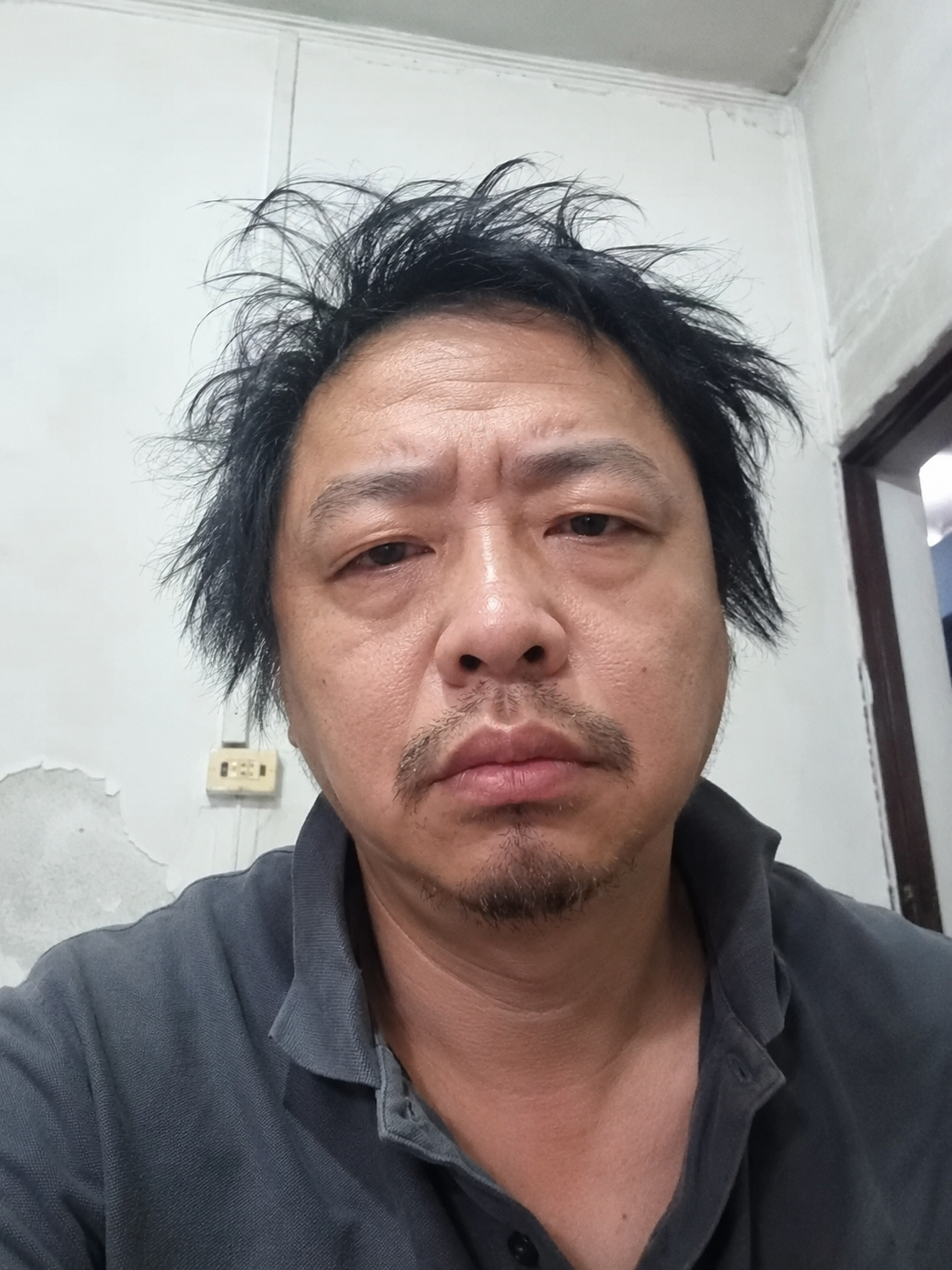
AI-generated original material
Image source: Leikeji
However, by inputting this photo into GPT Image 2, along with prompts shared by other bloggers on X, and selecting a style, the disheveled appearance undergoes an immediate transformation. The unkempt look is replaced by a professional portrait with clear facial details, improved skin texture, and enhanced contours under studio lighting.
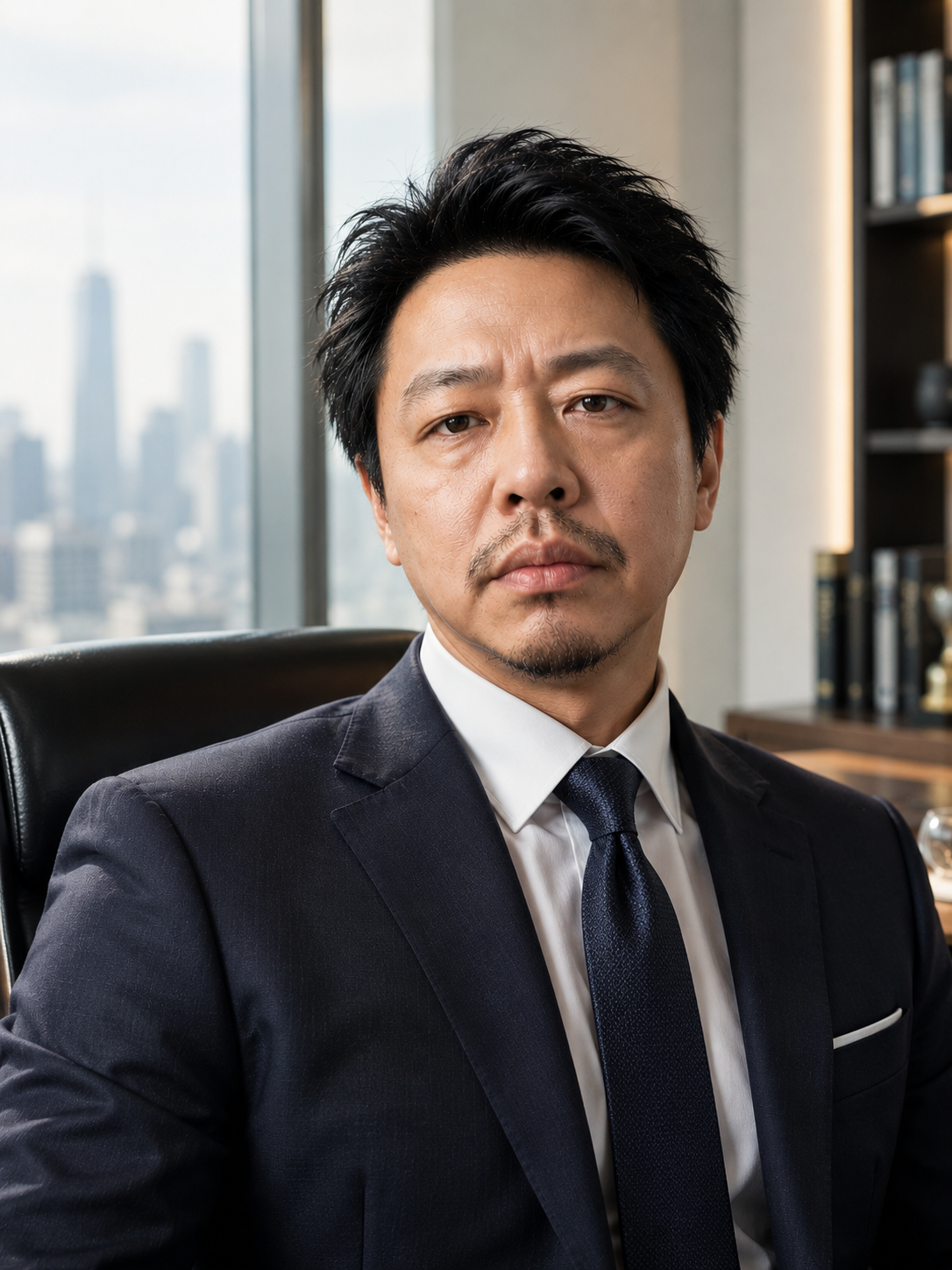
AI-generated ‘portrait photo’
Image source: Leikeji
More importantly, my facial expressions and features remain intact. Despite the significant difference between GPT Image 2's output and the ‘original,’ I can still be recognized as ‘myself.’
Of course, we can fine-tune details or even adjust the overall scene and style.
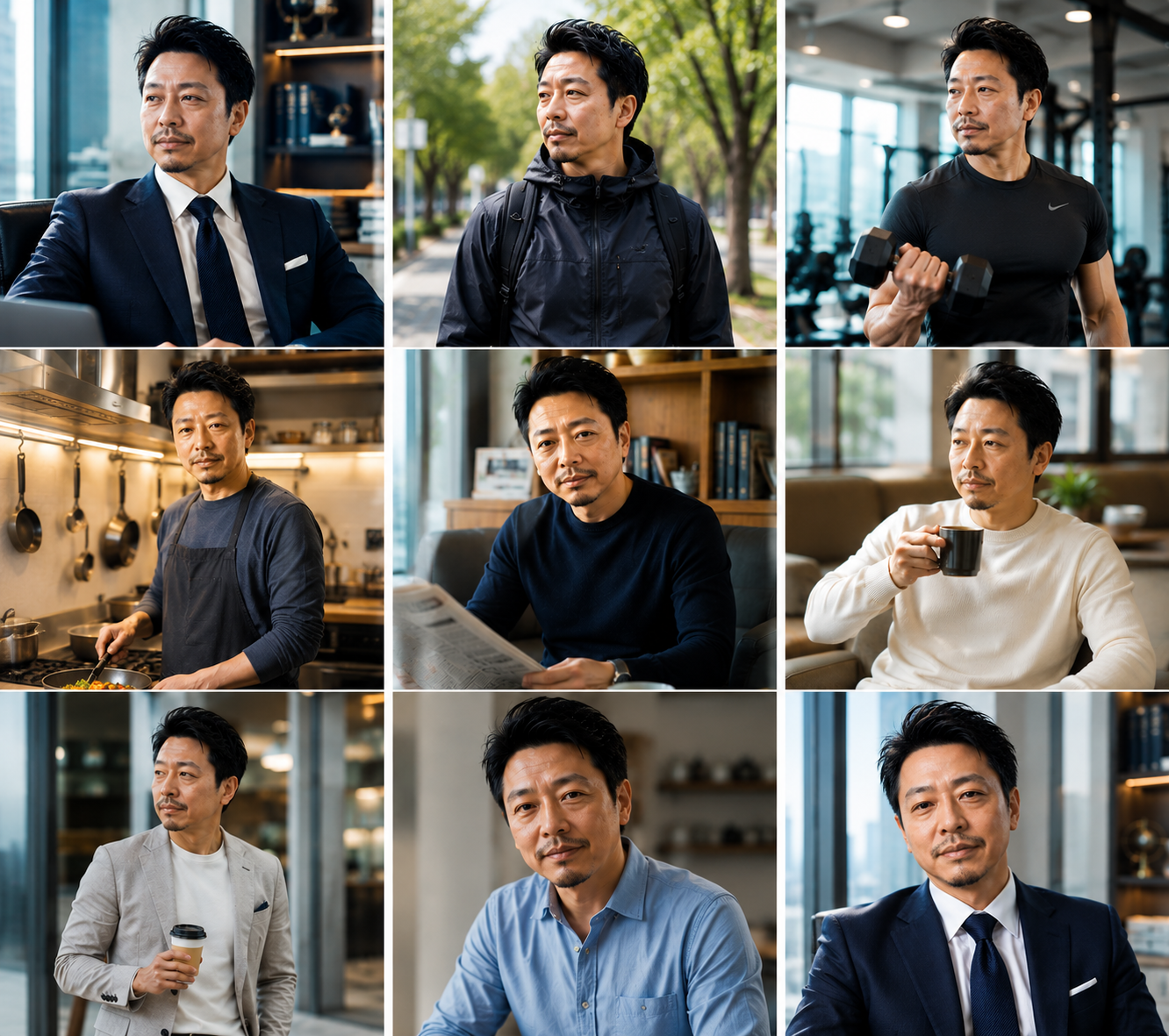
Different styles derived from the previous ‘portrait photo’
Image source: Leikeji
Interestingly, despite providing only a ‘front-facing selfie,’ GPT Image can generate photos from different angles upon request. Upon closer inspection, while the attire is relatively simple and carries an AI aesthetic, slight adjustments to the prompts make these ‘AI photos’ suitable for personal portraits.

An ‘ID photo’ derived from the previous ‘portrait photo’
Image source: Leikeji
Incidentally, Leikeji also tested GPT Image 2's ability to further process these ‘finished photos’ into ID photos. The results indicate that for informal occasions, such as work badges, student IDs, or exhibition media passes, these AI ‘ID photos’ are indeed useful and appear more natural than the common ‘face-swapped’ ID photos used by photography studios.
However, upon closer comparison, these AI ‘ID photos’ inevitably modify facial details. For instance, after about 10 modifications, a mole on my face disappeared, and my left eye became double-lidded. Considering that these details are often used by staff in formal settings like immigration for verification, Leikeji advises against using these ‘AI ID photos’ for official documents.
For comparison, Leikeji conducted tests using the same material on domestic AI services.
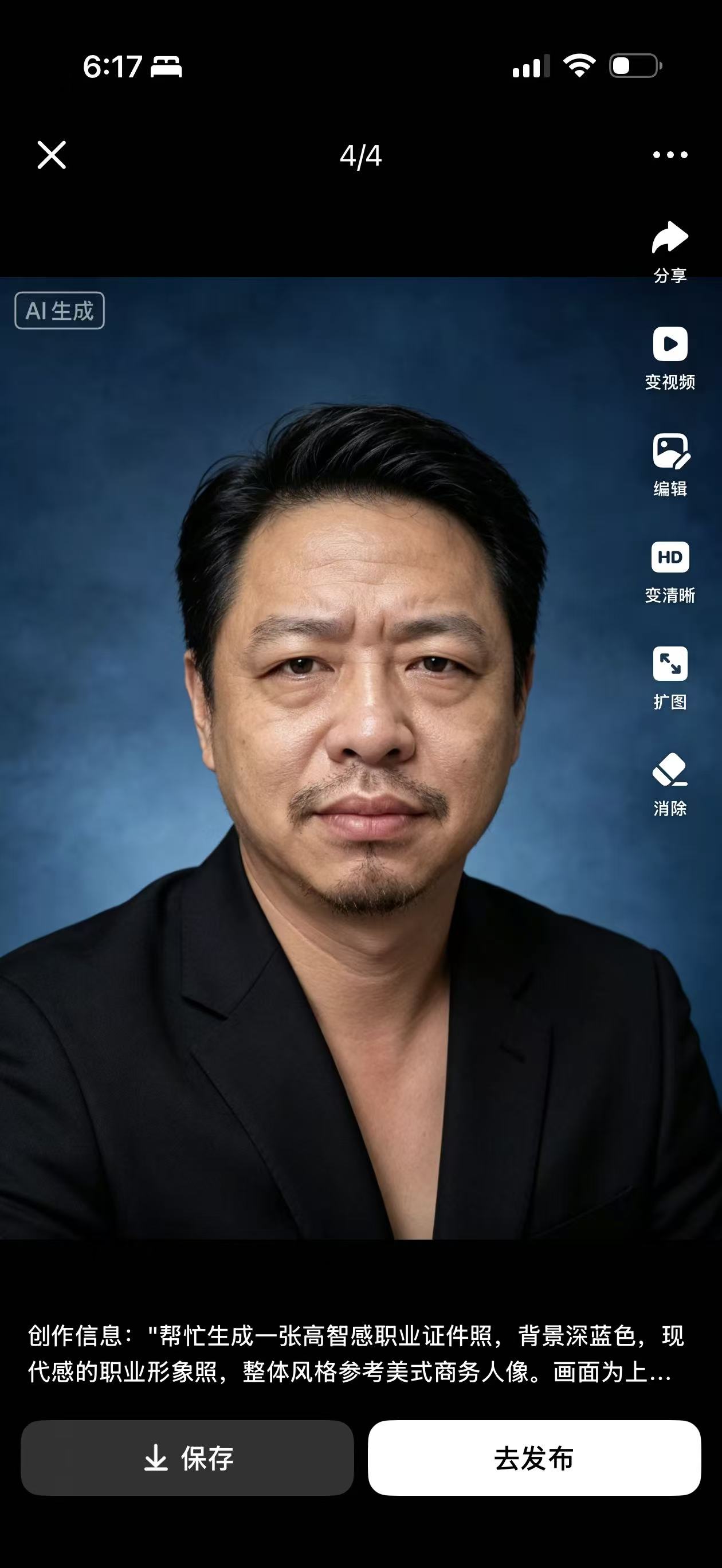
Doubao's photo editing mode generates a ‘portrait photo’ from the original material
Image source: Leikeji
Unlike GPT Image 2, Doubao and Yuanbao feature built-in AI photo editing modes that directly output artistic and ID photos in the desired style after uploading the original photo. In terms of quality, Doubao and Yuanbao's built-in editing modes produce significantly better results than GPT Image 2, with more controllable styles.
However, when using the same prompts without built-in styles, Doubao and Yuanbao's outputs exhibit a stronger AI and artificial feel.
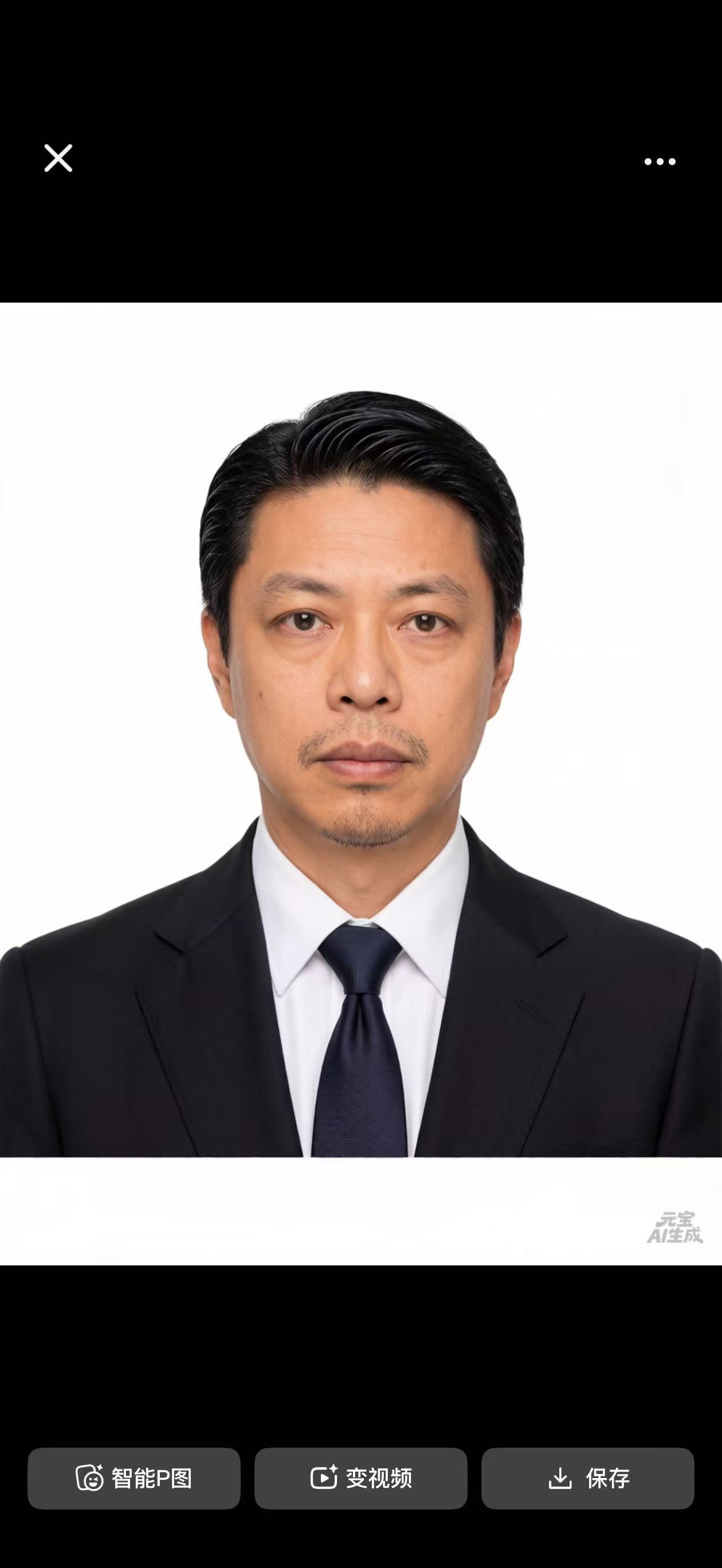
Yuanbao's AI image generation mode produces an ‘ID photo’ from the original material
Image source: Leikeji
For ID photos, Doubao and Yuanbao retain facial details as much as possible, performing more stably than GPT Image.
The Fundamental Difference Between AI ‘Photo Editing’ and AI ‘Drawing’
At this juncture, some may wonder: since both involve uploading photos and generating images with one click, what distinguishes GPT or domestic AI assistants from commonly used Pixel Cake or the ‘AI face-swapping ID photos’ in photo editing apps?
From Leikeji's perspective, the difference lies in the essence of photography as ‘documentation.’
Let's first discuss genuine ‘photo editing.’ Software like Pixel Cake, designed for bulk photo editing in studios, essentially performs ‘touch-ups.’ It operates on information already present in your original photo: the algorithm divides your photo into different parts like skin, facial features, and background, helping you remove blemishes, even out skin tone, or adjust face shapes according to standard aesthetic formulas.
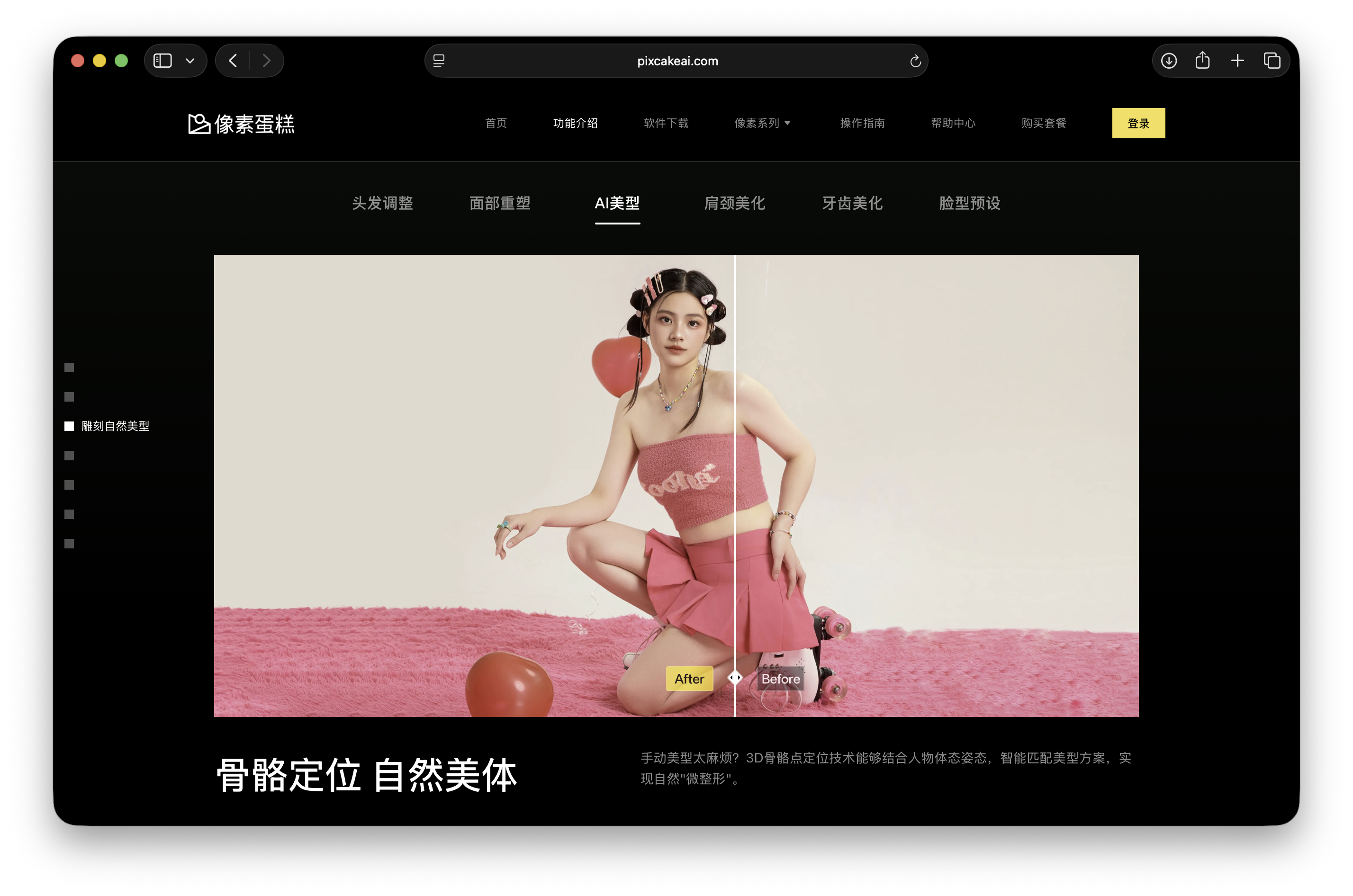
Image source: Pixel Cake
Even the common ‘face-swapping’ mode in mobile ID photo apps essentially pastes your ‘face’ onto a pre-made formal attire template—retaining all the ‘frozen’ information from the original photo.
However, GPT Image 2, Doubao, or Yuanbao's direct image generation modes operate on a ‘creation from nothing’ logic. After receiving your original photo, the model doesn't focus on individual pixel data; instead, it deconstructs your photo into semantic keywords through multimodal understanding, such as ‘40-year-old, Chinese male, short hair, bearded.’ After processing the description, it ‘draws’ a new photo for you based on its vast repository of learned portrait data.
To draw an imperfect analogy: AI photo editing modes like Pixel Cake essentially ‘alter’ photos, while AI image generation modes involve ‘describing’ the person in the photo to the AI and letting it ‘redraw’ a new image.
This explains why, during earlier tests with GPT Image 2, modifications eventually erased a mole on my face: one approach involves meticulous retouching with an eraser, while the other involves glancing at you and then redrawing a new image entirely. The freedom and authenticity of the two methods are on entirely different levels.
Will ‘AI Studios’ Exacerbate ‘Photo Deception’?
From Leikeji's perspective, the difference between ‘modifying based on the original’ and ‘redrawing based on description’ is also the key distinction between current ‘AI studios’ and traditional AI photo editing modes. The question arises: can images ‘redrawn’ by AI still be considered ‘photos’?
From a technical standpoint, portraits redrawn by large models are difficult to classify as traditional photos. After all, traditional photography, whether with a smartphone or DSLR, records physical traces of light on a sensor.
Now, however, large models directly calculate a stack of pixels based on probabilities in the background—scenes in these ‘photos’ may never have existed in the real world. This impact is somewhat similar to the situation when digital cameras first became widespread: film enthusiasts felt that digital photos ‘lacked soul.’ However, compared to the digital era, large model ‘photography’ has gone even further.
That said, even if we acknowledge that these ‘AI studio’ outputs cannot be considered photos, ‘AI studios’ are far from meaningless. Take Doubao and Yuanbao, for example; they clearly follow a pure ‘utility tool’ route.
From a demand perspective, what most users truly need is a presentable avatar usable in real life. For the average user, the emergence of ‘AI studios’ has truly transformed previously inaccessible ‘portrait photos’ into something ‘within reach.’ With a few taps, users can save hundreds of dollars and half a day's time—a clear benefit brought by technological inclusivity.
Of course, as the flip side of the coin, when large models turn standardized, streamlined image generation capabilities into a free-for-all, offline assembly-line photo studios will bear the brunt.
It's certain that if such studios continue to cling to the old approach of ‘makeup + assembly-line lighting + templated retouching,’ they will inevitably become obsolete in the face of nearly cost-free AI studios. For offline photography agencies, the future must involve moving toward customized scenarios like event photography that are difficult for large models to replace.
Additionally, for genuine photographers, in an era of ‘AI studio’ proliferation, ‘credibility’ will become a survival strategy for offline studios. The photo receipts required for offline ID photos represent, in a way, the studio's ‘credibility.’
As for concerns over ‘virtual personas running rampant,’ the technical perspective isn't as pessimistic as imagined. The AI industry has already reached a consensus, introducing SynthID to verify and distinguish between genuine photos and AIGC-generated images. As long as major platforms exercise due diligence, Leikeji isn't worried about ‘photo deception’ running rampant.
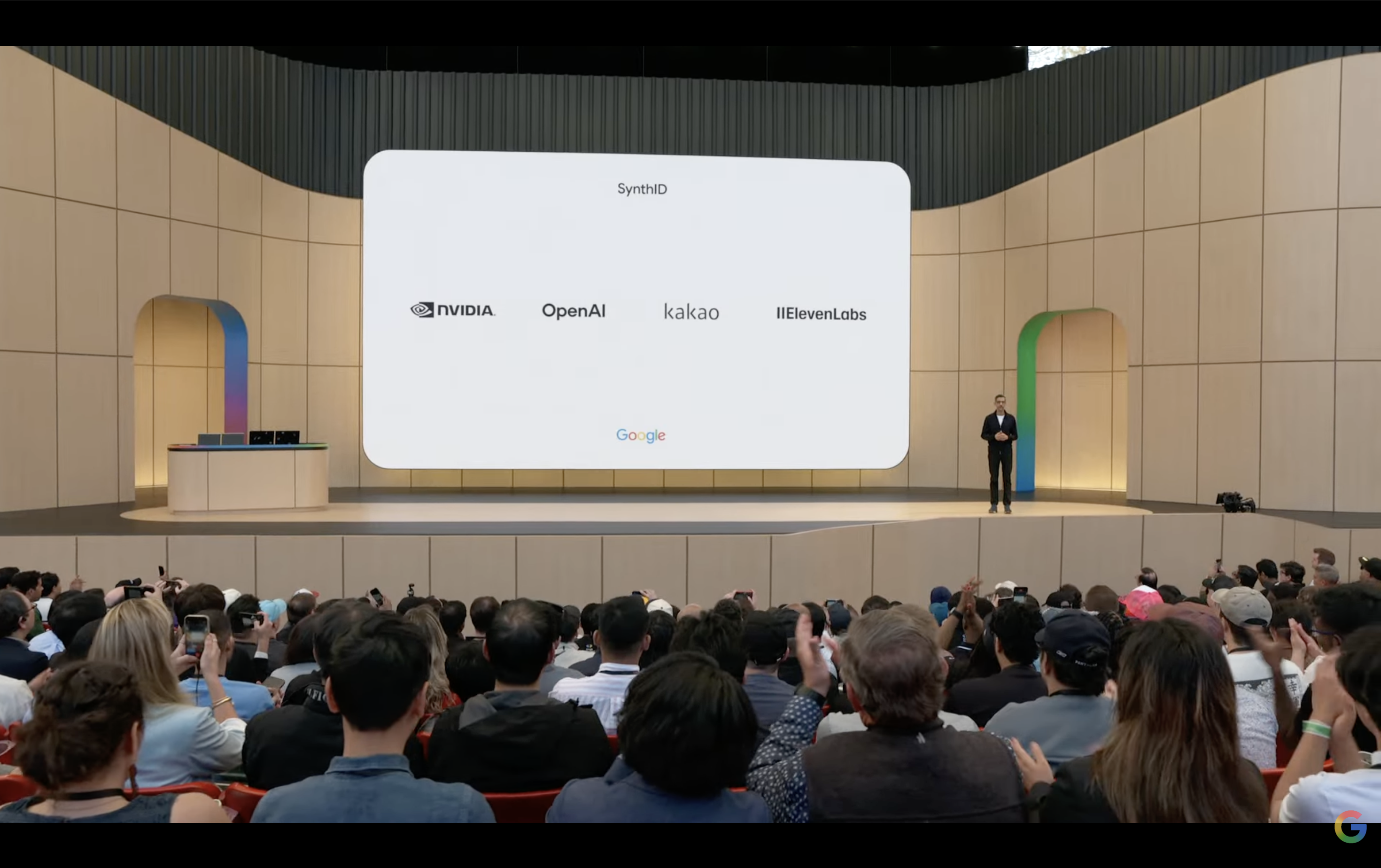
Image source: Google
Undeniably, as AI unleashes everyone's ‘creativity,’ the cost of fabrication has been infinitely lowered. However, from another perspective, ‘photo deception’ was already prevalent long before the advent of AI image generation technology. Since ‘AI studios’ haven't fundamentally worsened the situation while also providing some assistance in our daily lives, what's wrong with using ‘AI studios’ to satisfy a little ‘vanity’?
AI, AI photo editing, AIGC, GPT, Image 2
Source: Leikeji
All images in this article are from the 123RF licensed image library. Source: Leikeji
-
Ofilm Teams Up with ADSensE to Propel Large-Scale Deployment of All-Solid-State LiDAR Powered by ADS6311 Chip!
-
![]()
Loss of 2.5 Billion Yet Facing Strong Demand for Shares? Another Battle for Control of Lianchuang Electronics
-
![]()
Huawei’s Enjoy Series Flies Off the Shelves, Prompting Xiaomi to Double Down on Budget Smartphones
-
![]()
Beijing Hyundai's Top Executive Criticizes Industry Disorder: Certain Brands Treat Customers as Beta Testers
-
![]()
The domestic mobile phone market has declined for five consecutive quarters! Huawei defies the trend with significant growth: maintains its top market share
-
Annual Revenue Surpasses 3 Billion: An Automotive Trim 'Little Giant' Makes Its Debut on the Beijing Stock Exchange
-
![]()
The Space Force Wants to Spend $30 Billion on Rocket Launches: Is Trump Doubling Down, and Is SpaceX the Big Winner?
-
![]()
Going Crazy! One out of Every Three Plug-in Hybrids Sold in Europe is a Chinese Vehicle