Is the PC Era Over? Lenovo Rejuvenates with AI
 06/02 2026
 582
582
Source | Benyuan Finance
Author | Li Youshan
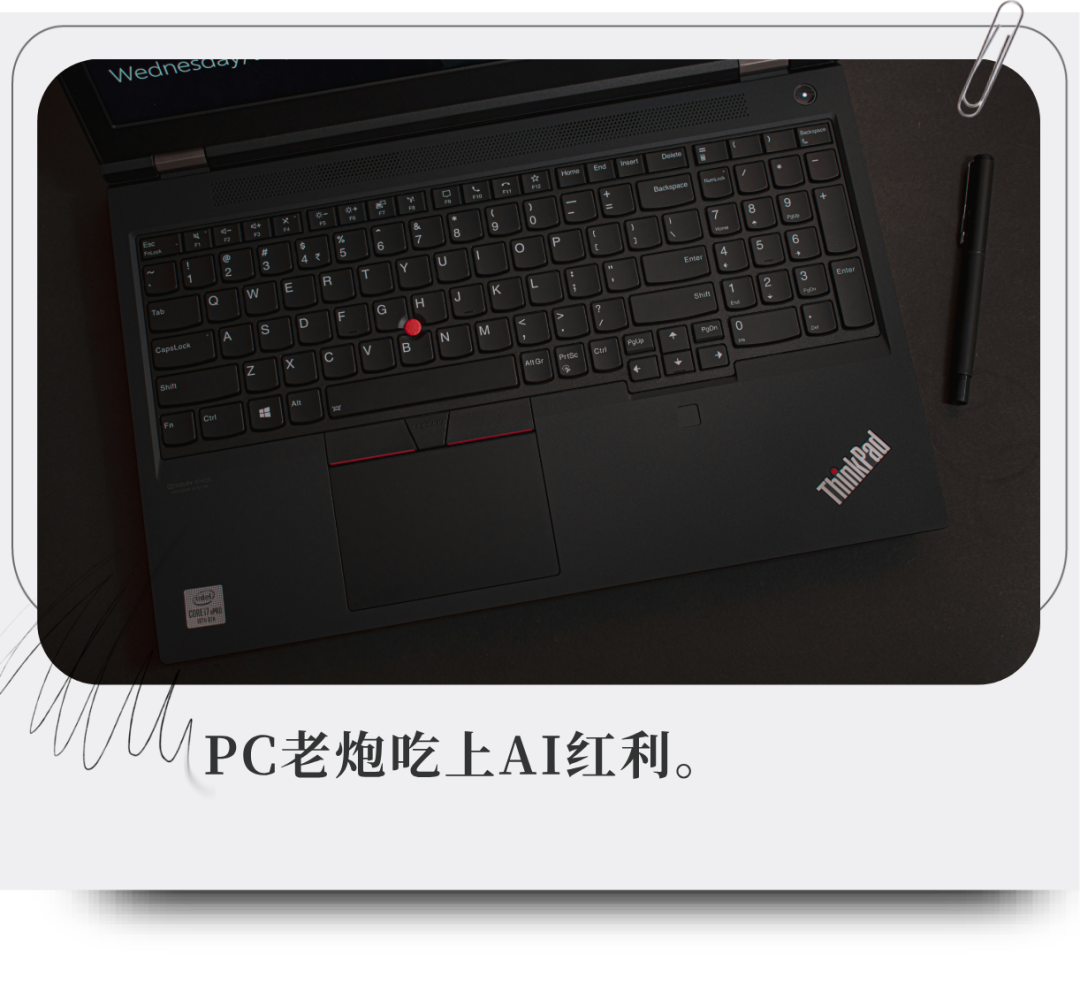
If it weren't for the barely visible 'ThinkPad' logo on office computers, many might assume that Lenovo has been swept aside by the mobile internet wave. Yet, with a market capitalization of HK$300 billion, the reality is starkly different—Lenovo has merely been lying low, never truly exiting the global stage.
Lenovo began as a small company in a communication room at the Chinese Academy of Sciences. In 2005, it made a bold move by acquiring IBM's personal computer business, gaining international recognition and ascending to the summit of the global PC industry. However, due to path dependency and strategic missteps, it found itself trapped in a decade-long transformation predicament.
Now, as AI enters a period of payback, the 40-year-old 'tech dinosaur,' once criticized for complacency and mere assembly, has made a resounding comeback with a record-breaking financial report: annual revenue surpassing $80 billion for the first time, and adjusted net profit growth (42%) more than doubling revenue growth (20%).
This time, can Lenovo truly shed its reliance on 'trade, industry, and technology' and evolve from an excellent hardware integrator into a genuine technological innovator? The answer may unfold over the next decade.

Veteran Player Reaps AI Dividends
An unexpected financial report revealed that Dell Technologies' revenue reached $43.8 billion in Q1 FY2027, up 88% year-on-year, propelling its market capitalization to $205.946 billion at market close and stirring the entire AI industry chain.
The AI hardware sector in Hong Kong stocks rallied, with Lenovo Group's market capitalization surpassing HK$300 billion.
This capital frenzy is not mere herd behavior. In the recently concluded FY2025/26, Lenovo also achieved remarkable results. Annual revenue grew 20% year-on-year to $83.1 billion, with adjusted net profit up 42% to $2 billion, marking its best fiscal year in history.
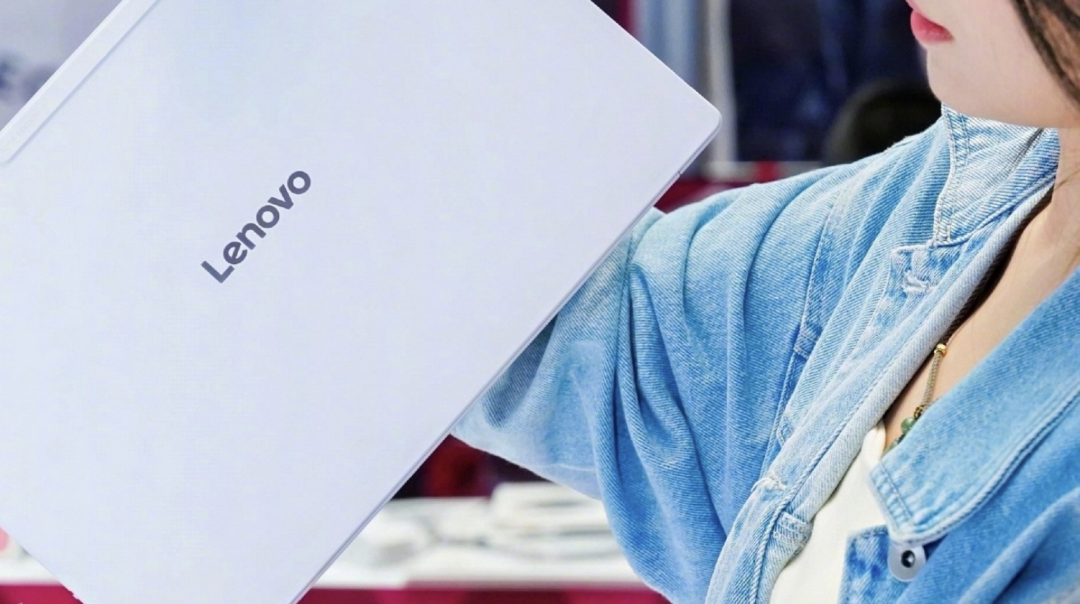
In Q4 alone, revenue grew 27% year-on-year, the highest growth in nearly 20 quarters; adjusted net profit doubled, with net profit attributable to shareholders surging nearly fivefold. For a hardware company, this performance is exceptionally robust.
Lenovo's three major business segments include the Intelligent Devices Group (IDG), centered around hardware like phones and computers; the Infrastructure Solutions Group (ISG), focusing on servers and enterprise-grade products; and the Solutions and Services Group (SSG), handling differentiated enterprise services like integration and cloud.
In earlier years, the market primarily valued Lenovo as a PC manufacturer. At the new fiscal year's pledging ceremony in April, Yang Yuanqing announced two new goals:
First, to exceed $100 billion in revenue within two years; second, to fully transform into an AI-native company.
The latter clarifies Lenovo's future direction: shifting from selling computers to selling AI and ecosystems, allowing AI to reconstruct all workflows and lifestyles.
With global AI capital expenditures surging, the highly anticipated ISG business, positioned upstream in the AI industry chain, serves as the best window and largest variable for assessing Lenovo's AI prowess in this financial report.
ISG primarily deals in servers, storage, and switches, reaping AI dividends with annual revenue up 32% to $19.2 billion, the fastest growth among the three businesses. Q4 performance was even more striking, turning a profit and setting a new quarterly revenue record of $5.6 billion, up 37% year-on-year.
AI servers, as the core infrastructure for computing power, saw a surge in enterprise-level orders. By the fiscal quarter's end, Lenovo's annual order backlog reached $21 billion, with AI server revenue up 50% year-on-year, officially entering NVIDIA's latest supply chain. NVIDIA's GB300 NVL72 rack solution began deliveries in Q4, with the next-generation Rubin-based platform launching in the second half.
In terms of profit margins, ISG improved to 3.6% in Q4, though annually it stood at just 0.4%, relying on cost dilution through scale rather than technological barriers, still plagued by the industry's common issue of revenue growth without profit growth.
For comparison, Dell's ISG division reported a 10.5% operating margin in its latest fiscal quarter, three times that of Lenovo, indicating Lenovo's ISG profitability foundation still needs further strengthening.
In market share, IDC data shows Dell leading the global server market in Q4 2025 with a 10.0% share among OEMs, followed by Supermicro at 9.3%, with Lenovo and Inspur around 4%.
The industry is shouting 'All in AI,' and Lenovo entered early, with Yang Yuanqing declaring in 2017 that 'Lenovo has bet its future on AI.'
However, compared to firms like Kunlunxin developing self-researched AI chips and GPUs, Lenovo's AI self-research layout in chip, model, and software ecosystem layers remains relatively weak, reflected in the group's low R&D rate of around 3%.
Lenovo lacks control over core chips and models, nor operating system entry points. Its AI servers rely heavily on NVIDIA's GPUs, while its Tianxi personal AI agent is essentially an interface accessing third-party models, with an ecosystem and value-added services still underdeveloped, limiting its bargaining power.
To address high-end storage shortcomings, Lenovo acquired Israeli storage company Infinidat in April, potentially laying a crucial foundation for the next decade's growth.

PC Segment Remains Dominant
As described in 'The Fire of Silicon Valley,' a book frequently referenced by Lei Jun: in that fervent and extraordinary era, a group of tech geeks and dreamers harnessed the power of computers, liberating them from sealed machine rooms and transforming the world.
The book vividly portrays the tumultuous PC golden age and precisely captures Lenovo's origins.
According to Tianyancha data, Lenovo Group was founded in 1984, initially named 'Legend.' It listed on the Hong Kong Stock Exchange in 1994, acquired IBM's PC business in 2005, becoming the world's third-largest PC manufacturer, and topped global PC market share in 2013.
To date, the IDG business selling PCs, phones, and tablets remains Lenovo's cash cow and foundation.
In FY2025/26, Lenovo's IDG revenue reached $58.9 billion, contributing about 70% of total revenue; operating profit accounted for roughly 64.6%, with an operating margin of 7.2%. However, this segment's growth rate was 17%, the lowest among the three businesses.
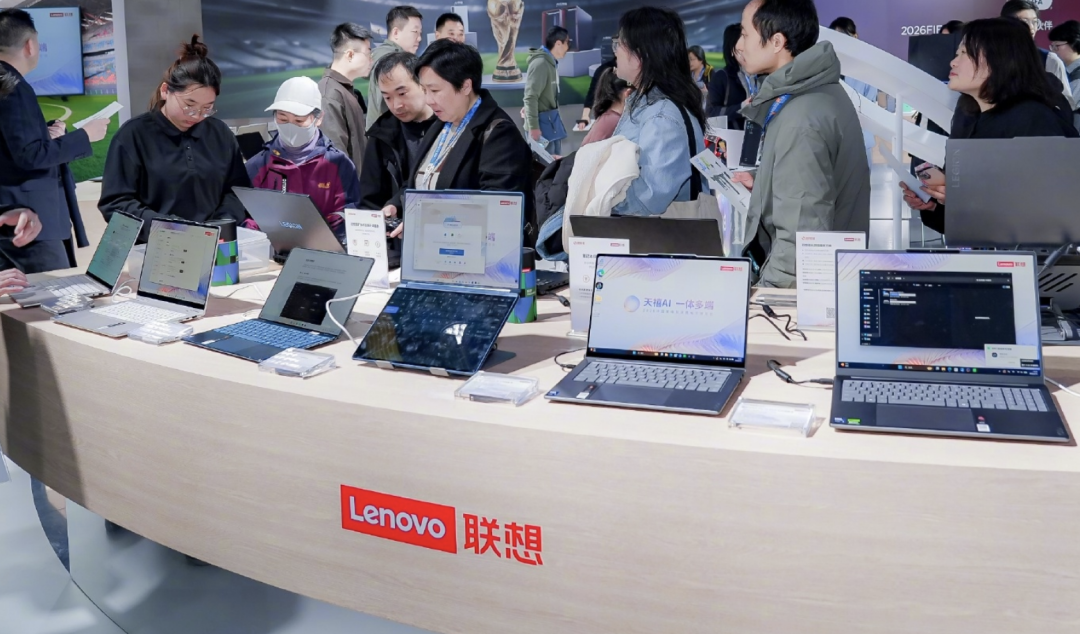
Omdia reports global PC shipments reached 279.45 million units in 2025, up 9.2% year-on-year. Factors like Windows 10's end-of-service upgrades and pandemic-driven device refresh cycles fueled market recovery. Lenovo shipped 70.85 million PCs in 2025, with high-end PCs accounting for 50% of shipments.
The internal growth driver was AI PCs, with Lenovo's AI PC annual sales surpassing 2.53 million units, doubling year-on-year.
Notably, AI PCs commanded higher prices, though costs also rose. For instance, with storage prices soaring, Citigroup predicts DRAM average price will surge 200% year-on-year in 2026, with NAND up 186%.
Moreover, AI PCs lack the disruptive product strength seen in models like Doubao phones. Lenovo's management admits that current AI PC buyers, attracted by AI features, are still concentrated among a few professional groups.
This means if market supply-demand reverses and storage prices fall, Lenovo's PC business will face continued pressure, making profit preservation challenging.
Built on Lenovo's massive hardware installation base, the SSG solutions and services business performed impressively.
Annual revenue surpassed $10 billion for the first time, with an operating margin above 20%. Accounting for 12% of revenue, it supported 30% of operating profit, serving as Lenovo's high-margin engine.
Overall, Lenovo's business structure typically involves 'subsidizing high-scale, low-margin hardware with low-scale, high-margin services,' with SSG struggling to offset scale shortcomings, raising questions about growth resilience.

Betting on Token Economy
FY2025/26 marked Lenovo's 'first year of the new AI decade,' with the financial report highlighting a 105% year-on-year increase in AI-related revenue.
Fully advancing AI transformation, Lenovo's AI delivery strategy revolves around 'personal AI' and 'enterprise AI.' For personal AI, it launched Tianxi AI 4.0; for enterprise AI, it follows three core principles: hybrid AI priority, value delivery first, and ecosystem co-construction and mutual benefit.
Yang Yuanqing declared, 'Lenovo is not a PC company. Lenovo is a full-stack AI technology company.'
Shifting from selling hardware to building ecosystems, Lenovo unveiled its Enterprise Longxia Lake solution and Token Factory, fully betting on the token economy, aiming to ensure every token is calculable, cost-effective, and generates value.
Competition in the token economy arena is fiercer than ever.
At the computing infrastructure layer, Huawei, Inspur, and New H3C dominate, with the top three vendors capturing nearly 70% of China's AI server market, leaving Lenovo to compete fiercely in the cracks.
In the cloud-based large model and services layer, internet giants like Alibaba Cloud, Tencent Cloud, Baidu Intelligent Cloud, and Volcano Engine possess complete tech stacks covering large models, computing power, storage, and networks, enabling token services at rock-bottom prices. Lenovo's reliance on a 'middleman markup' model faces structural disadvantages from inception.
Beyond competitor pressure, Lenovo confronts two major AI industry challenges: accelerated technological iteration and fragmented customer demands. These challenges are universal, but particularly daunting for traditional hardware vendors like Lenovo in terms of delivery tests.
Faced with such a complex competitive landscape, Lenovo is not without opportunities. It boasts the world's largest PC user base, a nationwide channel network, strong supply chain management, and enterprise customer resources. If it can leverage these strengths and pursue a differentiated competition route, it could secure a place in the enterprise AI services market.
In the AI wave, Lenovo has secured its ticket. How long this transformation marathon lasts depends on its commitment to investment. *All rights reserved. Unauthorized reproduction prohibited. Data support from Tianyancha.
end
Thank You for Subscribing
Please contact us first with any suggestions.
-
Ofilm Teams Up with ADSensE to Propel Large-Scale Deployment of All-Solid-State LiDAR Powered by ADS6311 Chip!
-
![]()
Loss of 2.5 Billion Yet Facing Strong Demand for Shares? Another Battle for Control of Lianchuang Electronics
-
![]()
Huawei’s Enjoy Series Flies Off the Shelves, Prompting Xiaomi to Double Down on Budget Smartphones
-
![]()
Beijing Hyundai's Top Executive Criticizes Industry Disorder: Certain Brands Treat Customers as Beta Testers
-
![]()
The domestic mobile phone market has declined for five consecutive quarters! Huawei defies the trend with significant growth: maintains its top market share
-
Annual Revenue Surpasses 3 Billion: An Automotive Trim 'Little Giant' Makes Its Debut on the Beijing Stock Exchange
-
![]()
The Space Force Wants to Spend $30 Billion on Rocket Launches: Is Trump Doubling Down, and Is SpaceX the Big Winner?
-
![]()
Going Crazy! One out of Every Three Plug-in Hybrids Sold in Europe is a Chinese Vehicle