Just Now! ChatGPT Incorporates Codex, What’s OpenAI’s Next Move?
 06/03 2026
 527
527
Is OpenAI Making a Strategic Leap?
This year marks a pivotal moment for the burgeoning growth of Agent applications.
From chat companions to digital employees adept at autonomously executing code, crafting PowerPoint presentations, and even editing videos in the background, the pace of AI advancement has been nothing short of remarkable.
Amidst this fiercely competitive landscape in the Agent domain, OpenAI has once again made a groundbreaking announcement.
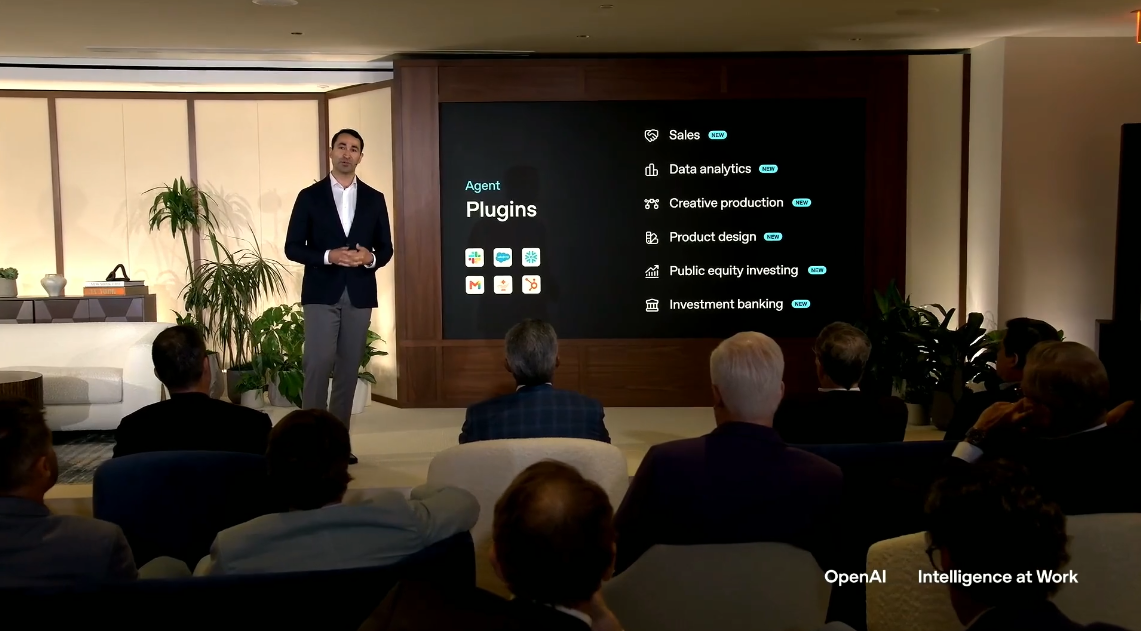
During the "Intelligence at Work" live event last night, OpenAI officially unveiled a significant decision:
They intend to seamlessly integrate the core functionalities of Codex into the ChatGPT application within the coming weeks, while maintaining Codex as a standalone programming tool.
Upon hearing this news, numerous international netizens are pondering: Why is OpenAI merging this standout product into ChatGPT?
The rationale is straightforward.
In the enterprise sector, the majority of companies are well-acquainted with ChatGPT but remain oblivious to Codex, which is tailored for developers and necessitates a dedicated portal. Many firms are even uncertain about the scenarios in which to deploy it.
By effortlessly integrating Codex's Agent execution capabilities into ChatGPT, users can directly harness these features within the familiar chat interface. Furthermore, OpenAI has also rolled out six industry-specific plugins, encompassing sales, data analysis, and creative production, thereby transforming intricate technical tools into daily aids for small and medium-sized enterprises.
It's undeniable that Codex's prior performance on Mac and Windows platforms has been exceptionally impressive.
Just last month, OpenAI accomplished the feat of remotely controlling Codex on a computer via the ChatGPT mobile app. The realization of this cross-device interaction implies that users can simply issue a command on their phone to have their home computer automatically execute code, modify files, or even construct a lightweight webpage.
This deeper integration signifies that this super Agent experience of cross-platform computer control will be universally and seamlessly accessible.

So, will other major model providers follow suit?
The answer is inevitable.
Currently, Microsoft has intricately embedded various Copilot agents into the Windows system. In fact, domestic platforms such as DingTalk and Feishu are also expediting the integration of large models' execution capabilities into unified user portals.
After all, users have finite attention spans, and no one desires to clutter their phone with dozens of AI tools for diverse scenarios.
Linking the potent underlying capabilities of large models with scenario-specific Agents at the click of a button, entrusting the complexity to the system and the simplicity to the user, is the trajectory of future AI applications.
In the future, ordinary individuals won't need to comprehend the intricacies of code or development tools. Simply articulate your ideas in plain language in ChatGPT, and let the underlying Codex handle the nitty-gritty.
This impending wave of Agent application popularization is indeed arriving sooner than we envisioned.
OpenAI, Codex, ChatGPT, AI, Agent
Source: Leikeji
The images in this article are sourced from: 123RF Licensed Image Library. Source: Leikeji
-
Ofilm Teams Up with ADSensE to Propel Large-Scale Deployment of All-Solid-State LiDAR Powered by ADS6311 Chip!
-
![]()
Loss of 2.5 Billion Yet Facing Strong Demand for Shares? Another Battle for Control of Lianchuang Electronics
-
![]()
Huawei’s Enjoy Series Flies Off the Shelves, Prompting Xiaomi to Double Down on Budget Smartphones
-
![]()
Beijing Hyundai's Top Executive Criticizes Industry Disorder: Certain Brands Treat Customers as Beta Testers
-
![]()
The domestic mobile phone market has declined for five consecutive quarters! Huawei defies the trend with significant growth: maintains its top market share
-
Annual Revenue Surpasses 3 Billion: An Automotive Trim 'Little Giant' Makes Its Debut on the Beijing Stock Exchange
-
![]()
The Space Force Wants to Spend $30 Billion on Rocket Launches: Is Trump Doubling Down, and Is SpaceX the Big Winner?
-
![]()
Going Crazy! One out of Every Three Plug-in Hybrids Sold in Europe is a Chinese Vehicle