Tencent's Trump Card Has Never Been Large Models
 06/03 2026
 617
617

The outside world has probably always misunderstood Tencent's AI strategy: it's not slow—it's cautious.
An exclusive report by a certain newspaper yesterday completely disrupted the domestic AI landscape—Tencent is secretly testing a prototype AI Agent embedded within WeChat, planning to initiate compliance approval processes followed by a small-scale grayscale test. Following the news, Tencent's Hong Kong stocks surged by 10%.
Over the past two years, industry sentiment has overwhelmingly deemed Tencent's AI efforts as lagging. ByteDance, Alibaba, and Baidu have sprinted ahead, vying for entry points, stacking computing power, and expanding scenarios. Despite Yuanbao's (a Tencent product) presence, Tencent has been labeled 'conservative, delayed, and always a step behind.' However, in the game theory (game) among top internet giants, success isn't about running faster—it's about betting more accurately and defending more steadily. Now, Tencent is finally playing its WeChat AI trump card.
I. Tencent's AI Dilemma
Media leaks reveal that the WeChat AI Agent's interaction logic is extremely simple: a right swipe on the main WeChat interface activates an intelligent conversation panel. Users can complete end-to-end lifestyle service fulfillment—store discovery, price comparison, ordering, and payment—with a single natural language instruction, entirely without manually opening mini-programs or navigating multiple pages.
This fundamentally differs from Yuanbao AI. Yuanbao serves as a supplementary tool, focusing on conversational Q&A and search enhancement without touching transactions, interfering with user behavior, or altering ecosystem rules. It's a classic 'icing on the cake.'
In contrast, the WeChat AI Agent represents a radical bottom-up innovation. Its core capability is singular: orchestrating the entire WeChat ecosystem and its underlying mini-program commercial empire on behalf of users.
For over a decade, WeChat's core identity has been that of a 'super connector'—a traffic container hosting nearly 10 million mini-programs, a platform for distributing traffic and building pathways. Users remain the primary operators, actively searching, clicking, and fulfilling tasks, while WeChat acts merely as a rule-setter and traffic distributor.
With the AI Agent's arrival, roles will completely reverse. WeChat will evolve from a 'traffic container' into an 'intent operating system,' shifting from 'passive connection' to 'active agency.' It will begin managing user decisions and operations, monopolizing the entire closed loop from 'intent to execution.'
Pony Ma has admitted that Tencent's AI layout (layout) has indeed lagged by nearly a year. However, the industry's deepest misunderstanding is that Tencent's 'slowness' stems not from inadequate capability but from an unwillingness and inability to act faster.
ByteDance, Alibaba, and Baidu's AI products can rapidly experiment, iterate, and even fail because their AI entry points are independent, replaceable, and have vast tolerance for error. WeChat, however, cannot afford such luxury.
Today, WeChat transcends mere social app status—it's a bona fide national digital infrastructure. With 1.4 billion monthly active users and annual transaction volumes in the trillions, it encompasses all core lifestyle scenarios for Chinese users, including communication, payments, government services, transportation, healthcare, and utility bill payments. Any feature embedded within WeChat directly shapes the internet habits of 1.4 billion users.
This is a double-edged sword. If successful, WeChat will solidify its super-entry status in the AI era, maintaining its barriers for another decade. But failure would be catastrophic.
AI hallucinations misinterpreting instructions, erroneous bill payments, privacy breaches, or misrouted service requests—any minor flaw could escalate from a product experience issue into a the entire internet ( the entire internet -wide) public opinion crisis or trust emergency. For WeChat, innovation must prioritize absolute safety and stability, a heavy burden no competitor faces.
Under this zero-tolerance pressure, Tencent has remained restrained for two years: the Hunyuan large model iterated quietly without hype; Yuanbao AI was confined to lightweight auxiliary functions; its Lobster series agents were deployed solely in controllable scenarios like enterprise services and developer tools, avoiding interference with WeChat's core ecosystem or C-end experience.
This restraint persisted until competitors began solidifying user habits, forcing a change.
II. Competitor Encirclement
Current AI strategies from three major players appear segmented but precisely target Tencent's Achilles' heel, forming an encirclement.
ByteDance's Doubao pursues an AI-native traffic entry strategy. Leveraging ByteDance's powerful recommendation algorithms and young user base, it rapidly captures fragmented user time through a standalone app, cultivating new user habits of 'getting things done with one sentence' via lightweight dialogue and low-barrier experiences. Its lightweight, agile, and fast-iterating model aims solely to seize first-interaction entry points.
Alibaba's Tongyi Qianwen deepens commercial transaction closures. By integrating AI capabilities into core scenarios like e-commerce, travel, local services, and cultural tourism, it fortifies high-value commercial barriers through practicality and implementation.
Their core advantage lies not in technological superiority over Tencent but in preemptively defining user interaction rules in the AI era.
Over the past two years, countless users have adopted a new mindset: needs can be fulfilled by speaking to AI instead of manual operations. Dialogue equals action; intent equals result.
This represents a dimensionality reduction attack on WeChat. If users grow accustomed to fulfilling services via Doubao or Qianwen, WeChat's cumbersome traditional workflow ('search-click-navigate-order') will render it instantly replaceable.
WeChat won't be uninstalled—but it will be demoted.
This is Tencent's deepest fear: not that competitors will surpass its user scale today, but that rivals will capture user mindshare in the AI era first. Once 'conversational fulfillment' becomes industry consensus, WeChat's entry will no longer make it a rule-setter but a follower, reducing its super-entry status to a mere social pipeline.
This external encirclement has elevated the WeChat AI Agent from a 'long-term strategic plan' to Tencent's top corporate priority, breaking WeChat's long-held product restraint bottom line (bottom line).
III. A Difficult Trump Card
The outside world sees only Tencent's bold move but fails to grasp the technical, computing, ecological, and compliance deadlocks behind this trump card. A prototype's success doesn't guarantee scalability for 1.4 billion users—the WeChat AI Agent's rollout ranks among the internet's toughest product engineering challenges.
First, computing power bottlenecks make costs astronomical.
AI Agents differ fundamentally from ordinary conversational AI. Each service requires multi-step reasoning, cross-ecosystem orchestration, and real-time data interaction, leading to exponential growth in computing demand. For a national-level product with 1.4 billion MAUs, full-scale deployment would create a 'computing power black hole.'
Restricted by overseas chip exports, Tencent lacks sufficient high-end GPU reserves, while domestic computing alternatives remain in adaptation phases. Martin Lau recently admitted that hardware limitations caused AI capital expenditures to fall short of expectations last year, with AI investment set to double this year.
This means Tencent isn't struggling with Agent technology itself but with balancing the costs of scaling for 1.4 billion users. The current grayscale testing essentially awaits alignment among computing supply, hardware adaptation, and cost control curves.
Second, adapting to 7 million mini-programs is a hellish engineering challenge.
WeChat's vast mini-program ecosystem is its core barrier but also the AI Agent's biggest drag. Millions of mini-programs feature fragmented development standards, inconsistent interfaces, chaotic business logic, and divergent permission systems.
For precise fulfillment, the AI Agent must complete the full chain of 'natural language recognition—precise mini-program matching—interface adaptation—authorized payment.' Any misstep in this chain could derail the service.
More daunting are ecological conflicts of interest. Most mini-program developers earn revenue through page exposure, user clicks, and traffic conversion. If the AI Agent automates price comparisons, ordering, and fulfillment behind the scenes—bypassing all display stages—it effectively strips developers of traffic and revenue.
Tencent must ensure the AI Agent's efficiency while appeasing millions of ecosystem partners to avoid destabilization. This interest balance poses a product management challenge harder than technological R&D, explaining Tencent's experimentation with centralized-decentralized hybrid models.
Third, compliance and privacy form zero-tolerance red lines.
Intelligent fulfillment relies on deep user data access: chat records, locations, spending habits, payment information, and civic data all require real-time authorization, retrieval, and analysis.
With 1.4 billion users, any data misuse, privacy breach, or permission overreach would trigger regulatory red lines. This necessitates Tencent's strict compliance processes and insistence on small-scale grayscale testing—this iteration allows no room for error.
In closing, the true AI battle among tech giants isn't about model parameters, algorithmic prowess, or conversational IQ. Any AI agent's ultimate value lies not in chatting but in fulfillment: ordering, paying, handling affairs, consuming, and serving.
From this perspective, the WeChat AI Agent's rollout resembles a defensive strategy: Tencent doesn't need AI smarter than all competitors—it just needs to keep all user lifestyle needs and service intents closed loop (closed-loop) within the WeChat ecosystem. Preventing user intent, traffic, transactions, and data from leaking outside is the key to winning the AI war.
But the real test begins now: does Tencent dare—and can it—cede control of its trillion-dollar ecosystem to an uncertain AI black box?
-
Ofilm Teams Up with ADSensE to Propel Large-Scale Deployment of All-Solid-State LiDAR Powered by ADS6311 Chip!
-
![]()
Loss of 2.5 Billion Yet Facing Strong Demand for Shares? Another Battle for Control of Lianchuang Electronics
-
![]()
Huawei’s Enjoy Series Flies Off the Shelves, Prompting Xiaomi to Double Down on Budget Smartphones
-
![]()
Beijing Hyundai's Top Executive Criticizes Industry Disorder: Certain Brands Treat Customers as Beta Testers
-
![]()
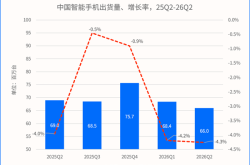
The domestic mobile phone market has declined for five consecutive quarters! Huawei defies the trend with significant growth: maintains its top market share
-
Annual Revenue Surpasses 3 Billion: An Automotive Trim 'Little Giant' Makes Its Debut on the Beijing Stock Exchange
-
![]()
The Space Force Wants to Spend $30 Billion on Rocket Launches: Is Trump Doubling Down, and Is SpaceX the Big Winner?
-
![]()
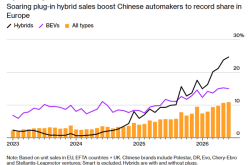
Going Crazy! One out of Every Three Plug-in Hybrids Sold in Europe is a Chinese Vehicle