When Google I/O Comes to Douyin, Cutting-Edge Tech Finds a New Stage
 06/03 2026
 514
514
Why Are Cutting-Edge Tech Firsthand Experiences Emerging on Douyin?
Author | Gu Nian Editor | Yang Zhou
This year's Google I/O featured a rather interesting scene.
A tech creator, @Xuan Gan X, known for creating a Chinese cultural fortune-telling device, had Demis draw a fortune. The fortune read: 'Crowds gather, but you pause.'
AI's fortune came true. A crowd surrounded him, and the Google DeepMind co-founder, CEO, and 2024 Nobel Prize in Chemistry winner actually stopped to see what these creators were doing with Google's AI.
This wasn't a typical scene at a tech conference.
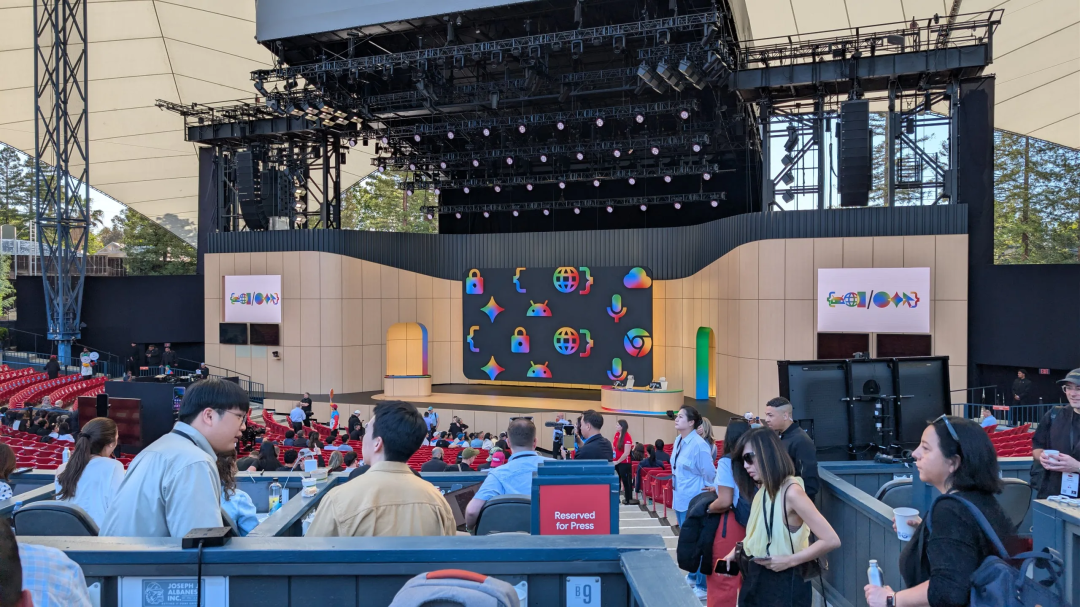
Invited by Google, 12 Douyin tech creators attended the event, bringing their creativity to life with numerous interesting moments.
Some brought their AI photo apps to the event, using Gemini's multimodal capabilities to organize travel photos, generate comics, and snap a photo with Demis. Others used VibeCoding to create a 'universal roast device,' showing a small app to Google staff. Some even incorporated personality tests into a 3D miniature world, having AI determine whether someone was a 'cyber madman' or a 'safety officer.'
While the keynote still took place in Mountain View, more products, questions, and discussions originated not just from within the tech circle. They began to come from parents, students, creators, product users, and ordinary users.
The latest tech trends emerged from the conference hall in Mountain View. Then, on platforms like Douyin, they were seen, learned about, and reinterpreted by more people. 
Creators Testing Products On-Site
The excitement at this year's Google I/O wasn't just about what was announced on stage; it was also lively offstage.
On stage, Google unveiled Gemini, Omni, Antigravity, AI search, and development tools. Offstage, Douyin creators brought products to the event, testing models in real-time, exploring the developer ecosystem within Google's suite of tools, and even pulling Google DeepMind CEO Demis Hassabis into the Douyin lens for questions.
This wasn't just simple 'on-site check-ins.' It was more like a group of tech creators with diverse backgrounds and expertise, acting as product managers, developers, users, and observers, conducting the first round of testing on behalf of ordinary users.
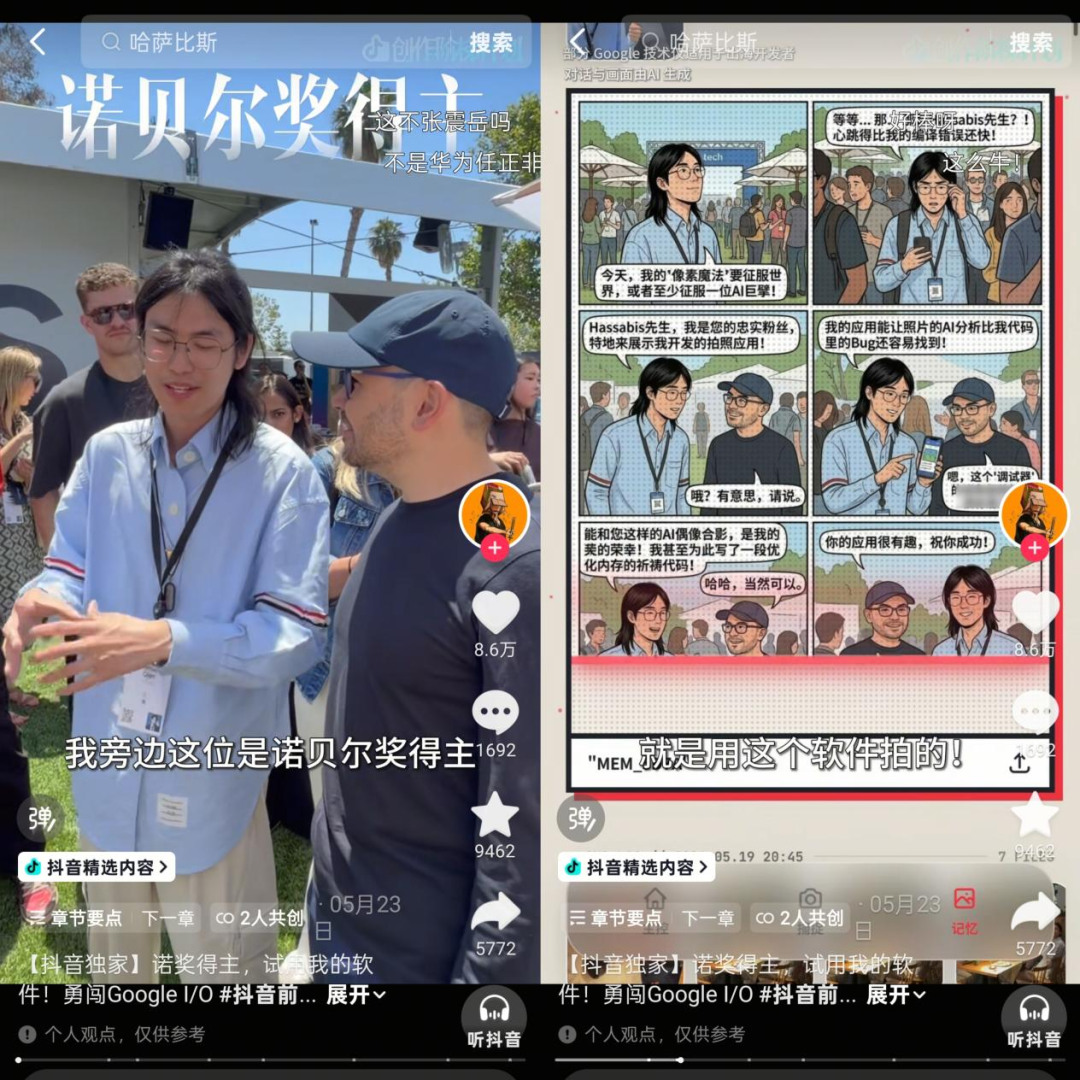
For example, @Digital Nomad Samuel brought his AI photo app to the event, integrating Gemini's multimodal capabilities to understand travel photos, automatically group them, and generate comics. Even his photo with Google DeepMind CEO Demis Hassabis was taken with this AI product completed on-site.
While recording fan materials, he also brought 'multimodal capabilities' from conference jargon back to a specific usage scenario. More importantly, as a representative of the fan community, the creator brought the perspective of ordinary people to the event.
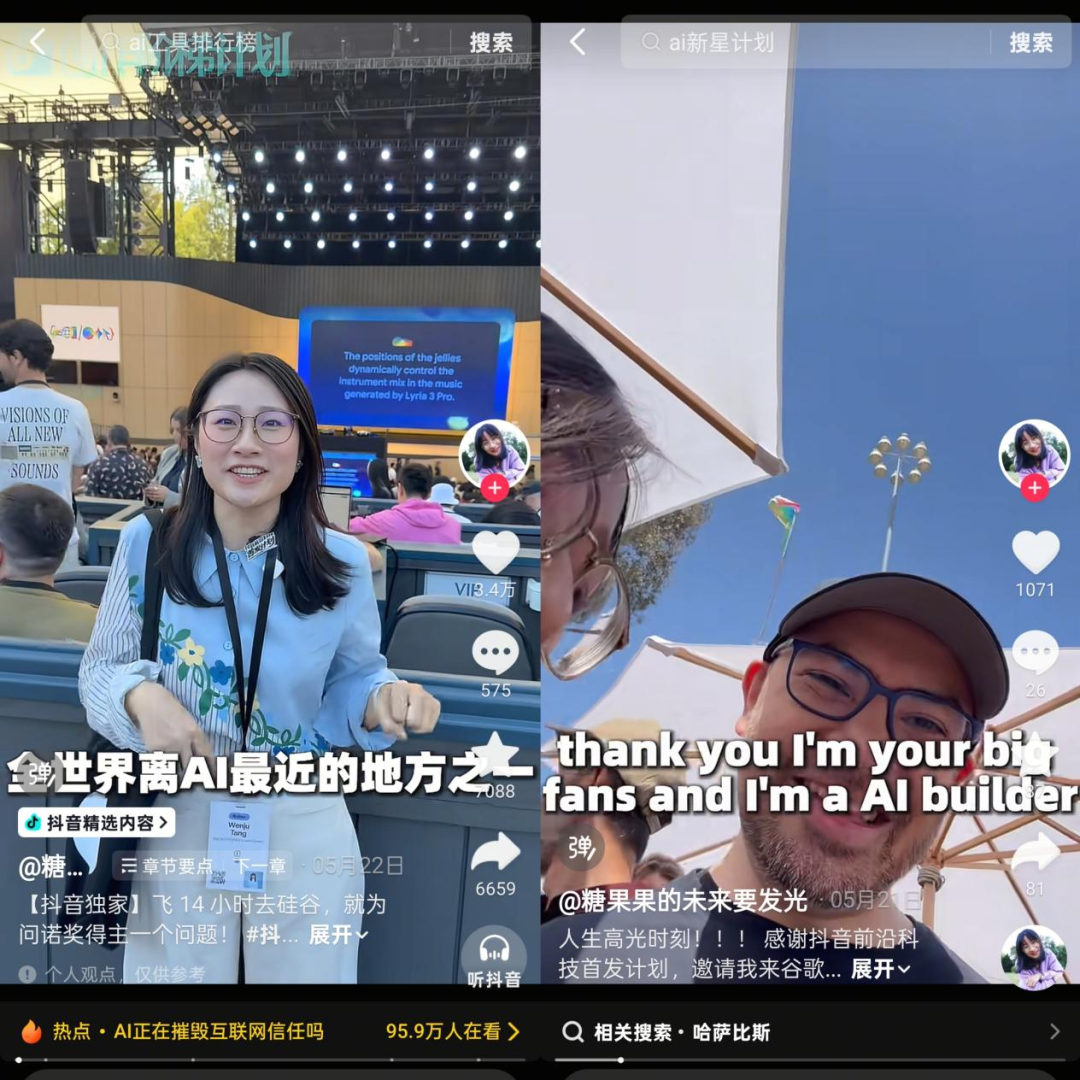
For instance, @Tang Guoguo's Future Shines asked Demis, as a mother of a 7-year-old, how today's children should prepare for the future.
This question is everyday but reflects the genuine concerns most people have about AI: how will technology affect future lifestyles and education?
Demis's response was also representative. He believed that foundational subjects like mathematics, physics, and computer science remain important, as they are still the underlying skills for mastering AI tools. At the same time, children should be exposed to AI earlier, incorporating it into their future learning and creativity.
After this content was posted on Douyin, the discussion continued.
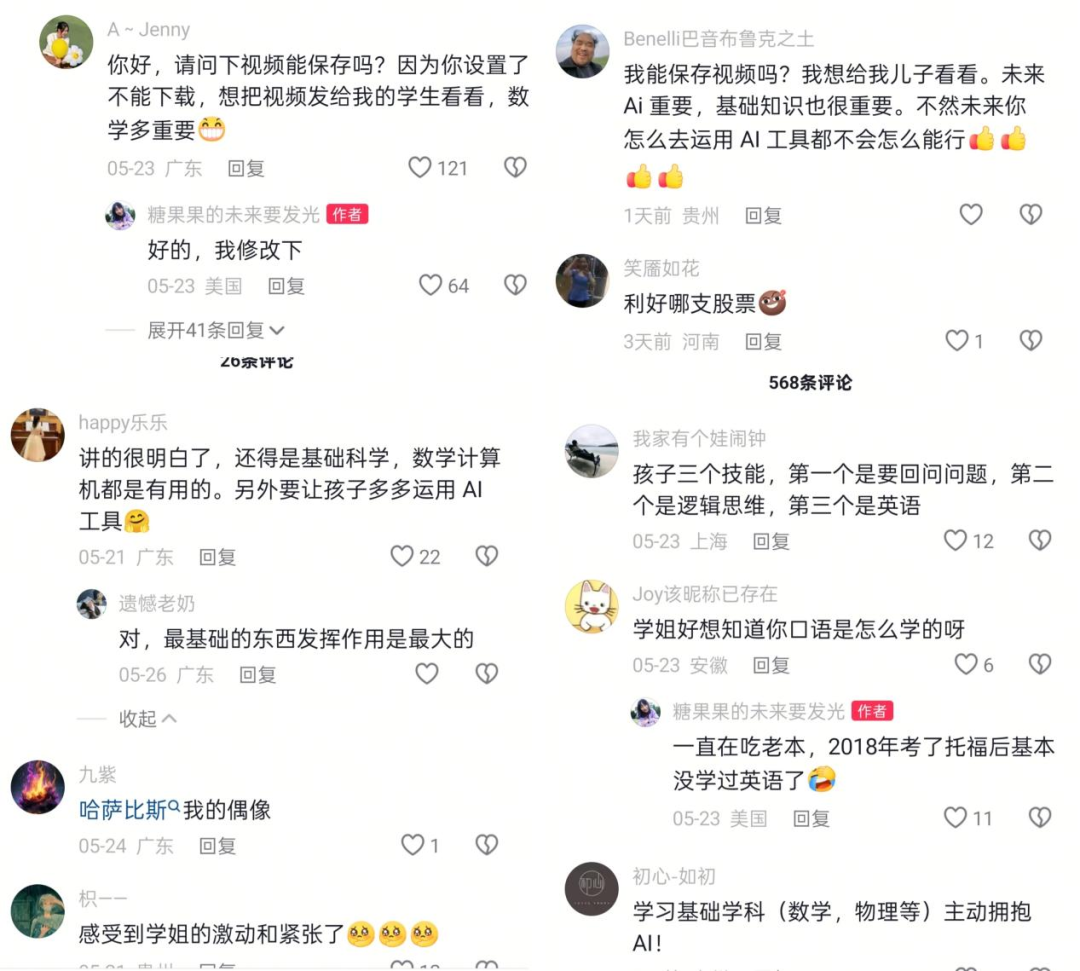
A teacher commented: Can the video be saved? I want to show it to my students; math is important. Others summarized that math and computer science are still useful, and children should use AI tools more. Some even proposed that children need three abilities: 'asking follow-up questions, logical thinking, and English.' Others, following the creator's on-site expression, asked about her spoken English learning methods.
A single question at Google I/O thus grew into multiple layers in the Douyin comment section: teachers thought about the classroom, parents about their children, ordinary users about skill preparation, and some even asked about English, expression, and learning methods all the way from AI.
Whether testing product demos on-site or as ordinary self-media creators, the diverse roles of Douyin creators are precisely their value. These individuals don't just bring traffic; they also bring two rarer things: real-world usage scenarios and questions from genuine audiences.
The former keeps technology from remaining confined to keynotes, while the latter ensures keynotes don't just answer questions from within the tech circle. 
Douyin Becomes the Surf Spot for Tech Conferences
Before AI, whether ordinary people understood many technologies didn't matter much. Chip architectures, cloud services, development frameworks, and model parameters didn't disrupt daily life even if not understood.
But after AI's practical applications, everyone became involved in tech topics. Writing documents, searching, editing videos, shopping, and planning all involve AI.
Cutting-edge technology no longer just affects developers; it has entered ordinary people's daily toolkits, even in small interactions with AI.
Many tech content enthusiasts will notice that this year's Google I/O excitement on Douyin even formed a complete 'online side event' covering pre-conference, during-conference, and post-conference.
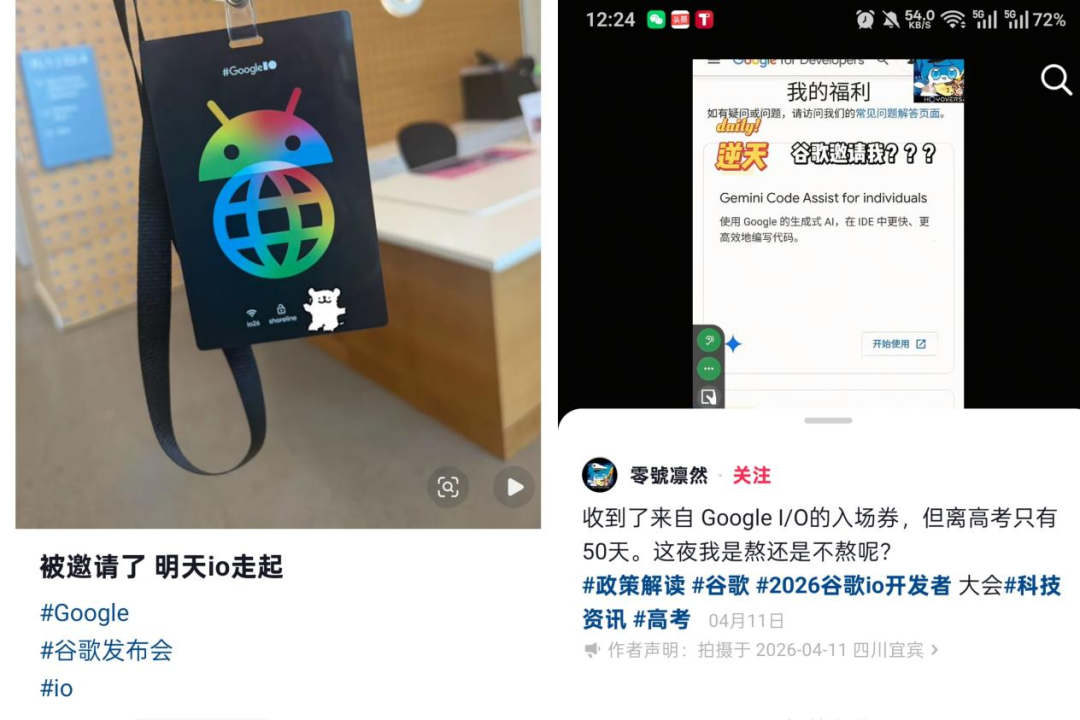
Before the conference, some already showed off their tickets, invitations, and Googleplex on-site credentials. For example, someone posted their Google I/O badge with the caption, 'Invited! Heading to I/O tomorrow.' A high school student from Sichuan received an online email invitation to Google I/O and asked, 'With only 50 days left until the college entrance exam, should I stay up for this?'
A global developer conference, originally far removed from ordinary users, was preheat ed by many tech enthusiasts on Douyin before its release. The keynote was no longer just an event on Silicon Valley's schedule; it began entering many Douyin users' timelines.
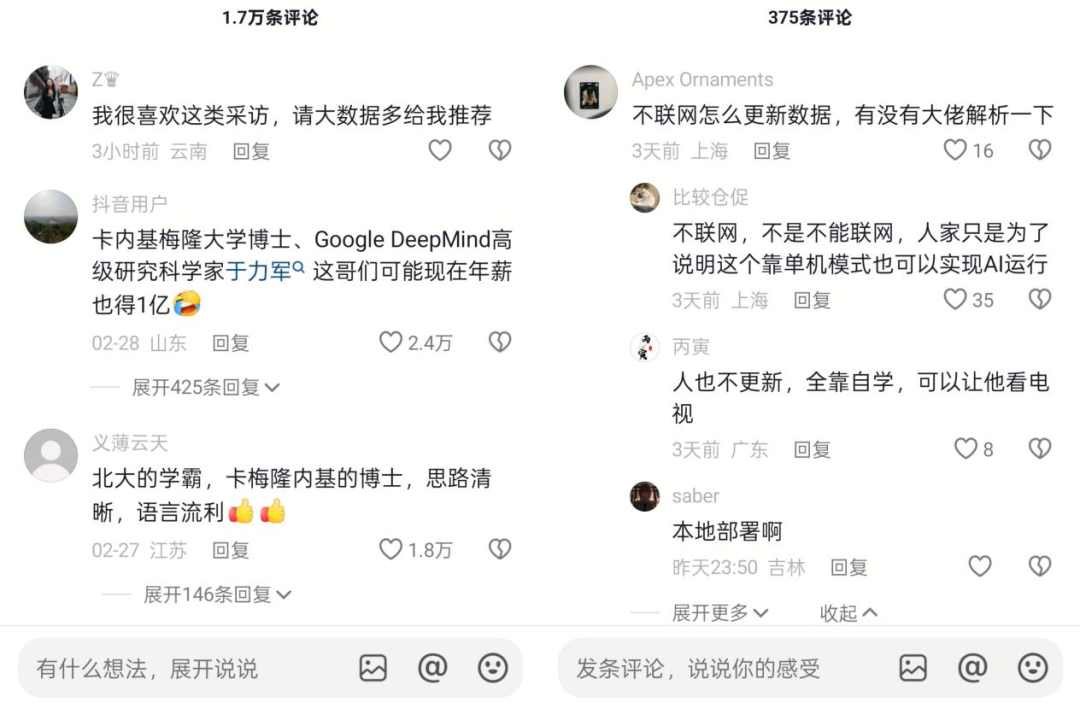
During the conference, Douyin authors visited Google's headquarters, with comments like, 'I love these interviews; please recommend more to me through big data.' Others added context about the interviewees: Peking University, Carnegie Mellon, Google DeepMind, senior research scientists.
After the conference, the content continued to ferment.
A creator introduced Google's latest Gemma 4 model's robotic duck, claiming it doesn't need cloud connectivity and can run on local computing power, allowing you to build one yourself.
This sparked curiosity: 'How does it update data without an internet connection? Can someone explain?' Someone immediately clarified: 'Not being offline doesn't mean it can't connect; it just demonstrates that AI can run in standalone mode.'
While these discussions seem scattered, they show that on Douyin, a tech topic is quickly understood by diverse groups, branching into education, career, creativity, consumption, and daily life. Cutting-edge tech isn't just displayed one-way; it's questioned, exchanged, and discussed.
This is precisely what sets Douyin apart from traditional media.
Traditional tech media excels at professional reporting and industry analysis but caters to a relatively concentrated audience already interested in technology or with industry backgrounds. Douyin's strength isn't replacing this professionalism (professionalism) but bringing cutting-edge tech to a broader audience.
Public data shows that in 2025, Douyin's annual tech content views exceeded 140 million. AI is a highly discussed buzzword on the platform: 17.48 million users have posted nearly 50 million AI-related tech contents on Douyin, with the number of AI content-interested users growing by 105% year-on-year.
Here are developers, students, teachers, parents, and ordinary users just beginning to explore AI. Different groups engage in the same topic, making people realize that Google I/O isn't far from their lives.
From Gemini's multimodal capabilities at the keynote to developer tools like Antigravity and AI search, topics once confined to tech conferences and communities are brought to the public eye by creators and further digested, questioned, and even inspired in the comment section.
The excitement around Google I/O on Douyin, beyond the platform's large traffic, stems from Douyin becoming the intermediary layer connecting cutting-edge tech with diverse audiences.
As AI begins entering everyone's lives, tech conferences no longer belong solely to venues and professional media. They need a more open, diverse, and everyday surf spot, which Douyin provides. 
Cutting-Edge Tech Becomes Hard Currency on Content Platforms
Of course, Google isn't the only example; more cutting-edge tech trends are happening on Douyin.
Looking back at May, signs of this change were already evident at ClawCon 2026 Shanghai.
As OpenClaw's official conference's first landing in China, @Poor Quality Hardware Department, invited by Douyin, became the first Chinese creator to deeply interview OpenClaw's core team.
From ClawCon2026 to Google I/O, Douyin has always wanted tech creators to be both observers and participants. It continuously tries to provide creators with more rare on-site opportunities to bring the freshest cutting-edge content.
Next is cultivating a discussion environment for professional tech content.
#MyFirstPaper is a great example. It starts with personal experiences behind scientific research, attracting authors from Science, Nature, and Cell, as well as researchers from Microsoft, Tsinghua, Zhejiang University, and Shanghai Jiao Tong University, who share their research journeys firsthand.
Someone commented, 'The expert I cited actually appeared on Douyin.' Beyond tech topics, more frontier figures are emerging on Douyin.
Finally, letting products from cutting-edge tech companies enter real usage scenarios.
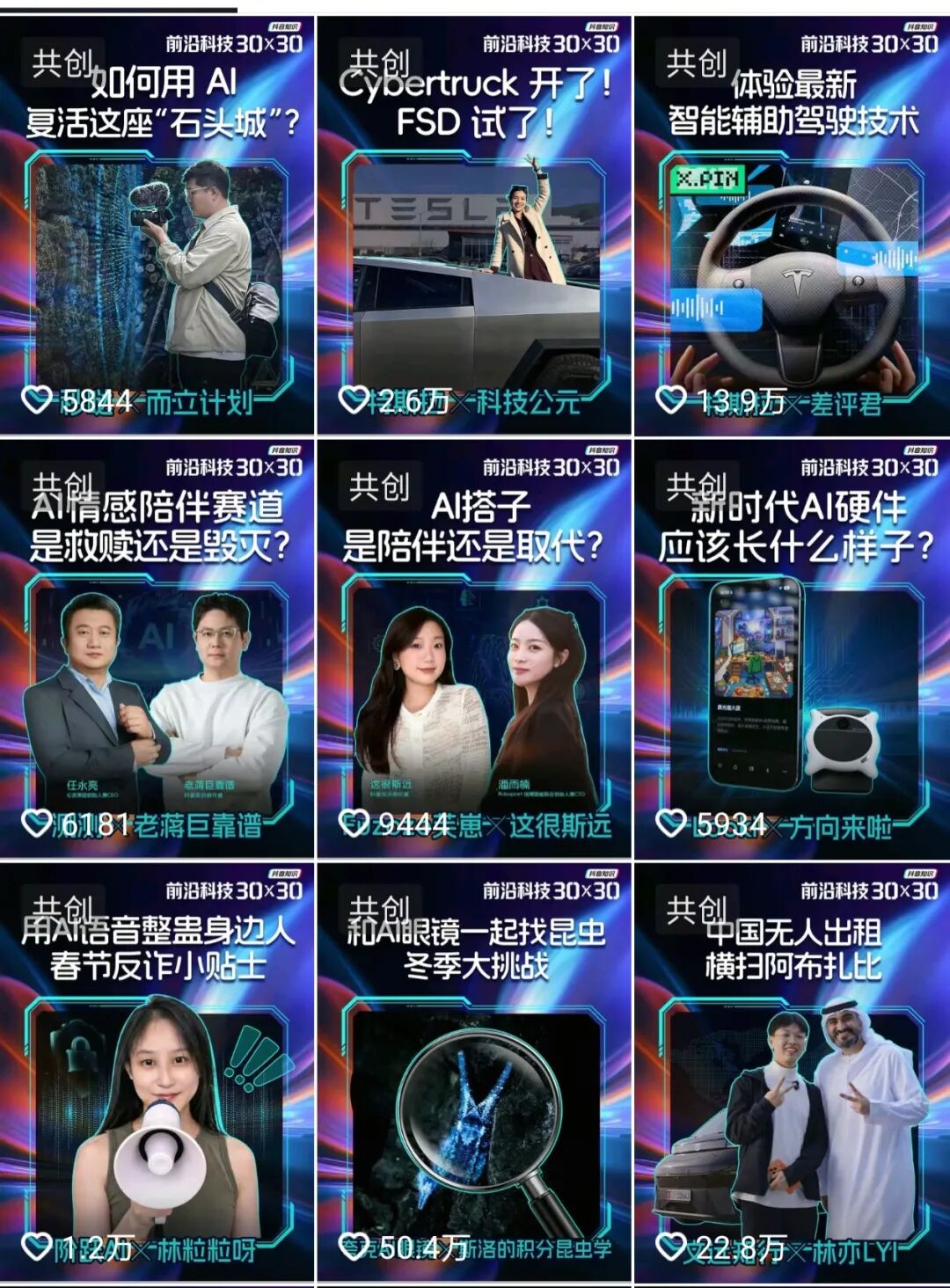
For example, the '30 Cutting-Edge Tech Products x 30 Douyin Creators' 30x30 series. Blogger @Qiuzhen and Aoshark Intelligence tested industrial-grade exoskeleton robots, bringing exoskeletons from 'industrial equipment' into specific scenarios: how they can be developed, used, and related to 'machine assistance' in ordinary people's understanding.
Creator @Lin Yi LYi's team member Xiaobai, supported by Douyin's Selected Content Creation Ladder Plan, visited Abu Dhabi, UAE, to experience the Robotaxi operations of WeRide, a leading Chinese autonomous driving company, locally. This provided a more practical perspective than the official corporate promotion (propaganda) of 'we have leading technology.'
Companies provide products and technologies, while creators offer usage scenarios, expression methods, and user feedback. On Douyin, both sides use more cutting-edge tech content to verify and present how a tech product meets real-life needs.
Viewing these actions together, it's clear that Douyin's success as a frontier tech discussion platform isn't just about catching tech trends; it's also because it simultaneously does three things: brings creators to the frontier, encourages frontier professionals to engage, and lets ordinary users participate in discussions.
Data also confirms this shift. In terms of user content consumption preferences, last year Douyin generated over 20,000 tech industry hot topics, with high-quality content supply growing by 152% year-on-year. Creator activity and growth are evident, and user demand for in-depth content is rising, with related metrics showing increases of 54%, 298%, and 30%.
Technology content on Douyin has begun to form a cycle of supply, consumption, and discussion.
For content platforms, cutting-edge technology is becoming a hard currency. It provides knowledge and also fuels imagination: it allows high school students to see the path taken by researchers, enables ordinary users to understand an AI product, and helps tech companies grasp real-world issues to better understand their products.
This is also the purpose of Douyin's 'Cutting-Edge Technology Launch Plan'.
The goal is not to create a few isolated events like Google I/O or ClawCon, but to transform technology content from sporadic excitement into a long-term capability—not just generating buzz for a moment, but turning a phenomenon into a vibrant content ecosystem.
Using this more stable mechanism for cutting-edge technology content: the latest developments from conferences, laboratories, and industrial sites are entrusted to a group of creators with expressive skills, technical understanding, and user awareness, who then bring them to a broader audience.
This also means that for tech companies, product launches should not end with a single event; they can also gain more visibility and discussion in the post-launch phase on Douyin.
-
Ofilm Teams Up with ADSensE to Propel Large-Scale Deployment of All-Solid-State LiDAR Powered by ADS6311 Chip!
-
![]()
Loss of 2.5 Billion Yet Facing Strong Demand for Shares? Another Battle for Control of Lianchuang Electronics
-
![]()
Huawei’s Enjoy Series Flies Off the Shelves, Prompting Xiaomi to Double Down on Budget Smartphones
-
![]()
Beijing Hyundai's Top Executive Criticizes Industry Disorder: Certain Brands Treat Customers as Beta Testers
-
![]()
The domestic mobile phone market has declined for five consecutive quarters! Huawei defies the trend with significant growth: maintains its top market share
-
Annual Revenue Surpasses 3 Billion: An Automotive Trim 'Little Giant' Makes Its Debut on the Beijing Stock Exchange
-
![]()
The Space Force Wants to Spend $30 Billion on Rocket Launches: Is Trump Doubling Down, and Is SpaceX the Big Winner?
-
![]()
Going Crazy! One out of Every Three Plug-in Hybrids Sold in Europe is a Chinese Vehicle