WWDC26 Ultimate Preview: The New Siri Takes Center Stage, iOS 27 Focuses on Refinement
 06/04 2026
 527
527
Apple's AI Needs to Prove Itself.
Finally, Apple has confirmed that WWDC26 will open at 10:00 AM local time on June 8, which is 1:00 AM on June 9 (Beijing Time).
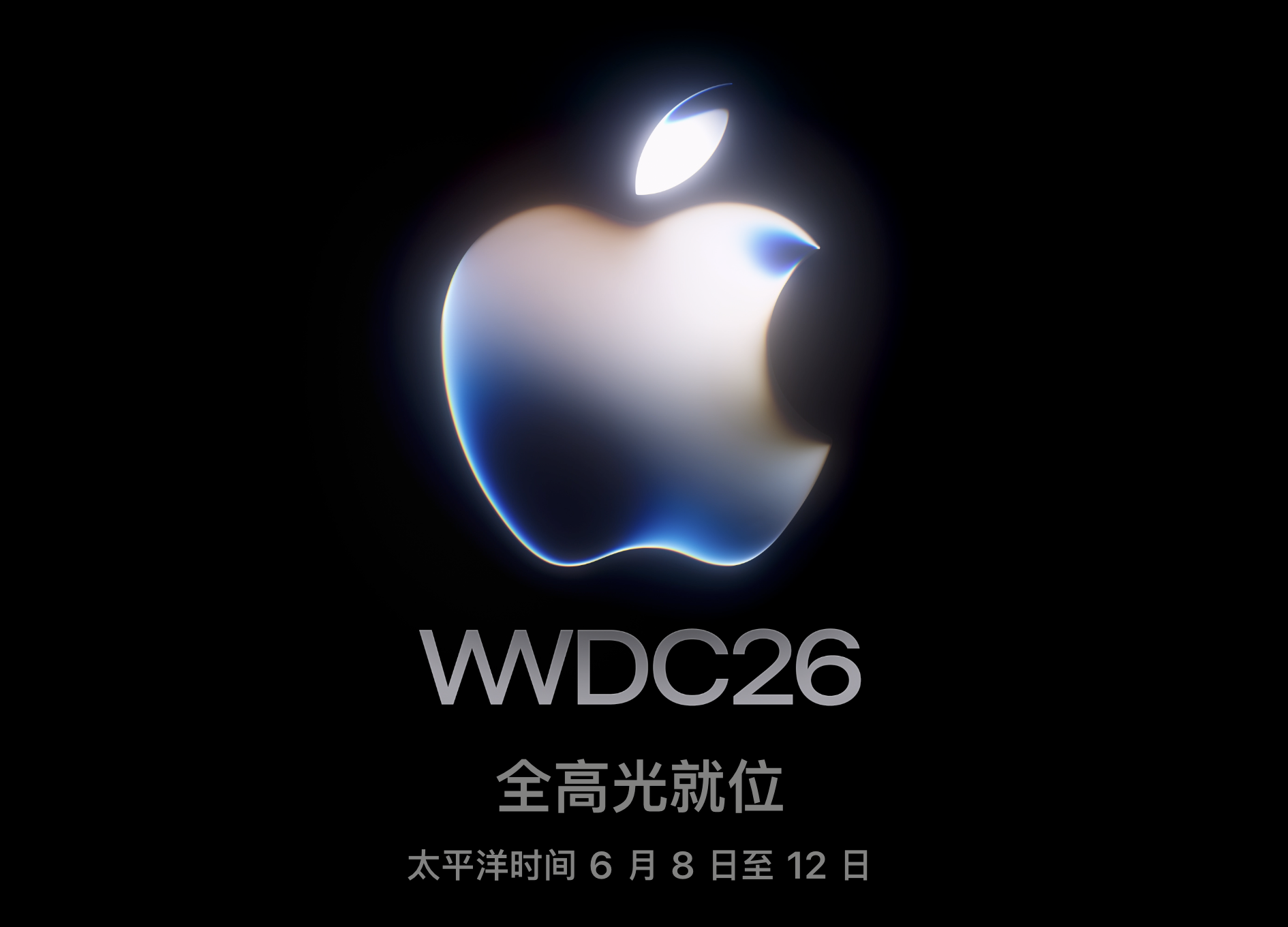
Image Source: Apple
As is customary, each WWDC showcases updates to the next-generation Apple platforms, including AI advancements and new software and developer tools. The most highly anticipated keynote speech, in particular, has traditionally focused on upgrades and changes to iOS, iPadOS, and macOS. However, by 2026, Apple faces different challenges.
Over the past two years, Apple Intelligence has failed to truly transform the daily usage of iPhone users. The repeated delays in Siri's major upgrade have also made Apple appear somewhat sluggish in the wave of generative AI.
Therefore, what truly makes WWDC26 worth watching this year is not just what iOS 27 and macOS 27 will look like or what new capabilities they will add, but whether Apple can redefine a more fundamental question: In an era where AI is deeply integrated into phones, computers, earphones, watches, glasses, and home devices, will the Apple ecosystem remain the best computing platform?
According to a roundup by Leikeji, based on current leaks about WWDC26, aside from the new Siri powered by the Gemini underlying model, Apple's next-generation systems are unlikely to undergo radical transformations. Instead, they will focus more on underlying and detail-oriented refinements, with true reforms expected to arrive in 2027 (the 20th anniversary of the iPhone), especially for iOS.
In recent years, changes to iOS have been somewhat awkward. On the one hand, Apple has been adding new features every year, from lock screen widgets and the Dynamic Island to personalized home screens and Apple Intelligence. On the other hand, for many ordinary users, the daily usage of the iPhone has not changed significantly. Apps are still apps, the Control Center remains the same, system settings are still buried in layered menus, and Siri has long failed to become a core gateway.
iOS 27 may first break this inertia in terms of visuals and gateways. According to Bloomberg, the new Siri will pop up from the Dynamic Island in a lighter bubble form, and users can access a system-wide gateway similar to "Search or Ask" by swiping down from the top center of the screen.
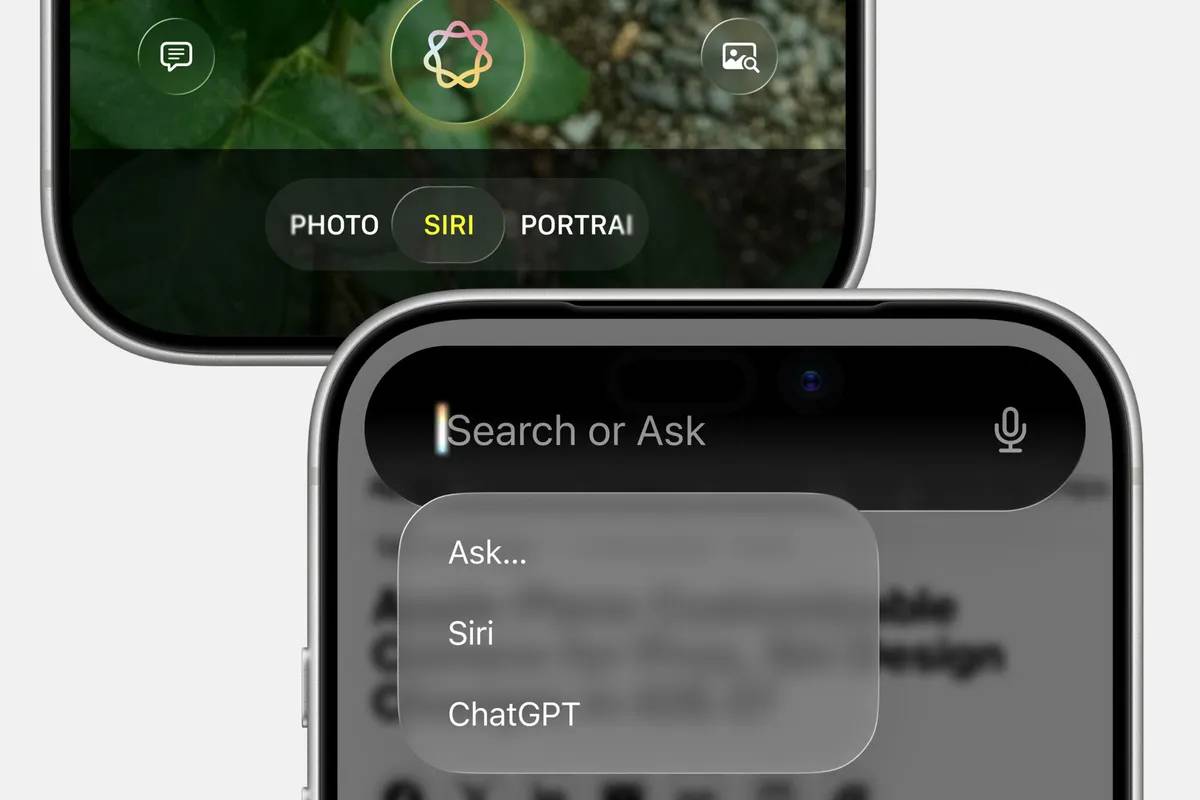
Not a real device. Image Source: Bloomberg
This gateway does not necessarily have to be understood in terms of AI capabilities; it is more like Apple redefining the way users search, control, and ask questions on the iPhone. In the past, swiping down brought up Spotlight search, but in the future, it may become a unified gateway that connects on-device content, system functions, web searches, and intelligent assistants.
The Dynamic Island has primarily served as a status indicator and light interaction area, such as for calls, timers, music playback, and navigation progress. If iOS 27 truly integrates Siri and the system search gateway into the Dynamic Island, it means Apple may transform this screen cutout from an "information display area" into a "system gateway."
The Camera app may also undergo more practical adjustments.
According to leaks, the Camera app in iOS 27 will introduce a new "Advanced" tab, supporting depth of field and exposure control, and offering widgets such as "Basic," "Manual," and "Preset." It may also include new grid and histogram tools. Additionally, the main interface will allow users to customize whether to display icons for functions like flash, exposure, and timer.
If iOS 27 can maintain Apple's signature simplicity in the camera interface while giving power users more control, it would be a very practical upgrade.
Furthermore, the Photos app may add a new tool area and introduce editing capabilities such as image expansion and recomposition, in addition to the existing "Cleanup" function. While this will certainly involve AI, from a system experience perspective, it is more like Apple continuing to integrate light photo editing capabilities that previously required third-party apps into the system photo album (system photo album).
More fundamental changes may involve stability and performance. MacRumors mentions that Apple is placing greater emphasis on bug fixes, stability improvements, and underlying performance optimizations in this generation of systems, even being compared by outsiders to the Mac OS X Snow Leopard-style update. While this may not sound as exciting as AI, it is actually more important for iOS users.
Another direction that cannot be overlooked is the early adaptation for foldable iPhones.
Even if Apple does not release a foldable iPhone this year, iOS 27 may reveal some system preparations in advance, such as more flexible window ratios, multitasking better suited for large screens, enhanced landscape interfaces, and a more blurred boundary between iPhone and iPadOS.
For Apple, the real challenge with foldables is not just hardware but also how to enable iOS to seamlessly switch between small screens, expanded large screens, and external displays.
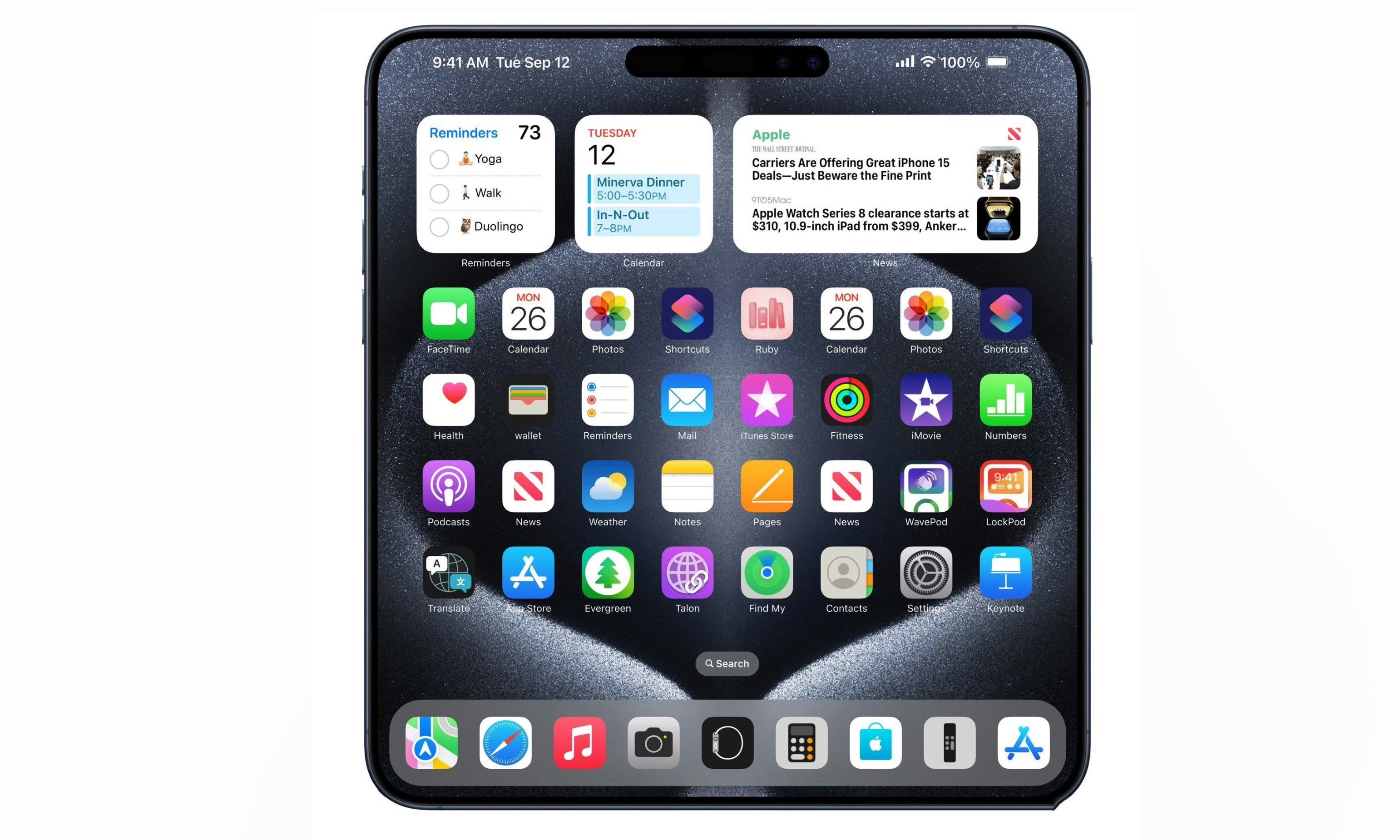
Image Source: X
Let's also mention iPadOS 27 briefly.
The biggest issue with iPads in recent years has been their surplus (overabundance) of hardware performance but shortage (lack) of system productivity. Therefore, it is worth anticipating whether Apple will continue to expand the system boundaries of the iPad, such as with more stable Stage Manager, freer window management, a file system closer to that of a desktop, a better external display experience, and a more natural workflow between the Apple Pencil, keyboard, trackpad, and multi-window usage.
For the iPad, while AI is important, fundamental system capabilities are even more crucial. Without sufficiently mature multitasking and file logic, even the most powerful intelligent assistant will struggle to turn the iPad into a truly reliable primary productivity tool.
Compared to the iPhone, the Mac is actually better suited to showcase Apple's AI ambitions. The reason is simple: Macs naturally handle more complex workflows. Writing, editing, programming, file management, browser research, meeting communication, and cross-app collaboration are all scenarios where generative AI can easily add value.
The key upgrades for macOS 27 this time include the new Siri, new Apple Intelligence features, and continued refinement of the liquid glass design language.
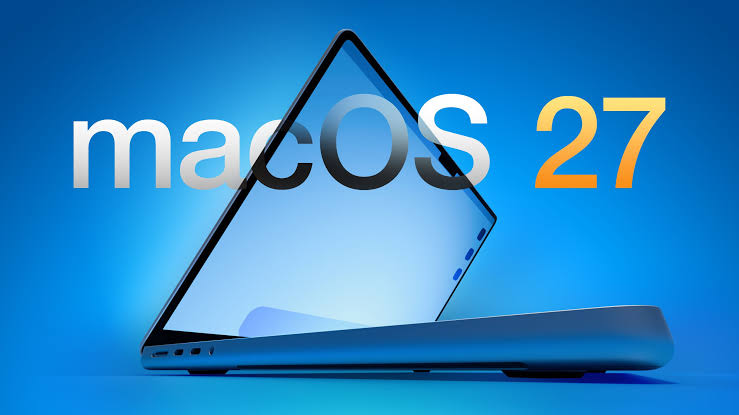
Image Source: X
First, macOS 27 will build on macOS Tahoe with performance optimizations and minor design adjustments, including improving the readability of the "liquid glass" interface. For Mac users, such "minor refinements" are far from insignificant. Finder, the menu bar, Dock, Mission Control, window management, Safari, file previews, and the shortcut system all form the basic productivity foundation of the Mac.
Additionally, macOS 27 will officially drop support for Intel chips. While many Intel Macs still offer decent performance, from Apple's perspective, unifying around the M series allows macOS to shed historical burdens in graphics, energy efficiency, security, virtualization, on-device models, and cross-device collaboration.
Safari may also be a focus of macOS 27, with the new version introducing automatic tab grouping to simplify the browsing experience.
If the new Siri and Apple Intelligence truly arrive in macOS 27, their first priority should not be AI chatting on the Mac but whether they can integrate into real workflows. For example, can they understand the content of the current window, connect emails, calendars, notes, files, and browser information, directly help users generate scripts, organize files, create to-dos, process images, and even complete continuous tasks across apps with user permission?
This would be a crucial step for Apple. In the past, Apple Intelligence's presence on the iPhone was not strong, partly because phone scenarios are more fragmented, and users have lower tolerance for AI errors. However, tasks on the Mac are longer and more complex, making AI's value easier to perceive.
If Apple can make macOS 27 the most stable, secure, and user-friendly personal AI work system, it may prove itself more effectively than by simply stacking features on the iPhone.
In addition to iOS, iPadOS, and macOS, WWDC26 is also an opportunity for Apple to realign the experience across all platforms. Platforms like visionOS, watchOS, and tvOS will also receive new updates, but currently, there is not much leaked information.
Undoubtedly, the biggest highlight of WWDC26 will still be Siri.
According to Mark Gurman, Apple is preparing a new Siri based on Gemini technology, which will have system-level access and integrate more deeply with iOS 27, iPadOS 27, and macOS 27, calling on full personal data such as on-device messages, photos, calendars, and documents.
Not only that, but Apple also plans to launch a standalone Siri app, which, as expected, will take on more functions, similar to the standalone AI assistant apps developed by Chinese smartphone manufacturers.
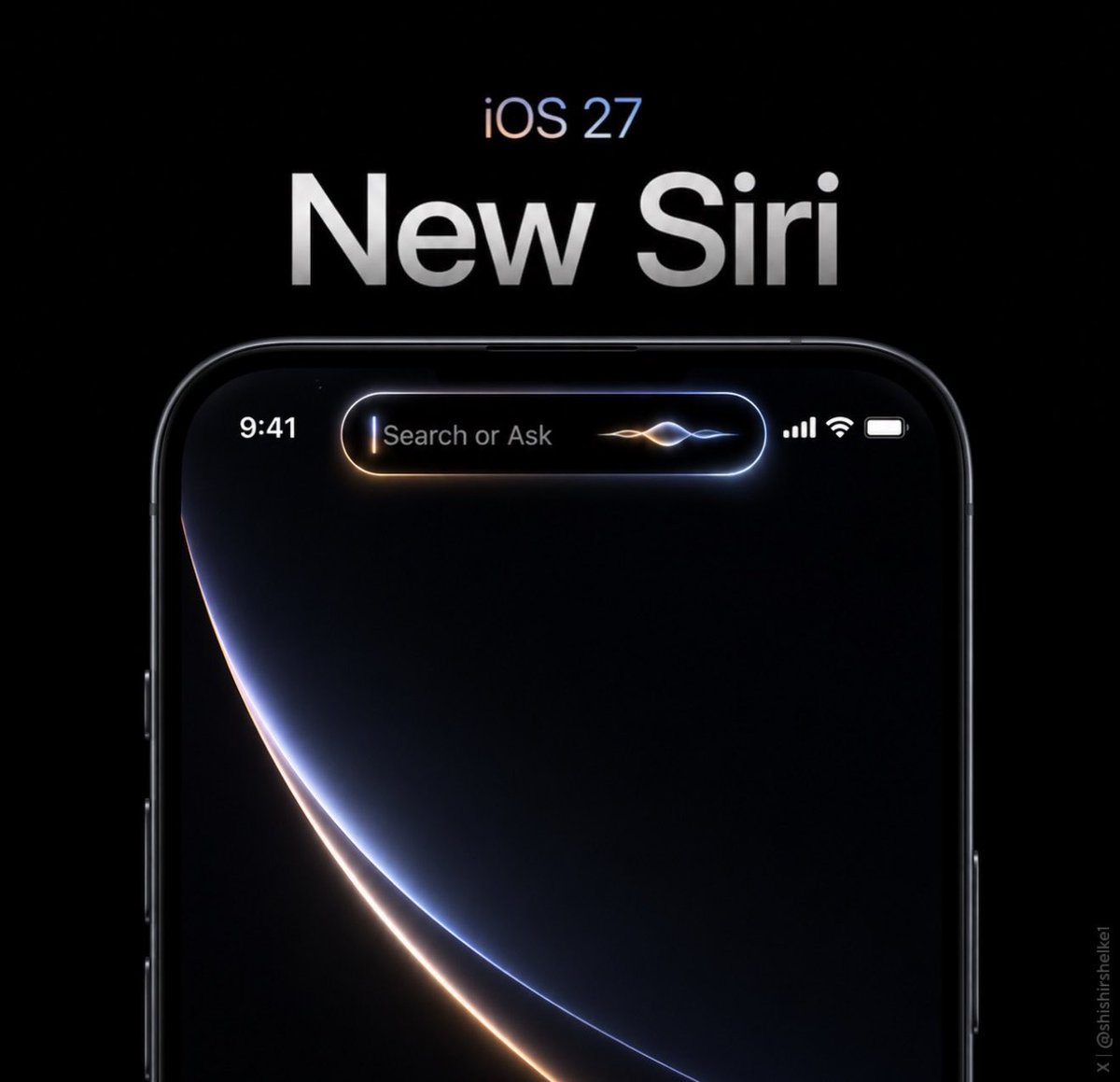
Image Source: X
However, it is worth noting that Apple has long emphasized hardware-software integration and has built a differentiated image around privacy and on-device processing. Now, it must rely on Google's Gemini model to achieve Siri's major upgrade, which, to some extent, admits that Apple lags behind in foundational large model capabilities.
From a practical standpoint, this may also be Apple's most pragmatic choice. The Siri issue has dragged on for too long, and Apple can no longer explain it away with "we're still refining it" for another year or two. By leveraging Gemini, Apple can fill in the underlying model capabilities and then amplify its true strengths:
System gateways, privacy architecture, on-device processing, cross-device experience, developer ecosystem, and control over the boundaries of user data access.
This is also what makes WWDC26 worth watching. Apple needs to clarify what role Gemini will play, which tasks will be completed on-device, which tasks will involve Private Cloud Compute, whether users' personal data will be used to train third-party models, and whether developers can access the new Siri capabilities.
On the other hand, the biggest issue with Apple Intelligence in the past has been that it felt like a collection of scattered features: writing tools, summaries, image generation, notification organization, photo cleanup, and partial Siri enhancements. While not useless, they hardly make users feel "I can't live without it every day."
Therefore, the real importance lies in whether they can be connected. The next step for AI phones is not for each app to add an AI button but for the system to understand what the user is doing and provide assistance in the right place.
For example, when a user is viewing a photo, AI can help edit it, generate captions, and send it to a specified contact; when writing an email, AI can reference the calendar, files, and the previous email; when researching in Safari, AI can organize webpages, extract tables, and generate notes; when describing a need in Shortcuts, the system can automatically generate a cross-app workflow.
This is the role Apple Intelligence should play—not just a brand name but a system-level intelligence that runs through the iPhone, iPad, Mac, Watch, and Vision Pro.
WWDC26 will be a very special developer conference for Apple. It will certainly include the usual upgrades to iOS, iPadOS, macOS, watchOS, visionOS, and tvOS, as well as continuous refinements in design, performance, developer tools, and ecosystem capabilities.
However, what will truly shape outside perceptions this year will still be Siri and Apple Intelligence.
Apple does not lack devices, users, or an ecosystem. But in an era where generative AI has reshaped software gateways, can Apple still turn complex technology into an experience that ordinary people are willing to use every day?
If the new Siri is just better at chatting, WWDC26 will likely only be seen as Apple's belated catch-up. If AI can truly integrate into Apple's major systems, understand personal scenarios, leverage device capabilities, and maintain Apple's emphasis on privacy and stability, then this conference could mark the beginning of Apple redefining the AI gateway.
Apple has already missed the earliest window of opportunity. Now, it must prove it can seize a new one.
AppleSiriiOS
Source: Leikeji
All images in this article come from the 123RF licensed image library. Source: Leikeji
-
Ofilm Teams Up with ADSensE to Propel Large-Scale Deployment of All-Solid-State LiDAR Powered by ADS6311 Chip!
-
![]()
Loss of 2.5 Billion Yet Facing Strong Demand for Shares? Another Battle for Control of Lianchuang Electronics
-
![]()
Huawei’s Enjoy Series Flies Off the Shelves, Prompting Xiaomi to Double Down on Budget Smartphones
-
![]()
Beijing Hyundai's Top Executive Criticizes Industry Disorder: Certain Brands Treat Customers as Beta Testers
-
![]()
The domestic mobile phone market has declined for five consecutive quarters! Huawei defies the trend with significant growth: maintains its top market share
-
Annual Revenue Surpasses 3 Billion: An Automotive Trim 'Little Giant' Makes Its Debut on the Beijing Stock Exchange
-
![]()
The Space Force Wants to Spend $30 Billion on Rocket Launches: Is Trump Doubling Down, and Is SpaceX the Big Winner?
-
![]()
Going Crazy! One out of Every Three Plug-in Hybrids Sold in Europe is a Chinese Vehicle