How Has Tencent's AI Become So Bold?
 06/04 2026
 458
458
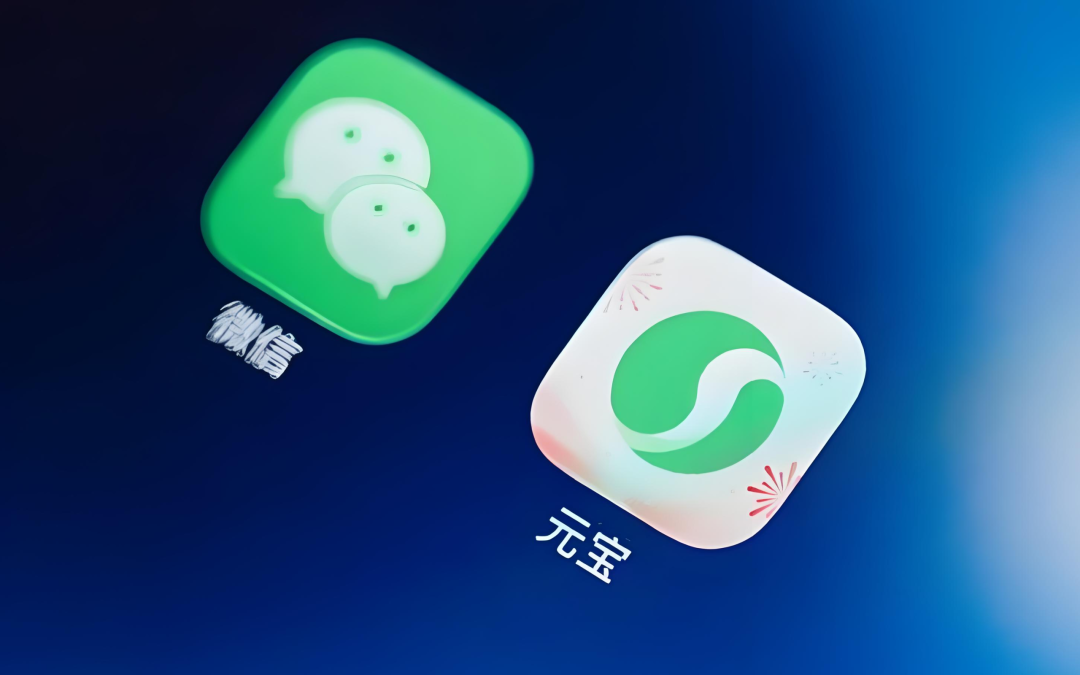
We Can't Just Let Doubao and Qianwen Show Off Their Moves
Tencent, a company known for its 'cautious' and even 'slow' approach, is taking an unprecedentedly aggressive stance in AI.
On June 2, three pieces of news about Tencent's AI were consecutively revealed. First, Meituan founder Wang Xing announced at an earnings call that Meituan's AI assistant, 'Xiaomei,' would integrate with Tencent Yuanbao, enabling services like ordering and delivery from Meituan Waimai within Yuanbao.
Second, according to the Financial Times, Tencent is testing a prototype of an autonomous AI agent and plans to initiate compliance procedures as early as this month, meaning WeChat could directly call on mini-programs.
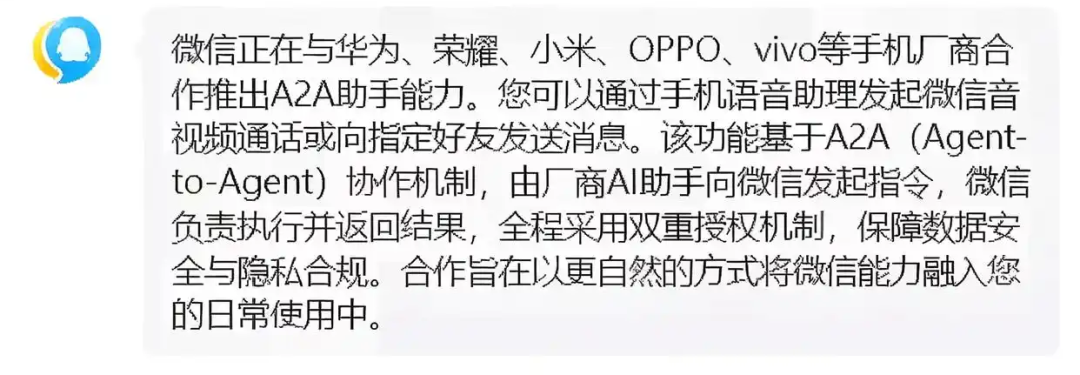
Third, IT Home discovered that WeChat is collaborating with mobile phone manufacturers such as Huawei, Honor, Xiaomi, OPPO, and vivo, allowing their AI assistants to directly initiate WeChat audio and video calls or send messages to designated contacts.
A series of positive developments caused Tencent's Hong Kong-listed shares to surge by over 10%, with its market value increasing by approximately HK$415.8 billion in a single day, marking the highest daily gain since January 2021.
Individually, these moves might seem like mere product iterations. However, when placed within Tencent's strategic roadmap of the past year, a clear trajectory emerges. The Tencent that once carefully weighed its options in the AI race, even hesitating to add a single entry point to WeChat, now seems to be actively breaking boundaries.
How Has Tencent's AI Strategy Become So Bold?
01 From Following to Restructuring
Tencent's 'boldness' in AI did not happen overnight. Over the past year, its investment pace in AI has become increasingly 'aggressive.'
In 2025, Tencent's R&D investment reached RMB 85.75 billion, a year-on-year increase of approximately 21%, with RMB 18 billion allocated to AI-related projects. Capital expenditures reached RMB 79.2 billion, a record high. In the first quarter of 2026, quarterly Capex rose to RMB 31.9 billion, almost entirely directed toward AI computing power and model iteration. Company executives also announced that AI-related investment would at least double in 2026.
Parallel to capital investment was the organizational restructuring at the end of 2025. On December 17, Tencent announced the establishment of the AI Infra Department, AI Data Department, and Data Computing Platform Department. It also recruited Yao Shunyu, a core researcher from OpenAI, as Chief AI Scientist, reporting directly to President Martin Lau.
This reporting line is highly unusual within a major corporate structure, where technical experts typically belong to specific business groups. This time, large models were directly elevated to a 'company-level priority project.'
Yao Shunyu also concurrently heads the AI Infra Department and the Large Language Model Department, indicating Tencent's intention to fully integrate 'algorithms' and 'computing power.' No longer satisfied with a 'modified version' with Chinese characteristics, Tencent emphasizes a Co-design model that combines its own business scenarios.
Pony Ma later admitted at the 2026 employee conference that Tencent had significantly optimized its AI talent structure over the past year, attracting more 'native AI professionals' from the industry.
Such aggressive talent acquisition is rare in Tencent's history. In March of the same year, Tencent dissolved its AI Lab, which had been established for nearly a decade, transitioning its AI business from the 'laboratory era' to the 'commercialization era.' This 'radical' adjustment, shifting from an academic research institution to a business unit directly bearing commercial value, reflects Tencent's urgency in accelerating AI implementation.
The evolution of the Hunyuan Large Model itself may be the most intuitive (intuitive) example. After DeepSeek gained popularity in early 2025, Tencent chose an extremely pragmatic path, fully embracing DeepSeek and downgrading the priority of its self-developed Hunyuan model. This was seen by outsiders as almost a concession, with rumors of 'Tencent AI falling behind' spreading widely.
However, by the end of 2025, after Yao Shunyu joined, Hunyuan was 'rebuilt from scratch,' with pre-training, reinforcement learning, and infrastructure all reconstructed. In late April 2026, the Hy3 preview model was officially released and open-sourced, featuring 2.95 trillion total parameters and only 21 billion active parameters. Using a Mixture of Experts architecture, it was specifically optimized for reasoning, long contexts, tool invocation, and agent scenarios.
After its launch, the model's token usage quickly surpassed that of the previous generation by tenfold, topping the weekly charts on the OpenRouter platform for three consecutive weeks. Pony Ma stated at a shareholders' meeting, 'As the new model trains, our confidence grows.'
From organizational restructuring to model iteration, Tencent completed the reshaping of its AI capability system in less than a year. However, the true purpose of this internal buildup is not simply to make Yuanbao smarter.
After all, increasing investment, restructuring, and attracting talent are 'standard moves' for giants facing technological waves.
Tencent's uniqueness lies in its choice of a different path from ByteDance and Alibaba. Instead of betting on standalone AI apps, it embeds AI agents into WeChat, an infrastructure-level ecosystem.
ByteDance's Doubao has accumulated over 340 million monthly active users, while Alibaba's Tongyi Qianwen is deeply integrated with Taobao and Alipay to create a 'consumption agent.' Competition for C-end AI entry points between the two companies is intensifying. Although Tencent Yuanbao has also surpassed 100 million monthly active users, it still lags behind Doubao and Qianwen.
Under such circumstances, Tencent did not choose to 'relentlessly pursue' user scale through Yuanbao but instead focused on WeChat's underlying ecosystem. After all, WeChat, with 1.4 billion monthly active users, handles every aspect of Chinese people's social lives, payments, travel, and daily activities.
Embedding an AI agent within WeChat that can access millions of mini-programs offers unparalleled user reach and scenario coverage compared to any standalone AI app. While Alibaba and ByteDance attempt to 'bypass' WeChat in the AI entry point race, Tencent's strategy seems to be 'defending' WeChat by embedding AI capabilities within an ecosystem users cannot avoid.
02 Avoiding Doubao and Qianwen's Home Turf
This logic is exemplified by the cooperation between Meituan's 'Xiaomei' and Yuanbao. Wang Xing explicitly stated at the earnings call that Meituan's true moat lies in its comprehensive local services, verified real-time information, authentic user reviews, and robust fulfillment infrastructure.
'By superposition (superimposing) these structural advantages with AI, we will provide users with the best AI-powered local life service experience.' In other words, Meituan provides fulfillment and data, while Tencent provides conversational entry points and user reach.
The two connect through an Agent-to-Agent approach, allowing users to complete the entire process from 'what I want to eat' to 'order placed' entirely within the Yuanbao conversation interface. This avoids direct competition between Meituan and Tencent while allowing both to find new positions of 'comfort' in the AI era.
Some industry insiders believe that the interaction between Yuanbao and Xiaomei is, to some extent, a 'rehearsal' for WeChat to develop its own AI agent.
The A2A cooperation with mobile phone manufacturers extends this 'ecosystem alliance' strategy to the hardware level. WeChat proactively opened interfaces to manufacturers like Huawei, Honor, Xiaomi, OPPO, and vivo, enabling their voice assistants to directly invoke WeChat capabilities for sending messages and initiating calls.
From a product perspective, this is merely a convenience feature, allowing users to send messages to friends without unlocking their phones and opening WeChat. However, from a strategic standpoint, this move signifies WeChat's transformation from a 'super app' into a 'service capability pool' that can be invoked by external AI agents.
This contrasts sharply with Alibaba and ByteDance's approach of attempting to replace WeChat functions with their own AI apps. Tencent has chosen not 'closed defense' but 'open connection,' making other AI assistants reliant on WeChat's capabilities.
This 'boldness' also implies a willingness to confront its own weaknesses. Pony Ma admitted at the 2026 shareholders' meeting, 'We can't just watch others do well and casually invade their territory. Only by setting a clear direction can we proceed steadily.'
Instead of engaging in head-on competition with Doubao and Qianwen in the C-end AI entry point arena where they hold advantages, Tencent returned to its core strength—social connectivity and ecosystem synergy.
WeChat AI agent, Yuanbao's A2A interoperability with Meituan, and A2A cooperation with mobile phone manufacturers—these three threads paint a picture: Tencent does not position itself as a 'disruptor' in the AI era but as a 'connection hub.'
It does not necessarily aim to create the smartest AI large model or the most popular standalone AI app but seeks to make all AI agents reliant on Tencent's ecosystem when connecting to real-world services.
Of course, this 'bold' gambit comes with risks. The cost of fully launching AI agents on WeChat is extremely high, and whether it can generate sufficient revenue to cover investment costs in the short term remains uncertain. Computing power supply is also a practical challenge, as Tencent's conservative layout (layout) before the U.S. chip export ban and ongoing tensions in domestic self-developed chip production capacity persist.
According to financial news, Tencent stated that it cannot currently determine the launch timeline for WeChat's AI agent, as its rollout largely depends on regulatory approval progress for agents. Given WeChat's 1.4 billion user base, compliance procedures are likely stricter than for other products.
Tencent's Q1 2026 earnings report also showed that revenue and operating profit grew by only 9% year-on-year, with core business growth rates diverging. The quarterly capital expenditure of RMB 31.9 billion accounted for approximately 42% of the period's Non-IFRS operating profit of RMB 75.6 billion, meaning the costs of this 'high-stakes gamble' are being borne by current profit statements.
Meanwhile, Alibaba and ByteDance are also making significant investments. Tongyi Qianwen's penetration into e-commerce and local life scenarios is accelerating, while Doubao is rapidly integrating with Douyin E-commerce to recommend stores and group-buying packages and complete transactions directly.
The 'interception' effect of AI entry points on traditional app service ecosystems is becoming a real threat that Tencent must face. If WeChat's AI agent fails to establish a sufficiently deep moat in user experience and scenario coverage, this 'bold' adventure could turn into a costly defensive battle.
But at least for now, Tencent has chosen to act. Pony Ma's self-deprecating remark about 'fixing the boat while leaking' also acknowledges a truth: in the face of new technological waves, giants must also continuously experiment and adjust.
Tencent AI's various 'bold' moves over the past year are essentially aimed at completing a strategic shift—from driving model capabilities through application scenarios to driving ecosystem synergy through underlying models.
03 In Conclusion
From 'too slow' to intensively pushing AI strategic transformation, Tencent has taken about a year.
From Hunyuan to Yuanbao, then to the WeChat AI agent, Tencent's AI product matrix is forming clear layers: Hunyuan as the large model foundation, Yuanbao as the general C-end assistant, the WeChat AI agent as the ecosystem execution hub, WorkBuddy as the productivity tool, and A2A capabilities building cross-platform connection channels.
If Tencent's previous 'slowness' was primarily due to cautious consideration of WeChat's ecosystem security, today's actions indicate that, driven by external competitive pressure and internal strategic recognition, Tencent has chosen a bolder AI path.
The stakes of this gamble are enormous, but the potential rewards are equally significant.
How much of an AI operating system can the WeChat ecosystem support? Whether Pony Ma's desired 'faster ship speed' can ultimately propel WeChat, this massive 'national flagship,' into a new era may soon become clear.
- END -
-
Ofilm Teams Up with ADSensE to Propel Large-Scale Deployment of All-Solid-State LiDAR Powered by ADS6311 Chip!
-
![]()
Loss of 2.5 Billion Yet Facing Strong Demand for Shares? Another Battle for Control of Lianchuang Electronics
-
![]()
Huawei’s Enjoy Series Flies Off the Shelves, Prompting Xiaomi to Double Down on Budget Smartphones
-
![]()
Beijing Hyundai's Top Executive Criticizes Industry Disorder: Certain Brands Treat Customers as Beta Testers
-
![]()
The domestic mobile phone market has declined for five consecutive quarters! Huawei defies the trend with significant growth: maintains its top market share
-
Annual Revenue Surpasses 3 Billion: An Automotive Trim 'Little Giant' Makes Its Debut on the Beijing Stock Exchange
-
![]()
The Space Force Wants to Spend $30 Billion on Rocket Launches: Is Trump Doubling Down, and Is SpaceX the Big Winner?
-
![]()
Going Crazy! One out of Every Three Plug-in Hybrids Sold in Europe is a Chinese Vehicle