AI Won't Replace You, But Your Work Style Will Be Transformed by Agentic AI
 06/04 2026
 534
534
In 2026, a silent foundational revolution is taking place in the AI industry.
Over the past three years, the proliferation of large models has addressed AI's 'content generation capabilities,' enabling high-quality output of text, images, code, and audio. However, a core limitation remains unbroken: AI lacks agency.
All generative AI systems operate based on human users providing precise instructions, defining task boundaries, overseeing execution processes, and finalizing results. AI remains essentially a passively triggered probabilistic generation system—an 'advanced production tool' dependent on human will—incapable of independently adapting to the dynamic complexities of the real world.
In contrast, Agentic AI (Autonomous Agent AI) completely subverts this operational paradigm. It is no longer a tool triggered by instructions, delivering single outputs and terminating tasks. Instead, it is an autonomous intelligent system characterized by goal-oriented agency, environmental adaptability, closed-loop execution, and self-iterative capabilities. This marks a pivotal transition point where AI evolves from a 'support tool' into a 'productivity entity.'
This transformation is not merely a functional superposition (superposition) but a reconstruction of AI's foundational logic: shifting from 'human-machine master-servant relations' to 'human-machine collaborative symbiosis,' from 'static content output' to 'dynamic scenario loops,' and from 'human-driven efficiency' to 'AI-autonomous productivity creation.'
Understanding the foundational logic, technical barriers, and industrial realities of Agentic AI is essential to truly comprehending the underlying framework of the next-generation digital economy.

Reinterpreting Agentic AI
A common cognitive misconception (misconception) exists within the industry: equating Agentic AI with 'upgraded large models,' 'advanced AI plugins,' or 'automation scripts.'
In reality, these belong to entirely distinct technological paradigms with insurmountable generational gaps. The core distinction lies in whether they possess independent task agency.
Traditional programmed AI and early algorithmic models operate on deterministic rule-matching principles. Relying on manually coded fixed instructions, preset rules, and limited scenarios, they can only execute structured, standardized, and variable-free simple tasks.
Even minor deviations in scenarios or demands exceeding preset rules cause system failure. These AIs lack comprehension, reasoning, and adaptability—essentially 'automation tools' capable of replacing only mechanical, repetitive operations without any intelligent attributes.
First-generation generative large models operate on probabilistic content generation. Leveraging massive pre-trained data, they possess semantic understanding, logical organization, and content creation capabilities, breaking through traditional AI's rule-based limitations to handle unstructured and ambiguous content demands.
However, their shortcomings include a lack of goal awareness, execution pathways, and environmental interaction capabilities. They can only generate static content based on historical training data, unable to connect with real-world scenarios, execute practical operations, or adjust plans in response to real-time changes. All task initiation, progression, completion, and optimization depend entirely on human intervention—a one-way intelligence capable of thought and output but incapable of practical action.
The core breakthrough of Agentic AI lies in constructing a complete autonomous intelligence loop paradigm. Its essence integrates the cognitive capabilities of large models with environmental perception, tool orchestration, decision planning, memory iteration, and risk validation to form a self-operating system independent of human intervention.
It no longer requires humans to break down tasks, refine instructions, or oversee processes. Given an ultimate goal, it autonomously completes the full chain of work from scenario assessment, task decomposition, path planning, execution, to review and optimization.
From a technical definition perspective, Agentic AI represents a class of AI systems with endogenous goal-driven mechanisms. Its core operational chain follows: 'multi-source perception → deep reasoning → dynamic planning → tool execution → result validation → memory iteration,' fully replicating the thinking and execution logic of advanced human cognitive labor.
Its core traits can be summarized as three foundational paradigm upgrades, completely distinguishing it from traditional AI:
First, from instruction dependency to goal alignment.
Abandoning traditional AI's absolute reliance on precise prompts, it leverages large models' intent understanding and reasoning capabilities to interpret human vague, abstract, and unstructured macro goals. It autonomously identifies core needs, eliminates ineffective interference, and defines task boundaries, solving the core pain point of generative AI where 'instruction deviation equals result failure' and enabling 'outcome-oriented' intelligent decision-making.
Second, from static generation to dynamic interaction.
Breaking through the limitations of offline content generation, it perceives real-time dynamic changes in external environments, data, and scenarios. During execution, it autonomously corrects paths, adjusts strategies, and mitigates risks, adapting to real-world uncertainties rather than mechanically outputting results based on fixed logic.
Third, from single-use reset to continuous evolution.
Overcoming traditional AI's defect of 'single-task, single-reset,' it establishes long-term memory and self-review mechanisms. It accumulates task experience, adapts to user preferences, optimizes execution logic, and forms a positive iterative loop where it becomes increasingly intelligent and precise with use—possessing true 'learning and growth capabilities.'
The most intuitive industrial difference is that while generative AI enhances single-link production efficiency, Agentic AI reconstructs the entire production system workflow.
Core Technical Barriers Supporting Agentic AI Operations
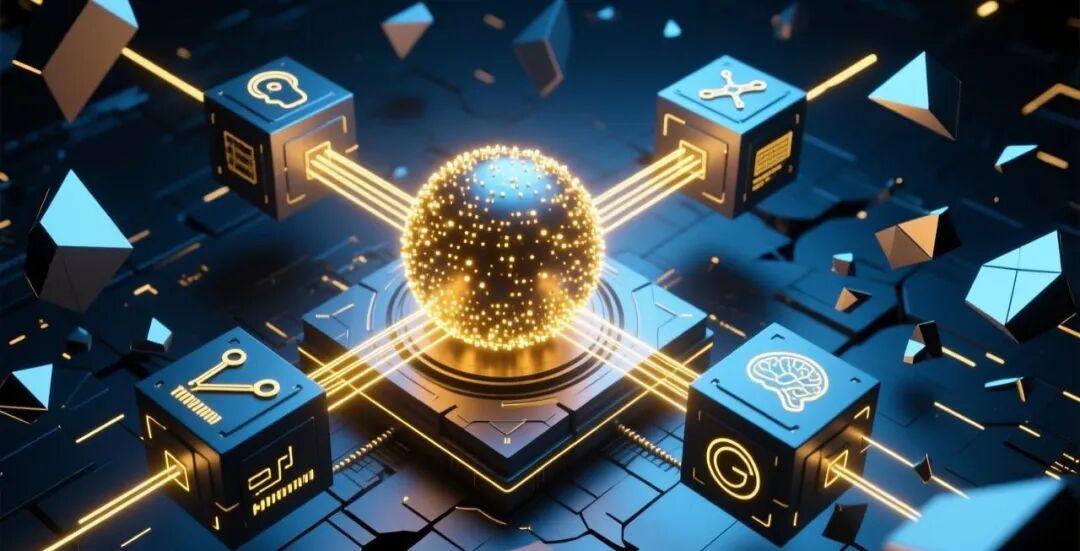
The autonomous capabilities of Agentic AI do not stem from parameter upgrades of a single model but from a complex technical architecture involving multi-module collaboration, software-hardware integration, and closed-loop iteration.
Ordinary AI plugins and automation tools on the market can only trigger simple fixed workflows. In contrast, truly autonomous Agentic AI relies on the deep coupling of four core modules to establish difficult-to-replicate technical barriers—a focal point for leading tech companies' strategic layout (deployments).
The perception module is the foundational prerequisite distinguishing Agentic AI from traditional large models. Traditional large models derive information solely from user text input and static training data, suffering from severe information lag and limitations.
In contrast, Agentic AI's perception system functions as a global dynamic information collection network. It can in real-time access multidimensional information sources, including internet public data, local system files, third-party tool interfaces, IoT device data, user historical behavior data, and industry dynamic sentiment. This resolves the industry pain point of AI being 'disconnected from reality,' providing authentic and reliable bases for subsequent reasoning, planning, and execution.
The reasoning and planning module serves as Agentic AI's 'brain center' and its core barrier to possessing 'agency.' It represents the most fundamental distinction from ordinary automation tools.
Traditional automation scripts can only execute preset steps without autonomous planning capabilities. In contrast, Agentic AI leverages large models' deep logical reasoning, chain-of-thought thinking, and causal analysis to accomplish two core advanced tasks: precise parsing of vague intents and dynamic planning of complex tasks.
The inability to translate cognitive capabilities into practical execution represents the largest industrial shortcoming of generative AI.
Unlike traditional AI limited to invoking fixed preset tools, Agentic AI autonomously orchestrates and operates tools, independently completing full-dimensional practical actions such as searching, editing, computing, debugging, submitting, scheduling, trading, and maintenance without requiring manual tool dock (interface) or operation execution.
This module transforms AI from a 'content producer' into a 'true productivity executor,' directly converting cognitive capabilities into tangible value.
The evolutionary capability module provides core support for Agentic AI's long-term value. It establishes a dual-layer memory system combining short-term situational memory and long-term feature memory, completely breaking through traditional AI's limitation of 'task completion equals reset.'
Short-term memory records execution details, path logic, data results, and weaknesses from single tasks, ensuring coherence in complex tasks. Long-term memory accumulates user work habits, preference patterns, industry scenario characteristics, and historical task experiences.
More critically, it features an autonomous review and iteration mechanism. After each task, the system autonomously validates result accuracy, analyzes execution deviation causes, optimizes task planning logic, corrects tool invocation flaws, and precipitate (accumulates) scenario-based experiences, achieving self-optimization without human intervention.
This continuous evolutionary trait enables Agentic AI to constantly adapt to personalized, scenario-based, and industry-specific demands, becoming increasingly aligned and efficient with use.
Building on this, advanced Agentic AI incorporates multi-agent collaborative orchestration architectures. Through division of labor, collaboration, validation, and game-theoretic mechanisms, multiple specialized agents handle segmentation (subdivided) tasks such as data retrieval, compliance review, logical validation, content creation, and execution, mutually cooperating and correcting errors. This significantly enhances execution precision and efficiency for complex tasks—a core technical barrier for current enterprise-grade Agentic AI.

Agentic AI Reconstructs Production Relations, Not Just Efficiency
By 2026, Agentic AI has transitioned from laboratory concept validation to full-scale industrial implementation in deep waters.
Unlike generative AI, which only optimizes single work links, Agentic AI's implementation fundamentally reconstructs production processes and human-machine division of labor across industries. It replaces standardized, procedural, and low-creativity human labor, reshaping industrial productivity structures with value far exceeding simple cost reduction and efficiency gains.
Mizuho Securities' latest semiconductor industry report identifies one of AI's most significant transformations: AI is evolving from traditional chatbots toward Agentic AI capable of autonomously executing complex tasks.
Gartner predicts that by late 2026, 40% of enterprise applications will integrate task-oriented Agentic AI, up from less than 5% in early 2025. The core trend shifts from 'capable of chatting' to 'capable of working,' emphasizing autonomous execution, multi-step orchestration, low hallucination, and trustworthy closed loops.
Knowledge workers spend 80% of their work hours on repetitive tasks such as data retrieval, organization, copywriting, process coordination, and report generation, with truly core decision-making and innovative creation work accounting for a minimal proportion.
The large-scale implementation of Agentic AI not only accomplishes basic tasks like copywriting, data aggregation, and PPT creation but also autonomously handles advanced matters such as project reviews, work coordination, cross-departmental collaboration, data analysis, and problem diagnosis.
This transformation directly reconstructs workplace core competitiveness. Future workplace value will no longer derive from 'proficiently completing processes' but from 'accurately formulating goals, controlling core directions, and making innovative decisions.' Employees will be liberated from tedious procedural tasks, using AI as an always-available 'intelligent teammate' for efficient collaboration.
Recently, Amazon Web Services announced the launch of Amazon Quick, a desktop AI assistant that introduces personal AI assistance to desktops. By maintaining real-time connections, accessing local files and applications, and learning from each session to deeply understand users' work content, it creates personalized experiences.
Users can directly create real-time dashboards, intelligent applications, polished presentations, and images within Amazon Quick.
By integrating Google Workspace, Zoom, Microsoft 365, and Salesforce, Amazon Quick seamlessly converges applications, tools, and data for one-stop operation of daily applications. Users can quickly start using it within minutes by providing only an email address.
For small, medium, and micro enterprises as well as internet companies, Agentic AI is deeply empowering all links (every link) of basic operations, front-end development, back-end maintenance, and user operations, constructing low-cost, high-efficiency, and uninterrupted digital teams.
At the operational level, AI autonomously handles user inquiry responses, lead screening, community maintenance, content distribution, and data analysis. It autonomously diagnoses traffic fluctuations and conversion weaknesses while outputting optimization strategies without requiring continuous human intervention.
Meanwhile, companies are integrating this AI collaboration capability into core business processes. Taking Amazon Web Services' Amazon Connect series as an example, it has expanded into four vertical solutions.
Among them, the intelligent supply chain planning solution Amazon Connect Decisions integrates Amazon's three decades of supply chain management experience. Through collaboration among six agents handling demand forecasting and supply planning, it distills thousands of alerts into core priorities to assist planners in decision-making. The intelligent recruitment solution Amazon Connect Talent uses AI to lead competency assessments and voice interviews, though final hiring decisions remain with human recruiters.
This perfectly exemplifies Agentic AI empowering employees as an 'intelligent teammate.'
In high-precision professional fields such as healthcare, biopharmaceuticals, and new materials, Agentic AI's autonomous closed-loop capabilities significantly lower thresholds for research and diagnosis, accelerating industry innovation iterations.
In clinical healthcare scenarios, AI can monitor patient vital signs data in real-time, organize case information, compare similar treatment plans, and review therapeutic effects to provide doctors with precise auxiliary decision-making bases, filling information blind spots in manual diagnosis.
For instance, Amazon Web Services' Amazon Connect Health solution integrates with electronic medical record systems to assist healthcare workers in patient identity verification, appointment scheduling, medical history organization, clinical documentation entry, and medical coding.
The solution operates 24/7, completing appointments instantly and transferring complex cases to staff when needed. It also conducts multi-stage evaluations of model safety and accuracy, including manual reviews involving healthcare workers.
The system can transcribe doctor-patient conversations during consultations, draft clinical documents in real-time for healthcare worker review, and generate patient summaries in plain language, significantly enhancing doctor diagnostic efficiency.

The Industrial Evolution Path of Agentic AI
In the next three years, Agentic AI will complete a critical leap from 'pilot implementation' to 'standardized popularization,' fundamentally reshaping human-machine collaboration models and the digital economy ecosystem.
First, lightweight technology and standardized protocols will break down cost barriers to implementation. The industry will rapidly establish unified standards for agent interaction, authorization, security, and compatibility, overcoming technical barriers between different vendors and platforms to resolve the issue of isolated agent systems.
Simultaneously, lightweight technology solutions leveraging edge-cloud collaboration will quickly mature, significantly reducing computational demands and implementation costs. Affordable Agentic AI products tailored for small-to-medium enterprises and individual users will be introduced, enabling universal technological access.
Second, multi-agent collaboration will become mainstream, building an autonomous system for all scenarios. The capabilities of a single agent are limited and cannot address complex, integrated scenarios.
In the future, multi-agent orchestration technologies will continue to evolve, enabling a closed-loop system of task division, collaboration, verification, and error correction among specialized agents. This will allow them to independently handle enterprise-wide, cross-domain, and highly complex workflows, establishing a 24/7, all-scenario, and unmanned digital productivity system that replaces most foundational tasks traditionally performed by human teams.
Third, regulatory compliance frameworks will be implemented, enabling controllable autonomous evolution. Addressing pain points such as AI decision uncertainty, data security, and ambiguous accountability, countries will introduce dedicated regulatory policies and industry standards to clarify accountability boundaries for AI autonomous actions, data usage limits, and risk management criteria.
At the same time, the industry will develop technical solutions such as hierarchical permission control, full-process traceability auditing, and risk threshold alerts, achieving a balance between 'AI autonomous execution and human-controlled oversight' and removing obstacles to implementation in high-risk areas.
Fourth, the division of labor between humans and machines will be completely restructured, ushering in an era of human-machine symbiosis. Future human-machine relationships will overturn traditional master-slave models, forming a new division of labor where 'humans set goals, AI executes; humans drive innovation, AI manages processes; humans control risks, AI enhances efficiency.'
Humans will be liberated from repetitive, low-value, and process-driven labor to focus on high-level tasks such as strategic decision-making, innovation, emotional value creation, and top-level design. AI, as an autonomous and collaborative productivity partner, will deeply integrate into all aspects of production and life, enabling efficient human-machine symbiosis.
Fifth, deep collaboration between cloud providers and leading model ecosystems will accelerate the realization of a full-stack value closed loop (closed loop). The large-scale commercialization of enterprise-grade Agentic AI requires not only breakthroughs at the application level but also a solid foundation of underlying security, compliance infrastructure, and computational power ecosystems.
For instance, Amazon Web Services (AWS) recently announced a deepened strategic partnership with OpenAI, enabling native integration of OpenAI's cutting-edge models, programming tool Codex, and managed agent services on the Amazon Bedrock platform. This collaborative model allows enterprises to develop and deploy production-ready agent systems with agility while benefiting from AWS's stringent data privacy, security controls, and governance mechanisms—completely eliminating underlying technical barriers and compliance concerns for enterprise AI transformation.
From rule-based matching in traditional programmatic AI to content creation in generative AI, and now to autonomous action in Agentic AI, the evolution of artificial intelligence is fundamentally a history of continuously liberating human productivity.
The digital world of the future will no longer be a one-way scenario of humans manually operating machines but a new ecosystem of collaboration between humans and autonomous agents.
Agentic AI is quietly reshaping industrial landscapes, workplace rules, and the fabric of digital civilization. Only by embracing this new paradigm of AI-human symbiosis can organizations seize core opportunities in the next wave of digital transformation and capture industry dividends and era-defining opportunities in the years ahead.
[Original reporting by Tech Cloud News] Reprints must credit 'Tech Cloud News' and include a link to this article.
-
Ofilm Teams Up with ADSensE to Propel Large-Scale Deployment of All-Solid-State LiDAR Powered by ADS6311 Chip!
-
![]()
Loss of 2.5 Billion Yet Facing Strong Demand for Shares? Another Battle for Control of Lianchuang Electronics
-
![]()
Huawei’s Enjoy Series Flies Off the Shelves, Prompting Xiaomi to Double Down on Budget Smartphones
-
![]()
Beijing Hyundai's Top Executive Criticizes Industry Disorder: Certain Brands Treat Customers as Beta Testers
-
![]()
The domestic mobile phone market has declined for five consecutive quarters! Huawei defies the trend with significant growth: maintains its top market share
-
Annual Revenue Surpasses 3 Billion: An Automotive Trim 'Little Giant' Makes Its Debut on the Beijing Stock Exchange
-
![]()
The Space Force Wants to Spend $30 Billion on Rocket Launches: Is Trump Doubling Down, and Is SpaceX the Big Winner?
-
![]()
Going Crazy! One out of Every Three Plug-in Hybrids Sold in Europe is a Chinese Vehicle