AI Reshapes Globalization: New Opportunities for Chinese Enterprises Going Global
 06/05 2026
 453
453

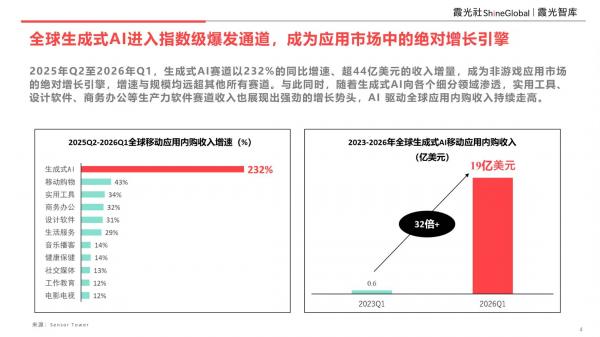
Global generative AI is undergoing a critical transition from technological breakthroughs to commercial monetization.
According to Sensor Tower data, from Q2 2025 to Q1 2026, the generative AI sector achieved a 232% year-on-year growth rate, generating over $4.4 billion in incremental revenue and becoming an undisputed growth engine in the non-gaming application market. This not only reflects rapidly increasing user acceptance of AI applications but also marks AI's transition from early concept validation to scaling paid adoption in mainstream consumer markets.
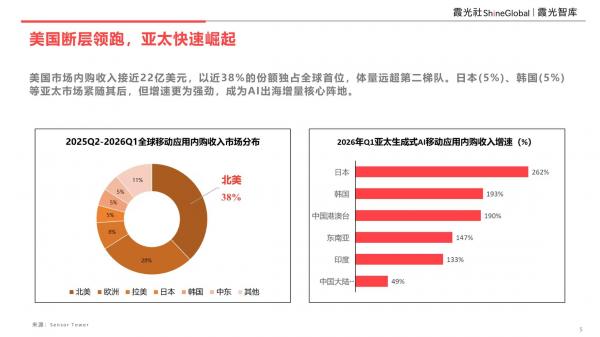
Amid this global growth wave, regional markets exhibit significant differentiation. The U.S. market leads globally with a nearly 38% share and nearly $2.2 billion in in-app purchase revenue, creating a first-mover advantage that will be difficult to replicate in the short term due to its mature application ecosystem and high-paying user base. Although smaller in scale, Japan, South Korea, and other Asia-Pacific markets are growing robustly, representing critical incremental opportunities for Chinese AI companies going global.
This "U.S.-Asia bipolar" pattern means Chinese enterprises must both validate their technical capabilities in mature markets and leverage cultural proximity and scenario innovation advantages in Asia-Pacific markets.
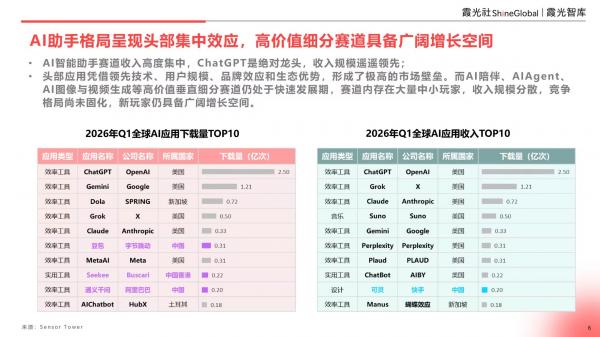
A closer look at the competitive landscape of AI applications reveals accelerating divergence between general-purpose tools and vertical applications. In the AI smart assistant domain, ChatGPT has established significant dominance through technological leadership, user scale, and ecosystem barriers, creating extremely high market entry barriers for newcomers. However, high-value sectors such as AI companionship, AI agents, and AI image/video generation remain in rapid development phases with fluid competitive dynamics, offering ample growth opportunities for new entrants.
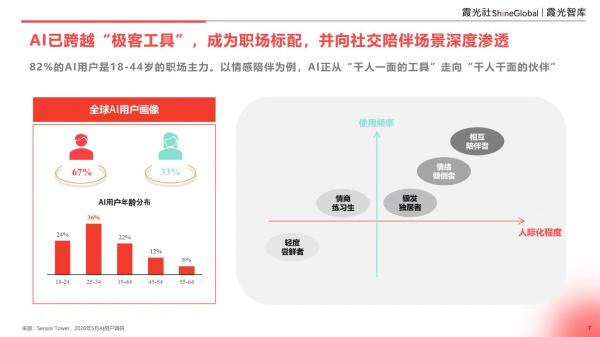
Meanwhile, the AI user demographic is shifting from "tech enthusiasts' tools" to "workplace essentials." Surveys show 82% of AI users are working professionals aged 18-44, with AI applications covering content creation, office productivity, social companionship, and other scenarios—becoming indispensable workplace infrastructure. This structural change in user composition is directly driving AI applications to extend from functional attributes to emotional value.
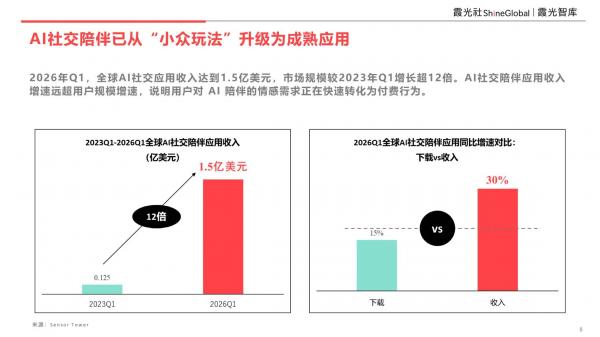
Taking the AI social companionship sector as an example, global revenue reached $150 million in Q1 2026, growing over 12x compared to Q1 2023. User payment growth far outpaces user base expansion, indicating that emotional needs are translating into paid behaviors and that AI companionship products have formed sustainable commercial closed loop (closed loops).

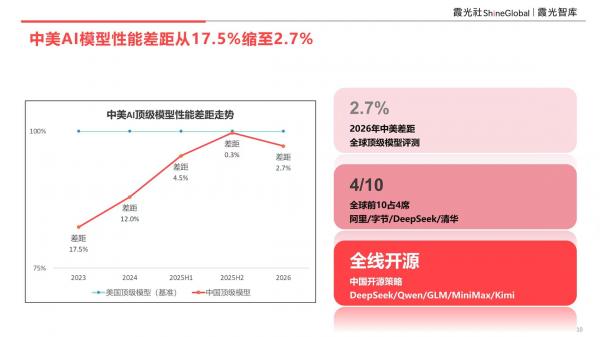
From a technical capability perspective, Chinese AI companies are rapidly closing the gap with global leaders. Studies show the performance gap between top Chinese and U.S. AI models has narrowed dramatically from 17.5% to 2.7%. In 2026, Chinese enterprises occupied four spots in the global top 10 model evaluations, coming from Alibaba, ByteDance, DeepSeek, and Tsinghua University. Simultaneously, Chinese open-source models like DeepSeek, GLM, MiniMax, Kimi, and Qwen are establishing global technical influence, with full open-source strategies lowering entry barriers for overseas developers and accelerating the global penetration of Chinese AI technologies.
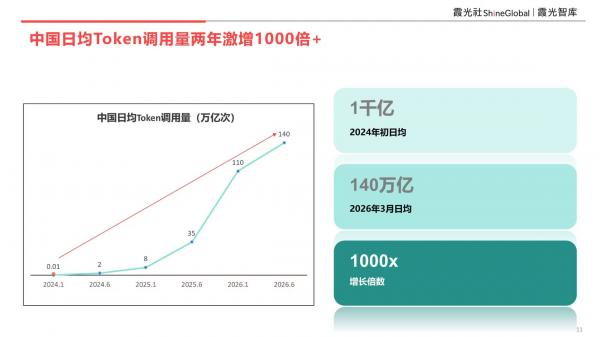
This rapid technical catch-up is fully validated at the application level. Data shows China's daily Token processing volume surged from hundreds of billions in early 2024 to 140 trillion by March 2026—a 1,000+ fold increase in two years. This exponential growth reflects not only rapid penetration of domestic AI applications but also positions Chinese AI models in the global first tier for real-world training and iteration capabilities.
The accumulation of these technical and scale advantages has translated into genuine overseas demand for Chinese AI—driven by cost-effectiveness, open-source ecosystem accessibility, scenario implementation capabilities, and global deployment experience. These four factors collectively constitute the core motivations for overseas users to adopt Chinese AI solutions.

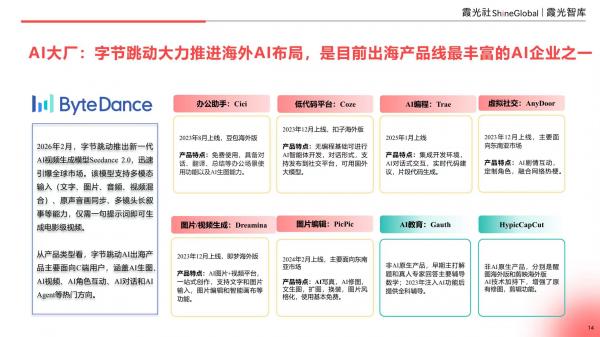
Among platform players, ByteDance stands out as one of China's most diversified AI companies in global expansion. In February 2026, it launched Secdance 2.0, a next-gen AI video generation model supporting multimodal inputs, original audio-visual synchronization, multi-shot storytelling, and other capabilities—able to generate cinematic-quality videos from a single prompt, quickly drawing global market attention. ByteDance's strategy demonstrates that Chinese AI giants are pursuing not single-product exports but platform-based, matrix-style ecological expansion.
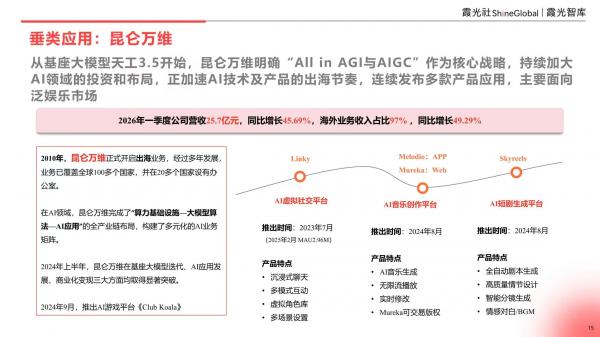
Unlike platform players' matrix strategies, Kunlun Tech has chosen full-industry-chain cultivation from foundational models to vertical applications. Since initiating its global business in 2010, Kunlun Tech has covered over 100 countries with a clear "All-in AGI & AIGC" core strategy. In Q1 2026, it achieved RMB 2.57 billion in revenue (+45.69% YoY), with overseas business contributing 97% (+49.29% YoY). From computing infrastructure to large model algorithms and various pan-entertainment (pan-entertainment) applications, Kunlun Tech has completed full-industry-chain deployment, with its high overseas revenue ratio validating the feasibility of upgrading AI globalization from "supplementary business" to "core growth engine."
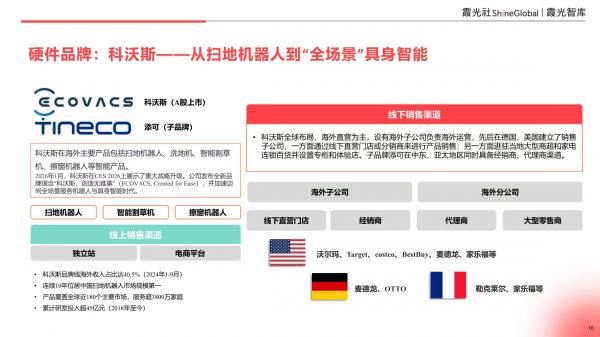
In hardware and embodied AI, Ecovacs represents another globalization path. Starting from robotic vacuums, Ecovacs is accelerating toward full-scenario service robotics. Channel-wise, it focuses on overseas direct operations with sales subsidiaries in Germany and the U.S., deploying through offline direct stores, distributors, and large retail counters. Its subsidiary Tineco simultaneously expands dealer and agent networks in the Middle East and Asia-Pacific. This case demonstrates that Chinese AI hardware globalization has upgraded from single-product exports to integrated brand-channel-service capability exports.
In summary, Chinese AI globalization is evolving from "model export" to "technical standards and ecological penetration." Whether through ByteDance's platform matrix, Kunlun Tech's full-industry-chain deployment, or Ecovacs' hardware brand upgrading, the commonality lies in moving beyond reliance on single price or channel advantages—instead building systematic global competitive barriers with technical capabilities as the core, localized operations as support, and vertical scenarios as breakthrough points.
-
Ofilm Teams Up with ADSensE to Propel Large-Scale Deployment of All-Solid-State LiDAR Powered by ADS6311 Chip!
-
![]()
Loss of 2.5 Billion Yet Facing Strong Demand for Shares? Another Battle for Control of Lianchuang Electronics
-
![]()
Huawei’s Enjoy Series Flies Off the Shelves, Prompting Xiaomi to Double Down on Budget Smartphones
-
![]()
Beijing Hyundai's Top Executive Criticizes Industry Disorder: Certain Brands Treat Customers as Beta Testers
-
![]()
The domestic mobile phone market has declined for five consecutive quarters! Huawei defies the trend with significant growth: maintains its top market share
-
Annual Revenue Surpasses 3 Billion: An Automotive Trim 'Little Giant' Makes Its Debut on the Beijing Stock Exchange
-
![]()
The Space Force Wants to Spend $30 Billion on Rocket Launches: Is Trump Doubling Down, and Is SpaceX the Big Winner?
-
![]()
Going Crazy! One out of Every Three Plug-in Hybrids Sold in Europe is a Chinese Vehicle