Dell’s AI Infrastructure Boom: NVIDIA Reaps the Benefits
 06/05 2026
 503
503

In the eyes of Wall Street, Dell has rapidly transformed from a traditional computer company into a key player in AI infrastructure.
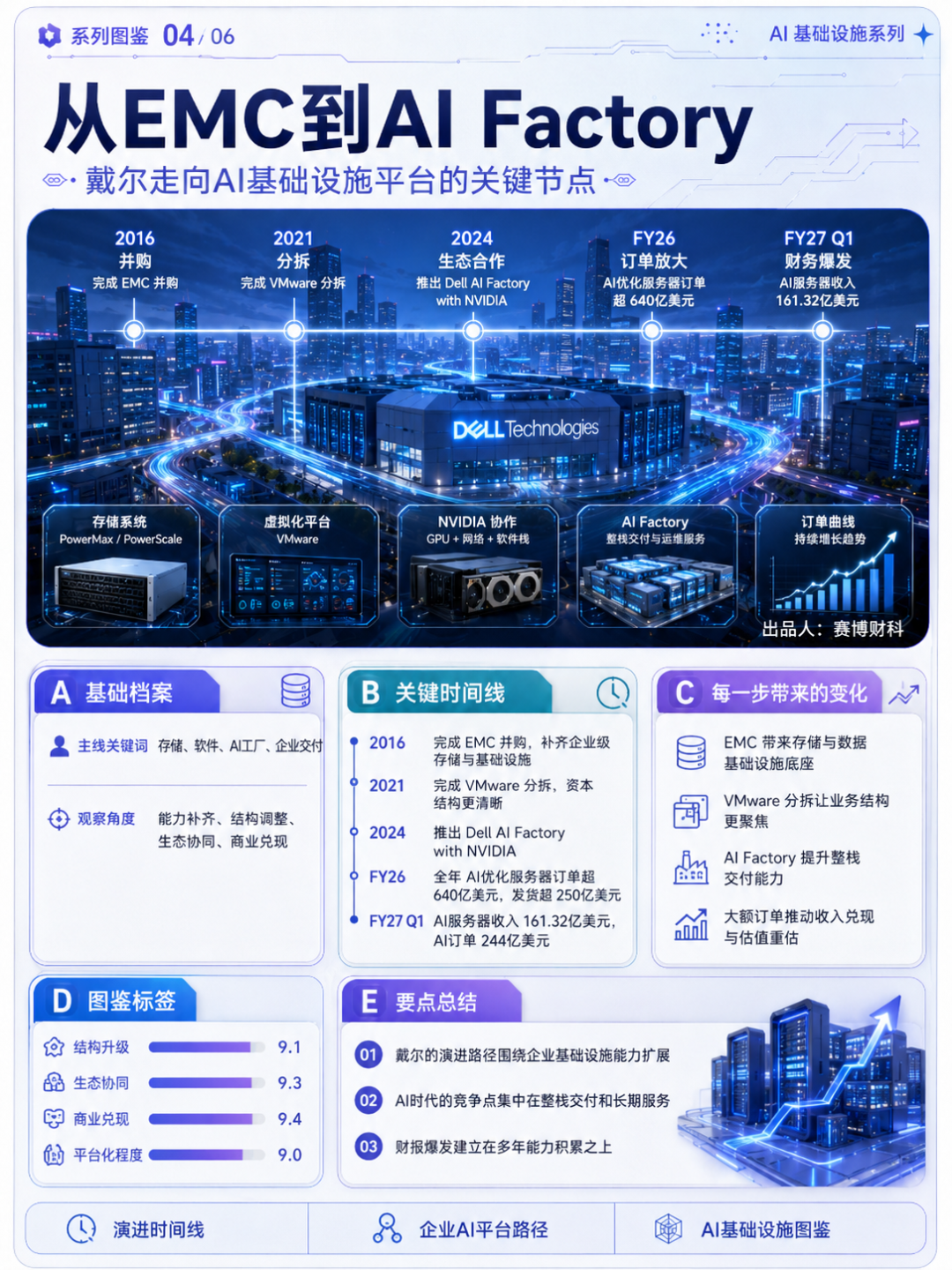
In its latest fiscal quarter, Dell reported revenue of $43.842 billion, up 88% year-on-year. Of this, revenue from AI-optimized servers reached $16.132 billion, marking a staggering 757% increase. These figures have prompted a reevaluation of the company and shed light on the flow of wealth within the AI supply chain.
1. From Computer Company to AI Infrastructure Leader
Many still associate Dell with commercial computers, monitors, data center servers, and enterprise procurement lists. However, the fiscal 2026 report has rewritten this outdated perception.
Dell’s fiscal year 2027 first quarter ended on May 1, 2026. During this period, revenue from the Infrastructure Solutions Group surged to $29.009 billion, up 181% year-on-year, while the Client Solutions Group contributed $14.609 billion, a 17% increase. While the computer business continues to provide stable cash flow, the growth driving valuation expansion comes from servers, networking, storage, and AI cluster deployment.
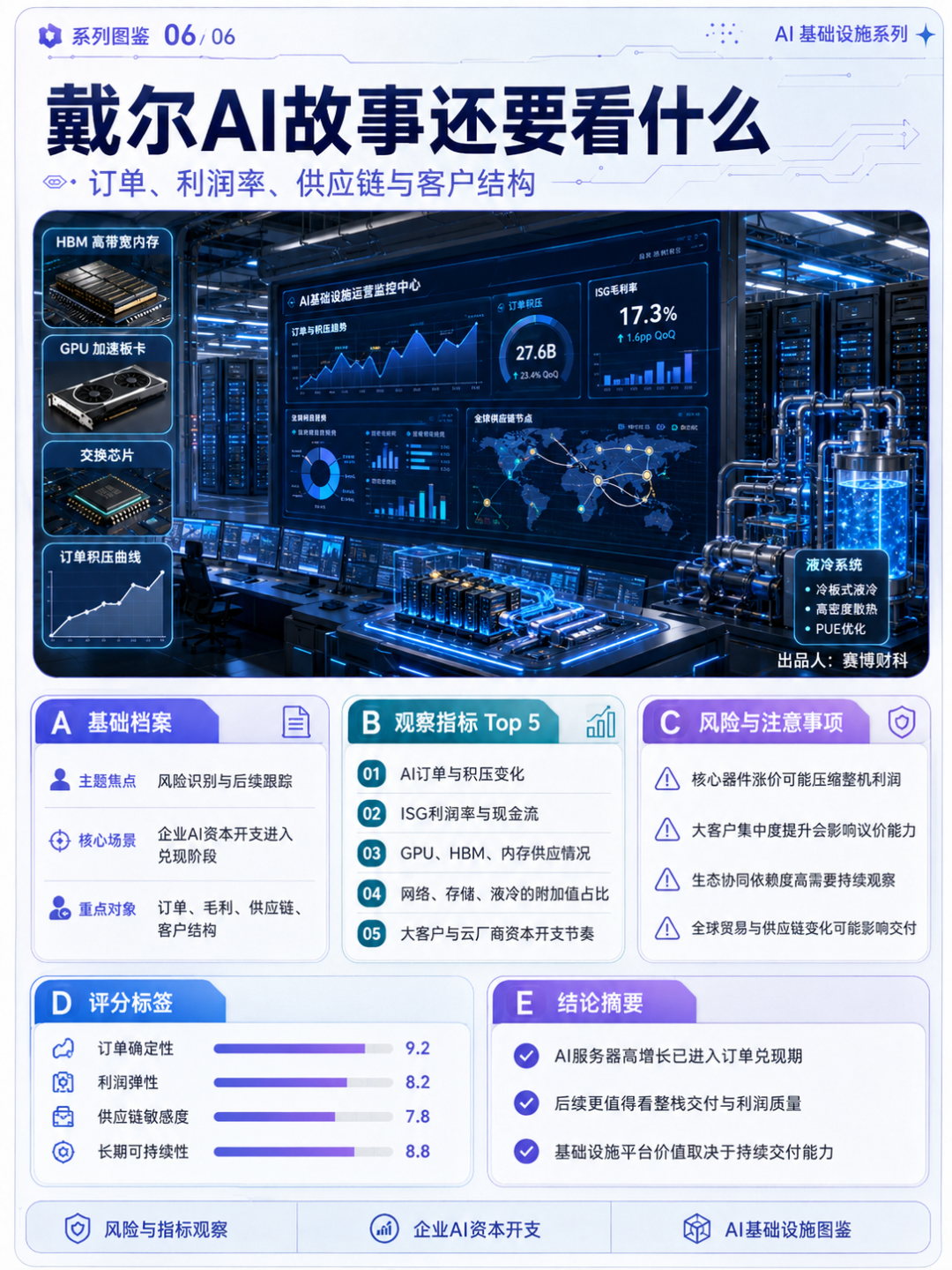
More critically, order volumes tell the story. Dell’s AI-related orders for the quarter reached $24.4 billion, with the AI backlog rising to $51.3 billion. The company subsequently raised its full-year AI server revenue forecast for fiscal 2027 to approximately $60 billion and its total revenue outlook to $165-169 billion. Following the earnings release, Dell’s stock surged nearly 40% in after-hours trading—a clear signal from capital markets that AI infrastructure has entered the revenue realization phase.

2. Dell Now Offers Full Data Center Solutions
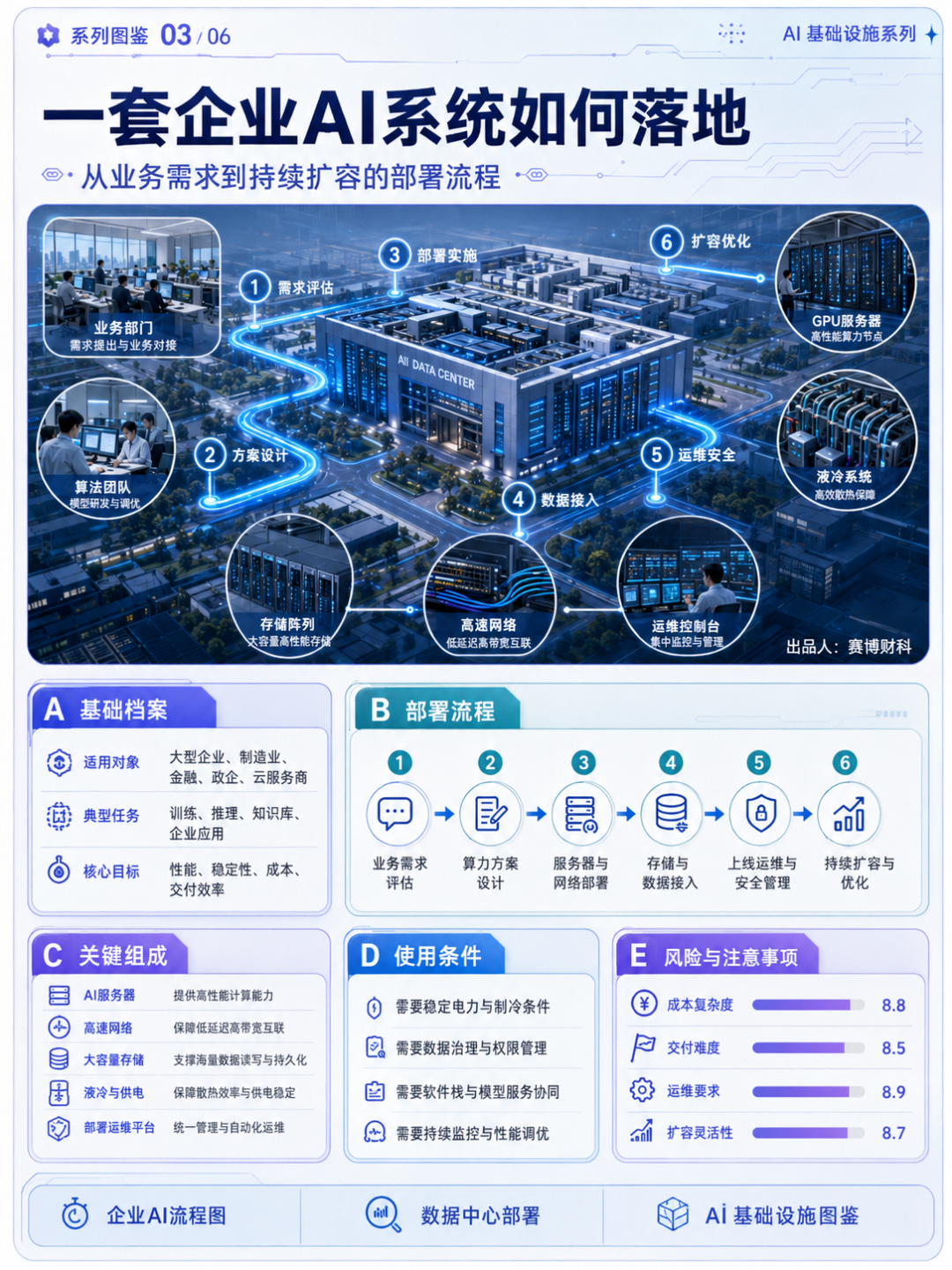
When enterprises build AI systems, procurement typically begins with GPU servers and extends to networking, storage, liquid cooling, power supply, operations, deployment services, and financing. The quoted price of individual devices determines only part of the cost; the true success of the project hinges on the stable operation of the entire infrastructure.
This is where Dell excels. It leverages enterprise customer relationships built during the PC era, storage and data infrastructure capabilities inherited from EMC, a global delivery system, and procurement financing through Dell Financial Services. In fiscal 2026, Dell’s revenue reached $113.5 billion, with operating cash flow at $11.2 billion. It secured over $64 billion in AI-optimized server orders, shipped over $25 billion worth, and entered fiscal 2027 with $43 billion in backlog.
This demonstrates that growth in fiscal 2027 first quarter was order-driven. When enterprise clients procure AI clusters, they often bundle servers, networking, storage, and services into comprehensive contracts. Dell has gradually transitioned from a hardware supplier to an infrastructure contractor for enterprise AI projects, altering its revenue structure accordingly.
3. NVIDIA Powers the Engine, EMC Provides the Framework
Dell’s AI strategy did not emerge overnight. Its 2016 acquisition of EMC filled gaps in enterprise-grade storage, data management, and infrastructure capabilities. The 2021 spin-off of VMware clarified its capital structure. In 2024, the launch of Dell AI Factory with NVIDIA packaged accelerated computing, networking, storage, software, and services into enterprise-focused AI deployment solutions.
NVIDIA supplies GPUs, networking, and software ecosystems, while Dell delivers these capabilities to enterprise clients. For many traditional enterprises, the challenges of building AI systems rarely center solely on chips. Data storage, model deployment, computing power scheduling, data center cooling, budgeting, and long-term maintenance all influence project success.
Dell aims to transition from a hardware supplier to an AI infrastructure integrator. This role derives value from project complexity. As enterprise AI moves from pilot projects to production systems, clients demand stable delivery, a unified point of responsibility, and long-term operational services—areas where Dell’s decades-long enterprise customer relationships regain relevance.
4. No Direct Chinese Equivalent—Only Fragmented Capabilities
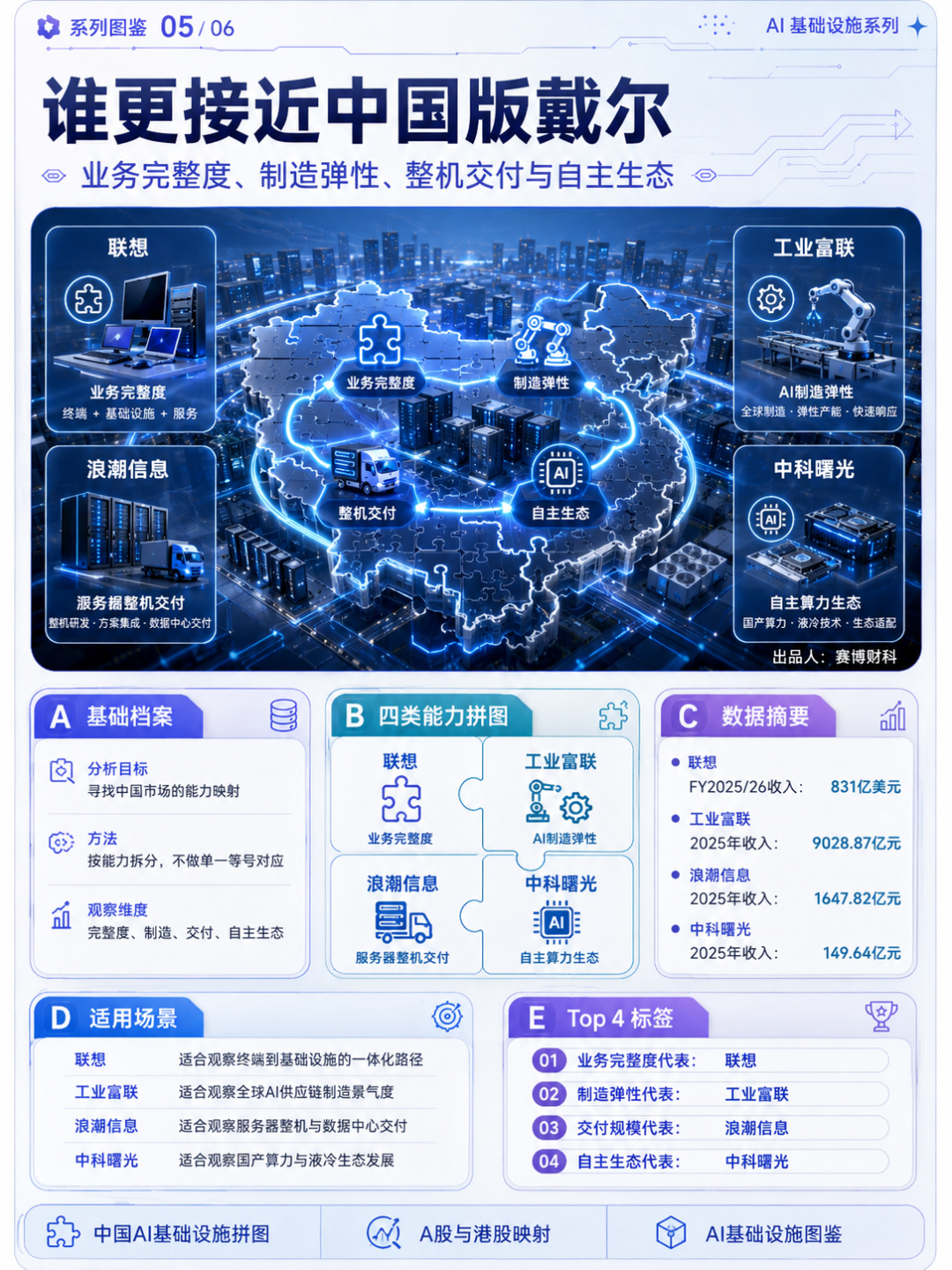
Searching for a direct Chinese equivalent to Dell yields limited value. Dell’s combination of PC cash flow, servers and storage, global channels, service delivery, financing tools, and large enterprise customer relationships is unique. The Chinese market is better analyzed by dissecting these capabilities.
Lenovo comes closest in terms of business completeness. In fiscal 2025/26, Lenovo reported $83.1 billion in revenue, with infrastructure solutions contributing $19.2 billion and achieving full-year profitability. It operates PC, server, and services businesses, making it the closest Chinese analog to Dell’s structure.
Foxconn Industrial Internet embodies AI manufacturing agility. In 2025, the company reported $902.887 billion in revenue, with cloud computing contributing $602.679 billion (up 88.7% year-on-year). AI server revenue from cloud service providers tripled, while 800G+ switch revenue surged 13-fold. Its value lies in manufacturing, assembly, and high-speed networking equipment capabilities within the global AI supply chain.
Inspur Information represents server delivery, while Dawning Information Industry symbolizes autonomous computing ecosystems. The former excels in servers, storage, and data center solutions; the latter focuses on domestic computing power, liquid cooling, high-performance computing, and hyperscale computing clusters. Each corresponds to different segments of Dell’s capability puzzle, defying simple one-to-one comparisons.
5. Risks Lurk Amid Growth
Rapid growth in AI server revenue does not automatically translate to synchronized profit margin improvements. GPUs, HBM, memory, switching chips, and liquid cooling systems compete for supply chain resources, with core component price fluctuations affecting gross margins. While AI server sales volumes are high, profit margins for manufacturers warrant ongoing scrutiny.
Customer concentration also merits attention. Large cloud providers, emerging cloud services, and sovereign AI projects drive big orders but also exert pricing pressure and create delivery concentration risks. During periods of demand expansion, order backlogs are advantageous; when capital expenditures slow, the pace of backlog fulfillment influences market expectations.
Dell also remains highly dependent on NVIDIA’s ecosystem. While binding to a market leader amplifies growth, it creates dependency. If cloud providers increase self-developed server ratios or white-label manufacturers capture orders, Dell must leverage storage, networking, services, and financing capabilities to maintain pricing power.
6. The Future of AI Depends on Delivery Capabilities
For the past two years, the AI industry has focused on models, chips, and computing power leasing. Now, enterprise clients are allocating budgets to operational systems. Companies capable of combining servers, networking, storage, liquid cooling, operations, and financing are entering a clearer revenue realization phase.
Dell’s transformation reminds investors to shift their AI supply chain focus from thematic hype to order quality, delivery capabilities, and cash flow. For the Chinese market, this means reducing single-company comparisons and instead examining supply chain positions: Lenovo for business completeness, Foxconn Industrial Internet for manufacturing agility, Inspur Information for server delivery, and Dawning Information Industry for autonomous computing ecosystems.
What this earnings report truly reveals is the commercialization speed of AI infrastructure. Models determine imagination space; infrastructure determines whether enterprises can truly use AI. Dell’s revaluation reflects capital markets beginning to price such delivery capabilities anew.
Some images in this article were generated by AI. Unless specified otherwise, all data comes from public market research reports. For any improper citations or infringements, please contact us for removal. This content is for reference and learning purposes only and does not constitute investment advice.
-END-
If you enjoy my content, please follow me for more!!
-
Ofilm Teams Up with ADSensE to Propel Large-Scale Deployment of All-Solid-State LiDAR Powered by ADS6311 Chip!
-
![]()
Loss of 2.5 Billion Yet Facing Strong Demand for Shares? Another Battle for Control of Lianchuang Electronics
-
![]()
Huawei’s Enjoy Series Flies Off the Shelves, Prompting Xiaomi to Double Down on Budget Smartphones
-
![]()
Beijing Hyundai's Top Executive Criticizes Industry Disorder: Certain Brands Treat Customers as Beta Testers
-
![]()
The domestic mobile phone market has declined for five consecutive quarters! Huawei defies the trend with significant growth: maintains its top market share
-
Annual Revenue Surpasses 3 Billion: An Automotive Trim 'Little Giant' Makes Its Debut on the Beijing Stock Exchange
-
![]()
The Space Force Wants to Spend $30 Billion on Rocket Launches: Is Trump Doubling Down, and Is SpaceX the Big Winner?
-
![]()
Going Crazy! One out of Every Three Plug-in Hybrids Sold in Europe is a Chinese Vehicle