SpaceX Set to Finalize IPO Details Today, Listing on June 12, with AI as New Growth Driver
 06/05 2026
 442
442
AI Capital Bureau, Shi Tao, June 3rd
Citing multiple sources familiar with the situation, reports from Reuters and Bloomberg indicate that Elon Musk's Space Exploration Technologies Corp. (SpaceX) is poised to finalize the key terms of its initial public offering (IPO), including the price range and the number of shares to be issued, on the afternoon of June 3rd (Eastern Time). If everything proceeds as planned, SpaceX will commence its investor roadshow on June 4th, finalize pricing as early as June 11th, and make its debut on the Nasdaq on June 12th under the ticker symbol "SPCX."
Setting Global IPO Records: Billion-Dollar Fundraising, Trillion-Dollar Valuation Ambitions
Sources close to the matter have disclosed that SpaceX aims to price its IPO shares at $135 each, with plans to issue 555.6 million new shares to raise $75 billion. This funding scale would eclipse the previous record of $29.4 billion set by Saudi Aramco in 2019, marking it as the largest IPO in global history.
This IPO will adopt a pure new share issuance model, prohibiting existing shareholders from selling their stakes during the listing. According to the prospectus, existing shareholders will face tiered lock-up periods and can only reduce their holdings after the company releases its first quarterly financial report. Such an arrangement is relatively uncommon for large-scale IPOs, suggesting that SpaceX's management prioritizes the company's long-term development over short-term shareholder exits.
Regarding valuation, figures vary slightly among sources. Reuters reported that SpaceX's target valuation is at least $1.8 trillion, while Bloomberg indicated that after initial exploratory pricing, the company adjusted its valuation target from over $2 trillion to $1.75 trillion. Sources suggest that the final valuation will be refined based on investor feedback during the roadshow, with underwriters granted a 15% greenshoe over-allotment option.
Business Revenue Breakdown: Aerospace, Satellite, and AI Triumvirate, with Distinct Profit Structures
As per the prospectus submitted earlier, SpaceX's business is currently segmented into three major areas: space launch, satellite internet (Starlink), and artificial intelligence (AI). The AI segment was incorporated following SpaceX's share-swap merger with xAI in February 2026. 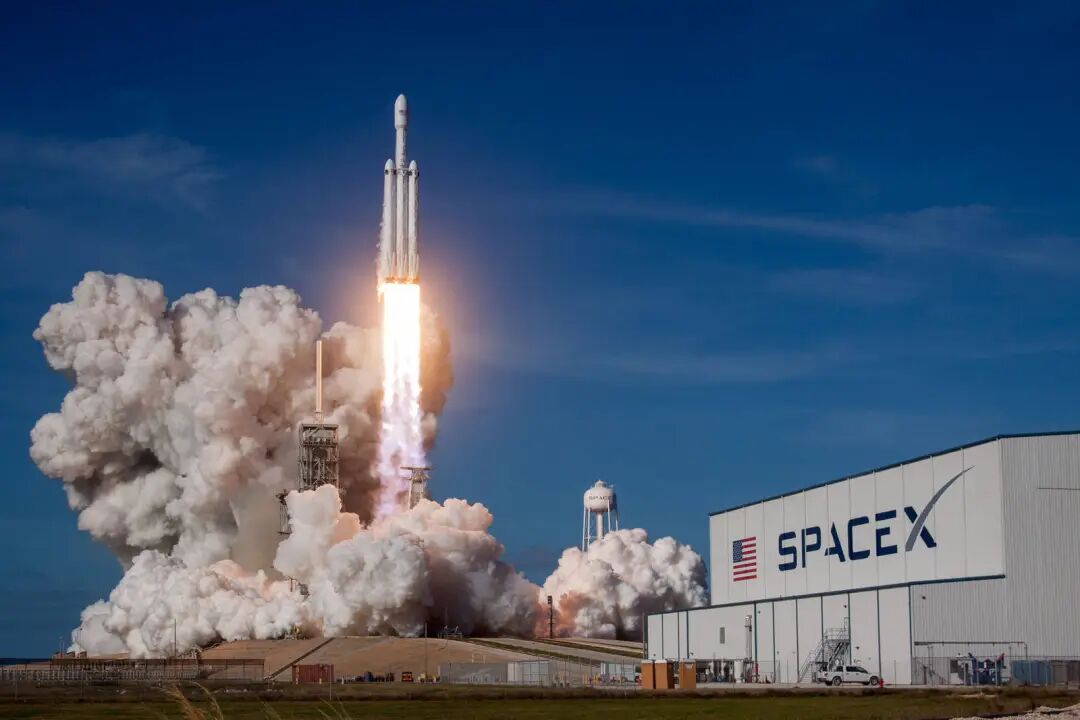
Financial data reveals that SpaceX's total revenue in 2025 reached $18.7 billion, with a net loss of $4.94 billion. A breakdown by business segment shows:
The space launch segment generated $4.086 billion in revenue in 2025, up 7.6% year-on-year, but incurred an operating loss of $657 million. This loss was primarily attributed to substantial R&D investment in the Starship project, with Starship R&D spending reaching $3.004 billion in 2025 and cumulative investment surpassing $15 billion.
The satellite internet (Starlink) segment generated $11.413 billion in revenue in 2025, up 49.8% year-on-year, with an EBITDA margin of 63%, making it the company's sole profitable segment. By the end of 2025, Starlink had amassed over 10 million global users.
The AI segment generated $3.201 billion in revenue in 2025, but posted an operating loss of $6.355 billion. The AI segment primarily encompasses xAI's Grok large model business and the advertising and data business of the original X social platform (formerly Twitter).
AI as the Core Narrative: Establishing Orbital Data Centers, Building a Space AI Ecosystem Barrier
Despite significant losses in the AI segment, it has emerged as the most captivating aspect of SpaceX's IPO among investors. The prospectus outlines SpaceX's strategy to construct a strategic closed loop of "launch capability + global low-orbit bandwidth + AI inference capability," planning to deploy distributed AI computing nodes using Starlink's global network to create "orbital data centers."
SpaceX stated in the prospectus that the AI business will serve as the primary driver of the company's future growth. The company anticipates the AI computing market to exceed $10 trillion by 2030, and SpaceX, with its unique infrastructure advantages, is well-positioned to capture a substantial portion of this market. 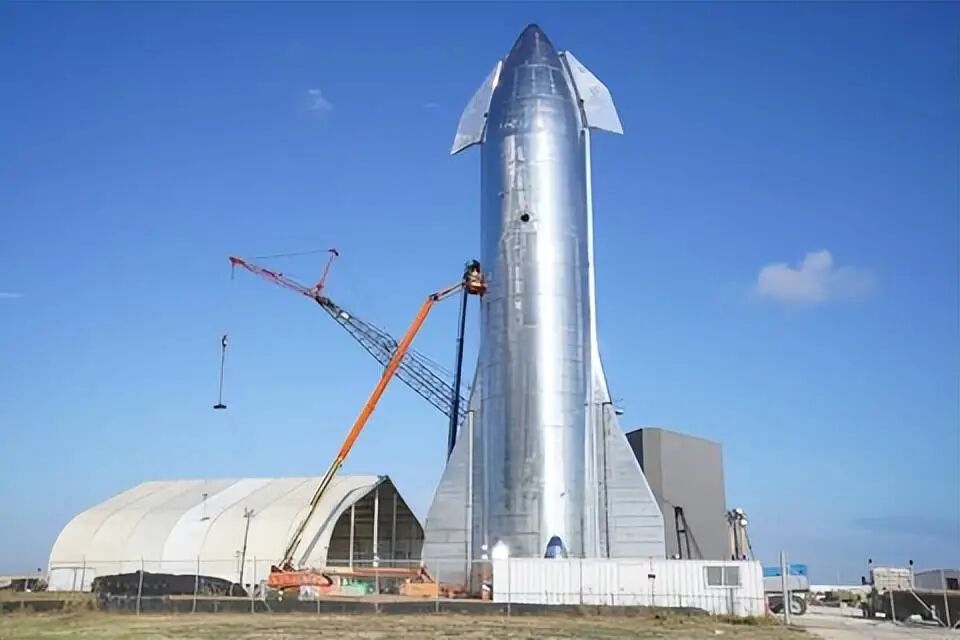
However, some analysts have expressed skepticism about SpaceX's AI strategy. They contend that xAI still lags significantly behind industry giants like OpenAI, Google, and Microsoft in large model technology, and the business model of "orbital data centers" remains unproven. Additionally, concerns have been raised about Musk's ability to effectively manage multiple companies simultaneously, which could impact SpaceX's long-term development.
Market Enthusiasm Coexists with Risks: Capital Chases Hype, but Technology and Commercialization Remain Uncertain
Buoyed by the IPO news, trading prices of SpaceX's private equity on secondary markets have surged recently. According to data from private equity trading platform Forge Global, SpaceX's stock has risen approximately 15% in the past month.
Goldman Sachs, Morgan Stanley, and JPMorgan Chase are serving as the lead joint bookrunners for this IPO. Sources indicate that SpaceX successfully negotiated underwriting fees below 0.75%, lower than the typical 1%+ fee level for large IPOs.
Industry insiders have stated that SpaceX's listing will have a profound impact on the global tech industry. On one hand, it will set a new valuation benchmark for startups in the AI and aerospace sectors; on the other hand, the massive funding will further intensify competition in the AI infrastructure sector.
However, investors should also be mindful of associated risks. The prospectus cautions that SpaceX faces multiple risks, including technological R&D failures, regulatory policy changes, and intensified market competition. Particularly in the AI industry, where technological iteration is rapid, most companies may ultimately be eliminated by the market, leaving significant uncertainty about whether SpaceX's AI business can achieve the expected growth. 
AI Capital Bureau is a professional platform dedicated to observing and analyzing capital market dynamics in the artificial intelligence field. We closely monitor capital operations such as financing, listings, and mergers and acquisitions of AI and embodied intelligence-related companies, deeply analyze industry trends and enterprise development trajectories, and provide valuable insights for industry participants. We are committed to becoming a bridge connecting AI innovation and capital markets, aiding Chinese hard tech companies in achieving value discovery and growth.
Risk Warning and Disclaimer: The market is fraught with risks, and investment should be approached with caution. This article does not constitute investment advice and should not be used as practical operational guidance. Traders assume all transaction risks.
-
Ofilm Teams Up with ADSensE to Propel Large-Scale Deployment of All-Solid-State LiDAR Powered by ADS6311 Chip!
-
![]()
Loss of 2.5 Billion Yet Facing Strong Demand for Shares? Another Battle for Control of Lianchuang Electronics
-
![]()
Huawei’s Enjoy Series Flies Off the Shelves, Prompting Xiaomi to Double Down on Budget Smartphones
-
![]()
Beijing Hyundai's Top Executive Criticizes Industry Disorder: Certain Brands Treat Customers as Beta Testers
-
![]()
The domestic mobile phone market has declined for five consecutive quarters! Huawei defies the trend with significant growth: maintains its top market share
-
Annual Revenue Surpasses 3 Billion: An Automotive Trim 'Little Giant' Makes Its Debut on the Beijing Stock Exchange
-
![]()
The Space Force Wants to Spend $30 Billion on Rocket Launches: Is Trump Doubling Down, and Is SpaceX the Big Winner?
-
![]()
Going Crazy! One out of Every Three Plug-in Hybrids Sold in Europe is a Chinese Vehicle