Behind Unitree Robotics' IPO: The Biggest Capital Winner Comes to Light
 06/05 2026
 459
459
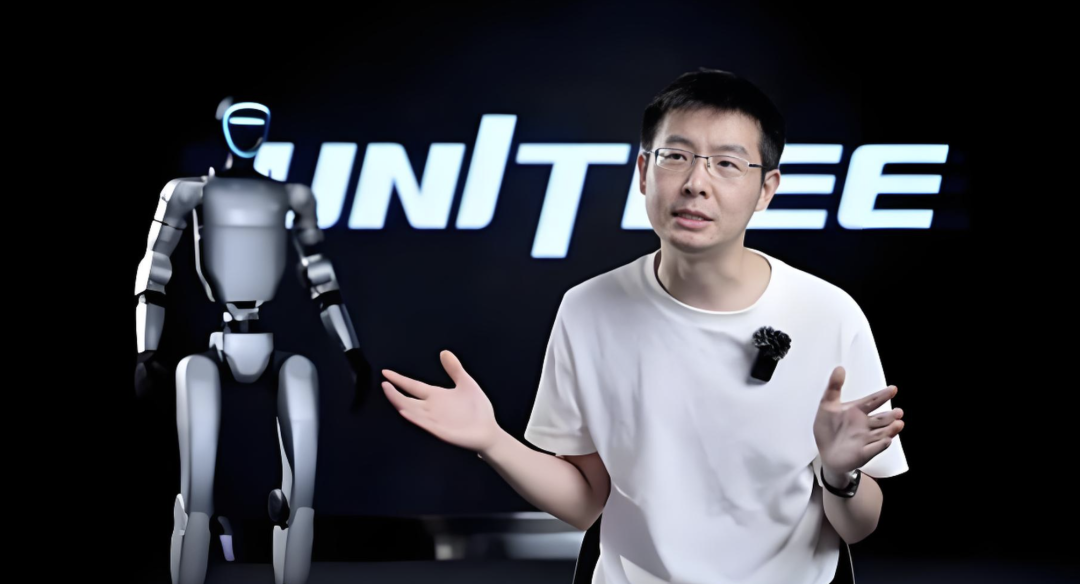
On June 1, it wasn't just children who were celebrating. Wang Xingxing from Unitree Robotics hit a personal jackpot (Wang Xingxing, a double celebration indeed!) when an announcement from the Shanghai Stock Exchange sent ripples throughout the hard tech sector. Unitree Robotics achieved 'lightning-fast approval' in just 73 days and is on track to become the 'first humanoid robot stock' on the A-share market. Moreover, NVIDIA CEO Jensen Huang publicly confirmed a collaboration with Unitree, further fueling its momentum.
While the public is mesmerized by robots dancing, the real winners are quietly crunching numbers behind the scenes.
So, who is the biggest winner in this grand spectacle?
The answer may come as a surprise: it's not Sequoia China, backed by investment guru Neil Shen, nor Shunwei Capital, founded by Lei Jun, but rather Meituan, the app you use daily for food delivery.

73 Days to Forge a 42 Billion Yuan Robot Empire
Let's take a walk down memory lane:
On March 20, Unitree Robotics' IPO application was accepted by the Shanghai Stock Exchange. On April 1, it was selected for an on-site inspection. By June 1, it had officially cleared the review process. From acceptance to approval, it took just 73 days—significantly faster than the Sci-Tech Innovation Board (STAR Market)'s average review cycle of 183 days and even surpassing the previous 'lightning-fast' record of 88 days set by GPU company Moore Threads.
One investor quipped, "This is faster than ordering a Meituan delivery."
According to the prospectus, Unitree Robotics plans to raise 4.202 billion yuan in this IPO, offering no less than 10% of its shares. At this rate, the company's total valuation is expected to reach approximately 42 billion yuan.
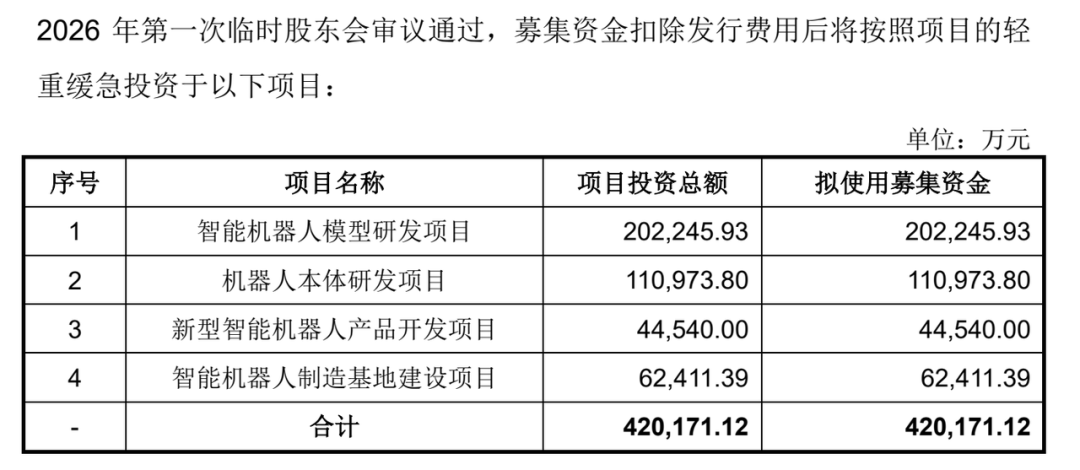
In its previous funding round in June 2025, Unitree's post-money valuation stood at just 12.7 billion yuan.
In less than a year, its valuation has tripled—a profit efficiency that would leave traditional bank wealth management products in awe.
Financial performance has also lived up to investor expectations. From 2023 to 2025, Unitree's revenue soared from 159 million yuan to 1.699 billion yuan, with a compound annual growth rate of 226.78%. Its net profit (excluding non-recurring items) turned from a loss of 18.01 million yuan to a profit of approximately 590 million yuan.
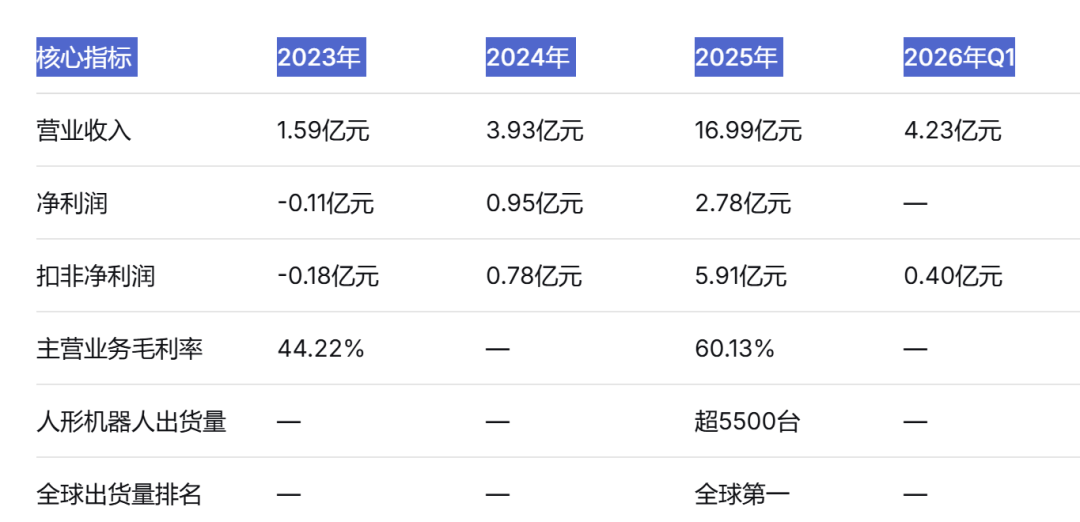
Source: Unitree Robotics Prospectus (Final Draft)
In 2025, it shipped over 5,500 humanoid robots globally, capturing a 32.4% market share—ranking first worldwide.
However, beneath the glittering success lie concerns.
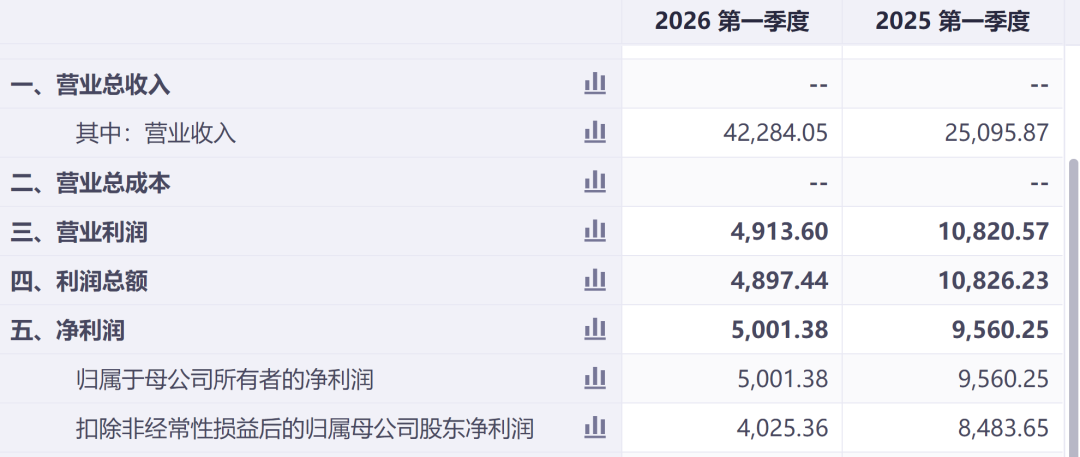
In Q1 2026, net profit (excluding non-recurring items) declined by 52.55% year-on-year. The prospectus attributed this to sharply increased R&D and sales expenses—essentially, heavy investments in 'robot brains'.
Meituan's Calculation: A 9.65% Stake, Over 4 Billion Yuan in Returns
As public attention focuses on Unitree's IPO, shareholder Meituan slowly emerges from the shadows.
The prospectus reveals that Meituan, through three entities—Hanhai Information (7.61% direct stake), Chengdu Longzhu (1.02%), and Galaxy Z (1.02%)—formed a concerted action group, collectively holding 9.65%. This makes Meituan Unitree's largest external institutional shareholder and the second-largest shareholder group after founder Wang Xingxing and the employee stock ownership platform.
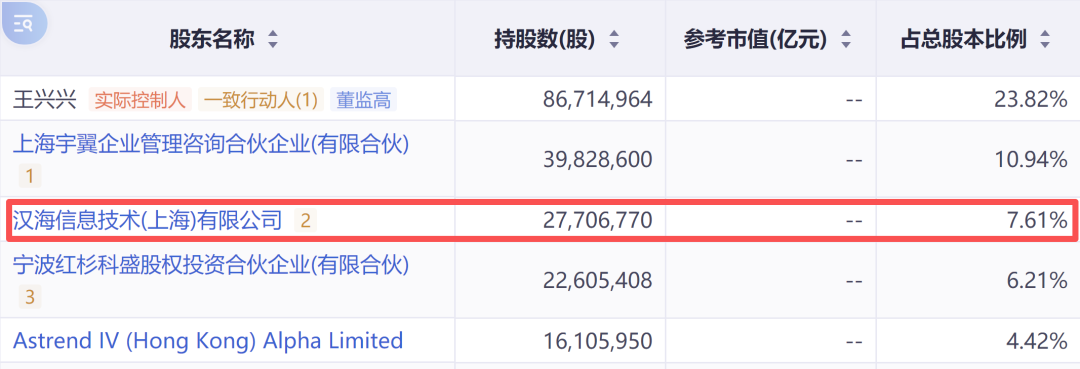
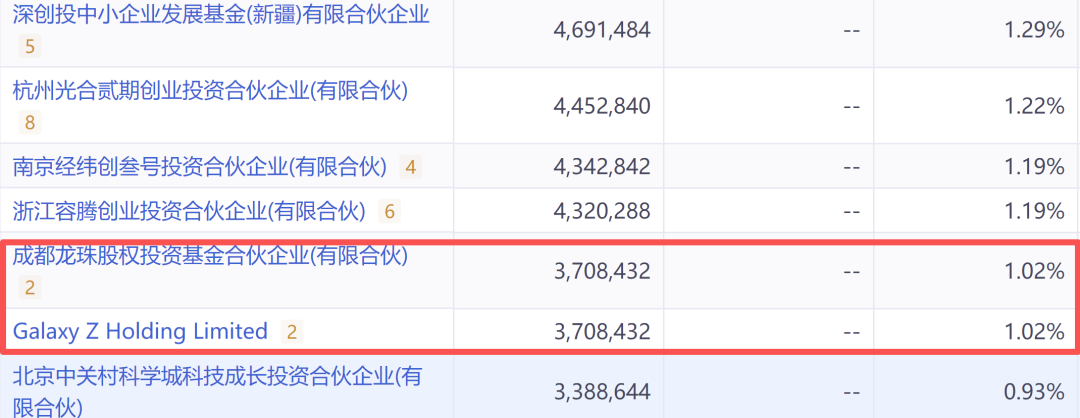
To put this into perspective: Sequoia China holds 7.11%, Shunwei Capital holds 4.42%, Tencent holds 0.60%, and Alibaba holds 0.45%. Meituan's stake alone exceeds the combined holdings of the latter four.
At the IPO valuation of 42 billion yuan, Meituan's portfolio book value exceeds 4 billion yuan.
What was Meituan's entry cost?
Public records show that Meituan entered as the lead investor in Unitree's Series B2 round in February 2024 when the company was valued at just 3.1 billion yuan.
In under two years, this investment has nearly multiplied 12-fold based on the IPO valuation.
Twelve times. What mutual fund delivers such returns?
And this is just calculated at the 42 billion yuan issuance valuation.
China Merchants Securities analyzed in a report that if Unitree maintains its market-leading shipment volume and lists at 3x price-to-sales (PS), its valuation could center around 35 billion yuan. However, considering the secondary market's scarcity premium for humanoid robot stocks, Unitree's actual debut performance could far exceed expectations.
In short, 4 billion yuan is just the starting line—the real drama begins after the bell rings.
Meituan's 'Robot Empire'
8 Years, 28 Unicorns, Half of the Hard Tech Sector
Unitree Robotics is just one piece of Meituan's hard tech investment puzzle.
Few realize that Meituan has quietly been building its hard tech portfolio for 8 years. According to China Entrepreneur, Meituan has invested in at least 16 companies in the embodied AI sector, with 10 growing into unicorns valued over $1 billion.
This isn't scattershot investing—it's a strategic bet on the future.
Consider these names:
Galaxy General, now valued at 21 billion yuan, with Meituan as its angel investor;
Xinghaitu, Zibianliang, and Sharpa, each valued over 10 billion yuan, all backed by Meituan at Series A;
Tashi Zhihang, which set a record for the largest single funding round in embodied AI at $455 million, also counts Meituan as a key investor.
In the AI large model sector, Meituan remains active.
Zhipu AI, dubbed China's 'first large model stock,' peaked at a market cap exceeding HK$320 billion. Yuezhi Anmian, whose $2 billion funding round was led by Meituan Longzhu, now boasts a post-money valuation surpassing $20 billion.
The breadth and depth of Meituan's hard tech investments are staggering, covering nearly the entire chain from computing power to applications.
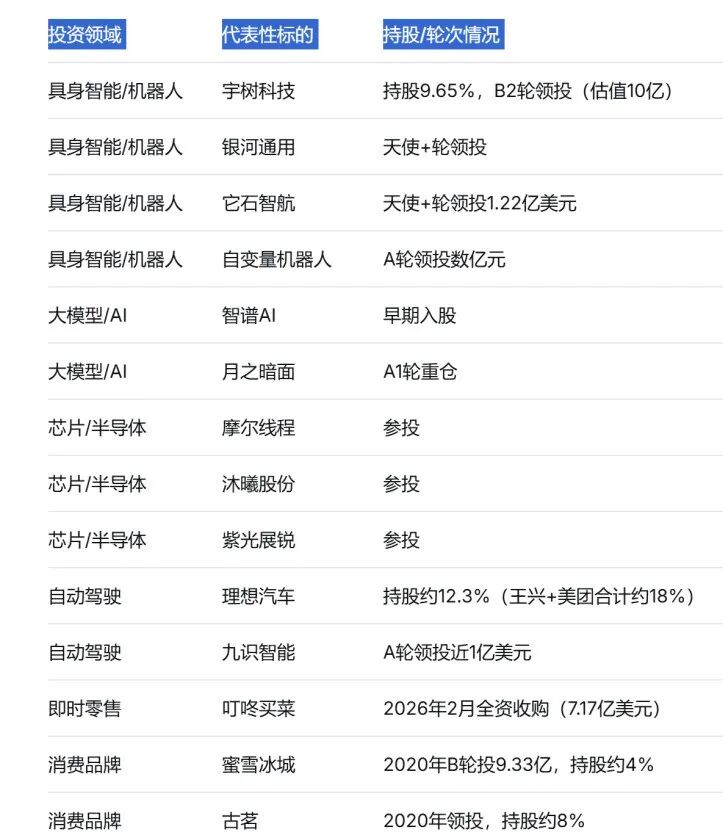
Source: Public Records, Incomplete Statistics
The numbers speak for themselves. As of May 6, China's primary market has seen 210 embodied AI financing events this year, compared to 357 in all of 2025. Among the 18 'billion-dollar club' enterprises in embodied AI, Meituan ranks as one of the most active internet giants.
Meituan has also long positioned itself in foundational computing and chips.
Moore Threads debuted with a market cap exceeding HK$300 billion, while Muxi Corporation (Xuanxi Inc.) surpassed HK$280 billion on its first trading day—both counting Meituan as early investors. In 2025, Meituan's R&D investment reached 26 billion yuan, up 23.5% year-on-year.
Whether neutral or not, one must admire Wang Xing's investment acumen.
Such widespread success in investments is no coincidence—it's the realization of strategic vision.
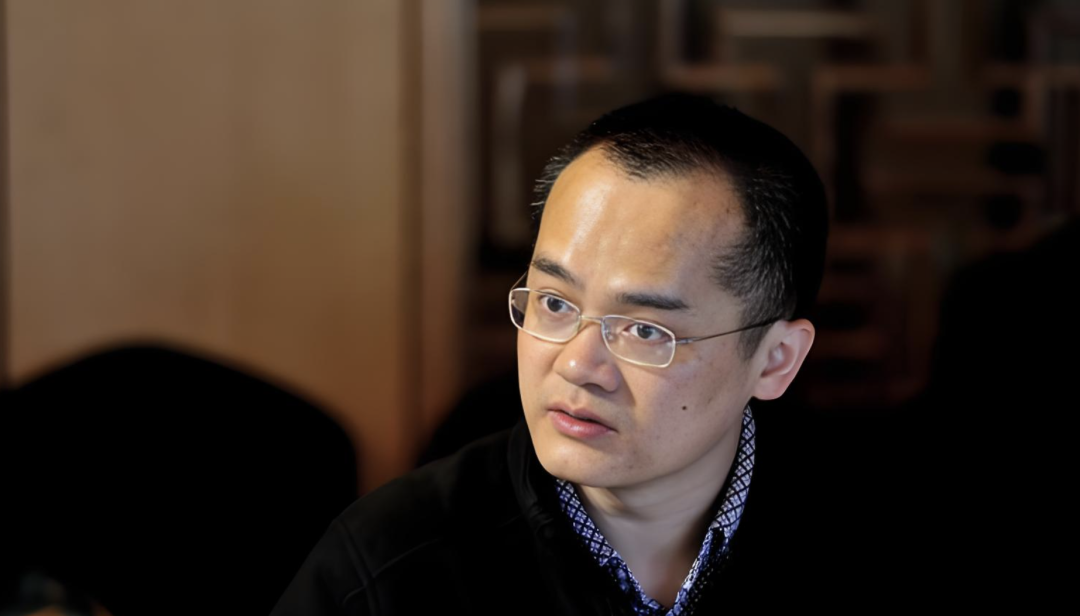
Decoding Meituan's Investment Logic
Many wonder: Why would a food delivery company invest heavily in robotics?
After reviewing Meituan's investment cases alongside its core business, a clear logic emerges: food delivery demands some of the highest 'physical world AI' capabilities among all applications.
Consider the challenges faced by delivery riders: How to locate a 5th-floor apartment in an old residential complex without elevators? How to avoid flooded streets on rainy days? How to navigate from B2 to B1 in a mall to reach a pickup counter? Today's AI large models cannot answer any of these questions.
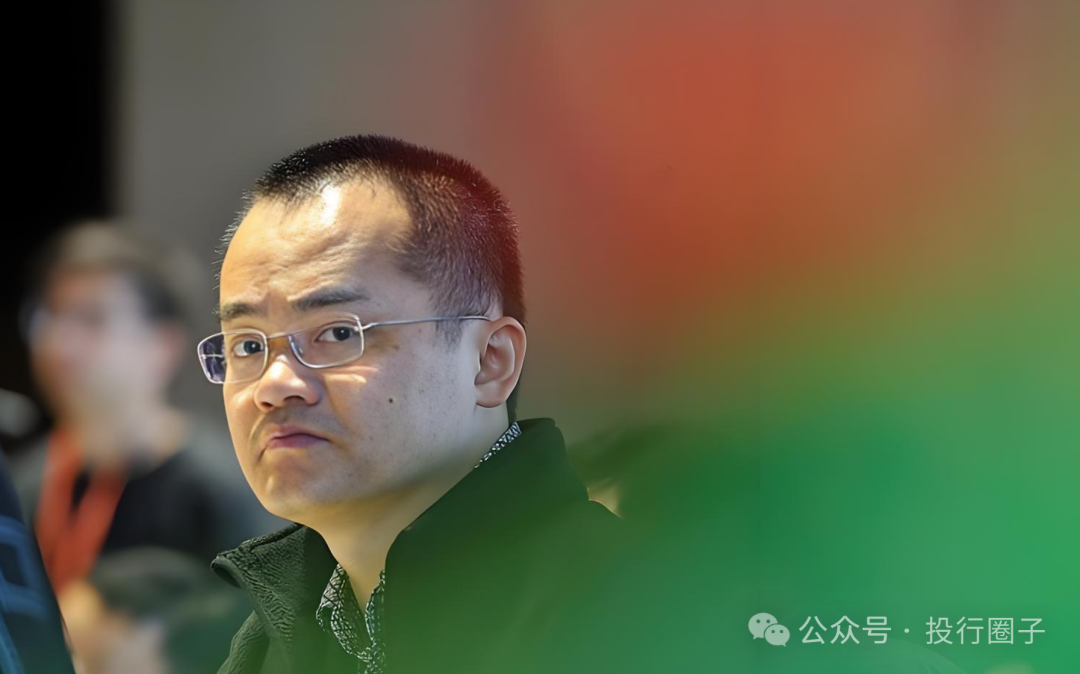
Meituan CEO Wang Xing once said, "Even if Einstein were a secretary and tried to book a restaurant, he wouldn't know if seats were available. This isn't an intelligence issue—it's an information issue."
This statement reveals Meituan's strategic intent. While other internet companies compete in AI intelligence races, Meituan focuses on digitizing and AI-enabling the physical world—a different dimension altogether.
This explains Meituan's bet on Unitree Robotics.
Meituan seeks not just financial returns from Unitree but also practical applications of its robots in real business scenarios.
The prospectus specifically mentions Unitree's collaborations with 'leading tech enterprises' for scenario-based deployments, with market speculation pointing to Meituan.
Similarly, investing in Zhipu AI secures foundational large model capabilities, while chip investments safeguard computing power supply. Investments in embodied AI aim to automate future deliveries.
This interconnected strategy invests not just for profits but for future profitability—two concepts with vastly different implications.
From 'Cost Center' to 'Investment Mainstay'
More notably, Meituan's investment portfolio is transforming from a 'financial narrative' into a 'profit engine'.
A little-known detail: Meituan reported a 23.3 billion yuan loss in its 2025 annual report, with its core local commerce segment also in the red. Many question Meituan's profitability.
But accounting profits and true earning power differ.
According to financial disclosures, as of March 31, 2026, Meituan's equity investments in NIO, Zhipu AI, Unitree Robotics, and others held significant book value under fair value measurement.
Unitree Robotics alone contributes over 4 billion yuan in paper gains at the IPO valuation.
In other words, if Meituan sold portions of these equity stakes, its account profits could reverse instantly.
But Meituan chooses not to sell. Why?
Because for Meituan, these stakes are strategic assets, not just financial ones.
This is the crux of understanding Meituan's current position: A tech company should pursue not short-term profit maximization but long-term positioning in key sectors.
Meituan's tech investments are evolving from 'profit-dragging cost centers' into 'rewarding strategic mainstays'.
Conclusion
Unitree Robotics' approval may appear as Wang Xingxing's victory on the surface but represents Meituan's strategic bet coming to fruition.
From entering at a 3.1 billion yuan valuation in Series B2 to reaping over 4 billion yuan in paper gains at IPO, and behind it, a complete ecosystem of 16 humanoid robot companies—Meituan has
-
Ofilm Teams Up with ADSensE to Propel Large-Scale Deployment of All-Solid-State LiDAR Powered by ADS6311 Chip!
-
![]()
Loss of 2.5 Billion Yet Facing Strong Demand for Shares? Another Battle for Control of Lianchuang Electronics
-
![]()
Huawei’s Enjoy Series Flies Off the Shelves, Prompting Xiaomi to Double Down on Budget Smartphones
-
![]()
Beijing Hyundai's Top Executive Criticizes Industry Disorder: Certain Brands Treat Customers as Beta Testers
-
![]()
The domestic mobile phone market has declined for five consecutive quarters! Huawei defies the trend with significant growth: maintains its top market share
-
Annual Revenue Surpasses 3 Billion: An Automotive Trim 'Little Giant' Makes Its Debut on the Beijing Stock Exchange
-
![]()
The Space Force Wants to Spend $30 Billion on Rocket Launches: Is Trump Doubling Down, and Is SpaceX the Big Winner?
-
![]()
Going Crazy! One out of Every Three Plug-in Hybrids Sold in Europe is a Chinese Vehicle