"3D Vision Pioneer" Grapples with Internal Strife: $120 Million in Share Reductions Offset by $147 Million Private Placement
 06/08 2026
 451
451
Source: Shenlan Finance
On June 5th, the A-share robotics sector experienced a significant surge in the afternoon trading session, with Orbbec, hailed as the "pioneer of 3D vision," witnessing a robust rally and reaching an all-time high in its stock price.
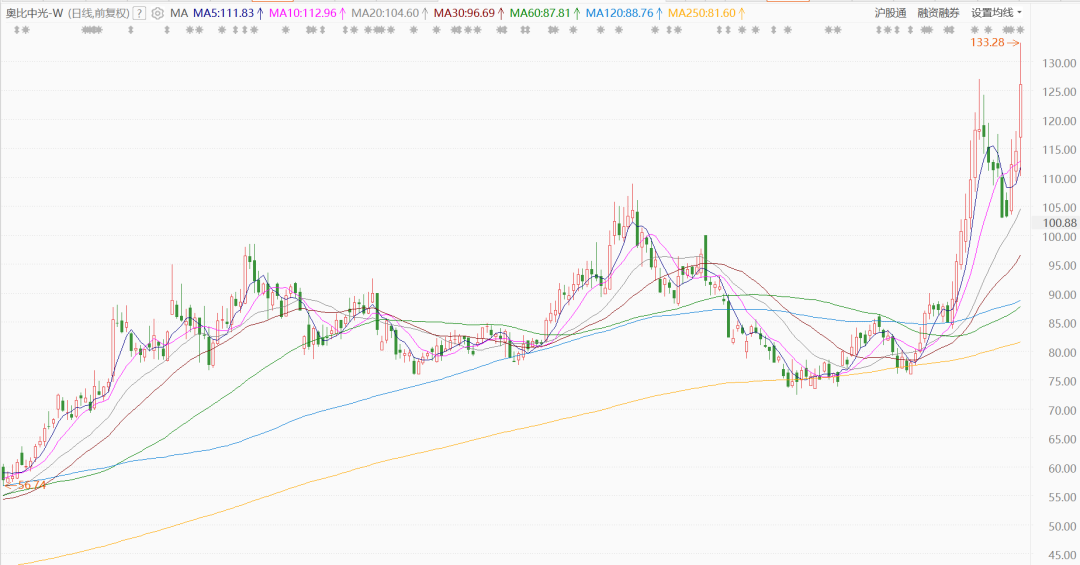
This surge in stock prices is not merely a reflection of a general market uptrend but rather signals a substantial shift in industry trends.
Just a few days prior, Li Ke, the Executive Vice President of BYD, announced the company's full commitment to developing humanoid robots under the project codename "Yao, Shun, Yu." This project, which was secretly initiated in 2022, has now assembled a core team of approximately 4,000 individuals, with over 30% holding doctoral degrees. BYD plans to deploy 20,000 units internally by 2026.
Meanwhile, Unitree Robotics achieved a "lightning-fast" approval for its Initial Public Offering (IPO) on the Sci-Tech Innovation Board, taking only 73 days from application to approval, setting a recent record for the fastest approval of hard technology companies on the A-share market. NVIDIA has also collaborated with Unitree to launch a humanoid robot based on the Isaac GR00T platform.
With major industry players entering the field, 2026 is poised to be the "year of mass production breakthroughs for embodied intelligence."
Orbbec does not merely sell ordinary cameras; instead, it provides the essential "eyes" for robots. As the robotics industry transitions from mere PPT demonstrations to factory mass production, the explosion in demand for upstream visual sensors is one of the most certain trends. Today's market surge is driven by expectations of massive orders resulting from robot mass production in the coming years.
However, the challenge lies precisely here: the higher the stock price climbs, the faster the temptation to cash out.
1. Immediate Cash-Out Upon Lock-Up Expiration: Core Circle Cashes Out $120 Million
Amidst the celebration of the stock price surge, a recent announcement regarding share reductions has brought this hard technology company into the spotlight.
On May 16th, the controlling shareholder Huang Yuanhao, along with six employee stock ownership platforms, CTO Xiao Zhenzhong, and employee representative director Zhang Dingjun, collectively announced a share reduction plan. Over the next three months, they intend to reduce their holdings by 1.54% of the total share capital. Based on the closing price of RMB 126.06 on June 5th, the cash-out amount is approximately $120 million, with Huang Yuanhao personally taking away about $72 million.
This move comes just four years after the company's listing on the Sci-Tech Innovation Board.
Several details warrant attention. This marks Huang Yuanhao's first share reduction since the listing. His holdings include 26.4361 million ordinary shares, which were only unlocked on January 7th of this year and were sold just four months after unlocking. The phrase "cash-out immediately upon unlocking" is not merely descriptive but a factual account.
The timing of the share reduction is also remarkably precise. The stock price has surged nearly fivefold from its 2024 low of RMB 18.83 to the date of the share reduction announcement, with a further 41% increase after the announcement, reaching a cumulative increase of 5.69 times.
Some investors have angrily questioned on stock forums: "What happened to Huang Yuanhao's commitment to long-termism? Is he deceiving minority shareholders?" The core question (zhì yí, meaning "doubt" or "question") from investors is: Why reduce holdings without distributing dividends?
Objectively speaking, the company does face difficulties. Orbbec has been continuously incurring losses from 2022 to 2024, only achieving its first profit of RMB 128 million in 2025. However, the earnings per share remain negative at RMB -3.8, with an unfilled accounting deficit, making dividend distribution impossible.
The new "National Nine Clauses" policy provides an exception for Sci-Tech Innovation Board companies: if cumulative R&D investment over the past three years exceeds 15% of revenue or RMB 300 million, controlling shareholders can reduce their holdings. Orbbec's cumulative R&D investment over the past three years totals RMB 700 million, far exceeding the 15% threshold, making the share reduction compliant.
But there is another RMB 48 million account that deserves scrutiny.
In 2025, the company spent RMB 48.04 million to repurchase 742,600 shares and claimed them as "deemed cash dividends" in accordance with the "Rules on Share Repurchases by Listed Companies." This is compliant. However, these repurchased shares were not canceled but used for employee stock incentives. The exercise price is approximately RMB 16 per share, resulting in a floating profit of over five times at the current price, benefiting five individuals, including three foreign employees.
Nominally, it is the company's "dividend" money, but in reality, it has become low-priced options for a very small number of people. Nominally, it rewards all shareholders, but in reality, it is a directed benefit transfer. Compliance and reasonableness are sometimes two different things.
Whether this operation is cost-effective for shareholders depends on whether the future profits from stock incentives can cover the RMB 48 million cost incurred today.
2. $120 Million Cash-Out on One Side, $147 Million Private Placement on the Other
While core shareholders cash out $120 million, the company is also eagerly seeking capital from the market, recently announcing a private placement plan of no more than $147 million.
This scenario of "left-hand reduction, right-hand private placement" is also compliant.
What will the private placement funds be used for? Two major items: a robotics AI vision and spatial perception technology R&D platform, with a total investment of RMB 1.796 billion and proposed funding of RMB 858 million; and an AI vision sensor manufacturing base, with a total investment of RMB 190 million and proposed funding of RMB 122 million. In short, it is for expansion.
Orbbec's financial position is not robust. As of the first quarter of 2026, its monetary funds stood at only RMB 660 million. With cumulative losses exceeding RMB 2 billion over the past eight years, it is a veritable "money-burning machine." Faced with heavy asset investments in chip R&D and production line construction, the cash on hand is far from sufficient. The private placement is almost the only option to maintain its technological arms race.
Putting aside capital operations and returning to technology and the industry itself, is Orbbec truly engaged in a promising business?
The answer is affirmative. It is riding the wave of the current hardest-core trends: physical AI and embodied intelligence.
Whether for humanoid robots, autonomous driving, or spatial computing, a pair of "eyes" is essential to perceive the three-dimensional world. Orbbec is one of the few domestic companies that possess full-stack self-research capabilities in 3D vision, covering "chips-algorithms-optics."
In 2013, Huang Yuanhao returned from MIT to start a business, focusing on 3D vision. Today, the company has deployed a full range of technical routes, including structured light, binocular vision, dTOF, iToF, and Lidar, with nearly 2,000 patents accumulated. More critically, it has established deep partnerships with industry giants such as NVIDIA, Apple, and AMD.
3D sensors are "standard equipment" for many robot development platforms. The company has already achieved adaptation and deployment with multiple companies, including Enlighten Robotics, Beijing "Tiangong," Ubtech, Ant Lingbo, Accelerated Evolution, Lingxin Qiaoshou, Magic Atom, and Honor.
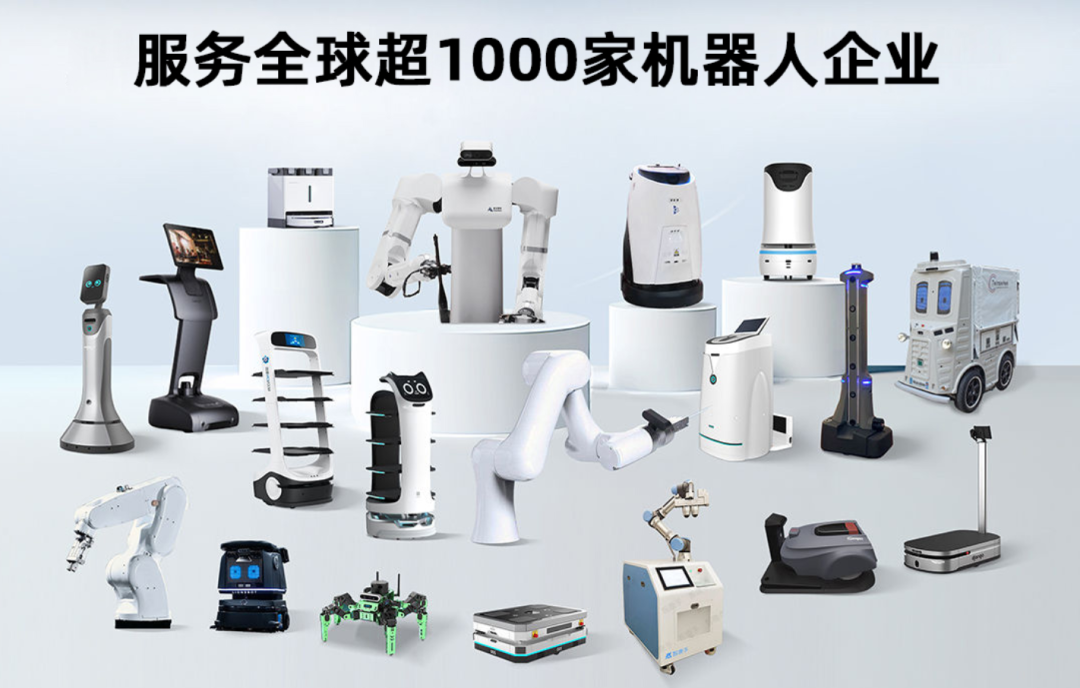
Securities firms are also optimistic. Huachuang Securities predicts that revenue will soar from RMB 1.7 billion in 2026 to RMB 4.2 billion in 2028, with net profit rising from RMB 300 million to over RMB 800 million. The private placement for expansion is to preemptively secure production capacity.
3. Conclusion
Orbbec's current situation is a microcosm of the growth stage of many hard technology companies.
On one hand, early investors, after waiting years for listing and lock-up expiration, seek a decent realization of value. On the other hand, technological barriers and production capacity require massive amounts of capital for chip R&D, production line construction, and talent acquisition, all of which are cash-intensive.
For investors, this is undoubtedly a high-risk gamble. You must believe in the grand industry narrative and have confidence in the management team's technological vision and execution to tolerate short-term performance fluctuations and equity dilution.
The Shenlan Finance New Media Cluster originated from the Shenlan Finance Journalist Community and has a 15-year history. As a well-known domestic financial new media outlet, its accounts focus on China's most valuable companies, cutting-edge industry developments, and emerging regional economies, providing valuable content for investors, corporate executives, and the middle class. Welcome to follow.
-
![]()
"3D Vision Pioneer" Grapples with Internal Strife: $120 Million in Share Reductions Offset by $147 Million Private Placement
-
![]()
The domestic auto sales have declined so much that dealers who can't hold on have started closing stores en masse
-
![]()
Five Brands Team Up with Huawei: Will Dongfeng Still Pursue Independent R&D?
-
![]()
The Large Six-Seater SUV Market: Overhyped and Overrated
-
![]()
The Smart Driving Blue Light: Urgent Need for Rectification
-
![]()
Would OpenAI Be Fascinated by Anthropic’s Concepts?
-
![]()
Tencent: Few Great Queries, Yet Possessing the Ultimate One
-
Does DingTalk Need Revolutionaries or Reformers?