The Smart Driving Blue Light: Urgent Need for Rectification
 06/08 2026
 453
453
Introduction
“Glare, eye discomfort, and mobile light pollution.”
Four years ago, Li Auto took the lead in installing an auxiliary driving indicator light, now widely recognized as the “Smart Driving Blue Light.” Subsequently, a growing number of vehicle models equipped with advanced assisted driving functions have adopted this visible indicator, aiming to alert all road users to the new driving conditions involving human-machine collaboration.
Statistics reveal that in the first half of 2025, the domestic installation volume of “Blue Light” for assisted driving reached 755,000 vehicles, with an installation rate of 7.1%, marking a staggering 1098% year-on-year increase. Indeed, with the widespread adoption of advanced assisted driving functions, this indicator light is no longer exclusive to new energy vehicles; many fuel-powered vehicles have also started to incorporate this feature, promoting it as a key product highlight.
Although national standards do not currently mandate the inclusion of the Blue Light, many netizens have likely already observed numerous vehicles driving with the Blue Light illuminated on the roads. This indirectly suggests that as advanced assisted driving functions continue to evolve, more and more vehicle owners are becoming accustomed to and even fond of this feature.
While owners who activate advanced assisted driving functions enjoy driving convenience, the lack of standardized design for the Smart Driving Blue Light has led some models to overemphasize the feature, resulting in overly long and bright Blue Lights that pose new safety hazards on the roads.
01 The Unchecked Proliferation of the Blue Light
Recently, on social media platforms, numerous bloggers have voiced complaints about the glare caused by the Smart Driving Blue Light. Some models, due to excessively high brightness settings, create significant visual interference for following vehicles at night or in rainy weather. In fact, the glare is not confined to dimly lit environments; some Blue Lights can be equally blinding during the daytime.
The primary complaints center on two issues: glaring brightness and unreasonable installation positions. The “large illuminated area and extremely high brightness” of the Blue Light make it “even brighter than reverse white lights.” When following a vehicle, the light height is directly in front of the driver’s eyes in the rear vehicle, severely obstructing the driving view.
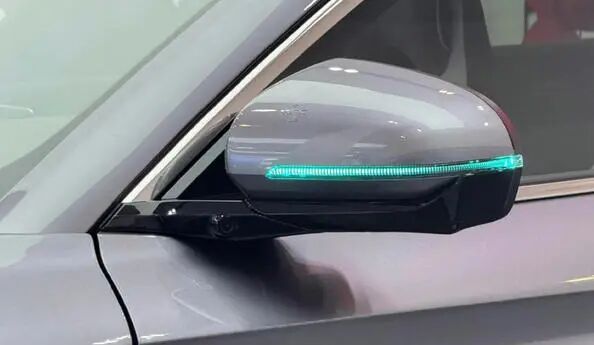
It is well known that the Smart Driving Blue Light is often installed on exterior rearview mirrors, rear bumpers, headlight assemblies, or fenders. However, due to the absence of unified industry standards, the position, color, and brightness of the Blue Light vary significantly across different automakers and models, exacerbating the issues of glare and confusion.
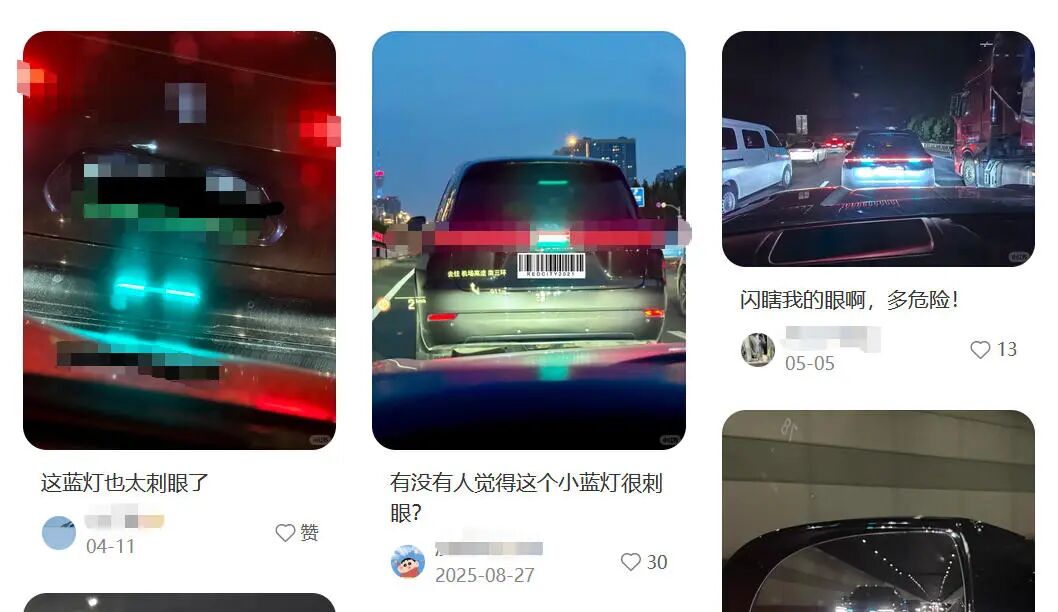
Of course, some automakers have indeed exhibited design flaws. For instance, the Blue Light integrated into exterior rearview mirrors allows the light source to be directly viewed by the driver, posing risks to both the driver and others. What was intended as a safety feature has inadvertently become a safety hazard due to poor design, which is unacceptable.
When it comes to glaring vehicle lights, many drivers have likely experienced vehicles using fog lights in non-foggy or non-rainy conditions, which is also a significant safety hazard. However, there is a distinction: the misuse of fog lights is a subjective driving habit, whereas the glare from the Smart Driving Blue Light is a design issue by automakers.
Automakers should recognize that the audience for the Blue Light is people outside the vehicle. For the driver, it may symbolize technological sophistication, but for other road users, it can be a source of interference. Therefore, we should not blame drivers who activate the Smart Driving feature, as they are innocent. Instead, in the absence of relevant regulatory constraints, we hope automakers can transcend the low-level thinking of “showcasing technology” and proactively consider these features from the perspective of all road users. After all, this is not a technical challenge; it can be resolved with empathy and user-centric thinking.
Resolving this issue does not require negating the value of the Blue Light but rather optimizing its design details. For instance, the Xpeng G7’s Blue Light features automatic brightness adjustment, the Arcfox Alpha S5 adopts a soft, surrounding blue light design, and the Qijing GT7 uses a diffuse reflection crystal Blue Light.
Nevertheless, we still hope that relevant authorities can intervene and establish a scientific and enforceable national mandatory standard for the Smart Driving Blue Light. After all, the safety hazards posed by the Blue Light do not actively harm the vehicle in question but passively harm other road users, which is difficult to quantify.
02 Vigorous Regulation is Essential
You may recall a similar passive issue to the glare caused by the Smart Driving Blue Light: last year, there was news suggesting that if a power battery catches fire, it could be ejected from the vehicle like a projectile in an emergency. This incident caused quite a stir and was widely criticized online.
Many argued that this approach did not minimize the damage caused by electric vehicle battery fires but rather transferred the risk from inside the vehicle to other road users. Vehicle safety is not a zero-sum game; one cannot compromise the safety of others to ensure one’s own safety. This underscores the need for relevant regulations to impose constraints.
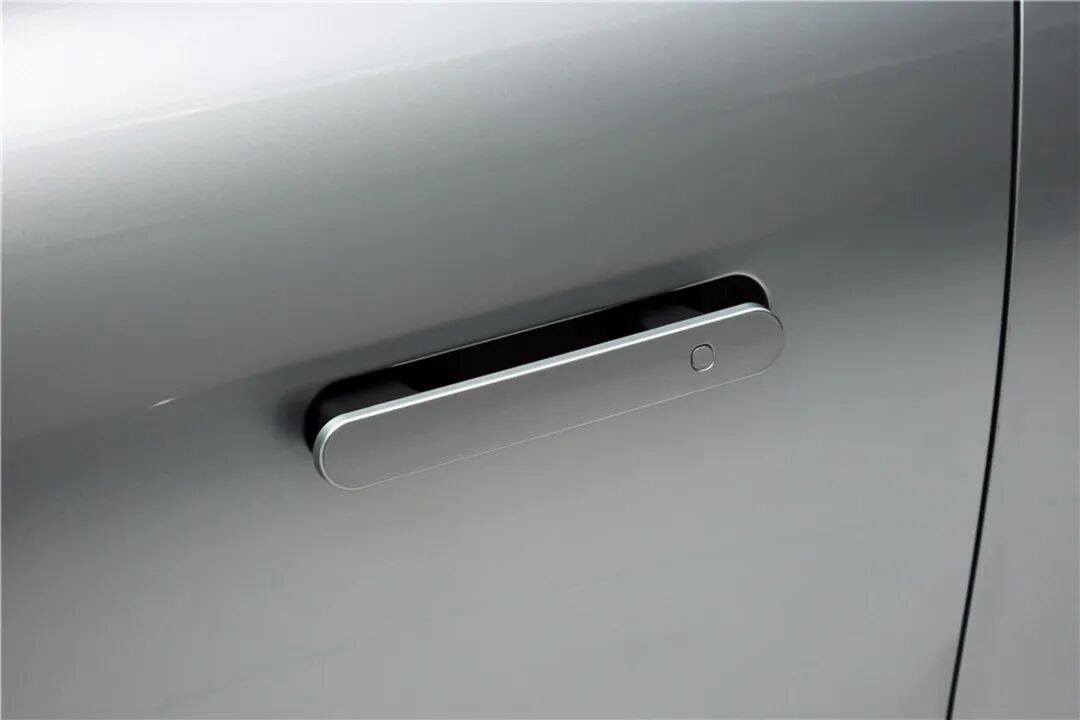
In fact, we have clearly seen that regulatory authorities are accelerating efforts to address pseudo-innovations and pseudo-technological features. Designs such as single-pedal driving, hidden door handles, screen-based gear shifting, and irregular steering wheels, which grew unchecked, have eventually been regulated. This also indicates that relying solely on automaker self-discipline is ineffective.
Consider another example: as the batteries in many new energy vehicles become larger and the use of pure electric power increases, resting inside the vehicle has become a common occurrence, as promoted by automakers and experienced by users. Consequently, many vehicles are equipped with so-called “zero-gravity seats.”
However, in the event of a collision, the seatbelt may not effectively restrain the body. The occupant may slide out from under the seatbelt, missing the protection of airbags designed for passengers in an upright sitting position. Fortunately, relevant authorities have taken note of this issue and are researching how to ensure safety when using zero-gravity seats in a fully reclined position.
Furthermore, starting July 1, 2026, physical controls must be provided for turn signals, hazard lights, reverse gear, drive gear, park gear, windshield wipers, window adjustments, and the activation switches for intelligent driving assistance. Moreover, the new national standards also specify requirements for the location and size of these physical controls.
At the end of last year, the Ministry of Public Security’s draft “Technical Conditions for the Safe Operation of Motor Vehicles” proposed that the default 0–100 km/h acceleration time for passenger vehicles after startup should not be faster than 5 seconds, aiming to reduce the risk of loss of control due to sudden high-torque output during daily driving. Automakers can still manually unlock shorter acceleration times (e.g., 2-second range) through sport/track modes, but the default setting must comply.
Undoubtedly, China’s electric vehicle industry has helped define the modern electric vehicle experience through large screens, lounge-like cabins, dazzling lights, rapid acceleration, and various features aimed at enhancing the appeal of electric vehicles. However, now, relevant authorities are taking timely action to address more meaningful and impactful issues, correcting unchecked growth, and returning to the right track of value.
As foreign media have noted, the decisions of relevant regulatory bodies will not be limited to China but will also influence global electric vehicle design trends. These new restrictions may quietly shape the landscape of the next generation of electric vehicles, making China not only the world’s largest electric vehicle market and innovation hub but also the most important global safety regulator.
Editor-in-Chief: Li Sijia Editor: He Zengrong
THE END
-
![]()
"3D Vision Pioneer" Grapples with Internal Strife: $120 Million in Share Reductions Offset by $147 Million Private Placement
-
![]()
The domestic auto sales have declined so much that dealers who can't hold on have started closing stores en masse
-
![]()
Five Brands Team Up with Huawei: Will Dongfeng Still Pursue Independent R&D?
-
![]()
The Large Six-Seater SUV Market: Overhyped and Overrated
-
![]()
The Smart Driving Blue Light: Urgent Need for Rectification
-
![]()
Would OpenAI Be Fascinated by Anthropic’s Concepts?
-
![]()
Tencent: Few Great Queries, Yet Possessing the Ultimate One
-
Does DingTalk Need Revolutionaries or Reformers?