Tencent: Few Great Queries, Yet Possessing the Ultimate One
 06/08 2026
 429
429
Tencent's Unwavering Confidence
On June 5th, at the Tencent Cloud AI Industry Application Conference, Tang Daosheng and Yao Shunyu engaged in a discussion centered around a question that Tencent has been grappling with in recent years: Is Tencent falling behind in the AI race?
The notion of Tencent being either swift or sluggish in AI development now evokes a sense of déjà vu, reminiscent of Baidu's early or late market entry dilemma. Of course, the key distinction lies in the fact that some of the opportunities Baidu missed in the past are now irreversible, whereas Tencent's AI advancements, aided by WeChat Agent, have the potential to catch up and even surpass competitors at any moment.
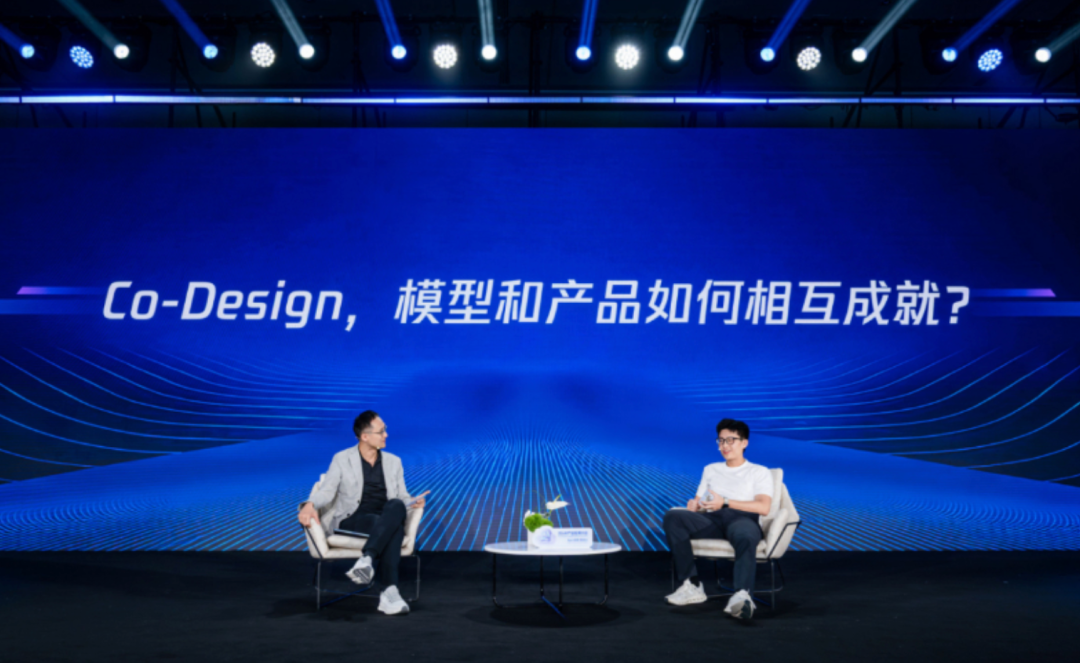
Nevertheless, it was remarkably candid and confident of the two Tencent executives to address this issue head-on at their own event.
Tang Daosheng posed the question to Yao Shunyu: "Many self-media outlets claim that Tencent is lagging behind and has missed out on some AI opportunities. Do you think we're truly slow?"
Yao Shunyu offered two insights: AI is a marathon, not a sprint; and AI will diversify rather than follow a single, linear trajectory.
This response embodies Tencent's characteristic approach, akin to what Pony Ma articulated three years ago. A friend recently shared with me that he particularly appreciates Tencent's management communication style—devoid of sensationalism or high-energy rhetoric, instead opting for transparent, stable, and mature information sharing and idea exchange.
The same holds true in this instance. Tencent acknowledges the validity of external questions, recognizing past missteps with models and products, but refuses to let outsiders define its current trajectory.
Over the past two to three years, the AI industry's scoreboard has been successively dominated by various types of companies. OpenAI has transformed chatbots into a universal interface, Anthropic has positioned Claude Code as a new tool in programmers' workflows, DeepSeek has disrupted the Chinese market with model efficiency and an open-source ethos, and ByteDance has continued to demonstrate its product distribution prowess with Doubao and video generation.
Tencent's Hunyuan, Yuanbao, ima, CodeBuddy, and WorkBuddy are all making strides, yet the company lacks an AI blockbuster that instantly leaves a lasting impression on the public. There have been numerous initiatives, but they often feel like isolated improvements scattered across the organization, failing to coalesce into a coherent "Tencent AI narrative" that resonates with the outside world.
This is precisely why Yao Shunyu's emergence is significant, as he has integrated Tencent's teams and businesses around foundational model R&D.
Tencent's Need for Robust Models
Yao Shunyu also emphasized during the conversation that the foundation of Co-Design lies in a solid model, with robust pre-training and post-training work being essential.
Regarding models, Yao Shunyu pointed out a concerning trend in China—the obsession with climbing rankings. He stressed that evaluations should be based on products and real-world applications rather than mere rankings.
This perspective aligns with Tencent's ethos. Tencent's foray into AI is not to prove itself as the premier model company but to enhance user experience, business efficiency, and organizational effectiveness.
Primarily because Tencent currently lacks a ranking advantage, and if Hunyuan can consistently outperform mainstream models, Tencent would not shy away from such a narrative.
This confidence mirrors Tencent's historical product personality. Tencent may not always be the first to propose new concepts, but it excels at solidifying its position in the long run through product capabilities.
WeChat Pay entered the market later than Alipay, WeChat Channels followed Douyin and Kuaishou, and the same pattern holds for games. Internally, Tencent hopes AI will follow a similar trajectory—being questioned for slowness initially, catching up midway by leveraging its ecosystem and product scenarios, and ultimately transforming AI into a foundational capability of its core businesses.
WeChat: The Ultimate Question
When explaining his decision to join Tencent, Yao Shunyu made a insightful observation: large models have become a "universal hammer," and what truly matters are good questions. Tencent, with its vast array of products, scenarios, and contextual data, has numerous AI-solvable problems.
This argument holds some weight, as domestic internet companies are accustomed to attacking from all angles, and the ecosystems of several BAT companies are expansive.
However, from a competitive standpoint, this argument holds limited significance. Tencent's AI competitors are not DeepSeek but ByteDance and Alibaba, both of which boast richer scenarios and more definable problems than Tencent.
Tencent's main businesses—social networks, content platforms, games, and Tencent Cloud's enterprise services—can all benefit from AI, but not all can be fundamentally reshaped by it.
For instance, AI can now assist in coding, prototyping, content generation, and providing customized scenarios for game IPs. However, this is akin to Taobao using Dianxiaomi (a customer service chatbot)—AI enhancing efficiency for marginal gains.
This also explains why ByteDance chose to sell Moonton Technology amid rapid AI investment, as the collision between games and AI has yet to yield new models and opportunities.
The same applies to Tencent Cloud.
Tencent Cloud can offer MaaS (Model as a Service) and provide other computing resources needed for AI, which is a crucial business (though Tencent doesn't seem overly interested currently). However, it's not a unique scenario or a special problem, as Alibaba Cloud, Volcano Engine, and even Zhipu and MiniMax can do the same—it's essentially technology-related rather than scenario-specific.
The same goes for content platforms. Tencent Video, Tencent Music, and China Literature can all leverage AI for more accurate recommendations and content generation. Yet, using APIs to output text, images, or videos is of the same nature and doesn't touch upon Tencent's unique context.
Therefore, Tencent doesn't actually have that many "good questions" to pose. One category consists of AI-native products like Yuanbao and WorkBuddy; the other, and more importantly, is WeChat.
Yuanbao is significant. It was crucial in the past as Tencent's foothold in the AI-native gateway competition and remains important now as a potential testing ground for the WeChat Agent.
Previous reports indicated that Tencent is developing an AI Agent for WeChat, aiming to integrate with millions of mini-programs within the WeChat ecosystem, covering high-frequency services such as ride-hailing, food delivery, ticket booking, and payment, with plans to initiate grayscale testing by mid-2026.
Recently, there have been reports of Tencent testing a prototype of an AI Agent embedded within WeChat, allowing users to swipe right from the WeChat homepage to enter a chatbox and issue instructions in natural language, with the Agent automatically invoking mini-programs to complete tasks.
Yao Shunyu's emphasis on "problem awareness," the importance of context, and the Co-Design model all converge here with the WeChat Agent.
From this perspective, the detail that "the Hunyuan team first helped Yuanbao adapt to DeepSeek" is crucial. From the model team's standpoint, this is somewhat awkward. Hunyuan's own pre-training is not yet complete, yet it has to deploy its strongest post-training personnel to help Yuanbao adapt DeepSeek effectively.
It's akin to using someone else's model to save your own product.
However, from Tencent's overall AI strategy, this is a necessary step.
This necessity doesn't imply that helping Yuanbao survive is paramount. To be honest, given Yuanbao's recent moves, I'm not overly optimistic about its future prospects.
This necessity means that Yao Shunyu needs to adapt to the Co-Design collaboration model and establish an image of openness, inclusiveness, and serving the overall interests within the model R&D team, which is just as fundamental as excelling in model R&D.
Because WeChat is Tencent's strongest product and also the most independent within the company. Yao Shunyu can influence Hunyuan, but the overall direction of the WeChat Agent will most likely still adhere to the WeChat team's product philosophy.
In other words, Tencent's most valuable context is held by its most boundary-conscious business.
This creates a delicate situation for Tencent's AI: Yao Shunyu is a key figure in Tencent's AI model and Agent methodology, but the real decision-maker for the WeChat Agent is Long Ge. Hunyuan can provide capabilities to support, but Long Ge will only decide the pace of the WeChat Agent's advancement based on his own judgment.
Therefore, returning to Yao Shunyu's statement: Tencent has many good questions.
I believe a more accurate statement is that Tencent doesn't actually have many good questions, but only the best one.
-
![]()
Beijing Hyundai's Top Executive Criticizes Industry Disorder: Certain Brands Treat Customers as Beta Testers
-
![]()
The domestic mobile phone market has declined for five consecutive quarters! Huawei defies the trend with significant growth: maintains its top market share
-
Annual Revenue Surpasses 3 Billion: An Automotive Trim 'Little Giant' Makes Its Debut on the Beijing Stock Exchange
-
![]()
The Space Force Wants to Spend $30 Billion on Rocket Launches: Is Trump Doubling Down, and Is SpaceX the Big Winner?
-
![]()
Going Crazy! One out of Every Three Plug-in Hybrids Sold in Europe is a Chinese Vehicle
-
![]()
Gemini Falls Out of Global Top 10: Where Is Google's AI Empire Headed?
-
![]()
Jiefeng Power Secures IPO Registration: A Critical Turning Point for an Exhaust System Supplier’s Evolution
-
![]()
Gemini Slips From Global Top 10: What Lies Ahead for Google's AI Dominion?