Haiqing Zhiyuan Prepares for HKEX Debut: Revenue Jumps Despite Profit Challenges and Worsening Cash Flow
 06/15 2026
 485
485
By Shi Zifu, Harbour Business Observation
In mid-March this year, Shenzhen Haiqing Zhiyuan Technology Co., Ltd. (hereinafter referred to as Haiqing Zhiyuan) submitted its listing application to the Hong Kong Stock Exchange (HKEX), which was accepted, with CMB International Capital and Pudong Development Bank International acting as joint sponsors.
It's reported that Haiqing Zhiyuan initially filed its application with the HKEX in August 2025, but the process was halted due to the expiration of financial documents. This marked the company's second attempt. On February 14, 2026, the China Securities Regulatory Commission (CSRC) issued an overseas listing filing notice for Haiqing Zhiyuan, clearing a key hurdle for the company to proceed with its HKEX hearing.
As anticipated, the company successfully passed the hearing on June 9. It is reported that Haiqing Zhiyuan conducted its share offering from June 11 to June 16, planning to globally offer 85.1625 million H-shares, with roughly 10% earmarked for the Hong Kong public offering and about 90% for international placement. The offering price is set at HK$7.2 per share, with an expected listing on the HKEX main board on June 22.
1. Revenue Jumps, but Profits Under Pressure
According to Tianyancha, Haiqing Zhiyuan, established in 2013, is a multispectral artificial intelligence technology firm. The company specializes in acquiring, processing, and analyzing optical data across multiple spectral bands to provide images with greater detail than visible light imaging.
Leveraging its proprietary multispectral perception and AI algorithm technologies, Haiqing Zhiyuan offers products and services capable of detecting both visible and invisible spectral information. These include multispectral AI modules—embedded hardware components that collect and process multispectral data (including visible light, infrared, and ultraviolet) through AI algorithms for integration into third-party devices; multispectral AI perception terminals—which integrate multispectral sensors, advanced AI algorithms, and standard hardware to provide real-time perceptual insights; and multispectral AI large model services—powered by the company's self-developed Zhiyuan Origin Large Model, offering large model platform solutions.
From 2023 to 2025 (hereinafter referred to as the reporting period), revenue from multispectral AI modules was RMB 99.121 million, RMB 299 million, and RMB 209 million, accounting for 84.6%, 57.3%, and 31.3% of total revenue in the respective periods. Sales volumes were 160,800 units, 587,200 units, and 364,400 units, with average selling prices of RMB 616.4/unit, RMB 509.6/unit, and RMB 573.7/unit.
In 2024, the average price of multispectral AI modules declined year-on-year, primarily due to the company's strategic shift to competitive pricing to attract clients and boost product competitiveness. Notably, a major new client, F, significantly contributed to revenue that year, resulting in a relatively lower average selling price in 2024.
During the same period, revenue from multispectral AI perception terminals was RMB 12.586 million, RMB 61.229 million, and RMB 92.638 million, accounting for 10.8%, 11.7%, and 13.9% of total revenue, respectively. Sales volumes were 10,700 units, 63,000 units, and 53,000 units, with average selling prices of RMB 1,173.4/unit, RMB 972.4/unit, and RMB 1,746.4/unit. The average price of multispectral AI perception terminals also declined in 2024.
Since 2024, Haiqing Zhiyuan has started generating revenue from multispectral AI large model services. In 2024 and 2025, revenue from these services was RMB 114 million and RMB 355 million, accounting for 21.8% and 53.1% of total revenue, respectively.
Haiqing Zhiyuan also derives a small portion of its revenue from selling other AI vision modules. During the reporting period, revenue from this business was RMB 5.2 million, RMB 47.1 million, and RMB 10.3 million, accounting for 4.4%, 9.0%, and 1.5% of total annual revenue, respectively, representing a relatively minor share.
Influenced by factors such as changes in the product mix, Haiqing Zhiyuan's gross profit margin during the reporting period was 12.2%, 18.8%, and 22.3%, showing a significant overall increase.
However, in terms of overall profitability, the company still faces challenges. Despite steady revenue growth over the past three years, Haiqing Zhiyuan continues to grapple with profitability pressures. During the reporting period, the company achieved revenue of RMB 117 million, RMB 523 million, and RMB 669 million, with net profits of RMB -18.413 million, RMB 40.412 million, and RMB 29.354 million, respectively. Adjusted net profits were RMB -18.171 million, RMB 42.944 million, and RMB 55.245 million, with net profit margins of -15.7%, 7.7%, and 4.4%, respectively.
In 2023, the company recorded a net loss of approximately RMB 18.413 million but successfully turned a profit in 2024 and 2025. However, in 2025, the company's net profit experienced a slight year-on-year decline. These fluctuating profits have raised concerns among market observers about the stability of the company's overall profitability.
The company stated that the 2023 loss was primarily due to decreased demand for certain products and the prevailing weak macroeconomic environment. The successful turnaround to profitability in 2024 was mainly attributable to a significant increase in gross profit, from RMB 14.3 million the previous year to RMB 98.2 million. The decrease in net profit in 2025 was primarily due to substantial increases in general and administrative expenses and research and development (R&D) expenditures.
A closer look at the reporting period reveals that Haiqing Zhiyuan's general and administrative expenses were RMB 11.874 million, RMB 13.04 million, and RMB 46.802 million, accounting for 10.2%, 2.49%, and 7% of revenue in the respective periods. Selling and marketing expenses were RMB 16.035 million, RMB 16.47 million, and RMB 17.7 million, accounting for 13.7%, 3.2%, and 2.7% of revenue. R&D expenditures were RMB 11.084 million, RMB 25.151 million, and RMB 50.793 million, accounting for 9.5%, 4.8%, and 7.6% of total revenue in the respective periods.
Haiqing Zhiyuan acknowledged that as the company is currently in a business expansion phase in a highly competitive market and continues to invest heavily in R&D, it may incur net losses in the short term. The company may not achieve or subsequently maintain profitability in the near future. It anticipates that as it continues to expand its business and operations and invests in R&D, its costs and expenses will increase in the coming periods. If the company fails to generate sufficient revenue and manage its expenses, it may continue to incur significant losses and may not achieve or subsequently maintain profitability.
Furthermore, the company exhibits significant concentration in its upstream and downstream sectors. During the reporting period, Haiqing Zhiyuan's clients included system integrators who incorporated the company's products and services into their offerings for enterprise-level users, as well as enterprise-level users who directly utilized the company's products and services.
During the reporting period, revenue from the top five clients accounted for 38.3%, 59.0%, and 46.8% of the company's total revenue. Revenue from the largest client was approximately RMB 23 million, RMB 186 million, and RMB 94 million, accounting for 19.6%, 35.5%, and 14.1% of total annual revenue, respectively.
On the other hand, Haiqing Zhiyuan's purchases from the top five suppliers accounted for 54.2%, 66.4%, and 62.2% of total purchases. Purchases from the largest supplier were approximately RMB 18.8 million, RMB 152 million, and RMB 101 million, accounting for 18.6%, 39.9%, and 18.5% of total purchases, respectively.
2. Deteriorating Operational Cash Flow and Soaring Receivables
In addition to profitability pressures, Haiqing Zhiyuan's cash flow has continuously deteriorated during the reporting period.
Contrary to the trend of net profit, the company's cash flow was positive in 2023 but turned negative in 2024 and 2025, with cash outflows for two consecutive years. At the end of each reporting period, the net cash flow generated from the company's operating activities was RMB 69.571 million, RMB -6.491 million, and RMB -130 million, respectively, indicating a sharp increase in the cash deficit.
Yuan Shuai, co-founder of the New Intelligence New Quality Productivity Salon, believes that the discrepancy between Haiqing Zhiyuan's book profit and cash flow reflects a common scenario where companies sacrifice asset quality for scale growth during rapid expansion. From a financial perspective, this "paper profit" primarily stems from the time lag between accounting recognition under the accrual basis and actual cash receipts. Despite explosive growth in revenue and net profit, and even the achievement of profitability, significant cash outflows often point to excessively high accounts receivable and inventory levels. For a hard-tech company deeply rooted in the vertical sector of multispectral AI, clients are likely concentrated among large B-end or G-end institutions such as smart cities and industrial safety, which typically possess strong bargaining power and long settlement cycles.
If the company overly relaxes its credit policies to seize market share, the profits reported on the balance sheet become mere figures yet to be realized, unable to support daily operations and leading to substantial cash shortages due to ongoing R&D investments and supply chain inventory. This "bloated" profit quality conceals significant bad debt risks. Once downstream payments fall short of expectations, the company may face a liquidity crisis characterized by having profits on paper but lacking funds for salaries or supplier payments, potentially escalating into a "sudden death" financial collapse. Therefore, this cash outflow state poses a severe test of the company's business model's cash conversion capability, indicating that its products do not yet possess strong cash conversion leverage in the market chain.
In terms of specific financial indicators, at the end of each reporting period, trade accounts receivable and notes receivable were RMB 19.817 million, RMB 146 million, and RMB 184 million, respectively. Inventory was RMB 55.967 million, RMB 31.577 million, and RMB 80.194 million. Trade accounts payable and notes payable were RMB 45.06 million, RMB 79.557 million, and RMB 45.882 million. Contract liabilities were RMB 21.28 million, RMB 20.28 million, and RMB 75.942 million.
From 2024 to 2025, Haiqing Zhiyuan's borrowings were RMB 28.584 million and RMB 152 million, respectively, showing a significant increase. As of the end of January 2026, Haiqing Zhiyuan's borrowings had increased to RMB 157 million.
At the end of each reporting period, the company's cash and cash equivalents were RMB 37.115 million, RMB 56.705 million, and RMB 66.556 million, respectively.
In terms of solvency, at the end of each reporting period, Haiqing Zhiyuan's current ratios were 2.0, 1.9, and 1.9, respectively. Quick ratios were 1.4, 1.7, and 1.6. Debt-to-capital ratios were -0.14, 0.2, and 0.59.
3. Sudden Share Acquisition Leads to a 250% Surge in Valuation
For this IPO, Haiqing Zhiyuan plans to use the raised funds primarily to enhance R&D capabilities and increase product development investments, expand production capacity, make strategic investments and acquisitions, intensify business expansion efforts and accelerate global market penetration, and provide general working capital for general corporate purposes.
In terms of capacity utilization, at the end of each reporting period, the company's capacity utilization rates were 24%, 87%, and 49%, respectively, showing significant fluctuations and indicating instability in future capacity digestion.
As of the signing date of the prospectus, Zhou Bo controlled 48.87% of the voting rights at the company's general meeting of shareholders, including his direct beneficial ownership of 5.96%; beneficial ownership of 38.34% through Zhongcheng Tianying, which he controls as the executive partner; beneficial ownership of 2.79% through Zhongzheng Tianying, which he controls as the executive partner; and beneficial ownership of 1.79% through Zhongzhi Tianying, which he controls as the executive partner.
According to the prospectus, since its establishment, Haiqing Zhiyuan has completed five rounds of financing.
Specifically, in 2020, Haiqing Zhiyuan entered into a capital increase agreement with A-round investors led by Zheshang Venture Capital. In 2021, the company entered into a capital increase agreement with B-round investors led by High-Tech Investment. In 2024, the company entered into capital increase agreements with C-round and C+-round investors, respectively. In 2025, the company entered into a capital increase agreement with D-round investors.
Market attention has been drawn to the fact that on July 8, 2025, Haiqing Zhiyuan entered into a capital increase agreement with D-round investor Zhide No. 9, which acquired 121,300 shares at a cost of RMB 50 million, increasing the company's registered capital from RMB 8.4918 million to RMB 8.6131 million. Due to this sudden share acquisition, Haiqing Zhiyuan's valuation surged significantly in a short period, rising from RMB 1.01 billion in the C+ round to RMB 3.55 billion, an increase of over 250%. The rationality of this sudden share acquisition has inevitably raised doubts from the outside world.
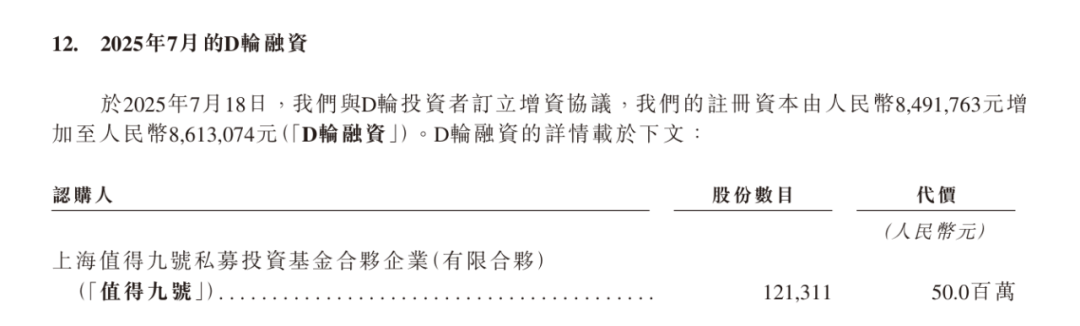
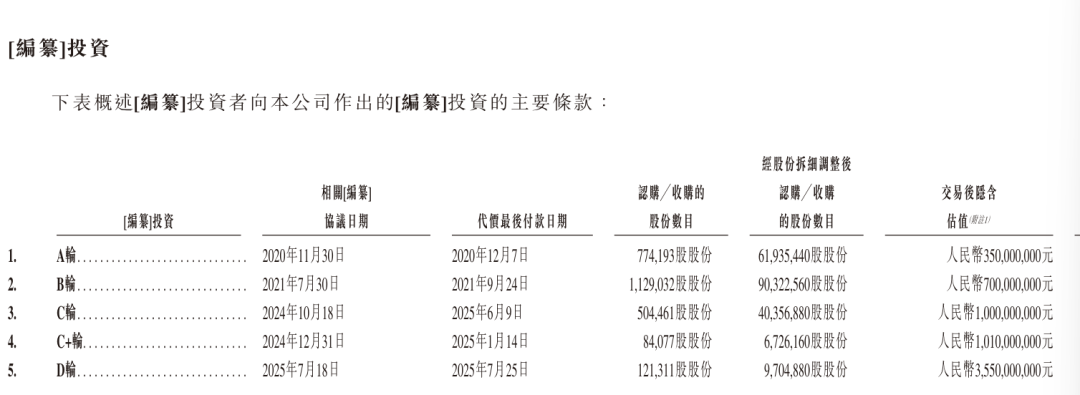
Yuan Shuai pointed out that the D-round investor's sudden share acquisition just two days before the prospectus submission is highly suspicious of "creating a myth."
-
![]()
A New Insight After Exploring Doubao's "Task Mode"
-
![]()
Why Is NASA Planning to ‘Disassemble’ the Space Station? Post-2030, the 450-Ton Behemoth Will Plummet into the Pacific Ocean
-
![]()
Why Is the Gap Between Alibaba and Tencent Widening?
-
![]()
SpaceX Market Value Surpasses $2 Trillion: Who is Supporting Musk's Space Dreams?
-
![]()
SpaceX Becomes the Largest IPO in History: Has Capital Surrendered to Technology?
-
AI Smartphone: Apple Hands in Its Answer Sheet
-
![]()
Midea: Nearing Completion in Its Transformation Journey
-
![]()
Controversy Rages On! SpaceX's IPO Unveiled: Is Musk a Visionary or Just a Dreamer?