Who Could Have Imagined Input Methods Becoming the Hottest Internet Product of 2026?
 07/01 2026
 342
342
Back in 2026, the notion that input methods would dominate the internet industry as the hottest product was beyond anyone's wildest dreams. The earliest domestic input method products have a history spanning over two decades. Yet, after such a prolonged period, they have managed to experience a renaissance, once again becoming highly sought-after assets in the internet sector. Internet behemoths like ByteDance, Tencent, Alibaba, Zhipu, and several others are all fervently promoting their own input method offerings.
On November 26, 2025, Doubao Input Method made its debut.
On December 10, 2025, Zhipu announced the release of its desktop AI input method.
On May 7, 2026, Alibaba's AI large model product, Qianwen, unveiled its AI voice input method.
On May 9, 2026, WeChat Input Method introduced the "Air Drop" feature in its iOS 3.3.0 version, catapulting it to sixth place on the App Store's overall free chart.
On May 27, 2026, KK Keyboard took the internet by storm due to a "glorious mishap" where its voice-changing feature became irreversible. Users found amusement in these quirky voices, propelling KK Keyboard to the top spot on the App Store's overall free chart.
On June 20, 2026, Alibaba Cloud launched the AI voice input method CosyVoice.
At this juncture, all major internet giants have synchronized their strategies and are once again vying for supremacy in the input method arena. According to incomplete statistics from Guo Jing's Internet Circle, the AI large models and input method products of major companies are as follows:
Tencent: Yuanbao + WeChat Input Method/Sogou Input Method
Baidu: Wenxin + Baidu Input Method
Alibaba: Qianwen + Qianwen Input Method/CosyVoice Input Method
ByteDance: Doubao + Doubao Input Method
iFLYTEK: iFLYTEK Spark + iFLYTEK Input Method
Zhipu: Zhipu AI + Zhipu Input Method
In the past, internet giants consistently placed their bets on AI large models. Now, they are once again fervently promoting input method products. What sparked this sudden popularity of input methods? Why are internet giants turning their attention to this already mature product?

Overlap in Functions
In reality, input method products in China have reached a high level of maturity. After nearly two decades of development, products like Sogou Input Method, Baidu Input Method, and iFLYTEK Input Method can fully cater to user needs. So, what factors have led AI large model products to start paying heed to input methods? Why are they "reinventing the wheel"?
The underlying reason lies in the overlap of functions. In the mobile internet era, users find voice input incredibly convenient. In the realm of AI large models, many users have also grown accustomed to directly using voice input for interactions. Prior to having their own input methods, AI large models relied on products like Sogou Input Method, Baidu Input Method, and iFLYTEK Input Method for this functionality.
Moreover, during the product iteration of AI large models, they also developed voice-to-text capabilities. According to observations from Guo Jing's Internet Circle, apart from the aforementioned AI large model products, some AI large models, although not launching standalone input methods, explicitly highlight voice-to-text functions in their product features. Some large model products also integrate voice-to-text functions within intelligent agents, allowing users to access them anytime.
When AI large models possess relatively mature voice-to-text functions, they have every opportunity to transform them into voice input method tools. In other words, from a technical standpoint, it is entirely feasible for AI large model products to launch input method clients. AI large models overlap with voice input and voice input methods in terms of functions. Since AI large models can handle long texts in voice input, why not directly launch voice-based input method products?
Staking Claims Early
Voice input methods are not merely a case of "reinventing the wheel" compared to traditional input methods. This is akin to how AI large models are replacing traditional search engines. Although AI large models may seem different from traditional search engines in certain functions, they are, in essence, no longer the same type of product. Once users become accustomed to receiving direct answers from AI, the sluggish efficiency and "irrelevance" of traditional search engines become increasingly frustrating. The eight ads at the top and bottom of search engine results, along with ads interspersed in the Feed stream, create a subpar user experience that pales in comparison to current AI assistant products.
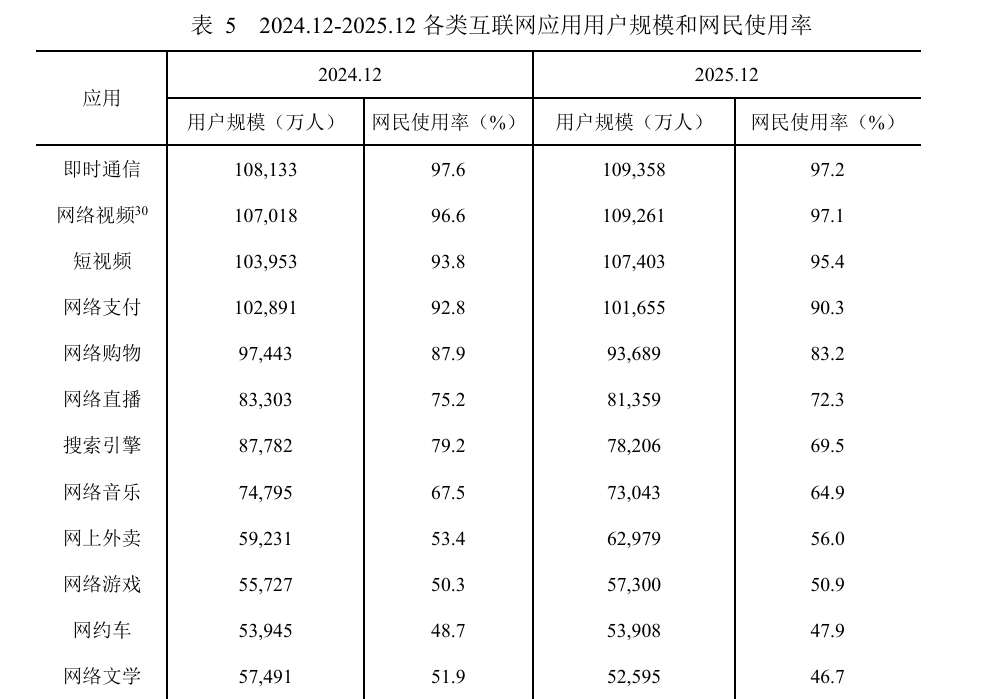
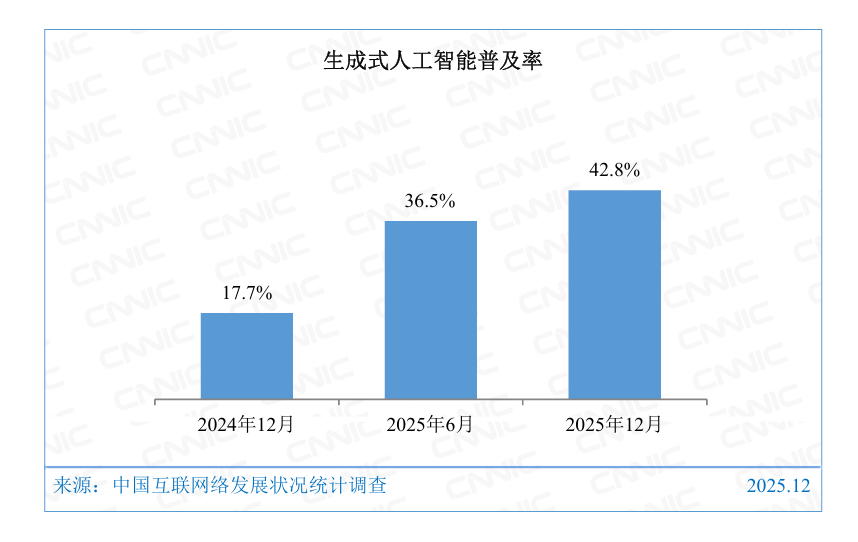
Users will still use search engines, but their frequency of use will significantly decline with the advent of AI. According to CNNIC data, in December 2025, China's search engine user base stood at 782 million, with an internet penetration rate of 69.5%. In December 2024, the user base was 878 million, with a penetration rate of 79.2%. In contrast, the AI sector is experiencing rapid growth. As of December 2025, China's generative AI user base reached 602 million, an increase of 353 million from December 2024, representing a growth rate of 141.7%. The penetration rate reached 42.8%, an increase of 25.2% from December 2024.
Traditional input methods primarily focus on text input. Is text input the most efficient and convenient method? Obviously not. Compared to typing, voice input methods are significantly more efficient, especially when combined with AI, which can correct errors in voice recognition.
Currently, AI voice input cannot match the accuracy of text input. However, the accuracy of voice input is expected to improve significantly in the future. This means that as long as AI large model products launch voice input methods, they can stake their claims early.
Based on past experience, given enough time, products like Sogou Input Method, Baidu Input Method, and iFLYTEK Input Method will all achieve similar levels of accuracy. The situation with voice input methods is likely to mirror that of text input methods, meaning that over time, the voice recognition accuracy of various products will converge. Therefore, regardless of the future scenario, all major AI large model products must stake their claims in voice input methods early.
Furthermore, from the perspective of AI large models, especially those in the consumer-facing (B2C) sector, every user input serves as a valuable data source, and this is even more so for voice input. Over a longer period, users' voice libraries will play a pivotal role.
Currently, there is a consensus in the AI industry that AI cannot yet replace user queries and thinking. If AI large models can rely on more authentic user input data, can they perform more accurate analyses?
In the current fiercely competitive AI large model landscape, companies cannot afford to cede core data to others or fall behind in the competition. Launching input methods is not surprising, especially considering the large user base of input methods, which could potentially drive the adoption of their own AI large model products.
When to Make a Move?
In the past few years, AI large models have brought excitement to the tech industry while also instilling fear in many ordinary people. Faced with this "high-tech" advancement, people from all walks of life seem to be at risk of being left behind or replaced by AI. Almost every few days, there are "groundbreaking" news stories about AI large models, causing ordinary people to either feel extremely anxious or rush to learn various AI-related technologies. Looking back, the same rhetoric was used when ordinary people were unfamiliar with computers and companies did not have websites.
However, in the face of an internet user base of 1.125 billion, does a "high-tech" technology that leaves many ordinary people behind truly exist?
In my opinion, ordinary people should not be overly anxious about keeping up with the pace of AI. According to observations from Guo Jing's Internet Circle, the current wave of AI voice input methods particularly reflects this point. The seemingly "sophisticated" AI ultimately proves to be very practical when it comes to implementation. For example, AI input method products still rely on traditional search engine advertising to boost downloads, even though search engines are seen as a "lagging" symbol in the AI era. AI is constantly said to replace various professions, but aren't SEO and SEM positions still around?
It is also interesting to note the actions of the aforementioned internet giants in the AI input method space. Although they are staking their claims early in AI voice input methods, they are not actively pursuing user acquisition. For example, Doubao Input Method, it is well-known that once ByteDance vigorously promotes a new app, it quickly rises to the top 10 of the App Store's overall free chart, as seen with Doushengsheng. However, Doubao Input Method has been available on the App Store since November last year and has not reached the top 100 of the App Store's overall free chart in the past three months.

The situation with WeChat Input Method is similar. I have only seen Tencent promote this product on WeChat Reading, with no support for WeChat Input Method in other products.
Some input method products, although launched, are not fully available across all platforms. The iOS, MacOS, Android, and Windows versions are often missing several terminals, meaning users cannot use them on all devices.
While major internet giants have aligned their strategies at the product level, there are significant gaps in specific operations, marketing, and product terminals. It is possible that input method products are not very profitable, so although the giants have launched them, they are not actively pursuing user acquisition.
AI has been popular for five years. For internet giants, the current question is whether they can leverage their own AI to make their products popular, such as input methods.
By Guo Jing, WeChat Official Account: Guo Jing's Internet Circle
-
![]()
Prayer for Success, Yet China's Space Industry Must Look Beyond Mere Success
-
![]()
Can Intelligent Driving Talents Adapt to Embodied AI? A Dimensionality Reduction or a Cultural Shock?
-
![]()
Final Assessment: Unveiling the Causes of the Sluggish Domestic Auto Market in the First Half of the Year
-
![]()
Buying a Crippled FSD for 100,000 Yuan! Musk Struggles to Quell Consumer Anger, Are New Energy Vehicles 'Outdated as Soon as They Hit the Road'?
-
![]()
Over €1.15 Billion Spent, No Mass Production in Four Years! The Volkswagen-Bosch Partnership Falters, While the Chinese Market Quietly Flourishes
-
![]()
AI Carnival: Who Will Foot the Bill?
-
![]()
Who Will Foot the Bill for the AI Craze?
-
![]()
Midea’s Air Conditioners Fly Off Shelves in Europe, Boosting He Xiangjian’s 200 Billion Yuan Fortune