Can Intelligent Driving Talents Adapt to Embodied AI? A Dimensionality Reduction or a Cultural Shock?
 07/01 2026
 385
385
Over the past two years, the embodied AI industry has essentially absorbed talent, methodologies, and organizational experience from the autonomous driving sector. According to incomplete statistics, nearly 40 core executives and technical leaders from the domestic intelligent driving sector have transitioned into the embodied AI field in the past two years. Many platforms related to intelligent driving also include embodied AI as a topic of technical discussion. The migration of intelligent driving talent to embodied AI: a dimensionality reduction or a cultural shock?

A Major Talent Migration?
Since the beginning of 2026, the embodied AI track has seen the emergence of several new unicorns. Looking at the list of founders, Gao Jiyang from Xinghaitu was formerly the head of mass production at Momenta. Guo Yandong from Zhipingfang is the former chief scientist at XPeng Motors. Chen Yilun from Tishi Zhihang is the former CTO of Huawei's Autonomous Driving Systems in the Automotive BU, and Li Zhenyu is the former president of Baidu's Intelligent Driving Group.
Li Auto has been the most significant contributor to this talent migration. Over the past six months, eight core executives have left Li Auto, covering key areas such as intelligent driving, chips, and products. Lang Xianpeng, the head of intelligent driving, Han Ling, the head of intelligent driving products, and other core executives such as Xia Zhongpu, Jia Peng, and Wang Jiajia, collectively known as the "Three Pillars," have all departed, mostly transitioning to the embodied AI field. Lang Xianpeng founded Kunlunxing Robotics, which completed three rounds of financing within 90 days of registration, with a valuation exceeding $1 billion, directly crossing the unicorn threshold. Wang Kai, the former CTO of Li Auto, co-founded Zhijiandongli with members of the intelligent driving team. Established just eight months ago, it has completed five rounds of financing, becoming the youngest unicorn in the embodied AI track.
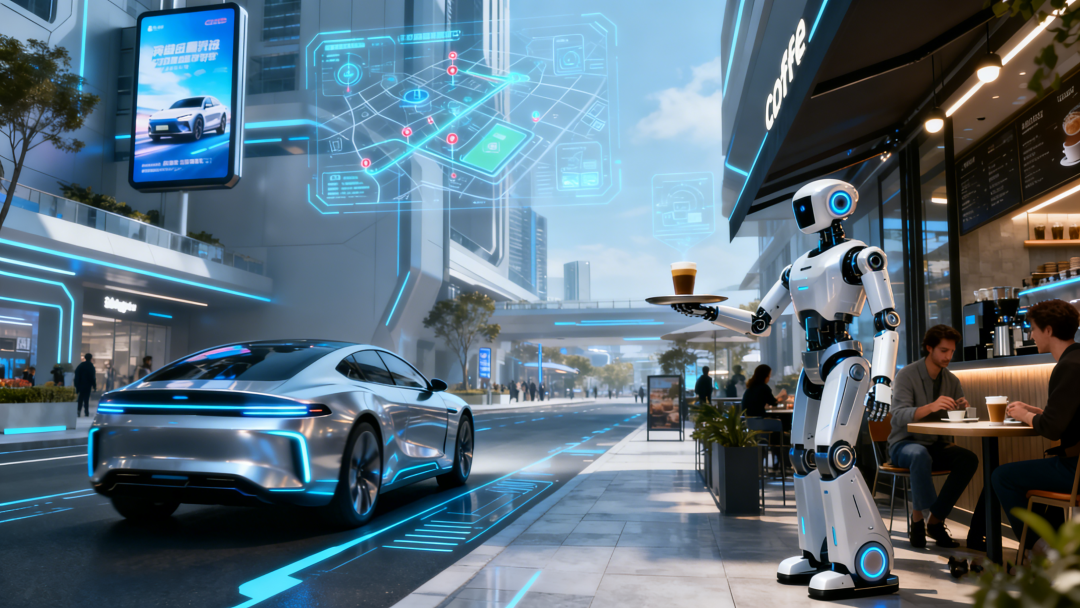
Image Source: Internet
There has also been a significant outflow of talent from Horizon Robotics. According to statistics, at least 14 core technical and management personnel from Horizon Robotics have left to start their own businesses, with 13 entering the embodied AI track. Yu Yinan, employee number 005, founded Vita Power. Niu Jianwei, the former general manager of the intelligent cockpit product line, founded Dingdang Power. Huang Guan, the former head of visual perception technology, founded Jijia Shijie.
The driving forces behind this talent migration stem from two main reasons: the contraction of the intelligent driving sector and the explosive growth of the embodied AI track. The commercialization of L4-level Robotaxi has been repeatedly delayed, with persistent challenges in addressing long-tail problems. Capital market patience has worn thin, leading the industry to shift from expansion to contraction. Meanwhile, the embodied AI track has exploded. From January to April 2026, the hiring index in the embodied AI field reached 579, a 15-fold increase from 36 in 2025. Salaries in embodied AI are also rising, with the average monthly salary for embodied AI positions increasing from 58,000 yuan to over 61,000 yuan. An embodied AI algorithm engineer described the current state, noting that the first question investors now ask is not about the technology but about the valuation and who invested in the previous round.

Does High Overlap in Technology Stacks Make the Transition Seem Logical?
From a technical architecture perspective, autonomous driving and embodied AI indeed share a significant amount of underlying technology. Both rely on a closed-loop system of perception, decision-making, and execution, requiring real-time environmental modeling and optimal decision-making based on massive sensor data. In perception systems, both must address issues such as information extraction in noisy environments, multi-sensor data fusion, and low-latency data transmission.
Technical concepts like VLA (Vision-Language-Action models), world models, end-to-end large models, and data closed loops are already widely applied in the autonomous driving field, making their migration to the robotics field logically smooth. Li Auto once proposed that autonomous driving represents the first half of embodied AI, while general-purpose humanoid robots represent the second half. A report by the Development Research Center of the State Council also indicates that the market size of China's embodied AI industry is expected to reach 400 billion yuan by 2030 and exceed one trillion yuan by 2035.
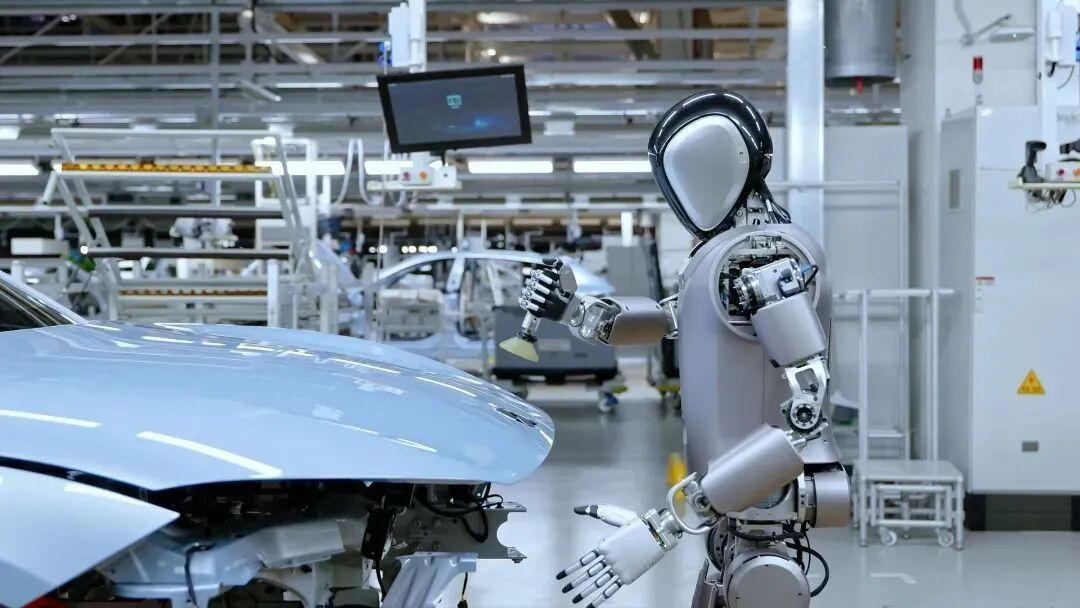
Image Source: Internet
The reason the embodied AI field can absorb so much talent from the intelligent driving sector is that intelligent driving talent brings not just reusable code but a complete methodology honed in the autonomous driving battlefield. This includes how to define complex problems, how to break down tasks amid uncertainty, how to make critical trade-offs under resource constraints, and how to maintain team discipline and confidence over a multi-year development cycle—all directly applicable to the embodied AI field.
Some argue that while specific knowledge in the intelligent driving field (such as a particular algorithm implementation or tuning technique) may quickly depreciate with technological advancements, the meta-capabilities honed in the intelligent driving field (such as mastery of algorithm development and deployment, cross-domain engineering capabilities, and the ability to scale technology from demo to production) remain highly valuable.
This is why capital markets place immense trust in entrepreneurs with an intelligent driving background in the embodied AI field. Lang Xianpeng, who oversaw the strategic planning and execution of the entire intelligent driving system at Li Auto, is seen by investors as having a deterministic judgment on the commercial path of embodied large models. Zhijiandongli's investor list includes star institutions such as Vision Knight Capital, BlueRun Ventures, Sequoia China, Legend Capital, CAS Star, and GaoRong Capital, with strategic investors including Tencent and Alibaba. These investment decisions reflect market recognition of the capabilities of intelligent driving talent.

Similarities Do Not Mean Identities
As these two fields progress in tandem, their distinctions are becoming increasingly apparent. Many who have transitioned from intelligent driving to embodied AI admit that they initially overestimated their similarities. While autonomous driving is complex, it essentially solves problems within a highly constrained environment: roads are fixed, traffic rules are clear, and vehicle forms are uniform, with most variables falling within a relatively definable framework. In contrast, robots operate in an open physical world, requiring consideration of nearly all possible interactions between humans and the physical environment.
A more fundamental divergence lies in the concept of tasks. Autonomous driving lacks downstream tasks; it is impossible to build a vehicle designed solely for Beijing's Fifth Ring Road. Intelligent driving pursues a universal solution adaptable to all road scenarios. However, the essence of robots is a collection of tasks. No single robot model can handle all industrial scenarios, let alone household scenarios. Actions like screw tightening, material feeding, sorting, assembly, transportation, and organizing may each require distinct data, training, and deployment methods. The cumbersome processes of pre-training, post-training, scenario fine-tuning, and few-shot learning are the norm in the robotics industry.
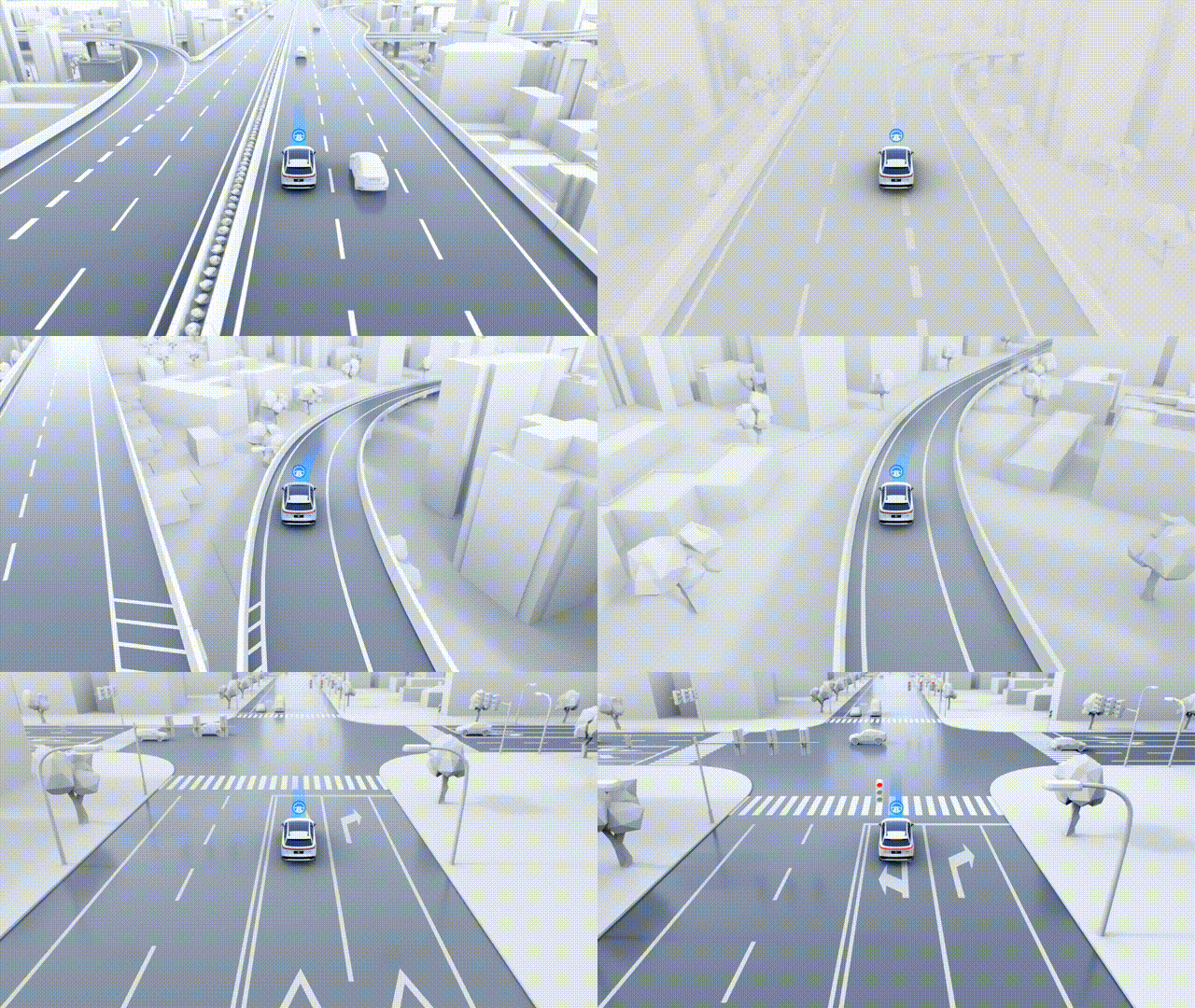
Image Source: Internet
From a capability perspective, the differences between intelligent driving and embodied AI are even more pronounced. Intelligent driving primarily addresses the single core issue of safe navigation and movement. In contrast, embodied AI must simultaneously solve navigation and movement, motion control, and dexterous manipulation. Navigation and movement are merely entry tickets for embodied AI; motion control and dexterous manipulation represent the true core challenges. While a vehicle's behavioral space on structured roads is relatively limited, general-purpose operating robots must handle non-standard objects, flexible materials, dynamic environments, and long-duration tasks. Capabilities like hand-eye coordination, force control, and self-recovery from failures, which are essential for embodied AI, have no ready-made solutions in automotive-grade systems.
Intelligent driving and embodied AI also differ at the data level. While language models can leverage vast amounts of internet data, robot data is highly scenario-dependent, with data accumulated in factories, supermarkets, cafes, hotel lobbies, and hospital reception areas varying significantly. Globally, there are only about 500,000 hours of usable real-world robot data, compared to 20,000 times that amount of text data consumed during large language model training. Learning a single action in embodied AI cannot rely on web scraping; it requires robots to repeatedly test in real environments. Multiple algorithm leaders have admitted in closed-door meetings that after spending tens of millions to collect 100,000 hours of data, model capabilities improved by only 5%. Skills learned in Factory A are likely to fail in Factory B.
Zhang Haixing, the former head of Tesla's China Design Center, divided embodied AI capabilities into five stages from L1 to L5. Currently, the industry is still transitioning from L1 to L2 and L3, corresponding to the intelligent stages of autonomous driving from L1 to L5. Humanoid robots can be deployed in some specialized scenarios but are still far from true cross-scenario generalization. At present, no unified technical route has been established globally, with each company adopting its own approach.

Is Experience Becoming a Liability?
By 2026, the winds in the embodied AI industry began to shift. Around the Spring Festival, headhunters mentioned that some robotics companies now explicitly prefer candidates with robotics industry experience, with cross-industry candidates facing significantly lower interview probabilities. While an intelligent driving background is no longer a disadvantage, it no longer carries the inherent attraction it once did. One company founded by talent from a leading intelligent driving firm explicitly excluded intelligent driving backgrounds in its job requirements for world model researchers. The CEO of an industrial robotics company put it bluntly: "Embodied AI is a new industry. Relying on old experience will essentially lead to failure."
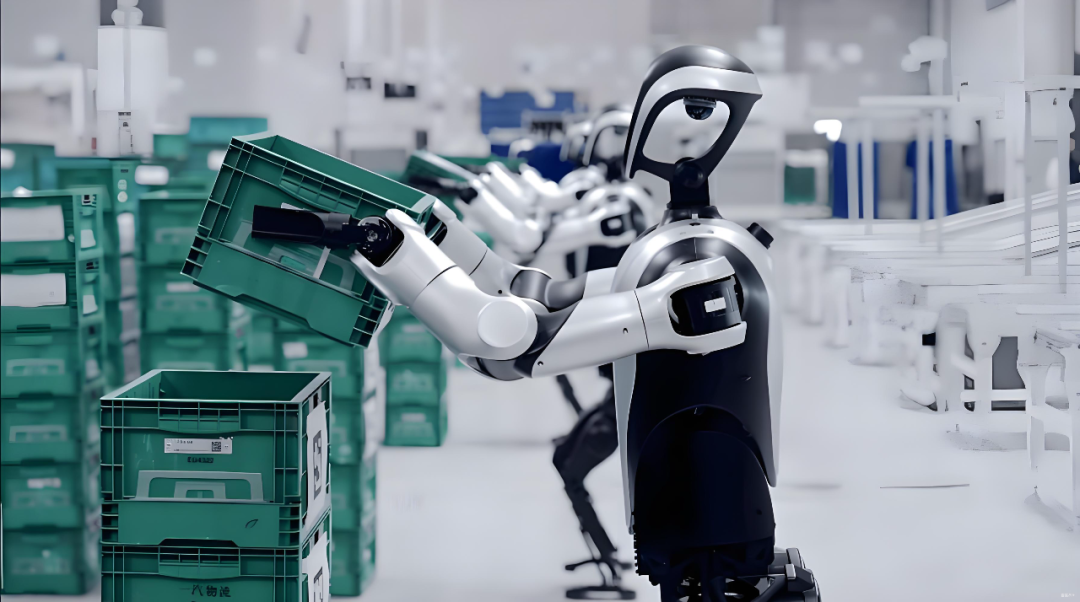
Image Source: Internet
This phenomenon arises not because experience lacks value but because it can become a burden. Engineers who have long grown within the intelligent driving system easily develop path dependencies, habitually seeking unified solutions, building general-purpose frameworks, and using previously validated methods to interpret and solve new problems. However, embodied AI often does not require—or even necessitates abandoning—this mindset, as the robotics industry is characterized by the absence of standard answers to almost all challenges.
Many entrepreneurs in the embodied AI field have privately expressed that what matters most now is not whether a candidate has worked on robots or autonomous driving but whether they can quickly grasp entirely new problems. A generation of successful experiences is losing relevance, and the new world is selecting for new capabilities. When a leading embodied AI company explicitly rejects intelligent driving backgrounds in its job requirements, it is not a negation of past technical accumulation but a wariness of path dependency.

The Real Situation Amid Capital Fervor
From a financing perspective, the embodied AI track continues to climb in heat . According to IT tangerine ie data, the first half of 2026 saw 288 financing events in the domestic embodied AI and robotics field, involving 226 companies, with disclosed financing exceeding 46 billion yuan. Extending this to July 2025-June 2026, the figures rise to 503 financing events and over 96 billion yuan. By early June 2026, total financing in the domestic embodied AI field had surpassed 67.7 billion yuan, nearing the total for all of 2025.
While financing data remains hot, the distribution of hot money is extremely uneven. In the first half of the year, the top five companies raised approximately 17.1 billion yuan, accounting for 37% of the industry; the top 20 took about 70%, or 33 billion yuan, leaving over 200 companies to split less than 30% of the funds. In the first five months of 2026, 27 companies secured all financing rounds of 1 billion yuan or more. The funds allocation is extremely imbalanced, with head companies receiving funds and thus deemed more deserving of them. This capital inertia-driven herd effect is significantly stronger than the positive feedback from market validation.
Image Source: Internet
Rather than focusing solely on who receives funding, attention should also be paid to who provides it. In financing rounds of 1 billion yuan or more, the main players have shifted from traditional VCs to companies like Baidu, ByteDance, Xiaomi, Meituan, SAIC, and Inovance, as well as investment platforms backed by local governments. Industrial capital and state-owned assets now account for over 40%. The entry of state-owned assets is direct: they provide funding and require companies to build factories locally while opening local factories as their first customers.
Behind the massive financing, how is the embodied AI field faring? Data shows that as of May 2026, there are over 10,000 embodied AI-related companies nationwide, including 320 humanoid robot manufacturers. However, there are zero cases of truly successful commercial closed loops. CloudMinds, once valued at over 20 billion yuan with financing exceeding 5.4 billion yuan, sold only 1.4 million yuan worth of goods in the first seven months of 2025, incurring a net loss of 84.25 million yuan. According to Phoenix Finance, as of the end of Q1 2026, the total market capitalization of A-share humanoid robot concept stocks reached 11.89 trillion yuan, while global actual shipments of humanoid robots were only about 2,000 units. Unitree Technology has a price-to-sales ratio of 24.7, but 73.6% of its revenue comes from research and education clients, with industrial demand scenarios accounting for only about 9%. Industry judgments suggest that 2026 is not the first year of commercialization for embodied AI but the first year of elimination.

Final Words
After all this discussion, let's return to the original question: For professionals in intelligent driving transitioning to embodied AI, do the opportunities outweigh the risks, or vice versa? In the short term, the algorithmic capabilities, engineering experience, and systems thinking of intelligent driving professionals can indeed bring incremental value to the embodied AI industry, as evidenced by the rapid acquisition of substantial funding by numerous startups with backgrounds in intelligent driving.
However, in the long run, the fundamental differences between the two fields in terms of problem definition, technical pathways, and evaluation systems make simple experience replication unfeasible. Only those who can let go of path dependence and re-understand the unique challenges of the robotics industry are likely to survive in the upcoming elimination round. Those who enter with a mindset of 'dimensionality reduction superiority' may ultimately find themselves on the receiving end of such a reduction.
-- END --
-
![]()
Chinese Cars: Germany's 'Praise' Amidst US Fears
-
![]()
Growth Illusion and Undercurrents: Behind the 66% Growth, Insta360's 'Prosperity Dilemma'丨A-Share Avoidance Guide
-
![]()
Who Needs Whom More: Is NIO a ‘Treasured’ Exhibit in Museums?
-
![]()
Great Wall Motors Takes a Stance Contrary to GAC Group
-
![]()
Prayer for Success, Yet China's Space Industry Must Look Beyond Mere Success
-
![]()
Can Intelligent Driving Talents Adapt to Embodied AI? A Dimensionality Reduction or a Cultural Shock?
-
![]()
Wang Xing Apologizes as Meituan Adjusts Two Key Departments
-
![]()
Final Assessment: Unveiling the Causes of the Sluggish Domestic Auto Market in the First Half of the Year