Who is Holding Back the Development of Dexterous Hands?
 07/03 2026
 414
414
Produced by | RoboIsland
"The more you study the human hand, the more incredible it seems," mused Elon Musk, the world's richest man, during an earnings call.
In March 2025, Musk confidently promised to produce 5,000 Optimus units, only to retract all commitments seven months later during a subsequent call—simply because the hands for Optimus could not be manufactured.
The engineering difficulty of hand design far exceeded expectations, forcing Tesla to halt part of its production line, leaving a backlog of handless robot semi-finished products in the factory. Musk admitted the problem lay in the combined hand and forearm module.
However, this did not hinder UBTECH from selling robot companions.
At the 2026 Global Launch Event, UBTECH unveiled its full-size hyper-bionic humanoid robot, the "YouWorld" U1 series, showcasing over 50 models, with male versions standing at 183 cm and female versions at 168 cm. The robots featured skin replicating pores and fingerprint textures, could blink and smile, and even danced the waltz with partners.
The company subsequently announced that pre-sale orders had surpassed 13,000 units, roughly equivalent to 70% of global humanoid robot shipments in 2025. UBTECH's stock price soared by over 18% during trading.

UBTECH Humanoid Robot. Image Source: UBTECH's Official WeChat Public Account
Yet, when these human-faced robots actually took the stage and began walking, the atmosphere shifted dramatically. Not only did their movements appear overtly mechanical, but their facial expressions were stiff, and their dialogue occasionally stuttered.
Some netizens joked, "It's like an inflatable doll with AI—too fake." The highly anticipated robot companions, when demonstrated in reality, revealed another side, with a noticeable gap between their appearance and the idealized promotional video (promotional video). Netizens exclaimed, "It looks nothing like the promo!"
Out of 88 degrees of freedom, only 24 were active, while 64 were passive. Moreover, the walking ability—crucial for the companion experience—was only available in the top-tier models priced at 990,000 or 880,000 yuan. Even more awkwardly, the official specifications explicitly stated that the U1 series did not perform any household chores.
On one hand, Musk was stumped by a pair of functional hands, while on the other, UBTECH's robots had already amassed over 10,000 pre-orders. How could robot "wives" be sold before mastering dexterous hands?
Who, exactly, is holding back the development of dexterous hands? Tracing the supply chain reveals an answer far more complex than simply being unable to source a particular component.
I. Fingertips Monopolized by Giants
The fate of the dexterous hand industry largely rests in the hands of Maxon and STMicroelectronics, much like how the photovoltaic industry was once constrained by silicon material prices and power batteries by lithium ore shortages.
To understand why dexterous hands are so challenging, one must first dissect their internal components.
Any dexterous hand essentially consists of three systems: a drive system providing power, a transmission system converting power into joint movement, and a sensing system enabling tactile perception in the fingers. These systems compete for space within a volume no larger than a human hand, accounting for over 80% of the hand's total cost.
Tracing the workflow of power generation—action execution—sensory feedback in a hand reveals three clear bottlenecks.
The starting point of power is the motor. To enable fingers to perform delicate tasks like screwing or picking up soft objects, each finger must incorporate a special micro-motor—the coreless motor—featuring a self-supporting hollow cup-shaped coil with a diameter of just a few millimeters. These motors are small, responsive, and highly energy-efficient, forming the physical foundation for fine hand operations.
However, the supply chain for these "fingertip hearts" is extremely narrow. Swiss Maxon, German Faulhaber, and Japanese Orbray dominate 70-80% of the global high-end market, with import prices reaching $50-80 per unit and lead times stretching to several months or even a year.
By 2026, Maxon and Faulhaber's order backlogs exceeded 12 months. Domestic manufacturers faced not only delays but also had to accept the pricing and delivery terms set by these foreign suppliers.
The power generated by motors is high-speed rotation, but finger joints require low-speed, high-torque movement. Directly transmitting high-speed motor rotation to fingers would result in either spasmodic tremors or insufficient torque to grip even a paper cup. The intermediary solution to this contradiction is the reducer.
In the context of dexterous hands, a reducer is not merely a component but the essential pathway for power transmission from the motor to the fingertips.
It converts the motor's tens of thousands of RPM into slow, forceful finger joint rotations. Without it, even the best motor would spin uselessly, failing to generate actual gripping force.
This component also suffers from heavy import reliance. Japan's Harmonic Drive, protected by a full chain of patents covering tooth profile design, material formulations, and precision machining, dominates over 80% of the global harmonic reducer market.
Even after power reaches the fingertips, one question remains unresolved: How does the robotic finger know it has grasped an object? Is it an egg or a stone? Is the grip force appropriate, or will it crush the object?
Most existing dexterous hands rely on position encoders and torque sensors for proprioception—knowing where the fingers are but not whether the grasped object is soft or hard, slippery or rough.
Tactile perception at the fingertips remains the dexterous hand's greatest weakness. The inability to "feel" while grasping directly blocks commercialization in precision industrial assembly and home service scenarios.
Tactile sensors address this issue. Five years ago, domestic tactile sensors were virtually nonexistent, with single-unit import prices exceeding 100,000 yuan.
Not until startups like PaXini Technology redesigned the technology from first principles, bypassing overseas patents to develop 6D Hall array tactile sensing technology, achieved 100% localization, and slashed prices to 199 yuan.
However, the degree of localization varies greatly across different components. Breakthroughs in packaging and algorithms resolved cost issues, but core elements like high-precision ADC chips and signal processing circuits within the sensors still rely on imports.
Installing sensors and manufacturing their internal components are two vastly different challenges. Domestic products still lag overseas counterparts in flexibility, resolution, and durability.
A break in any of these three sequential links halts the entire hand's movement. Packing all these components into a space barely larger than a fist constitutes an extremely difficult physical problem.
This problem exerts pressure across multiple dimensions: higher degrees of freedom require more components; more components increase volume; increased volume prevents fitting into a human hand-sized space. Reducing component size to fit compromises power and lifespan. To date, no solution to this physical dilemma has been found.
II. Why Can't Scaling Reduce Costs?
After tracing component-level bottlenecks along the supply chain, one might assume that achieving domestic substitution for every part would lower prices and solve the dexterous hand problem. However, delving into manufacturing reveals a far more complex reality.
Manufacturing adheres to a near-iron law: larger scale reduces costs. Doubling production enhances raw material procurement bargaining power, improves production line automation, and thins fixed costs, naturally lowering unit costs.
This holds true for photovoltaics, power batteries, and most industrial products.
But dexterous hands defy this logic.
Researchers at Physical Intelligence, after tracking multiple dexterous hand production lines, reached a conclusion that defies industry intuition: the precision assembly of dexterous hands may be a rare manufacturing category where "scaling up fails to reduce costs."
What does this mean? Why does producing 10,000 dexterous hands not significantly lower the per-unit cost compared to producing 100?
This brings us back to the aforementioned physical challenges. Taking Tesla's Optimus design as an example, each finger must incorporate a micro-motor, reduction gears, tendon cables, and sensors. These components measure millimeters in diameter, with the smallest transmission parts just 3.4 mm across.
Assembling these rice grain-sized components into finger joints requires human labor. To date, most precision assembly for dexterous hands still depends on manual work.
Not because factories avoid automation, but because existing automated equipment cannot handle the task. Machine vision cannot detect millimeter-level deviations in tiny components, and robotic arms cannot perform multi-angle precision engagements in millimeter-scale spaces. Only human eyes and fingers can accomplish this.
An engineer interviewed by RoboIsland described how workers use tweezers to pick up micro-bearings barely larger than sesame seeds, align them under a microscope, and gently press them into place. A misalignment of even a fraction of a millimeter could jam the bearing and render the entire finger's transmission system useless.
A single failed component assembly wastes hundreds of yuan worth of upstream parts.
Meanwhile, a 5% deviation in screw torque—insignificant in ordinary robotic arms—can reduce finger flexibility by 30% in dexterous hands. Eliminating such deviations requires repeated testing, fine-tuning, and rework during assembly.
Each hand's assembly becomes a bespoke manual process, incapable of mechanical repetition. This explains why "scaling fails to reduce costs": increasing production does not automatically lower rework rates; it does not speed up worker assembly; it does not improve product consistency.
Everything depends on accumulated human experience, which cannot be gained through mere production expansion. Consequently, daily output per workstation remains extremely limited, and training skilled workers for such tasks takes considerable time.
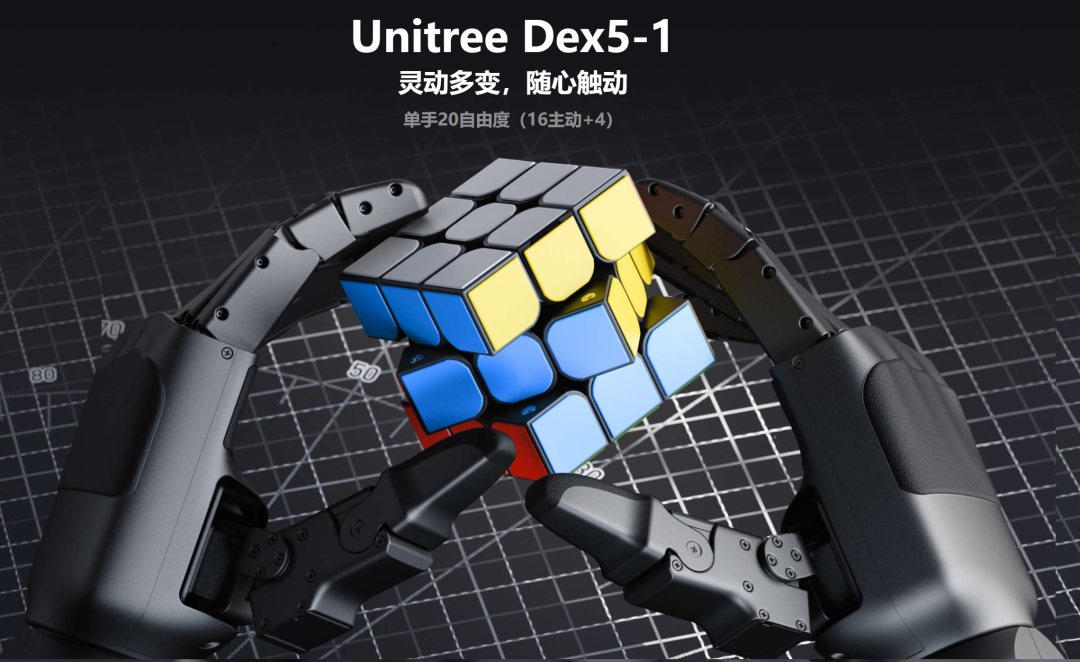
Unitree Dex5. Image Source: Unitree Robotics Official Website
Beyond manufacturing challenges lies an even tougher obstacle: transmission technology routes have yet to converge.
Tesla's Optimus uses a tendon-cable scheme, mimicking human tendons to pull fingers. This approach offers strong biomechanical similarity and light weight, enabling multi-degree-of-freedom movement in confined spaces. However, repeated bending causes tendon creep, elongation, and wear. In sorting tests, Tesla's dexterous hands lasted just six weeks.
Unitree's Dex5 opts for a gear scheme, providing structural rigidity and high torque but limited flexibility, preventing fingers from making complex lateral movements like human hands.
InTime Robotics employs a linkage approach, offering structural stability and long lifespan but suffering from long transmission chains and significant precision degradation, making fine operations difficult. Companies like Critical Point bet on direct-drive schemes, offering precise control and fast response but requiring high power density and compact motors that must fit inside fingers, resulting in exorbitant costs and weak impact resistance.
Different schemes render dexterous hands' interfaces, protocols, and testing methods entirely incompatible. Hands from Company A cannot fit robots from Company B, forcing each manufacturer to reinvent the wheel.
Without unified standards, no cross-vendor universal designs or large-scale supply chain collaboration can emerge. The industry fragments into niche markets, each with only a handful of players groping forward.
If the first bottleneck is "reliance on imported core components," the second is "manufacturing processes dependent on manual labor and lack of consensus on technical routes." The former has a clear Chasing the target (catch-up target)—replacing imports with domestics—while the latter lacks ready answers and cannot be resolved by simply switching suppliers. It demands that the entire industry find new equilibrium points in design and manufacturing paradigms.
This hurdle proves even more difficult to overcome than component shortages.
III. Complete Machine Factories Start Building Their Own Hands
With core components held hostage and manufacturing processes heavily reliant on manual labor, humanoid robot manufacturers downstream grew restless. They reached a consensus: rather than wait for others to build suitable hands, they would develop their own.
Why must complete machine factories build their own hands? The answer is simple: no suitable options exist on the market.
A high-degree-of-freedom dexterous hand involves multiple cutting-edge fields—motors, reducers, sensors, control algorithms—and few third-party suppliers excel in all these areas.
Even if such suppliers exist, their prices are exorbitant, delivery cycles start at half a year, and technical parameters may not align with the manufacturer's robots.
For complete machine factories, outsourcing dexterous hands entails inescapable issues: incompatible interfaces prevent installation on their robots; even if installed, collaboration efficiency lags far behind custom-built solutions; and the supply chain remains controlled by others, risking future bottlenecks.
Building their own hands offers three clear advantages: deep customization, supply chain independence, and design authority. Controlling hand design grants core influence over the entire machine's performance and costs.
Thus, a movement of complete machine factories building their own hands has begun, reshaping the dexterous hand industry's landscape.
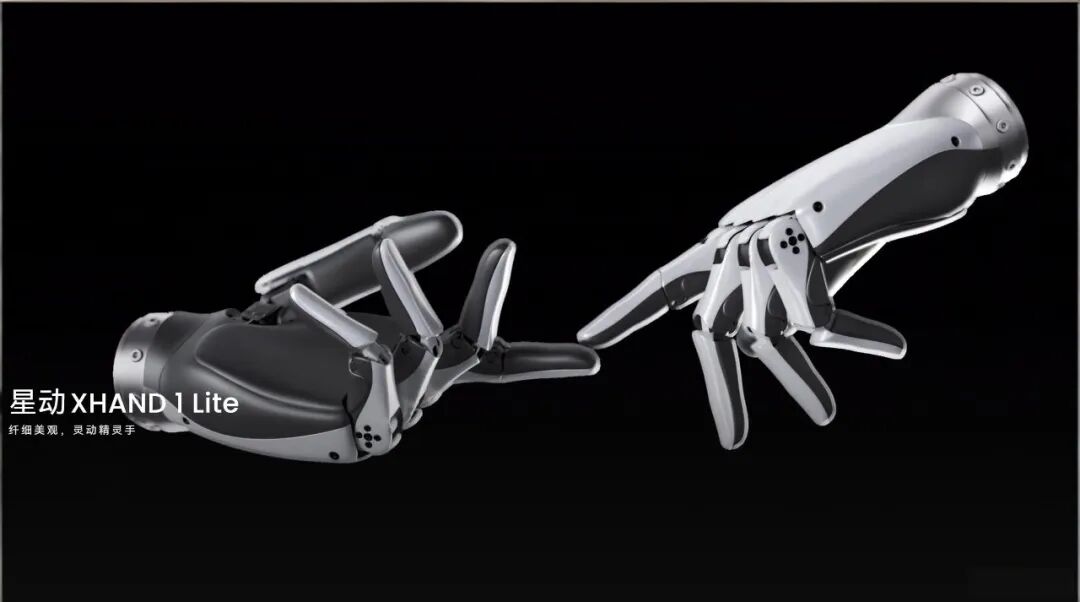
Dexterous Hand. Image Source: StarMotion Era Official Website
Among complete machine factories pursuing in-house development, StarMotion Era stands out as the most funded and vocal player, serving as a telling case study. Its journey epitomizes the logic behind manufacturers building their own hands.
The company emerged from Tsinghua University's Institute for Interdisciplinary Information Sciences, with founder Chen Jianyu serving as an assistant professor—labels that made it a darling of venture capital.
In July 2025, it secured nearly 500 million yuan in Series A funding, followed by nearly 1 billion yuan in Series A+ funding in November, and another 1 billion yuan in strategic financing in March 2026, valuing the company at over 10 billion yuan. Within a year, it completed three major funding rounds, attracting 16 investors, including industry giants like Samsung, Geely, Alibaba, Lenovo, and BAIC.
StarMotion Era's core narrative revolves around full-stack self-research, developing everything from robot brains and motion control to bodies, joint modules, and dexterous hands. In 2025, it released the fully direct-drive five-fingered dexterous hand XHAND1, featuring 12 active degrees of freedom per hand. By 2026, this evolved into the XHAND 1 PRO, boosting freedom to 21.
StarMotion Era's story defies simple dichotomies of breakthrough or bottleneck. It embodies the logic of complete machine factories pursuing self-research: exchanging high investments for control over core components and leveraging full-stack self-research narratives to secure high valuations in capital markets.
However, the objective laws of the industrial chain will not automatically change just because one company has secured more financing or generated more buzz. When the 'impossible trinity' of the dexterous hand industry has yet to find an answer, the progress of any company must be measured against the progress bar of the entire industrial chain.
Moreover, when we strip away the narrative shell of full-stack self-research, factors such as the actual position of Xingdong Jiyuan's shipment volume, the fact that not all links are independently completed, and the early stage of commercialization verification still raise doubts about the dexterous hand industry.
IV. Conclusion
Humanoid robots are a new species. We cannot say that just because there are 1.4 billion people in China today, there will be 1.4 billion humanoid robots in the future. When consumers purchase a product, the first question they ask is what problems it can help them solve.
If the dexterous hand has not yet been able to answer the question of what problems it can solve for you, if it cannot even create a hand that can work stably on a real production line for three months without breaking, then those predictions about a market worth tens of billions or a track worth hundreds of billions are just numbers on a PPT.
'The more you study the human hand, the more incredible you realize it is,' Musk said with a tone full of frustration. And this sense of frustration he feels precisely explains the current state of the dexterous hand industry.
It took humans millions of years to evolve these hands, capable of sensing temperature, adjusting force, identifying objects through blind touch, and performing precise operations with an error margin of 0.1 millimeters. Now, we are trying to replicate all of this on a robotic hand with just a few years of research and development time.
The gap here is not just a technical issue; it is also a matter of time, engineering, and patience.
The dilemma of the dexterous hand industry is essentially a reiteration of the most fundamental laws of manufacturing: from a running demo to a mass-producible hand, there lies a whole set of knowledge about materials, processes, standards, supply chains, and cost control.
There are no shortcuts to this knowledge, nor can it be resolved through financing. What it requires is repeated trial and error, continuous iteration, and a long wait.
Cover source: Westworld
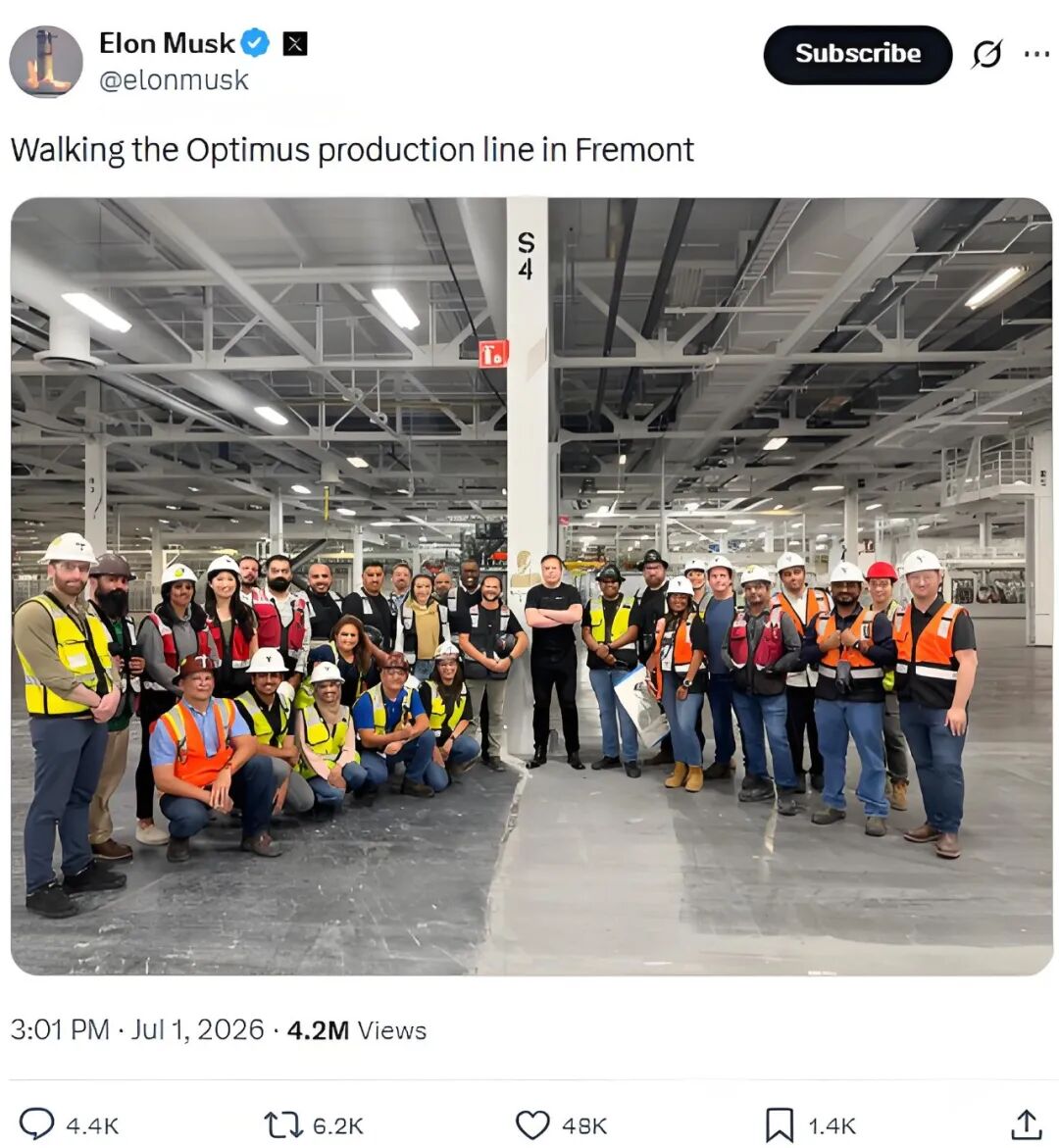
Featured image source: Elon Musk's X account
Copyright of RoboIsland. Reproduction without authorization is prohibited.
-
![]()
NVIDIA Launches 'Computing Power Financing'
-
![]()
Following Up on the 'Safety Net' for Intelligent Driving: Is Huawei's Strategy Astute or Perilous?
-
![]()
ICML 2026 | One Model to Unify Humans, Objects, Sounds, and Actions: OmniShow Revolutionizes Multimodal Controllable Video Generation as a Systematic Engineering Feat!
-
![]()
Mid-Year Sales Analysis: Leapmotor Faces Challenges Alone, NIO Breaks Free from the 'NIO 30K' Stigma
-
![]()
Without Chinese EVs, the European Auto Market Would Stagnate in the Past
-
![]()
Tata Electronics Hit by Ransomware, iPhone 18 Pro Secrets Leaked: Why Did Apple's 'Indian Stronghold' Crumble So Fast?
-
![]()
After Watching Several World Cup Knockout Matches, My Insight into the Competition Among Large Models Has Deepened
-
![]()
2025 Annual Dual Credit Report: Positive NEV Credits Exceed 21 Million Points