Following Up on the 'Safety Net' for Intelligent Driving: Is Huawei's Strategy Astute or Perilous?
 07/03 2026
 554
554
Lead | Introduction
In the first half of 2026, China's intelligent vehicle market is experiencing a significant transformation, shifting from 'hardware competition' to 'liability competition.' On May 28, BYD took the initiative by announcing a one-year safety net commitment for its urban navigation feature at the 'Dare to Lead' intelligent strategy launch event. Less than a month later, on June 22, Yinwang announced that Huawei's Qiankun Intelligent Driving officially followed suit. With simultaneous implementation of 'price increases' and 'safety nets,' is Huawei's move a strategic masterstroke or a high-stakes gamble fraught with uncertainty?
Produced by | Heyan Yueche Studio
Written by | Cai Yan
Edited by | He Zi
Full text: 1,866 characters
Reading time: 3 minutes
Starting from July 1, the one-time buyout price for the Qiankun Intelligent Driving ADS Max advanced feature package has been adjusted, and there's a compelling story behind this change.
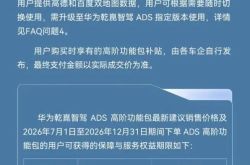
After BYD introduced a safety net for intelligent parking, which significantly boosted its usage rate from 21% to 93%, Huawei finally followed suit by incorporating urban and highway NCA (Navigated Cruise Assist) into its protection scope. With price increases come enhanced rights, transforming the 'dare to use' trust experiment from marketing rhetoric into concrete compensation agreements.
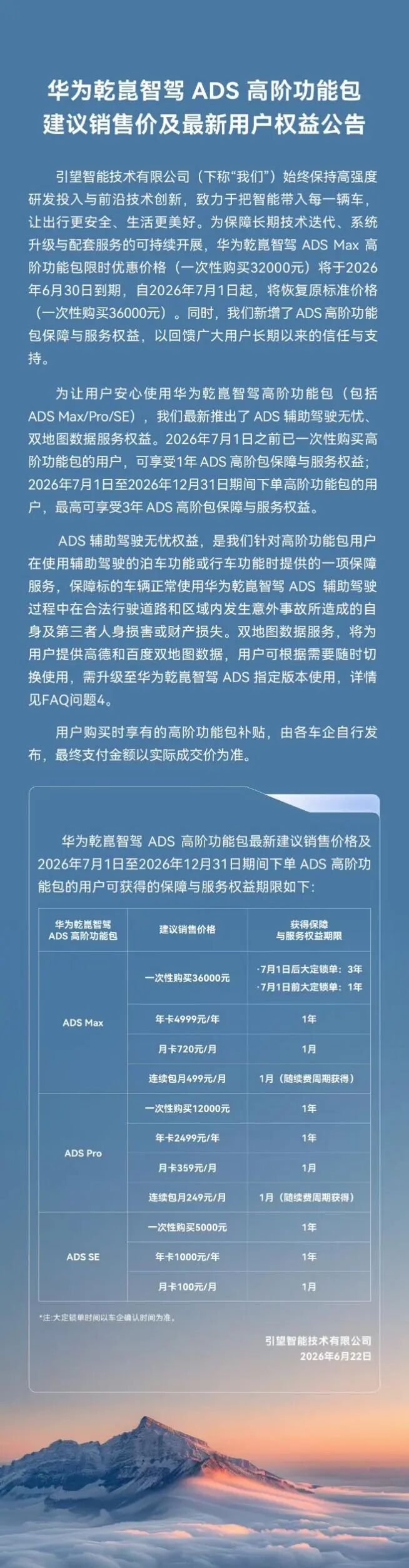
△ Huawei enhances intelligent driving protection rights and interests
Huawei Emulates BYD's Strategy
BYD's safety net policy can be seen as a game-changer in the industry. As early as July 2025, BYD introduced a safety net for intelligent parking. Prior to this, the actual usage rate of the 'Divine Eye' intelligent parking function was a mere 21%. After officially announcing that accidents would be compensated by the automaker, the usage rate skyrocketed to 93%. It wasn't that users were unwilling to use intelligent driving; they were hesitant due to fear. Building on this experience, BYD expanded the safety net from parking to urban navigation: New users of the 'Divine Eye' A and B models enjoy one year of urban navigation safety net rights upon vehicle delivery, while existing owners who upgrade to 'Divine Eye' 5.0 via OTA also receive the service, covering vehicle repairs, third-party losses, and personal injuries with no upper limit, no commercial insurance claims, and no impact on next year's premiums. This commitment is supported by BYD's fleet of over 3.15 million intelligent vehicles, daily driving data of 200 million kilometers, and a research and development team of over 5,000 for intelligent driving.
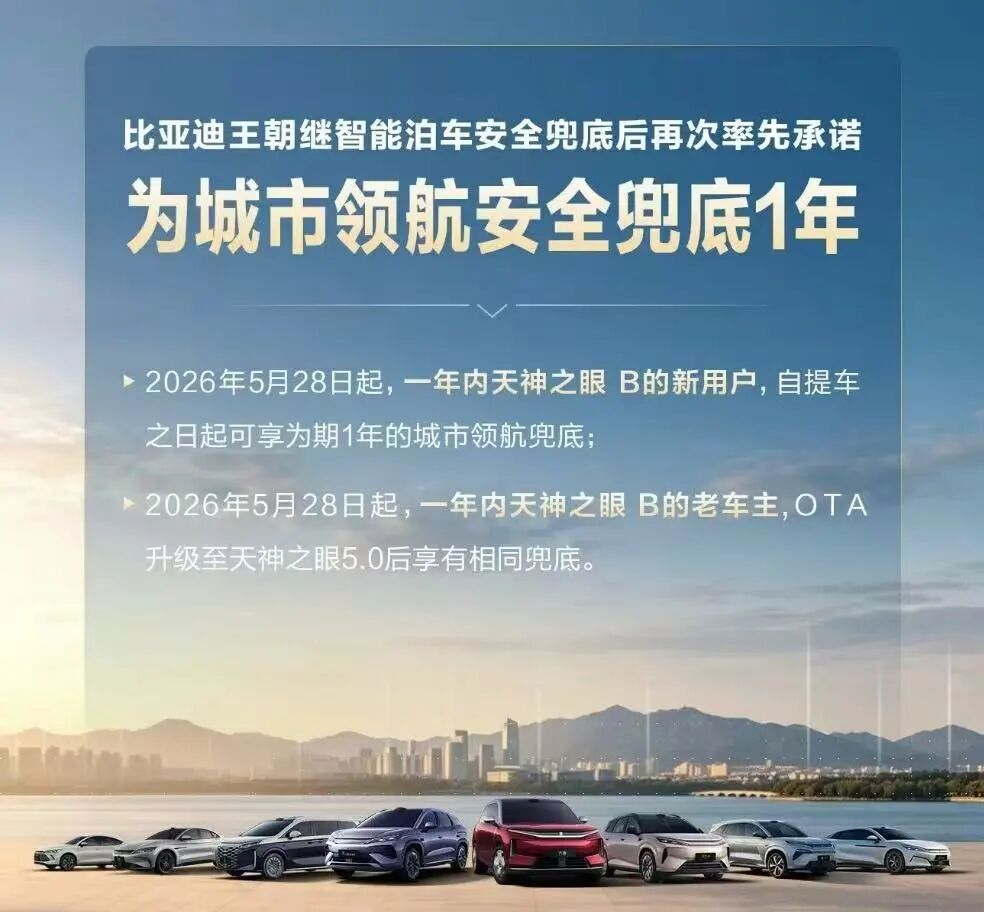
△ BYD expands safety net from parking to urban navigation
Huawei's follow-up strategy differs in its approach. Starting from July 1, the one-time buyout price for the Qiankun Intelligent Driving ADS Max advanced feature package has been restored from 32,000 yuan to the standard price of 36,000 yuan. After adding automaker subsidies, the actual user payment increases from 12,000 yuan to 15,000 yuan. Concurrently with the price hike, there is a significant upgrade in protection rights—for the first time, urban NCA and highway NCA are included in the protection scenarios, achieving full coverage of intelligent driving protection across the three core scenarios of parking, urban, and highway driving. Existing users who purchased before July 1 enjoy one year of rights, while new users who place orders between July 1 and December 31 can enjoy up to three years of rights. The protection scope is clearly defined as 'personal injury or property damage to oneself or third parties caused by accidental accidents during the normal use of Huawei Qiankun Intelligent Driving ADS assisted driving on legal roads and within legal areas.' From a technical standpoint, as of the end of May 2026, the cumulative assisted driving mileage of Qiankun Intelligent Driving has reached 11.47 billion kilometers, with R&D investment exceeding 15 billion yuan in 2025 and planned investment of 18 billion yuan in 2026, along with future five-year computing power investment of 70 to 80 billion yuan.
From a technical perspective, both Huawei and BYD are backed by extensive road test data and continuously evolving algorithms. Legally, the primary responsibility for Level 2 assisted driving still lies with the driver, and automakers' 'safety nets' essentially represent the proactive assumption of commercial-level financial losses rather than a transfer of legal responsibility. However, from a consumer perspective, the value of protection lies in certainty—regardless of legal provisions, an automaker's commitment to 'compensating in case of an accident' provides users with the utmost peace of mind.
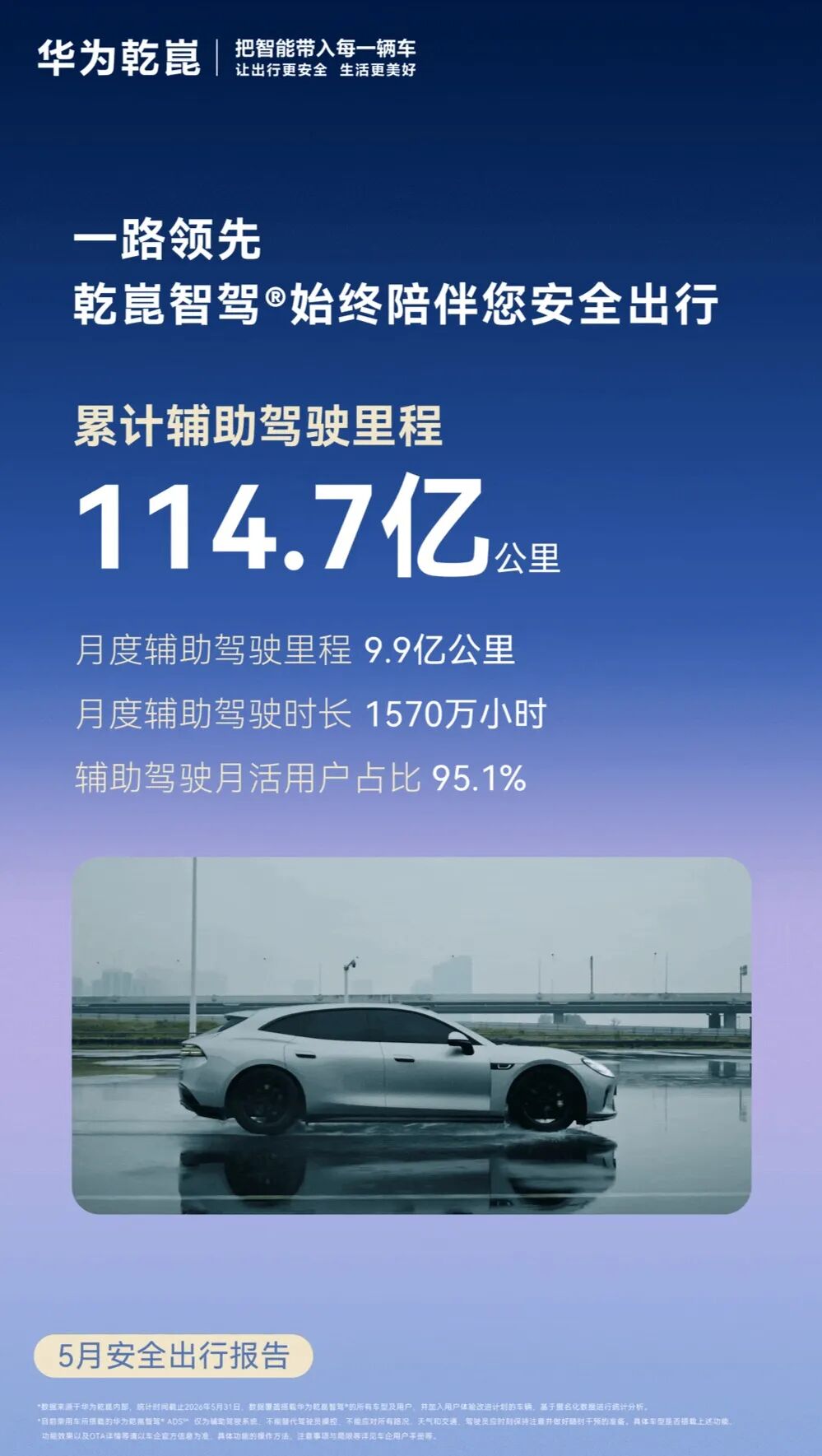
△ Qiankun Intelligent Driving's cumulative assisted driving mileage has reached 11.47 billion kilometers
Elevation of Intelligent Driving Protection
The successive moves by BYD and Huawei signify the formal extension of competition in intelligent driving from hardware parameters such as chip computing power and LiDAR line count to the fundamental issue of 'liability assumption.' Current intelligent driving protection schemes on the market can be roughly categorized into three tiers: The first tier, exemplified by BYD, focuses on free safety nets for core scenarios with no upper limit on compensation; the second tier, represented by Huawei Qiankun ADS's supporting rights and benefits, adopts a scenario-based insurance gift model where protection is linked to the price of the feature package; the third tier consists of paid optional models like XPENG Motors' 'Intelligent Driving Peace of Mind Insurance,' with an annual fee of 239 yuan and a maximum compensation of 1 million yuan. The coexistence of these three models indicates that the industry has not yet established a unified standard, but 'the necessity of taking responsibility for intelligent driving' has become a consensus among leading players.
Policy efforts are also progressing in tandem. In March 2026, the Beijing Financial Regulatory Bureau officially announced that Beijing would lead the nation in developing and applying commercial insurance for intelligent connected new energy vehicles, optimizing and upgrading existing new energy vehicle insurance to achieve unified adaptation for intelligent connected new energy vehicles across all levels from L2 to L4. On June 16, the Ministry of Industry and Information Technology released a public consultation on the mandatory national standard 'Safety Requirements for Autonomous Driving Systems of Intelligent Connected Vehicles' (draft for approval), suggesting an implementation date of July 1, 2027. The Supreme People's Court, in its guiding cases, clearly stated that the driver remains the person actually executing the driving task after activating the assisted driving function. These signals indicate that the intelligent driving responsibility system is transitioning from 'automakers' self-justification' towards institutionalized construction involving 'regulation, insurance, and automakers' collaboration.' Of course, current intelligent driving safety net schemes still suffer from structural contradictions—whether an accident meets compensation standards is solely determined internally by automakers, lacking intervention from third-party neutral institutions. In the long run, the industry needs to establish a standardized, third-party-evaluated intelligent driving risk protection system.
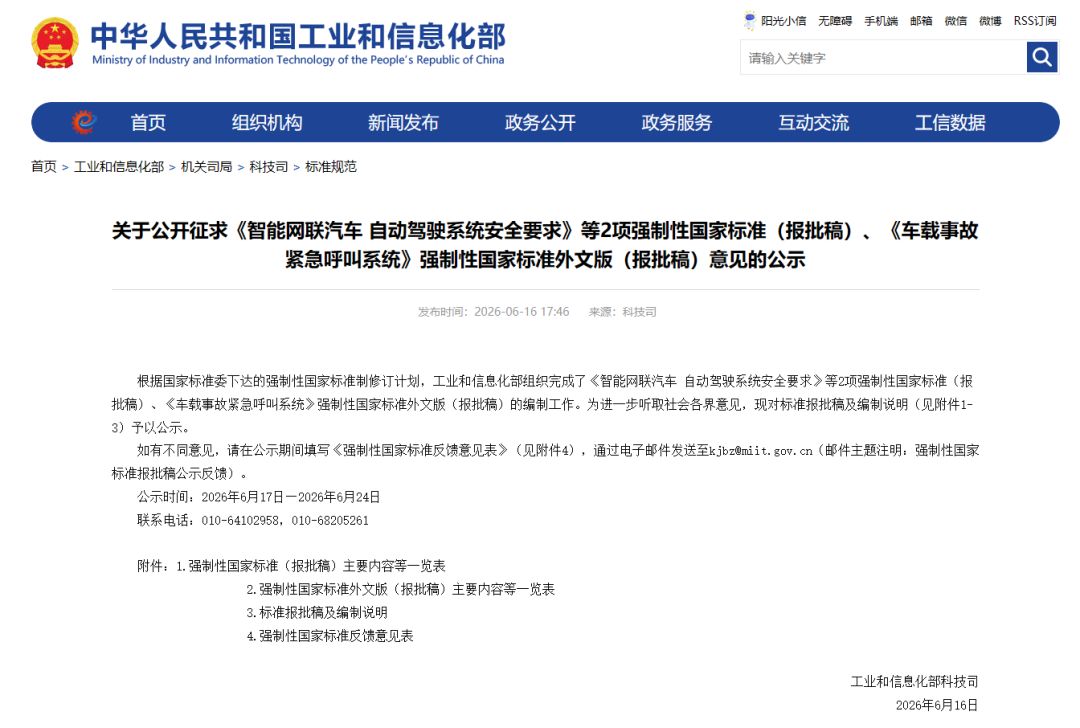
△ Intelligent driving protection policies are gradually being implemented
Commentary
Is Huawei's move brilliant or risky? From a timing perspective, after BYD's safety net policy was announced, the market initially validated the positive impact of such commitments on consumer confidence. Huawei's follow-up during this window provides a clear reference in terms of timing. However, once 'safety nets' translate into actual compensation, companies will also shoulder greater responsibilities. Leading companies at the forefront of intelligent driving, facing numerous technological uncertainties, still dare to make bold bets. This requires courage but also entails greater risks. Is Huawei betting on a win this time?
(This article is original to 'Heyan Yueche' and may not be reproduced without authorization.)
-
![]()
Rokid's Ambition and Embarrassment: 300,000 Sales Can't Support Its Ecosystem Dream
-
Are Gaming Ventures No Longer in Vogue Among Tech Titans?
-
![]()
Kuaishou’s Keling AI, Valued at $18 Billion with a Five-Year IPO Pledge, Faces a Make-or-Break Challenge
-
![]()
Valued at $18 Billion with a Five-Year IPO Plan: Kuaishou’s Kling AI Takes a Bold Leap
-
![]()
NVIDIA Launches 'Computing Power Financing'
-
![]()
Following Up on the 'Safety Net' for Intelligent Driving: Is Huawei's Strategy Astute or Perilous?
-
![]()
ICML 2026 | One Model to Unify Humans, Objects, Sounds, and Actions: OmniShow Revolutionizes Multimodal Controllable Video Generation as a Systematic Engineering Feat!
-
![]()
Mid-Year Sales Analysis: Leapmotor Faces Challenges Alone, NIO Breaks Free from the 'NIO 30K' Stigma