NVIDIA Launches 'Computing Power Financing'
 07/03 2026
 352
352
This article is crafted based on publicly accessible information and serves solely for informational purposes. It does not offer any investment recommendations.
In 1848, gold was unearthed in California, triggering a massive influx. The following year, nearly 100,000 fortune seekers swarmed to the Sierra Nevada foothills. Few struck it rich, but San Francisco Harbor's shipowners grew wealthy. A voyage from the East Coast to California saw fares skyrocket to 40 times their original cost. Levi Strauss, who never wielded a shovel, became the Gold Rush's greatest beneficiary by selling canvas trousers. His oft-quoted, though unverified, maxim rings true: "In gold mines, the real treasure isn't gold; it's jeans."
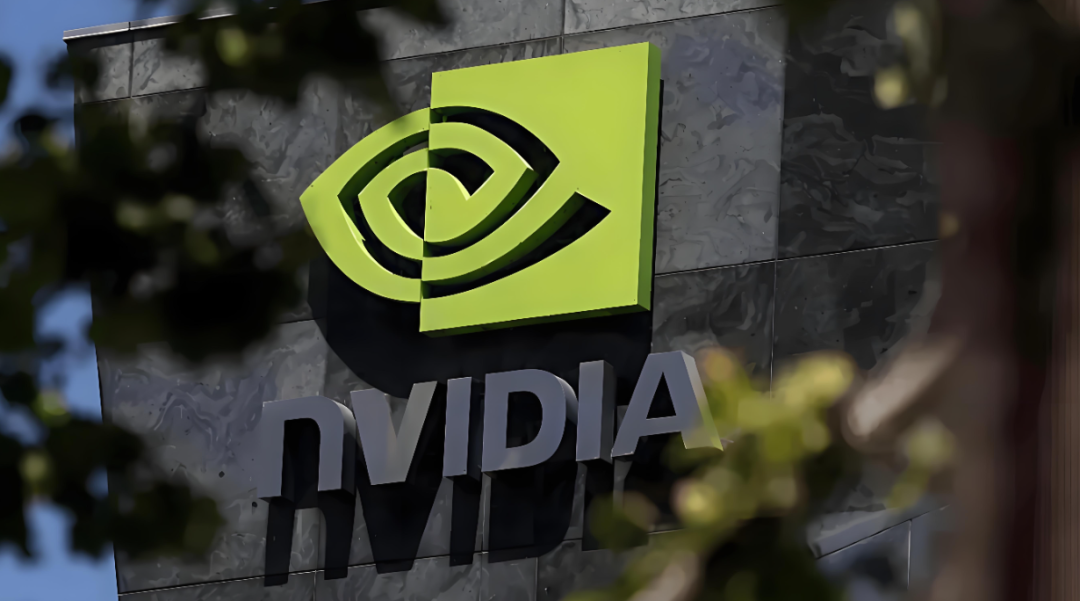
In July 2026, NVIDIA unveiled a groundbreaking business model. Dubbed "Computing Power Financing," it eschewed tech jargon for clarity: trading computing power for future profits. AI startups could now access GPUs without upfront cash, instead offering future revenue or profit-sharing agreements.
Two early adopters signed on: Australia's Sharon AI, deploying up to 40,000 GPUs, and Singapore's Firmus Technologies, constructing a 360-megawatt data center on Indonesia's Batam Island to house 170,000 GPUs. These 210,000 GPUs became the inaugural collateral for NVIDIA's initiative.
GPUs, once mere hardware, now function as tradable assets—mortgaged, paid in installments, and repaid through future earnings. This marks a semiconductor industry first.
Traditionally, chips were straightforward commodities: cash on delivery, no strings attached. But NVIDIA recognized a shift. Its customers, AI startups globally, struggled to afford GPUs as spot prices surged and venture capital dried up amid rising interest rates. It was a classic paradox: customers thronged storefronts but couldn't pay.
The conventional responses were price cuts or waiting for customer liquidity. NVIDIA chose a third path: transforming chips into financial instruments. It began accepting customers' future earnings to settle current bills.
This resembles subprime lending in structure but diverges sharply in risk. Subprime lending extended credit to homebuyers unlikely to repay, leading to bank losses when housing markets crashed. NVIDIA's model, however, secures collateral in AI firms' future profits—derived from model training, inference services, and enterprise subscriptions. NVIDIA is betting some of these firms will become the next OpenAI or Anthropic. With every GPU lent, it claims a stake in future winners' profits. While venture capitalists dream of joining AI unicorns' shareholder lists, NVIDIA doesn't need to dream—it just needs to deliver.
Why is NVIDIA so generous with credit?
The first reason is customer liquidity. Over the past two years, global AI infrastructure investment has soared, but end-application revenues and profits lagged. OpenAI and Anthropic remain deep in the red, as do computing power leasing firms. Cloud providers barely break even, amortizing massive capital expenditures over five to six years. The industry's cash has flowed upstream, leaving downstream a barren landscape.
NVIDIA itself announced plans in June to issue at least $20 billion in debt. It wants to sell chips downstream, but downstream cash has been depleted—by NVIDIA itself. It's akin to a winery buying up all local grapes, brewing premium red wine, then realizing villagers can't afford it. So, it introduces installment plans, accepting villagers' future harvests as collateral. Benevolent, yet strategically calculated.
The second reason is mounting competition. AMD is gaining ground, Intel is transforming, Google's TPU is encroaching on the inference market, and Amazon's Trainium is reducing GPU reliance. Once alternatives emerge, even if slightly inferior, price becomes decisive. NVIDIA must flood global data centers with its GPUs before these alternatives mature. The Computing Power Financing initiative is its tool to seize time and market share—occupy the space first, then collect rent slowly.
The most subtle motive lies in revenue structure.
NVIDIA's preference for profit-sharing over simple installments reveals its insight into hardware's limitations. Chips are one-time sales—earn once per GPU sold. But if that GPU becomes a stake in a money-printing factory, NVIDIA gets a cut of every bill printed. This financial engineering move, disguised as customer care, transforms NVIDIA from a hardware vendor to an infrastructure platform. It's no longer just selling shovels; it's using shovels to buy stakes in gold mines, sharing in every ounce mined. The business model shifts from hardware to finance, from selling chips to customers to exchanging chips for their future cash flows, transitioning its balance sheet from "inventory" to "equity." And the best part? When those AI startups finally turn a profit, their first distribution goes not to early angel investors but to their GPU supplier.
The most profound impact lies in reshaping AI industry production relations.
Previously, computing power was a production means—owned or leased by enterprises. But Computing Power Financing turns it into a resource exchangeable for profit-sharing, akin to equity. Future AI startups won't need to raise funds, buy GPUs, and then train models. They can directly pay today's computing costs with future profits.
This sounds like a financing fairy tale, but the ending may resemble a dystopian parable. NVIDIA is evolving from a mere chip supplier into a superhub, controlling computing power allocation and future profit claims of AI winners. Companies accepting Computing Power Financing will have ceded the first line of their profit statements to NVIDIA before their business models prove viable. NVIDIA doesn't need to pick winners; it just needs to ensure that whoever wins owes it money.
In every historical gold rush, the ultimate survivors weren't the first to find gold but those who traded jeans for gold dust, shovels for shares, and tickets for deeds. They never mined; they mined the miners' fates. When the last grain of gold is panned and the miners depart, they fold their canvas and iron tools and open a bank on the deserted mine.
And NVIDIA is becoming the fate of all miners.
-
![]()
Rokid's Ambition and Embarrassment: 300,000 Sales Can't Support Its Ecosystem Dream
-
Are Gaming Ventures No Longer in Vogue Among Tech Titans?
-
![]()
Kuaishou’s Keling AI, Valued at $18 Billion with a Five-Year IPO Pledge, Faces a Make-or-Break Challenge
-
![]()
Valued at $18 Billion with a Five-Year IPO Plan: Kuaishou’s Kling AI Takes a Bold Leap
-
![]()
NVIDIA Launches 'Computing Power Financing'
-
![]()
Following Up on the 'Safety Net' for Intelligent Driving: Is Huawei's Strategy Astute or Perilous?
-
![]()
ICML 2026 | One Model to Unify Humans, Objects, Sounds, and Actions: OmniShow Revolutionizes Multimodal Controllable Video Generation as a Systematic Engineering Feat!
-
![]()
Mid-Year Sales Analysis: Leapmotor Faces Challenges Alone, NIO Breaks Free from the 'NIO 30K' Stigma