STEP Electric Corporation: From Profit Revival to New Losses—Can Haier’s Intervention Break the Cycle?
 07/17 2026
 562
562
By Yang Jianyong
After Haier Group took over as the actual controller of STEP Electric Corporation, the company not only resumed revenue growth but also turned its losses into profits, achieving a net profit of 5.5 million yuan last year. However, it is important to note that from 2022 to 2024, the company accumulated losses exceeding 1.7 billion yuan.
Last year’s financial turnaround brought STEP Electric Corporation out of three consecutive years of losses, seemingly heralding a new era of steady growth. Unfortunately, the company has once again found itself in a precarious position this year, with a market capitalization of just 6.8 billion yuan.
According to the performance forecast, STEP Electric Corporation is projected to incur losses ranging from 11 million to 16 million yuan in the first half of 2026, a stark contrast to the profit of 1.86 million yuan recorded during the same period last year. The primary drivers of these losses include shifts in the revenue mix, leading to a decrease in gross profit margins, and increased expenses due to intensified investment in new product R&D, market expansion, supply chain management, and digital transformation.
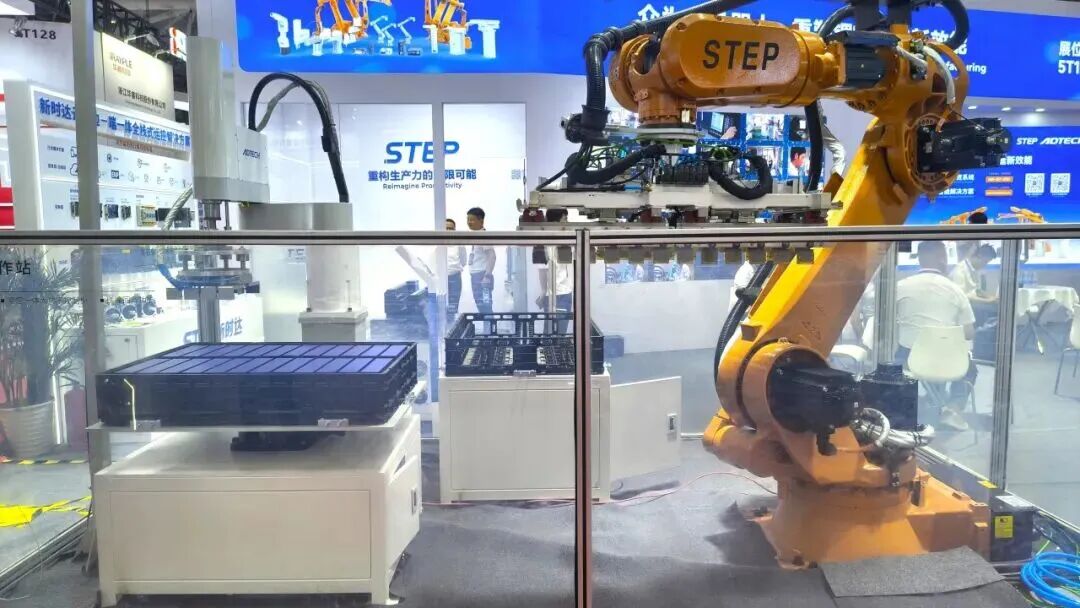
As an automation enterprise with 30 years of experience in the industrial control sector, STEP Electric Corporation has developed a comprehensive product system that includes elevator control, robotics, control and drive technologies, and more. The company offers a diverse range of robot products, such as SCARA robots, articulated robots, semiconductor robots, collaborative robots, and embodied intelligent robots.
Amid China’s push towards intelligent manufacturing, industrial robots are witnessing double-digit growth. Data from MIR indicates that China’s industrial robot shipments surpassed 300,000 units in 2025, marking a year-on-year increase of over 13%.
The resurgence in demand for industrial robots, coupled with the wave of import substitution, has opened up more market opportunities for domestic industrial robot companies. Among them, Estun is anticipated to achieve profits ranging from 150 million to 180 million yuan in the first half of 2026, representing a substantial year-on-year increase of 2144%-2593%.
This significant profit surge is primarily attributed to the company’s focus on enhancing operational efficiency and implementing cost-saving and efficiency-improving measures, such as lean manufacturing. These efforts have led to a notable increase in the comprehensive gross profit margin compared to the same period last year, demonstrating the company’s ability to break free from industry competition and achieve high-quality growth.
Overall, given the long-term trend of import substitution and the growing demand for automation and intelligent development in downstream industries, the industrial robot market continues to hold significant growth potential. However, within the promising fields of industrial automation and industrial robots, STEP Electric Corporation and Estun present a stark contrast.
Of course, since becoming part of Haier’s ecosystem, STEP Electric Corporation has leveraged the in-depth empowerment of Haier’s COSMOPlat industrial internet platform. This includes tapping into the scenario resources of Haier’s over 160 manufacturing centers worldwide to strengthen collaboration along the industrial automation supply chain. This collaboration is expected to enhance the company’s capabilities in key technologies and products within the field of intelligent manufacturing.
Currently, STEP Electric Corporation’s industrial robots and variable frequency products are being gradually deployed in Haier Group’s factories, and embodied intelligent robots have also been implemented for training purposes. Overall, Haier Group has provided STEP Electric Corporation with a valuable large-scale implementation platform and a closed-loop environment for continuous iteration and upgrading, enabling the development of an integrated system of ‘AI + industrial automation, industrial robots + humanoid robots’ and AI solutions.
Finally, in the era of generative AI, new technologies such as AI large models, big data, and the Internet of Things are driving industrial transformation and upgrading with fresh impetus.
In particular, intelligence centered on AI technology applications represents the future trend in industrial robot development. By integrating industrial robots with cutting-edge technologies like AI large models and machine vision, industrial robots are being propelled towards intelligence and autonomous decision-making capabilities.
STEP Electric Corporation has deeply integrated AI technology with its robots, developing the SMART ROBOT teach-free intelligent work platform. Based on 3D vision and AI path planning systems, this platform enables autonomous workpiece recognition, automatic seam extraction, and trajectory planning, thereby enhancing efficiency in complex seam and irregular structure welding.
As domestic industrial robot manufacturers continue to upgrade their products and solutions, technological innovation and high-value-added products will serve as the core competitiveness for future development.
At the same time, import substitution is an inevitable trend, and China’s industrial robot industry is in an accelerated phase of substitution. Customers are increasingly prioritizing autonomous controllability and customization needs in product selection, driving the continuous growth in the market share of domestic industrial robots. For leading companies, they are expected to capitalize on the substitution dividend to continuously unlock their growth potential.
Yang Jianyong, a contributor to Forbes China, expresses views that are solely his own. He is committed to providing in-depth interpretations of cutting-edge technologies such as industrial robots, AI large models, artificial intelligence, the Internet of Things, cloud computing, and smart hardware.
-
The Second Half of AI: Cost-Effectiveness Takes Center Stage
-
![]()
Location, Concentration, and Trajectory Tracking: Hikvision’s TDLAS Gas Cloud Imaging Telemetry System Debuts at WAIC 2026
-
The 'AI Study Tour' Under the Original Equipment Manufacturer Model is Set to Create a New Wave of Internet-Famous Science and Innovation Cities
-
![]()
Now, There's a 'Basis' to Curb 'Price Wars': Future Reports of Automakers Setting Low Prices Will Be Probed Under New Rules
-
![]()
WAIC 2026: Farewell to Parameter Races, Full-Chain AI Commercialization
-
![]()
Tencent’s ‘Crouching Tiger,’ WeChat’s ‘Hidden Dragon’: The Dual Paths of AI Development
-
![]()
Tencent Hides Its 'Tigers', WeChat Conceals Its 'Dragons'
-
![]()
Where is the Way Out for the Chinese Auto Market Amid Industry-Wide Losses?