Location, Concentration, and Trajectory Tracking: Hikvision’s TDLAS Gas Cloud Imaging Telemetry System Debuts at WAIC 2026
 07/17 2026
 346
346
In high-hazard sectors like oil refining, petrochemical plants, and energy production, gas leaks can trigger catastrophic incidents in seconds, causing irreparable ecological harm. Conventional monitoring approaches often suffer from one-dimensional constraints: point sensors measure concentration but cannot trace a leak’s path; gas cloud imaging visualizes spread but lacks precise concentration data; and visible light cameras fail to detect colorless gases. These fragmented methods make it difficult to obtain a holistic view of a leak.
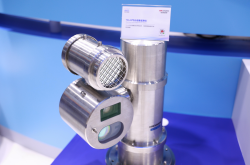
At the 2026 World Artificial Intelligence Conference (WAIC), Hikvision introduced its revolutionary TDLAS Gas Cloud Imaging Telemetry Device. This system uniquely integrates gas cloud imaging, TDLAS laser-based monitoring, and visible light imaging, enhanced by an AI-driven large model for intelligent refinement. It enhances image clarity, boosts leak detection precision, and effectively renders invisible gases “visible,” thereby strengthening intelligent safety measures in high-risk industries.
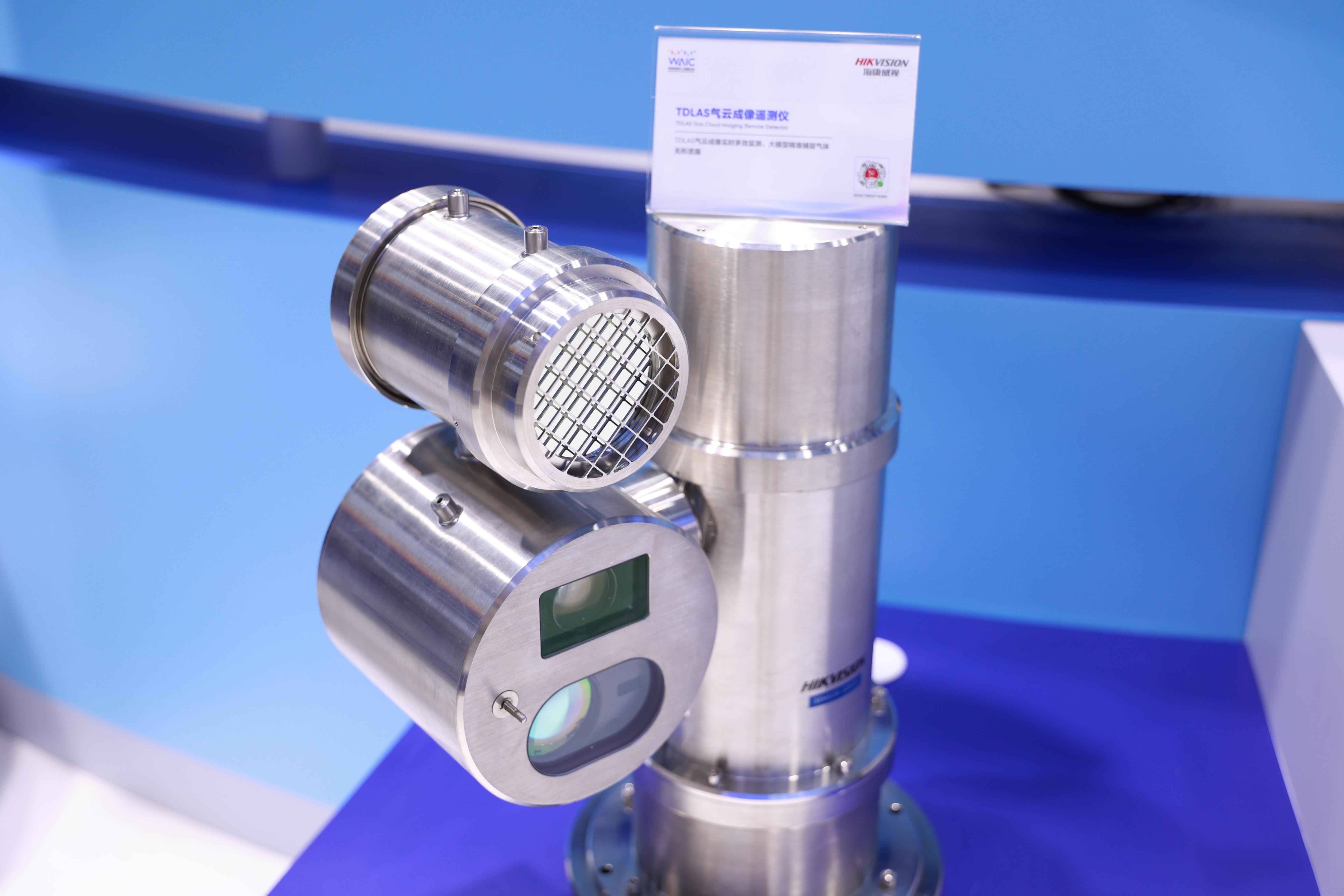
Image: Hikvision’s TDLAS Gas Cloud Imaging Telemetry Device showcased at WAIC 2026
Three-in-One Functionality for Holistic Monitoring
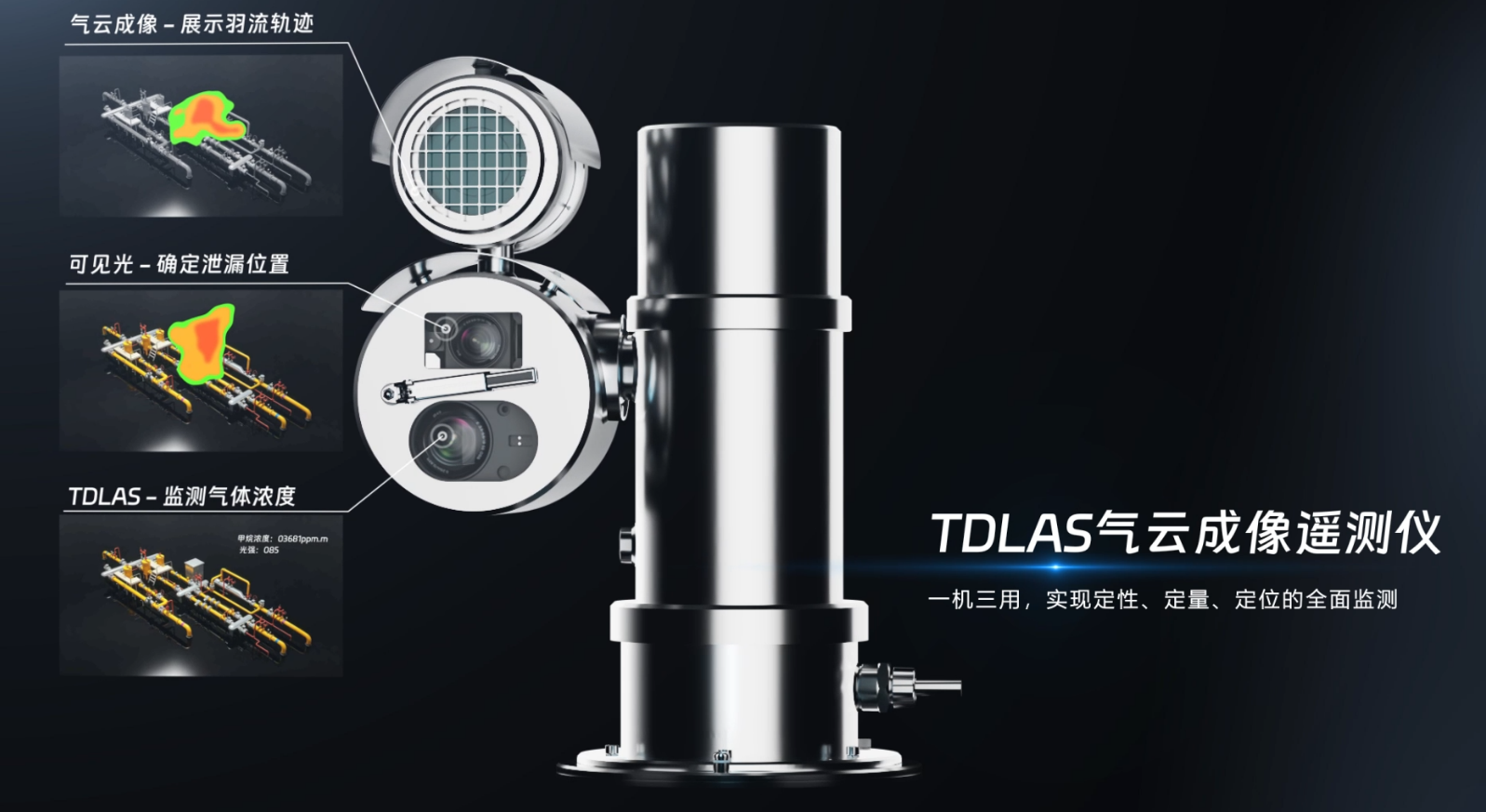
Gas leaks often occur silently and spread rapidly, making it difficult for traditional single-method monitoring to capture the full dynamics. The TDLAS Gas Cloud Imaging Telemetry Device combines three sensing technologies: TDLAS for precise gas concentration measurement, gas cloud imaging for real-time visualization of the leak’s trajectory, and visible light imaging for contextual mapping of the leak source’s surroundings. This three-in-one approach enables simultaneous qualitative, quantitative, and locational analysis of gas leaks, helping inspectors quickly identify the source, diffusion path, and affected area. This provides clear, actionable evidence for emergency response.
AI-Driven Large Model for Enhanced Detection
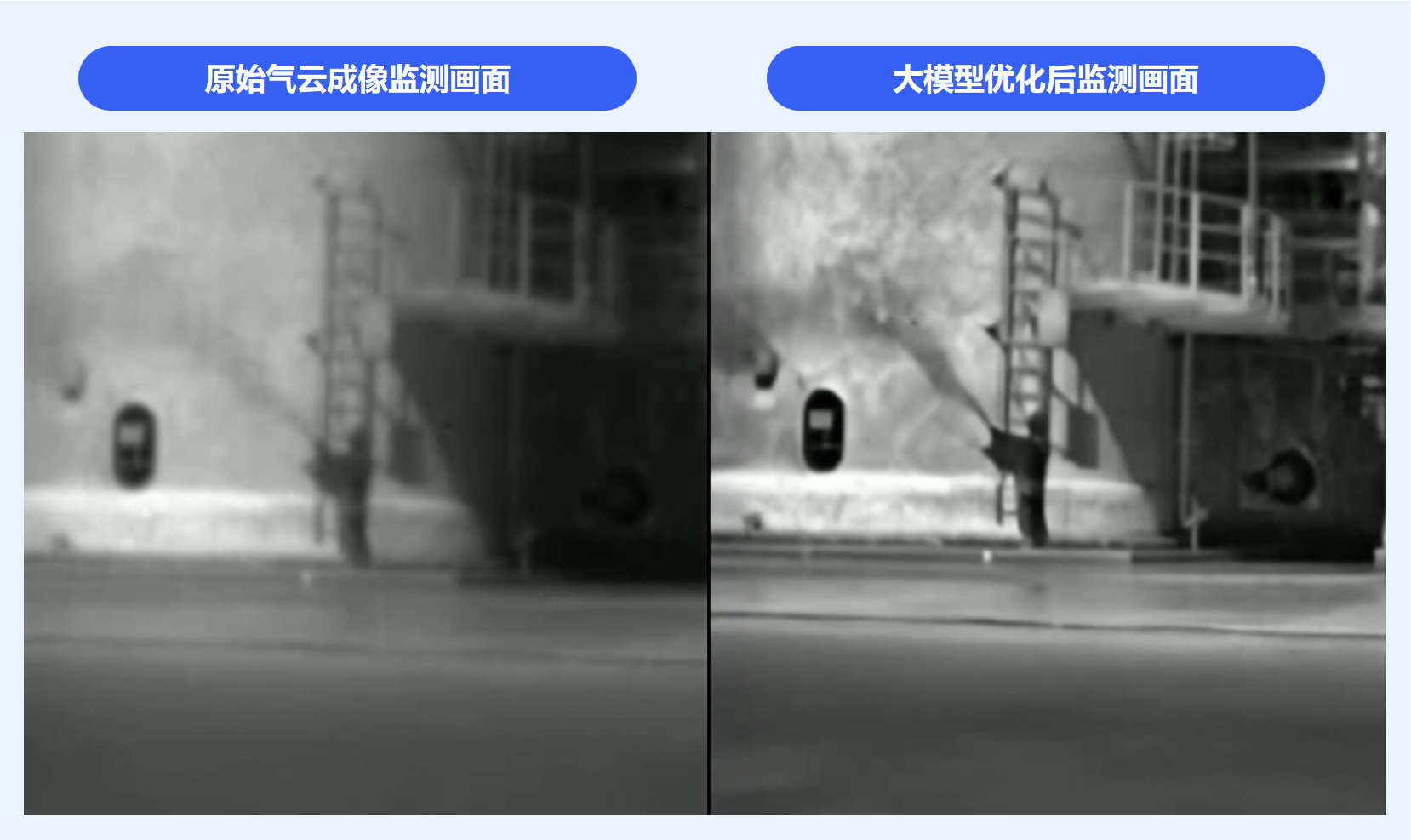
Traditional gas cloud imaging systems often produce grainy images with limited detail, leading to frequent false negatives and positives—especially in cases of minor pipeline leaks or low-concentration emissions—creating safety blind spots.
Hikvision’s device leverages the generalization and enhancement capabilities of AI large models to intelligently refine raw gas cloud images, enhancing edge details and overall gas plume contours. The leak detection accuracy exceeds 90%, even under challenging conditions such as minor leaks, low concentrations, or strong background interference. The system can keenly detect and clearly display gas plumes that were previously indistinct, accelerating hazard identification and precise response.
Uncooled Detector for Lower Maintenance
Traditional gas cloud imaging systems typically require cooled detectors, resulting in high initial costs and ongoing wear-and-tear that necessitates regular component replacement. This makes long-term, stable operation in harsh environments challenging, and offline maintenance creates monitoring gaps, posing safety risks.
The TDLAS Gas Cloud Imaging Telemetry Device resolves these issues through a hardware-level innovation: it uses an uncooled detector, enabling “near-zero maintenance” throughout its lifecycle. The system ensures continuous 24/7 operation under extreme conditions, providing uninterrupted monitoring without lag or downtime, and significantly reducing total lifecycle costs.
With its three core strengths—“three-in-one holistic detection, AI-driven precision, and low-maintenance reliability”—the TDLAS Gas Cloud Imaging Telemetry Device enables visualization, quantification, and traceability of gas leaks. It provides an all-weather intelligent safety shield for high-risk industries like petrochemicals and gas, ensuring safer operations.
-
The Moment to Evaluate Montage Technology Has Arrived
-
![]()
StepOn Has Solved the Monetization Challenge of Large Models with Just a Smartphone
-
![]()
Is a Camera the New AI Safety Guardian? Hikvision Introduces Active Vision Operation Monitoring Gun-Ball Camera at WAIC 2026
-
The Second Half of AI: Cost-Effectiveness Takes Center Stage
-
![]()
Location, Concentration, and Trajectory Tracking: Hikvision’s TDLAS Gas Cloud Imaging Telemetry System Debuts at WAIC 2026
-
The 'AI Study Tour' Under the Original Equipment Manufacturer Model is Set to Create a New Wave of Internet-Famous Science and Innovation Cities
-
![]()
Now, There's a 'Basis' to Curb 'Price Wars': Future Reports of Automakers Setting Low Prices Will Be Probed Under New Rules
-
![]()
WAIC 2026: Farewell to Parameter Races, Full-Chain AI Commercialization