The Second Half of AI: Cost-Effectiveness Takes Center Stage
 07/17 2026
 427
427
If you're still stuck in the old mindset of "whoever has the largest model parameters and highest benchmark scores wins," you may have already missed the biggest shift happening in the AI industry.
The AI arena in 2026 has undergone a complete transformation—the most talked-about highlight at Google I/O is no longer some flashy AGI demo but the "medium-sized" Gemini 3.5 Flash. Meta and SpaceX AI explicitly play the combo of "matching performance with high cost-effectiveness." Even OpenAI has introduced a three-tier pricing system, using Luna and Terra to cover cost-sensitive and mid-range scenarios, no longer relying solely on its flagship model Sol.
This shift from "parameter competition" to "unit price competition" represents a collective awakening forced by reality after two years of industry frenzy.
01. When the Bill for "One Smart Move" Exceeds Employee Salaries
The story begins with a somewhat absurd reality. In June 2026, AI startup Lindy made a decision: to switch entirely from Anthropic's Claude to DeepSeek. The reason was brutally simple—the company's API bills had surpassed the total salary expenses of all its employees. After switching to DeepSeek-V4, inference costs dropped by about 95%, saving millions of dollars annually. Lindy's CEO, Flo Crivello, summed up the industry's pain point: "Most startups can't afford to pay for brand premium."
According to interviews by National Business Daily with multiple overseas companies, switching to Chinese large models reduced inference costs by 30% to 95%. OpenRouter statistics show that the proportion of Tokens invoked by U.S. companies from Chinese AI models surged from 4.5% in the first half of 2025 to a peak of 46%.
Behind these numbers lies a simple truth: When AI moves from the lab into core enterprise production systems, cost stops being just a financial issue—it becomes a survival issue.
Over the past two years, the biggest obstacle for companies embracing AI wasn't insufficient capability but runaway costs—many companies found their Token budgets exhausted mid-quarter, forcing internal usage restrictions. Enterprise spend management platform Ramp's statistics show that in April 2026, the median monthly AI Token expense for companies was $2,246, but the average soared to $140,842—a handful of "super users" were consuming the vast majority of AI budgets.
A bank executive even explicitly stated at a half-year meeting: "All large model applications must quickly establish cost-benefit evaluation mechanisms." When the "pay-as-you-go" AI cost structure collides with the "free-for-scale" internet logic, Tokens are transforming from technical parameters into industrial settlement units—every Token asks: What are you getting for your money?
02. "Good Enough" Beats "Best"
Under this pressure, the logic of AI competition has fundamentally flipped. The industry's core demand has shifted from "blindly pursuing the strongest performance" to "matching the most suitable model for specific tasks at reasonable costs."
Perplexity CEO Aravind Srinivas puts it more bluntly: "The model itself is no longer the core product; the key lies in the coordination system that places models within functional frameworks and matches them with numerous tools." His answer: "Use the most suitable model for the task." Simple customer service tasks don't need the most expensive model; complex coding problems require flagship versions—using a single model for everything often leads to the absurdity of "using a sledgehammer to crack a nut."
Lightweight small models are becoming the most cost-effective and highest-growth-potential choice.
Among OpenRouter's top 10 monthly popular LLMs, lightweight models occupy 6 spots, with parameter counts in the billions to low hundreds of billions. On Hugging Face Hub, 92.48% of downloads come from models with fewer than 1 billion parameters. OpenAI itself has launched GPT-5.4 mini and nano—nano's input cost is just 8% of the flagship's, and output cost is one-twelfth. Meanwhile, the capability gap between top and secondary models has narrowed from "worlds apart" to within 10% to 20%.
When performance gaps shrink, price competition becomes crucial. Tencent's Chief AI Scientist Yao Shunyu points out: "Using a strong model saves money compared to a weak one because it gets things done faster"—performance is the premise of cost-effectiveness. But when gaps narrow sufficiently, who's cheaper and who better integrates into real workflows becomes the decisive factor.
03. Technological Routes Also Make Way for Cost-Effectiveness
The cost-effectiveness competition has penetrated deep into technological foundations.
An industry statistic shows that using an inference model for complex code review tasks can cost 5 to 10 times more than a general model—some teams found that two models gave identical answers, but one consumed more than twice the Tokens and cost nearly 10 times more, simply because it "overthought."
IBM Research proposes the "Abstract Reasoning Chain" (Abstract-CoT) method: For a math problem, a standard chain-of-thought requires 8 natural language steps, while the abstract version uses just 14 symbols to reach the same conclusion, consuming less than one-tenth the Tokens.
OpenAI found a breakthrough in KV cache optimization, with foreign media reporting its new scheme could slash inference costs by over half. Anthropic is engaging with Samsung to develop custom AI chips, with a single custom ASIC's inference cost potentially much lower than general-purpose GPU solutions. Between 2026 and 2030, rapid improvements in inference efficiency will become a key force reshaping the AI industry landscape.
04. A Wake-Up Call for Capital Markets
ING points out in its latest research report that AI trading is shifting from "buying future narratives" to "verifying investment returns." The market is moving from "growth narratives" to "profitability validation," from "storytelling" to "calculating returns."
Chinese AI has taken a distinct path. UBS Securities analyst Xiong Wei notes that Chinese AI "focuses on efficiency over hardware stacking." In 2025, leading Chinese internet giants' AI capital expenditures were about 400 billion yuan, just one-tenth of the top five U.S. cloud providers, yet they accounted for nearly half of the global TOP 15 models. Their self-built data centers maintained average utilization rates above 65%, significantly higher than U.S. counterparts.
China's cost-effectiveness advantage has become the core logic for global capital to reprice Chinese tech assets. Currently, some Chinese open-source models lag top U.S. models by about 6 to 9 months technically but are priced 60% to 90% lower, covering most regular AI tasks. Li Kaifu's assessment is even more direct: "Showy AI should stop! AI deployments that don't impact corporate financial statements are just wasting money."
05. From "What Can AI Do?" to "Is AI Worth Doing?"
The core question in AI's first half was "What can AI do?"—everyone stacked parameters, competed on benchmarks, and chased rankings. The core question in the second half has become "Is AI worth doing?"—everyone now calculates costs, compares prices, and scrutinizes expenses.
This isn't a step backward but a progression.
For any technology to move from showmanship to widespread adoption, it must transition from "can it be done?" to "is it affordable?" This was true for the internet, smartphones, and now AI. As Token prices continue to fall, inference efficiency keeps rising, and model tiering provides options for every budget segment, AI truly transforms from a toy for a few giants into a tool for all industries. The winner won't be the "strongest" but the "most worthwhile."
-
The Moment to Evaluate Montage Technology Has Arrived
-
![]()
StepOn Has Solved the Monetization Challenge of Large Models with Just a Smartphone
-
![]()
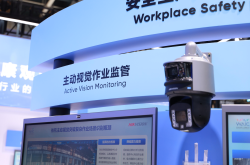
Is a Camera the New AI Safety Guardian? Hikvision Introduces Active Vision Operation Monitoring Gun-Ball Camera at WAIC 2026
-
The Second Half of AI: Cost-Effectiveness Takes Center Stage
-
![]()
Location, Concentration, and Trajectory Tracking: Hikvision’s TDLAS Gas Cloud Imaging Telemetry System Debuts at WAIC 2026
-
The 'AI Study Tour' Under the Original Equipment Manufacturer Model is Set to Create a New Wave of Internet-Famous Science and Innovation Cities
-
![]()
Now, There's a 'Basis' to Curb 'Price Wars': Future Reports of Automakers Setting Low Prices Will Be Probed Under New Rules
-
![]()
WAIC 2026: Farewell to Parameter Races, Full-Chain AI Commercialization