WAIC 2026: Farewell to Parameter Races, Full-Chain AI Commercialization
 07/17 2026
 427
427
Abstract: The hottest edition yet.
Source: Chaoyang Capital Theory
On July 17, the 2026 World Artificial Intelligence Conference (hereinafter referred to as the “WAIC”) is set to open.
Since its inaugural edition in 2018, no WAIC has been as lively as this year’s—simultaneously launching across three locations and four venues in Shanghai Expo, Zhangjiang, and West Bund, with over 1,100 enterprises packed into a 100,000-square-meter exhibition area, showcasing more than 300 global product premieres.
However, scale is not the focal point; what truly warrants attention is the shifting industry wind direction (Chinese for “trend” or “direction”). The sector no longer seems obsessed with model parameters.
From computing power chips to operating systems, from smartphones to factory robots, everyone is asking the same questions: Can it be implemented? Can it be mass-produced? Can it generate profits?
Chaoyang comb, sort out, organize, arrange, streamline (Chinese for “analyzes” or “reviews”) several representative participating enterprises to see what has changed.
Domestic Computing Power Enters Commercial Realization Phase with 10,000-Card Clusters and 3D Chips
For the past few years, computing power has been the “unsung hero” behind large models.
Important, but not particularly glamorous.
This year is different.

The 10,000-square-meter Chip-Computing Integration Pavilion at the Zhangjiang Science Hall marks WAIC’s first dedicated computing power exhibition venue. Over 100 enterprises and 200+ exhibits are on display, with 67 products making their domestic debut here.
Among the participants, Huawei Ascend, Enflame Technology, Iluvatar CoreX, Biren Technology, and MetaX Integrated Circuits—nearly all mainstream domestic GPU manufacturers—are present, with over a dozen general-purpose high-computing-power chip enterprises competing on the same stage.
Let’s start with Huawei.
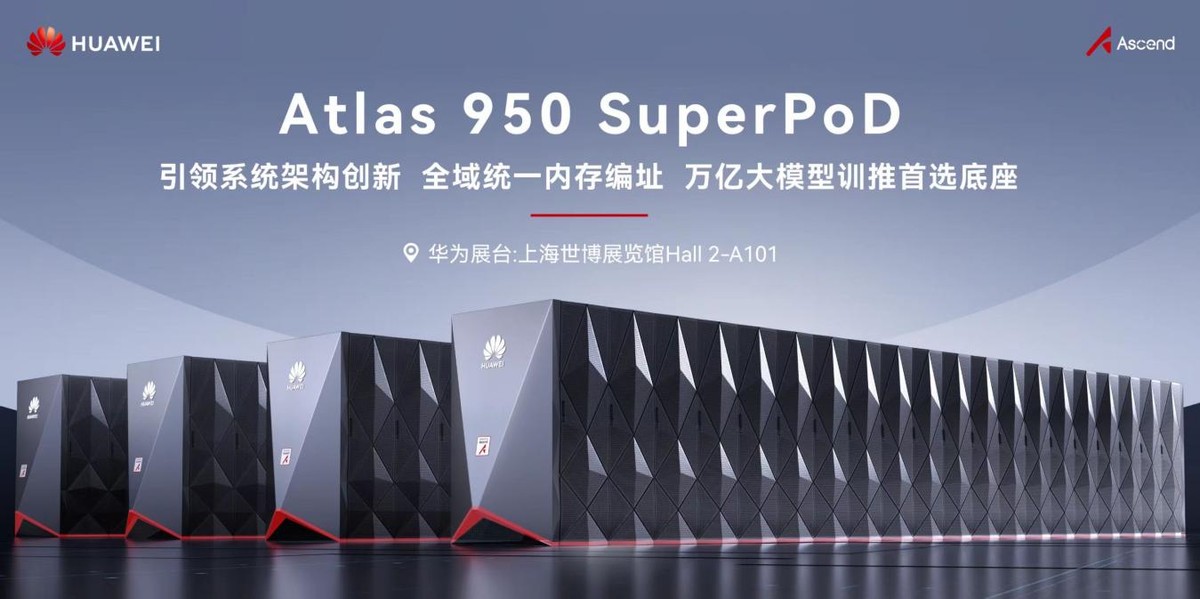
During the 2026 World Artificial Intelligence Conference, the Atlas 950 SuperPoD makes its real-machine debut, likely the most attention-grabbing hardware at this year’s exhibition.
The Atlas 950 SuperPoD is equipped with 1,024 Ascend cards, leading in core metrics such as computing power, memory, and interconnection bandwidth. The Atlas 950 SuperCluster built upon it boasts a computing power scale exceeding 500,000 cards—currently the world’s strongest computing cluster. Also unveiled is the lightweight Atlas 850E air-cooled model, specifically designed for local small-to-medium-sized intelligent computing data centers—not every city needs a 10,000-card cluster, but every city needs computing power.
This product fills the gap for decentralized computing power.
Now, let’s look at another noteworthy player—Orient Computing Core.
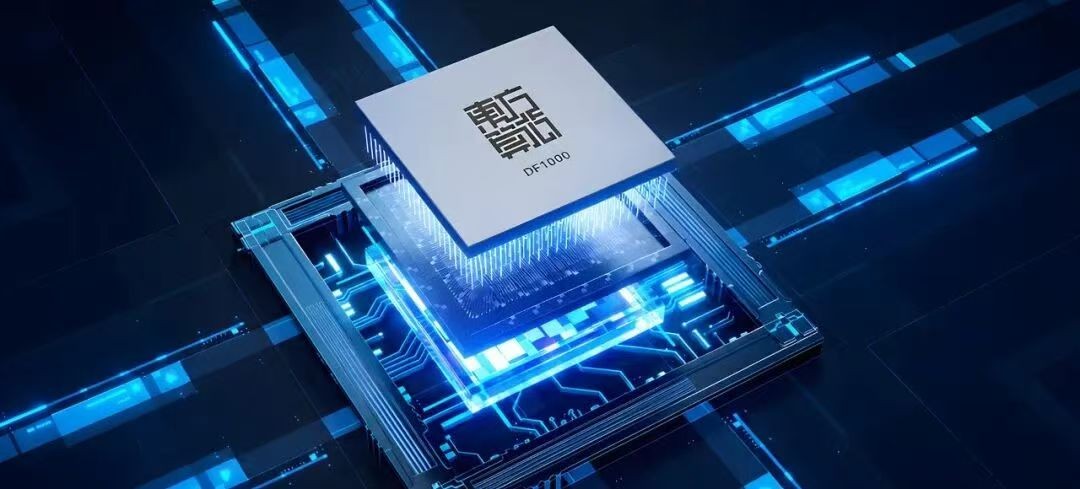
If Atlas represents the pinnacle of cluster-based approaches, the DF1000 takes an entirely different path: foundational breakthroughs at the chip level.
This is the world’s first mass-produced 3D near-memory high-computing-power chip with a fully domestic supply chain.
“Near-memory computing” involves placing computing units as close as possible to memory units, physically shortening data transfer distances. This addresses a long-standing industry challenge: when computing power increases, data movement becomes a bottleneck—the so-called “memory wall.”
Consider two core metrics: BF16 computing power of 520 TFLOPS and memory bandwidth of 6.4 TB/s. These figures directly target the pain points of the memory wall.
What truly makes it interesting is its mass-production strategy. The DF1000 uses a mature 14nm process—eschewing the most advanced technology to avoid the risks of being constrained by high-end process availability. It is suitable for both cloud clusters and edge-side inference.
The company has also announced its roadmap: the DF2000 in Q4 2026, followed by the DF3000 in 2027. The plan is clear and not just speculative.
Additionally, the commercial progress of both products is worth noting.
Huawei’s 10,000-card super-node solution already covers 11 industries, including finance, government affairs, and the internet; the DF1000 has completed stable testing of 128-card clusters and is ready for bulk delivery.
According to Orient Computing Core, the company has already received industry orders and will initiate mass production in the second half of the year.
In other words, these are not conceptual prototypes—they are aimed at generating revenue.
Of course, the bustling activity in the exhibition halls is backed by policy support.
Over the past year, intelligent computing centers have proliferated across regions, with subsidies for AI terminals and support for domestic chip procurement being implemented one after another. The prosperity seen at the WAIC exhibition halls is, to a large extent, the concentrated realization of policy dividends.
Looking at the timeline makes the transformation even more apparent.
At WAIC 2025, the highest-specification computing power equipment was still a mid-sized 384-card Ascend cluster, capable only of training foundational models with hundreds of billions of parameters. In earlier editions, manufacturers competed on single-card benchmark scores, with fragmented software and hardware ecosystems and scattered implementation scenarios, making it impossible for buyers to procure at scale.
In just a few years, the changes have been visible to the naked eye.
The capital markets are also voting with their wallets.
CITIC Securities research predicts that the domestic AI chip market will exceed 300 billion yuan in 2026; China Academy of Information and Communications Technology data shows a 417% year-on-year surge in domestic AI computing power demand in the first quarter. According to Bernstein Research, Huawei Ascend is expected to capture approximately 50% of China’s AI chip market share this year.
The competitive logic has shifted. Single-card computing power parameters are no longer the sole barrier; cluster collaborative scheduling, software-hardware integration, and lifecycle cost control—these seemingly “less glamorous” capabilities have become key differentiators.
Many may wonder why such a transformation has occurred in the computing power industry in just a few years.
In the early stages, the core goal of computing power development was to address the “availability” issue—once large-scale clusters could be built, a competitive edge was established. Today, with intelligent computing centers densely established nationwide, computing power supply has shifted from scarcity to surplus, and industry demand has transformed into “usability and cost-effectiveness.”
Computing power is no longer a scarce resource controlled by a few enterprises; reducing unit computing power costs, adapting to niche scenarios across industries, and achieving unified resource scheduling are now the core keys for computing power vendors to capture the market.
Agent Operating Systems Take the Baton from Large Models, Reshaping the Foundational Logic of the AI Industry
With computing power issues being addressed, what about the upper layers?
The truly exciting changes are happening at the software level.
The core highlight of this year’s WAIC is not which large model has topped the charts again, but the debut of mass-production-ready general-purpose agent operating systems, which have taken center stage in the industry for the first time.
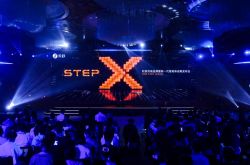
This track (Chinese for “sector” or “field”) is no longer dominated by a single player. StepFun’s StarHub OS, Baidu’s suite of agent products, the Agentic OS jointly launched by Honor and Alibaba, and NetEase Youdao’s first 100% open-source desktop-level AI agent in China all made their debuts at this WAIC.
However, the fastest mover is StepFun.
The StarHub OS (Step AOS), released on July 13, is regarded by the industry as the first agent-native operating system to achieve true Large scale commercial use (Chinese for “large-scale commercialization”).
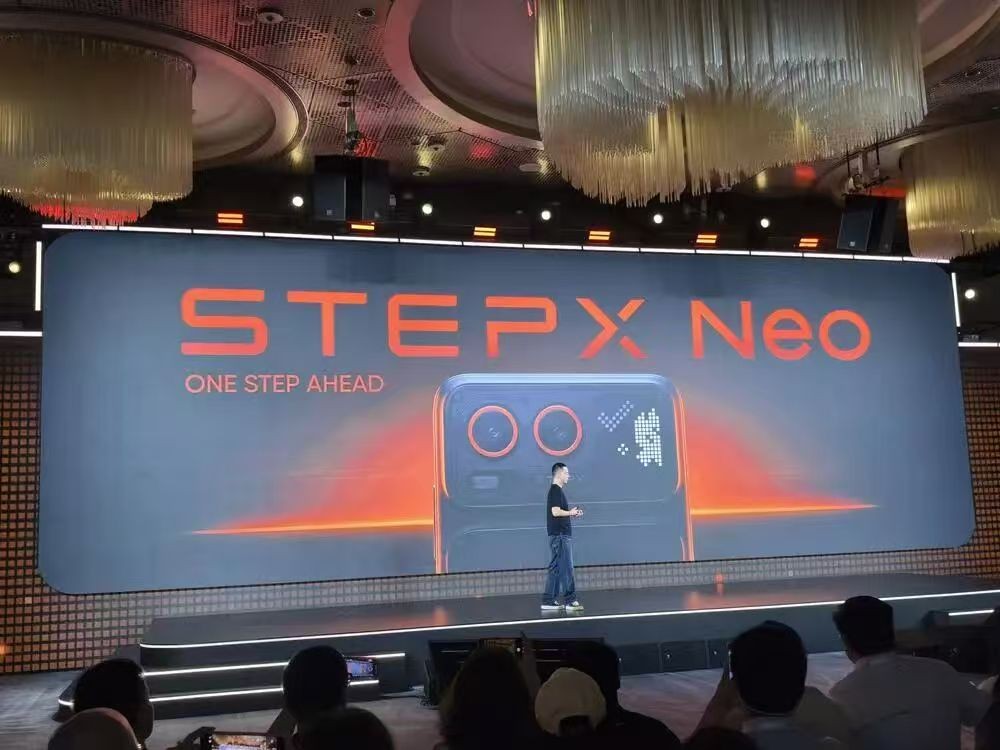
How is it different from previous AI assistants?
Simply put: while past AI assistants operated on a “you ask, I answer” model, StarHub OS follows a “you say, I do” approach.
Technically, it employs a dual-layer architecture—one layer is a sandbox compatible with most Android applications, while the other is an independent AI-native execution layer capable of autonomously coordinating multiple mainstream apps to complete coherent tasks.
For example: when you say, “Book a high-speed train ticket and hotel for me to Shanghai this weekend,” it won’t just provide search results. It will open travel apps to check schedules, hotel apps to compare prices, and payment apps to complete the booking—all without requiring your intervention.
This is not a conceptual video; it is a functional product.
The commercialization data is equally impressive. According to StepFun’s official figures, the lightweight Step Edge model for edge devices has been installed on 42 million units, with 60% of China’s leading smartphone brands already in deep cooperation. Vehicles equipped with this system, such as Geely’s intelligent cockpit, have sold nearly 40,000 units within three months of launch.
Agent OS is no longer just a concept in PowerPoint presentations—it is operating in the real consumer market.
Industrial capital has also recognized this. According to Securities Times, StepFun is expected to complete nearly $2.5 billion in financing, with leading hardware supply chain enterprises such as Huaqin, ZTE, and OmniVision taking stakes. The upstream and downstream have voted with their wallets.
Exhibits are the explicit thread, while forum topics are the implicit one.
What were the hot topics at past WAIC editions? Large model training, AI safety governance. This year? Open-source agents, AI coding, token economics, OPC (One-Person Entrepreneurial model , Chinese for “One-Person Startup Model”)—nearly every new topic points to the same goal: lowering barriers and accelerating monetization.
Speaking of tokens, this metric deserves separate mention.
Tokens are the smallest units of AI text processing—you can think of them as “word blocks” consumed each time an AI processes a segment of text or an image, now a unified pricing unit across the industry.
How fast is their growth? According to data from the National Data Bureau, as of March this year, China’s daily average token usage surpassed 140 trillion, increasing over a thousandfold since early 2024.
Usage has skyrocketed, but pricing standards remain unclear. Runjian shares showcased a full-stack token factory solution at the exhibition and hosted a dedicated forum on “Computing-Power-Electricity Collaboration × Token Factories”—essentially discussing how to price and deliver AI computing power services. The industry still lacks standard answers.
The OPC model discussion points to the same logic: computing power is becoming cheaper, development tools are simplifying, and the barriers to AI entrepreneurship are rapidly lowering. What once required the resources of major corporations can now be undertaken by a single individual with a computer.
Looking back two or three years ago, the landscape was entirely different.
At that time, companies were aggressively scaling up ultra-large-parameter models, but most AI products could only operate on a “you ask, I answer” basis, unable to autonomously complete complex tasks. The agent products showcased at exhibitions were primarily custom tools for vertical scenarios like retail or industry, fragmented and lacking cross-terminal, cross-scenario general-purpose systems.
We might ask: Why was AI previously unable to escape passive response limitations?
This was not solely due to insufficient model technology. During the era of high computing costs, large-scale cross-application autonomous execution would have incurred prohibitive computational expenses, preventing agents from being commercially viable at scale and confining them to demonstration stages.
Only after the maturation of domestic computing power systems and the continuous decline in token costs could the cost barriers for AI autonomous execution be broken, enabling large-scale implementation of general-purpose agent operating systems. Technical maturity is foundational, but cost reduction is the core prerequisite for the industry to advance to the next stage—this is also the primary reason why industrial transformation lags behind technological breakthroughs.
Now it has arrived. This signifies a reshaping of industrial division of labor.
In the past, the AI industry chain had clear boundaries—computing power vendors built chips, software companies developed models, and terminal manufacturers produced hardware, each operating independently. With the emergence of general-purpose agent OS, software platforms have become the central hub of the entire chain: connecting various computing power sources upward and uniformly managing all terminals, including smartphones, robots, and vehicle infotainment systems, downward.
Whoever controls the system ecosystem holds the discourse power. This logic is identical to the stories of Android and iOS in the past.
Consumer AI + Embodied AI Explode on Dual Fronts, Technology Penetrates the Real Economy
With computing power and systems in place, the ultimate question is: Can ordinary people use these products? Can factories afford them?
This WAIC provides a relatively clear answer: consumer-grade intelligent hardware and industrial robots are simultaneously entering mass production cycles.
Let’s start with smartphones.
StepFun’s native agent smartphone, equipped with StarHub OS, will make its debut at this conference, with Huaqin Technology deeply involved in contract manufacturing.
This phone features a built-in local lightweight multimodal model with tool call (toolcall) execution latency as low as 0.1 seconds, ensuring user data does not need to be transmitted to the cloud—simultaneously achieving intelligent experience and data privacy, two aspects that were previously difficult to reconcile.
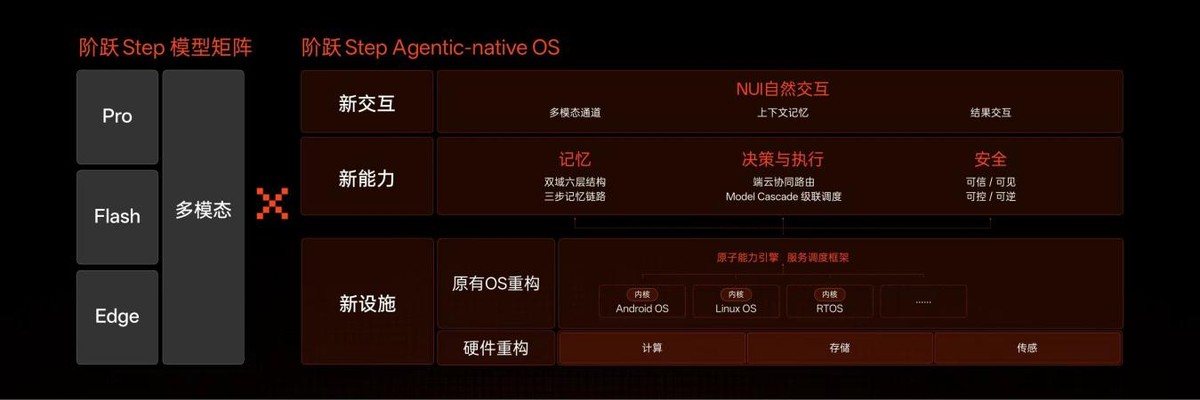
ZTE’s Nubia will also exhibit an AI agent smartphone developed jointly with ByteDance.
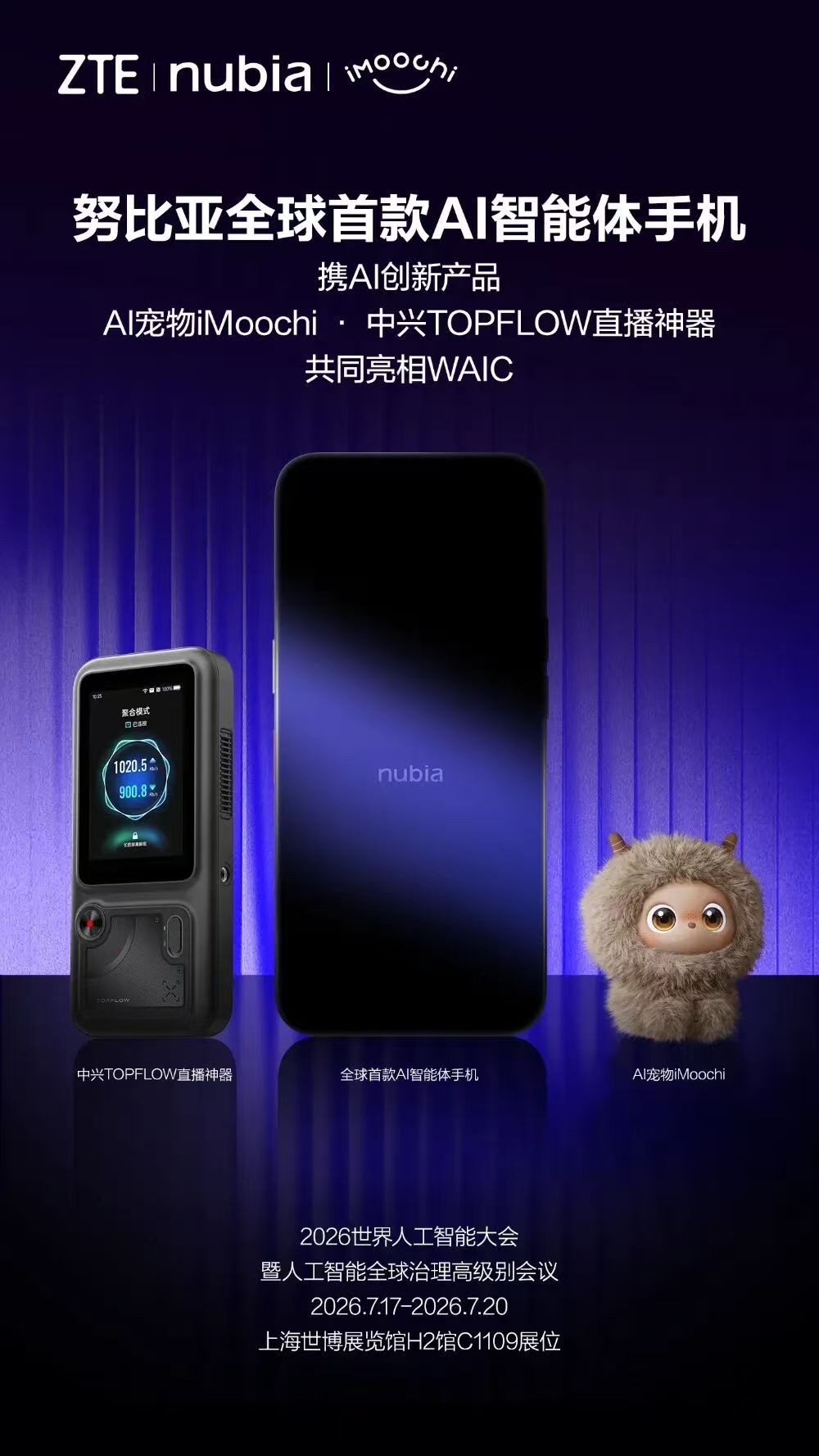
Before this, what could so-called “AI smartphones” do? Photo optimization, voice queries—essentially just stacked single-point functions. No smartphone could autonomously complete coherent tasks across multiple apps, such as booking tickets, handling office work, or planning itineraries.
AI used to be a “value-added feature” for smartphones; now it is becoming their “foundational logic.” Judging by the completeness of the exhibits, domestic manufacturers are indeed ahead in implementing system-level intelligent hardware.
Now, let’s look at robots.
This conference has dedicated an entire exhibition hall to robots, with over 200 embodied AI enterprises showcasing their offerings—a scale unimaginable just two years ago.
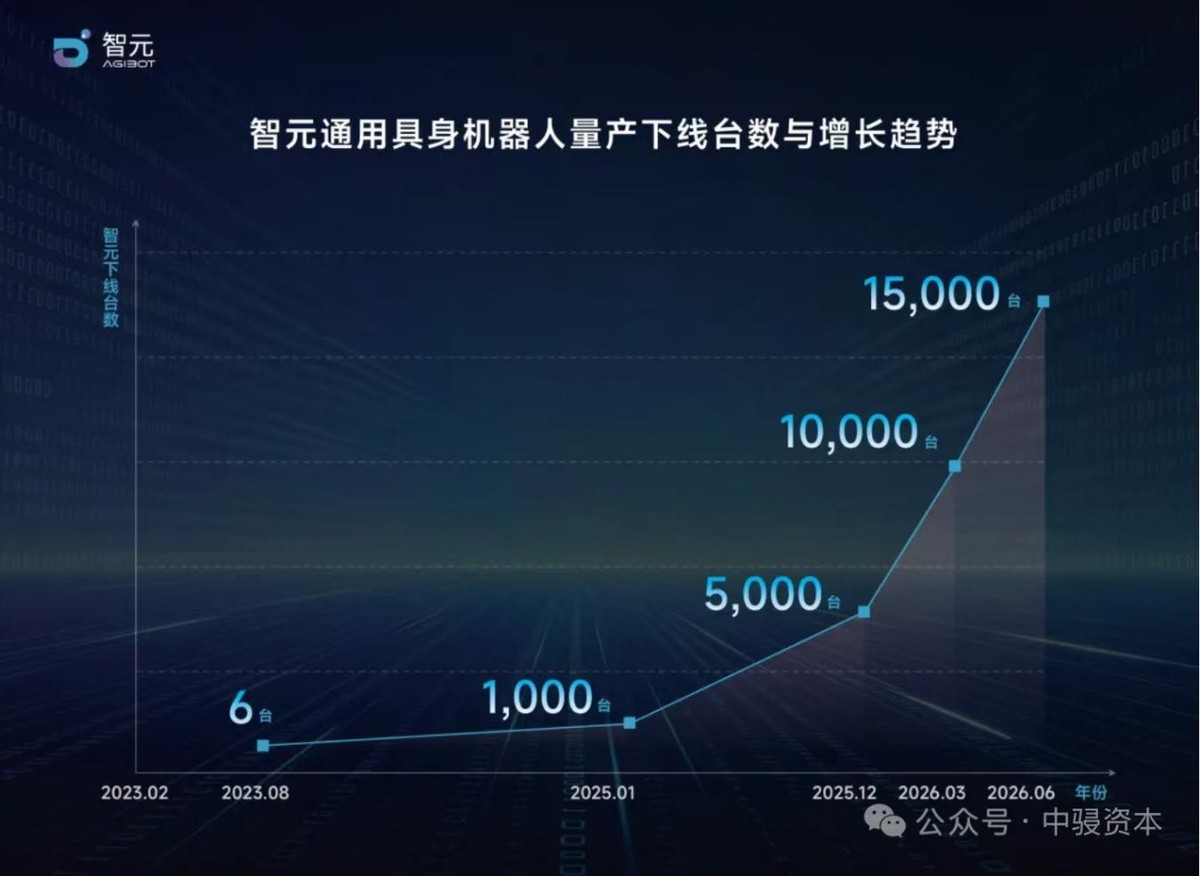
The leader is Enflame Robotics. Before the exhibition opened, its 15,000th industrial humanoid robot rolled off the production line. According to real-world testing data, it achieves a 99.99% operational stability rate in 3C precision manufacturing quality inspection scenarios.
15,000 units are not demo figures from a lab—they represent genuine production line deliveries.
Companies like Unitree, Mech-Mind, and Fourier Intelligence have also brought complete solutions tailored to different manufacturing scenarios. Shengshu Technology showcased MotuBrain—a “universal brain” for embodied AI robots—in the exhibition hall, aiming explicitly to provide a unified intelligent hub for various humanoid robots.
Another noteworthy player is Daxiao Robotics, which focuses on world models—simply put, enabling robots not just to “execute instructions” but to understand the operational laws of the physical world, possessing cognitive and predictive capabilities.
These companies represent different technical routes within embodied AI: some focus on task execution, some on intelligent hubs, and some on world understanding. Together, they form a relatively complete technological chain.
One notable detail: “mass deliverability” is replacing “parameter leadership” as the most frequently mentioned keyword in the robotics sector. This shift alone speaks volumes.
Two tracks are surging simultaneously, sending the same signal: AI technology is stepping out of exhibition halls and entering the smartphones of ordinary people and the production lines of factories. The commercialization pathway from computing power and software to end-user devices has largely been established, and the industry chain is transitioning from the 'technology validation' phase to the 'commercial validation' phase.
Of course, this full-chain commercialization race is not unique to China. OpenAI's GPT assistant and Google's Gemini show that overseas giants are also extending toward intelligent agent OS and end-hardware, though at different paces.
However, judging by the completion level of exhibits at this year's WAIC, domestic companies have indeed gained a phased lead in the commercialization speed of system-level intelligent hardware.
To be frank: the industry is still in its early stages.
High-frequency, essential consumer scenarios are still being explored. There is no standard answer yet on what kind of intelligent agent functions will keep users engaged daily. The same applies to the industrial sector, where lightweight and low-cost robotics solutions for small and medium-sized manufacturing enterprises are just getting started.
But for ordinary users, changes are already underway. AI is evolving from a 'chat tool' to an 'execution assistant.' Tasks like booking tickets, comparing prices, planning itineraries, and cross-APP operations—things that used to require opening multiple apps one by one—are now being taken over by underlying systems.
For small and medium-sized business owners, the proliferation of lightweight computing power and low-code AI tools means that AI is no longer a weapon exclusive to large corporations. The next wave of innovation opportunities may well be hidden in some unassuming corner of the WAIC exhibition hall.
Conclusion
Looking back at the full-chain products showcased at this year's WAIC, it is clear that the industry's competitive logic has undergone a significant shift. Parameters are no longer the core metric; instead, the ability to achieve stable mass production and real-world scenario monetization has become the focus for companies.
Today, domestic computing power, general-purpose intelligent systems, and supporting physical terminal ecosystems are gradually improving. Token-based pricing, low-code tools, and solo entrepreneurship models are also continuously expanding the boundaries of industry innovation, making the AI industrial ecosystem more diverse.
However, objectively speaking, the entire industry is still in the validation phase of implementation. Issues such as payment systems, device interoperability standards, and cost-benefit analysis for industrial robots still require more time for market refinement.
The overall development direction is clear and positive, but Large scale profitability (scalable profitability) will take time. Leveraging the current pace of industry chain iteration, the speed of AI penetration into various sectors is expected to steadily increase. This exhibition also provides a clear reference for understanding the development trajectory of the industry in the next phase.
-
The Moment to Evaluate Montage Technology Has Arrived
-
![]()
StepOn Has Solved the Monetization Challenge of Large Models with Just a Smartphone
-
![]()
Is a Camera the New AI Safety Guardian? Hikvision Introduces Active Vision Operation Monitoring Gun-Ball Camera at WAIC 2026
-
The Second Half of AI: Cost-Effectiveness Takes Center Stage
-
![]()
Location, Concentration, and Trajectory Tracking: Hikvision’s TDLAS Gas Cloud Imaging Telemetry System Debuts at WAIC 2026
-
The 'AI Study Tour' Under the Original Equipment Manufacturer Model is Set to Create a New Wave of Internet-Famous Science and Innovation Cities
-
![]()
Now, There's a 'Basis' to Curb 'Price Wars': Future Reports of Automakers Setting Low Prices Will Be Probed Under New Rules
-
![]()
WAIC 2026: Farewell to Parameter Races, Full-Chain AI Commercialization