Baidu Initiates Secondary Listing in Hong Kong to Reshape AI Valuation
 07/17 2026
 514
514
Author|Li Xin
Editor|Chen Xiaoran
On July 16, Baidu officially announced the initiation of the process to transition to a dual primary listing in Hong Kong. After the switch is completed within the year, its listing status in Hong Kong and the United States will be mutually independent, aiming for inclusion in the September window for the Hong Kong Stock Connect.
Capital Upgrade
The adjustment of the listing structure represents a core measure for Baidu to refine its global capital landscape and overcome valuation constraints.
Previously, Baidu adopted a model of 'Nasdaq primary listing + Hong Kong secondary listing,' with its Hong Kong trading status dependent on its U.S.-listed entity. This not only failed to meet Hong Kong's regular market access requirements and hindered access to southbound capital, but also subjected its overall valuation to the emotional volatility of the U.S.-listed Chinese concept sector, preventing the independent value of its new AI businesses from being fairly priced by the market.
According to the announcement disclosed by the Hong Kong Stock Exchange, Baidu's board of directors has fully authorized management to proceed with the conversion, with all compliance processes expected to be completed by 2026. After completion, Class A ordinary shares and American Depositary Shares will remain freely convertible and tradable across markets.
From a strategic perspective, after the dual primary listing is implemented, Baidu will gain autonomous pricing power in the Hong Kong market. If it successfully passes rigorous assessments such as market capitalization and average daily trading volume, it is expected to follow the path of Bilibili and NetEase and be included in the September adjustment list for the Hong Kong Stock Connect.
The market has already responded. As of the close of Hong Kong stocks on July 16, Baidu's closing price in Hong Kong was HK$110.3, with a single-day increase of 2.6% and a total market capitalization of HK$300.2 billion.
It should be noted that the current valuation is still anchored to traditional search advertising business. After the entry of southbound capital, institutions may reevaluate Baidu's growth assets such as AI cloud, large models, and autonomous driving, potentially catalyzing an upward movement in stock price.
Business Transformation
Behind the capital maneuvers lies a fundamental shift in Baidu's business structure. Relying on its first-quarter 2026 financial report, it is evident that Baidu has completed a historic transition in its business structure, with AI business surpassing advertising business for the first time to become the new primary revenue driver.
In the first quarter of 2026, Baidu's general business revenue, excluding iQIYI, was RMB 26 billion, representing a year-on-year increase of 2%. Among this, AI-driven business revenue reached RMB 13.6 billion, accounting for 52% and showing a year-on-year increase of 49%.
In contrast, revenue from core traditional search advertising was only RMB 10.2 billion, a year-on-year decline of 28.6%. User data also showed pressure, with Baidu App's monthly active users in March reaching 655 million, a year-on-year decrease of 69 million, as user traffic and advertising budgets continued to be diverted to platforms like Douyin and Xiaohongshu.
The path to AI monetization has not been smooth. As China's earliest company to deeply engage in AI industrialization, Baidu has invested an average of over 15% of its annual revenue in R&D over the past decade, with a cumulative investment of RMB 180 billion in the AI sector. However, it has long been subject to industry criticism for 'early Layout (layout) but slow implementation.'
ERNIE Bot, as China's first general-purpose large model comparable to overseas products, has underperformed in consumer-facing commercialization.
Cross-border businesses such as food delivery and automotive have gradually contracted, and the buzz around the autonomous driving sector has been gradually surpassed by Huawei and Horizon Robotics.
Management once adhered to a closed-source model route, underestimating the rise of open-source models like DeepSeek. Coupled with the departure of core talent from its early Silicon Valley AI lab to start their own ventures, multiple factors have hindered commercialization progress.
After confronting these shortcomings, Baidu is accelerating its corrections. Li Yanhong admitted in an internal meeting that 'starting early but arriving late' is an objective reality, compelling the company to shrink (contract) non-core sectors and focus on the full-stack AI mainline of 'cloud-model-agent.'
Currently, Baidu's growth is primarily driven by AI infrastructure business. In the first quarter, AI cloud revenue reached RMB 8.8 billion, a year-on-year surge of 79%, with GPU cloud revenue increasing by 184%, securing a large number of computing power procurement orders from government, financial, and automotive enterprises.
Apollo Go's fully autonomous driving orders reached 3.2 million, a year-on-year increase of 120%. AI-native marketing, enterprise intelligent agents, and other application scenarios have also steadily landed, officially transitioning AI business from a pure investment phase to a scaling (scaled) monetization phase.
Practical Constraints
Against the backdrop of China's AI industry landscape, industry demand expansion provides growth opportunities for Baidu. However, intense competition in the sector, imbalanced commercialization structure, and entry of cross-border players pose practical constraints to its breakthrough.
Favorable industry factors are accumulating, with the global large model wave driving a surge in domestic government and enterprise computing power procurement demand. In the first half of 2026, total financing in China's AI sector exceeded RMB 300 billion, with the large model sector alone accounting for approximately RMB 159.8 billion.
Simultaneously, the acceleration of industrial digital transformation continues to release orders from central enterprises, financial institutions, and manufacturing companies, with Baidu having a competitive advantage in undertake (undertaking) these orders due to its years of technological accumulation.
Baidu's differentiated barrier lies in its full-link collaboration capabilities. Leveraging massive real-world scenario data accumulated from its search business, it has long provided training materials for the iteration of the ERNIE large model. Coupled with AI cloud ranking first in China's AI public cloud market for six consecutive years, it can establish a closed loop of 'computing power services-model invocation-industry implementation,' capturing market share in the To B government and enterprise services sector.
However, business shortcomings are also prominent. Baidu's AI revenue structure is highly concentrated in the infrastructure layer, with high-margin businesses such as AI applications and enterprise intelligent agents accounting for only 35% of total AI revenue. User penetration of consumer-facing products is insufficient, and profitability quality needs improvement.
Industry competition pressure continues to intensify. Huawei and Alibaba Cloud leverage their ecosystem binding advantages to seize the government and enterprise cloud market. Large model companies like Zhipu AI and DeepSeek, while procuring computing power, also develop complementary services, gradually cutting into downstream market profits. Overseas, OpenAI collaborates with hardware vendors to launch customized inference solutions, further squeezing the survival space of third-party AI service providers.
Additionally, the autonomous driving business is constrained by local road testing regulations, with uncertainties surrounding the pace of scaled implementation.
Continuous large capital expenditures on AI R&D, if coupled with a faster-than-expected decline in traditional advertising business, will squeeze the overall cash flow safety margin.
In summary, Baidu's switch to a dual primary listing is a key strategic move to leverage capital tools to activate its long-term R&D accumulations and reshape market valuation logic.
From its early diversified Layout (layout) to its current focus on the AI main business and contraction of its fronts, Baidu is correcting its past strategic dispersion. However, challenges such as the contraction of traditional main businesses, imbalanced business profitability structure, and intensified industry competition cannot be resolved in the short term.
For management, the only way to shed the label of 'starting early but arriving late' and establish a firm foothold in the AI industry wave is to introduce long-term capital through the Hong Kong Stock Connect, accelerate the commercialization of AI applications, optimize revenue structure, and deliver on technical value through consistently improving operational data.
-
The Moment to Evaluate Montage Technology Has Arrived
-
![]()
StepOn Has Solved the Monetization Challenge of Large Models with Just a Smartphone
-
![]()
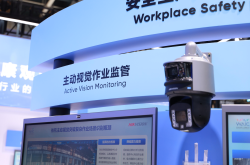
Is a Camera the New AI Safety Guardian? Hikvision Introduces Active Vision Operation Monitoring Gun-Ball Camera at WAIC 2026
-
The Second Half of AI: Cost-Effectiveness Takes Center Stage
-
![]()
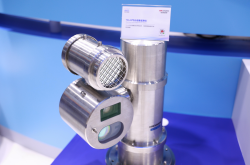
Location, Concentration, and Trajectory Tracking: Hikvision’s TDLAS Gas Cloud Imaging Telemetry System Debuts at WAIC 2026
-
The 'AI Study Tour' Under the Original Equipment Manufacturer Model is Set to Create a New Wave of Internet-Famous Science and Innovation Cities
-
![]()
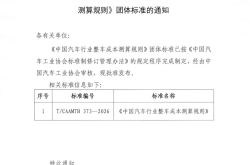
Now, There's a 'Basis' to Curb 'Price Wars': Future Reports of Automakers Setting Low Prices Will Be Probed Under New Rules
-
![]()
WAIC 2026: Farewell to Parameter Races, Full-Chain AI Commercialization