Apple AI Enters China, Entrusting Its 'Core' to Alibaba and Baidu
 07/20 2026
 469
469
Apple AI Makes Concessions to Enter China: Better Late Than Never
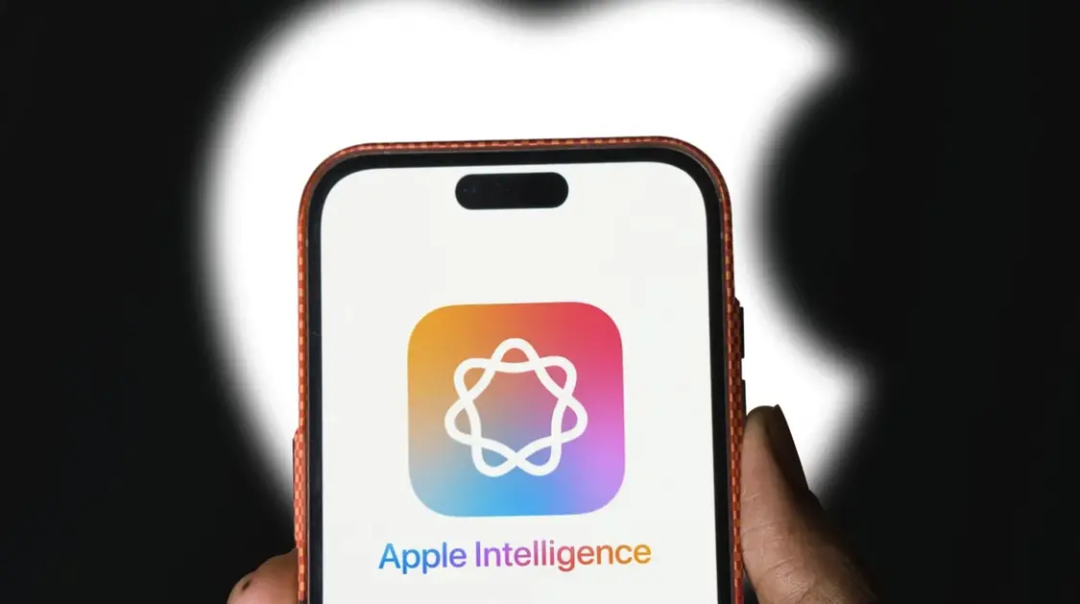
On July 15, the Cyberspace Administration of China announced that Apple Intelligence had completed the necessary filing for on-device generative AI services for mobile phones. This approval was part of a larger batch that also included Huawei, OPPO, vivo, Xiaomi, Samsung, and ZTE (Nubia-Doubao consortium), bringing the total number of approved terminal manufacturers to seven.
This development means that domestic users in China will soon have access to Apple Intelligence.
Surrendering the AI 'Core,' While Holding Onto the Hardware 'Shell'
Apple Intelligence made its debut at WWDC 2024, offering compatibility across Apple's full range of devices, including iPhone, iPad, and Mac. It employs a hybrid architecture that combines on-device small models with cloud-based large models, supporting a variety of functions such as text proofreading, image creation (Genmoji, Image Playground), natural language search, and cross-app interactions.
At this year's WWDC, Apple Intelligence received another significant upgrade with the introduction of Siri AI. This enhanced Siri boasts capabilities that include understanding personal context, operating apps, reading screen content, interpreting images, and answering knowledge-based questions. Moreover, it can read screen content and engage in interactions with applications.
Interestingly, Alibaba and Baidu quickly became trending topics on social media, with their stock prices soaring, eclipsing the attention given to the other six smartphone brands.
This surge in interest is attributed to the fact that the overseas version of Apple AI integrates ChatGPT and Gemini, which are not available in China.
According to confirmations from Alibaba and Baidu, the functions of the China version of Apple AI will be powered by QianWen and Wenxin, respectively. Reports also indicate a clear division of labor between the two, with QianWen taking the lead and handling approximately 65% of the tasks, while Baidu's Wenxin serves as a supplement, responsible for the remaining 35%.
Prior to this, Apple had engaged in discussions with domestic AI companies such as Baidu, DeepSeek, and ByteDance in early 2025. However, issues related to model adaptation and compliance requirements ultimately led to the selection of the Alibaba-Baidu partnership.
This move exemplifies Tim Cook's 'precision knife' strategy: making concessions on the model layer of the China version of Apple AI to secure a compliance window and maintain user experience continuity. At the same time, it avoids the risk of relying solely on a single model provider.
In my opinion, by entrusting Alibaba and Baidu with the service capabilities of the China version of Apple AI, Apple has effectively handed over its AI 'core.' In essence, Apple has ceded the underlying model capabilities of its AI to local partners to gain market access in China.
Over the past two years, domestic manufacturers like Huawei, ZTE, and Honor have iterated their on-device AI at a pace that has far exceeded industry expectations. Features such as meeting minutes, AI assistants, and system-level intelligent scheduling have transformed AI from a mere bonus feature into a fundamental user experience requirement.
For instance, the current trend of AI agent smartphones has given rise to two distinct approaches: Nubia's 'Doubao Phone' and StepFun's native AI phones. Both aim to redefine human-computer interaction logic in the AI era and seize hardware entry points.
If Apple continues to remain on the sidelines, it will face systemic risks, including the loss of high-end users and the marginalization of Apple OS (iOS, iPadOS, macOS, visionOS, etc.) by AIOS.
It's worth noting that in the minds of most Apple ecosystem users, Siri has become synonymous with 'artificial stupidity.' Once domestic users become accustomed to the native AI interactions of Chinese smartphones, the cost of switching back to Apple AI will become a significant brand liability.
By entrusting its AI 'core,' Apple is essentially cutting its losses. Rapidly integrating local leading model services not only addresses Apple AI's technical shortcomings and stabilizes its user base but also gives Apple a fighting chance in the battle for AI terminal entry points.
However, Cook remains firmly in control of Apple AI's 'shell,' with Siri remaining the sole system-level entry point into the Apple ecosystem. App invocation permissions, user data closed-loop management, and service distribution rules remain under Apple's strict control.
Alibaba and Baidu's model products are merely one link in Apple's vast supply chain, serving as 'engine suppliers' for Apple AI's local adaptation.
For Alibaba and Baidu, this is not just a simple technical supply deal. By integrating into Apple's top-tier hardware ecosystem, their AI capabilities are upgraded from ordinary AI application services to core system-level infrastructure for smartphones.
This represents a strategic breakthrough that is difficult to achieve through consumer-end promotion alone, marking a crucial step for local large models to move from 'usable' to 'certified by high-end ecosystems.'
As many commentators have noted, Alibaba and Baidu now have their own 'Doubao Phones,' thanks to Cook's strategic move.
Hardware Entry Points: Apple's Achilles' Heel
This is the boundary of Apple AI's compromise and Cook's middle-ground solution to the AI hardware challenge: the large model can be replaced, but the system interaction entry point must not be ceded. When the 'core' can be replaced, the truly scarce resource is no longer the model itself but the entry point and ecosystem that host it.
This is also why Apple is determined to block model providers from encroaching on hardware entry points, even if they are former allies.
Around the time of the China version of Apple AI's filing, Apple sued OpenAI and two former employees. These ex-employees joined OpenAI after leaving Apple and led hardware product development. They were accused of stealing unreleased product blueprints and component specifications for use in self-developed hardware.
Reports indicate that OpenAI is preparing over five AI hardware products, including pens, smart speakers, pendants, earphones, and smartphones.
OpenAI responded tepidly, stating, 'While we take these allegations seriously, we have not found any evidence to support the claims. We believe in fair competition and the freedom for people to choose where they work...'
Cook may not be able to 'strangle' OpenAI's hardware ambitions with a single lawsuit, but it can objectively delay OpenAI's hardware progress and even create obstacles for its IPO.
This reveals Apple's inherent contradiction: on one hand, it collaborates openly with model providers (OpenAI, Google, Alibaba, Baidu); on the other hand, it keeps partners in check.
This is Apple's most pragmatic compromise. Its own models lag behind overseas competitors like OpenAI and Google, as well as domestic AI firms like Alibaba and Baidu.
However, Apple's product ecosystem remains its strongest defense. Apple must defend its control over hardware entry points and neutralize potential threats before they emerge.
From OpenAI's perspective, its willingness to take legal risks to compete in the AI hardware market underscores the irreplaceability of smartphones as AI super entry points.
This is because human-computer interaction is shifting from 'people searching for apps' to 'AI orchestrating services,' with system-level AI becoming the new center for traffic distribution.
In this process, the value of smartphones as entry points will be reevaluated, transitioning from hardware carriers to service orchestration hubs. Without a hardware carrier, even the most powerful large models remain mere cloud interfaces, unable to become high-frequency interaction touchpoints for users.
The launch of the China version of Apple AI also sparks a new round of competition. The 'model-software-hardware' trifecta battle, spanning models, systems, and terminals, will be the focal point of the next phase. Smartphone brands, model providers, and internet giants will all participate, bridging the last mile for AI to transition from 'capable of thinking and speaking' to 'truly capable of getting things done.'
I also observe that the industry has divided into two camps. On one side are smartphone manufacturers embedding large models into their operating systems to create native agents, such as Apple, Huawei, Xiaomi, and Honor, which use 'hardware + system' barriers to defend entry points.
On the other side are model providers like StepFun and OpenAI, attempting to bypass smartphone manufacturers and seize entry points using AI-native hardware.
For Apple, entrusting its AI core to model providers like Alibaba and Baidu is a tactical retreat. Apple's future success hinges not on whether its 'core' is self-developed but on whether Apple OS can become the best intermediary layer connecting user intent with vast services.
As long as its entry point and ecosystem advantages remain, Apple's AI core can be replaced, iterated, and upgraded at any time. However, Apple's window for remedial action is narrowing. If it cannot keep pace with the industry, this delayed entry could ultimately lead to its exit.
Thus, Apple's 'curveball' entry into China through partnerships with Alibaba and Baidu marks the starting point of this breakthrough.
-
![]()
Some New Thoughts on ModelBest
-
![]()
After Three Attempts to List on the Hong Kong Stock Exchange, Has Yonyou Finally Broken Free from Its Painful Transition?
-
![]()
Qianwen Powers Apple’s AI: Alibaba Secures Its ‘Doubao Moment’ with iPhone Integration
-
![]()
JD Marches West, Pinduoduo Ventures East: The Clandestine Struggle for China’s Supply Chain Dominance
-
![]()
GAC Honda Secures 10-Year Contract Renewal: Debunks Merger Rumors, Unites for Market Breakthrough | Mirror Pro
-
![]()
Analysis of BBA Service Reputation Index in the First Half of 2026: Terminal Services Under Pressure
-
Observation of AI Business Models: From Token-Based Payment to Outcome-Based Payment
-
Observations on AI Business Models: From Token-Based Payment to Outcome-Based Payment