Alibaba Cloud’s All-Out Offensive in AI
 12/02 2025
 695
695

Written by Hao Xin
Edited by Wu Xianzhi
“We are the only full-stack AI cloud platform,” declared both Google and Alibaba almost simultaneously during their earnings calls.
Full-stack investment underscores a cloud provider's commitment to AI, vividly reflected in their aggressive capital expenditures.
Google projects its 2025 capital expenditures to reach between $91 billion and $93 billion, surpassing its earlier estimate of $85 billion, with plans for further increases.
Over the past twelve months, Alibaba's cumulative capital expenditures have exceeded 126 billion yuan, with a substantial portion allocated to cloud and AI initiatives. Wu Yongming has explicitly stated that AI-related investments will surpass 380 billion yuan over the next three years, with the potential for further expansion.
If Google and Alibaba can be classified as 'pioneers,' then Tencent represents a more cautious 'defender.'
While Tencent claims it 'will invest heavily in AI,' its capital expenditures have declined to 19.1 billion yuan and 13 billion yuan in the second and third quarters of this year, respectively, down from 36.6 billion yuan and 27.5 billion yuan in the fourth quarter of last year and the first quarter of this year.
The contrasting approaches to capital allocation are stark. Tencent's defensive posture stems from the stability of its core businesses in gaming and WeChat, with its social media moat remaining formidable in the short term. In contrast, Google and Alibaba's aggressive moves are driven by external volatility and competitive pressures in search, advertising, e-commerce, and other sectors.
Alibaba's dual-front strategy is particularly noteworthy. On one front, it competes fiercely with Meituan and JD.com in the instant retail sector. On the other, it faces off against ByteDance's Volcano Engine, Baidu Intelligent Cloud, and large model unicorns in the cloud and AI arenas.
As its B2B and B2C strategies gradually take shape, Alibaba confronts a recurring core question: How should pioneers navigate the AI battle?
Insufficient Supply
The financial reports and earnings calls for the second quarter of Alibaba Cloud's 2026 fiscal year primarily revolved around one theme: supply and demand.
From the demand side, customer needs remain robust. Alibaba Cloud's AI servers and deployment infrastructure are severely lagging behind the growth rate of customer orders, resulting in a backlog that continues to expand.
This trend is also evident in Google's Q3 financial report, where the total cloud order reserve reached $155 billion, up 46% quarter-over-quarter and 82% year-over-year, primarily driven by strong enterprise demand for AI. Order growth serves as a barometer for cloud providers; as long as a certain level of net growth is maintained, overall cloud revenue can continue to rise.
The latest quarter for Alibaba Cloud's financial report ended on September 30, 2025, roughly aligning with the explosive growth demand fueled by DeepSeek in the industry.
We observe that many companies have hastily deployed DeepSeek or various vendor large models in a trend-following manner, only to struggle with maximizing their performance subsequently. This indicates that market demand is shifting from initial infrastructure construction to the backend of the value chain, encompassing model fine-tuning, application development, and value realization.
Despite intense competition among cloud providers, the overall market remains in a state of 'supply falling short of demand.' Based on this, Wu Yongming made three assessments: the capabilities of foundational models and full-modal models are continuously improving, 'the overall trend of the Scaling Law has not yet plateaued, and the industry has not yet reached its ceiling.'
Over the next three years, AI demand will remain highly certain, with overall AI resources still in short supply. This is because every link in the AI server supply chain is experiencing shortages, all driven by increased AI demand. The expansion cycles for manufacturers across various aspects of the supply chain will make it difficult to achieve rapid improvements in supply to meet demand growth within the next two to three years.
Major U.S. cloud providers and Alibaba Cloud, among others, are not only fully utilizing their new GPUs but also their previous generation or even GPUs from three to five years ago. Therefore, we believe that the so-called 'AI bubble' is unlikely to materialize within the next three years.
Against this backdrop of strong industry demand, Alibaba Cloud's financial performance naturally shines. The report shows Alibaba Cloud's revenue at 39.824 billion yuan, up 34% year-over-year, marking the fourth consecutive quarter of over 10% year-over-year growth. Despite high investments, Alibaba Cloud's profit margins have also seen a slight recovery in the past two quarters.
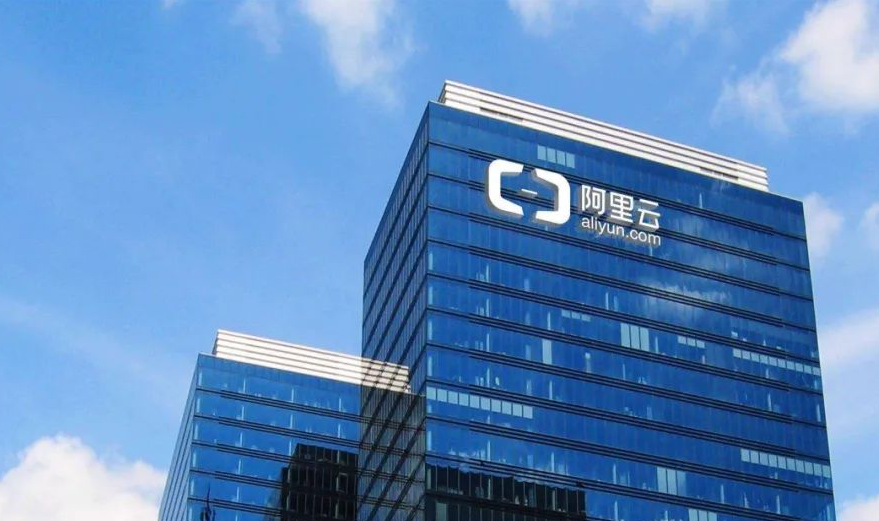
Alibaba Cloud's external commercial revenue accelerated to 29% growth. AI-related product revenue achieved triple-digit year-over-year growth for the ninth consecutive quarter. Market share improved across multiple segments, with hybrid cloud growth exceeding 20%.
Notably, Alibaba Cloud's total revenue, including internal revenue, grew 34% year-over-year, while revenue excluding internal revenue grew 29% year-over-year, a difference of 5%. This implies that the primary driver of Alibaba Cloud's revenue growth at this stage is still internal AI transformation.
Considering that this quarter falls outside major e-commerce promotional periods, the 34% year-over-year growth is quite significant, also indicating the breadth and depth of Alibaba's internal AI adoption. Based on the concurrent timeline, much of this growth likely stems from e-commerce search and recommendation transformations and Alimama's AI marketing business consumption, with these demands set to be released in the next quarter.
The Counterattack of AI Pioneers
For a long time, Google has been chasing OpenAI and Anthropic, with cloud providers frequently facing setbacks and being written off. However, Gemini 3 may mark a new starting point. Sam Altman mentioned in an internal OpenAI memo that 'Google's model progress this time is mainly due to solid pre-training.'
Behind 'solid pre-training' lies the issue of compute utilization efficiency, a long-standing advantage of established players like Google and Alibaba Cloud. They achieve exponential increases in compute scale through the efficiency of self-developed TPU clusters and full-stack architectures.
This is why Google, Alibaba, and other providers place such importance on full-stack capabilities at this juncture. While AI model startups can continue to make breakthroughs in single areas like agents, coding, and reasoning, such overall resource optimization breakthroughs still fall within the comfort zone of cloud providers.
Alibaba Cloud believes that as AI applications mature, customers are more inclined to choose cloud providers with full-stack technical capabilities. This has also triggered a ripple effect, with increased depth and breadth of AI usage driving demand for traditional cloud products like computing, storage, and databases. This validates early assessments that cloud providers cannot profit solely from large models and must ultimately rely on infrastructure.
Google understands this well and is using models as a showcase of its 'strength' to further promote related products and services. Recently, Google has even ventured into NVIDIA's 'sensitive territory'—TPUs. Google hopes to capture NVIDIA's customers with lower rental prices, potentially generating billions of dollars in annual revenue. This move also represents the ecological niche dividends brought by full-stack infrastructure construction, which will further enhance the profitability of cloud computing revenue in the future.
Joe Tsai also stated, 'Americans judge who is winning the AI race mainly by large model performance, but Alibaba looks at the entire stack, focusing on whose AI is affordable, widely used, and sustainable.'
If AI adoption rate is one of Alibaba's criteria for its large models, then an open-source and B2C strategy is imperative.
Open-sourcing large models serves as the bait to attract customers. 'Open-source models give customers higher data control, allowing them to use either private clouds or Alibaba Cloud, but ultimately, running the model requires infrastructure.'
One notable development is that Singapore's National AI Program (AISG) selected Alibaba's Qwen architecture for its important SEA-LION project, replacing Meta's previous Llama model. Meta's internal turmoil and wavering commitment to open source indirectly provided Qwen with an opportunity to surpass.
AISG's proactive shift to Qwen is a significant signal, indicating that Chinese open-source models like Qwen have transitioned from 'followers' to viable 'options' based on their strong technical capabilities.
As more critical projects and national-level initiatives are built on Qwen, it establishes an irreplaceable position in the global open-source ecosystem, naturally gaining stronger discourse power and the ability to set industry standards in the future.
The Buried Plot
Whether driven by assessments of demand-side trends or optimistic expectations for future technologies, Alibaba's decision to continue saturated investments has become inevitable.
The short-term fluctuating impacts are already evident. Alibaba's operating profit for the entire second quarter was 5.36 billion yuan, down 85% year-over-year; net profit was 64.1 billion yuan, down 7% year-over-year; and single-quarter net profit was 20.6 billion yuan, down 53% year-over-year.
Free cash flow turned negative at 21.8 billion yuan, compared to 13.7 billion yuan in the same period last year. The decline in free cash flow is primarily attributable to increased capital expenditures on instant retail investments and cloud infrastructure construction.
For Alibaba, simultaneously investing heavily in instant retail and cloud infrastructure presents significant pressure. This 'dual-front operation' essentially defends its core territories on two critical fronts while seeking new growth curves for the next decade.
Alibaba's challenge lies in balancing 'bleeding investments' with 'market confidence.' It must clearly demonstrate to the outside world that these investments not only translate into visible, scalable commercial returns but also build moats for the AI era. The key to this path depends on whether Alibaba can successfully convert the infrastructure and market share acquired through 'money-burning' into sustainable, cash-flow-generating machines.
Within less than a month, we have witnessed Alibaba's unified operational capabilities. Describing this capability as 'formidable' is no exaggeration. Qwen, rebranded as a standalone app, surpassed 10 million downloads within a week of its public beta launch. Quark paved the way, extending from the app to AI browsers and smart glasses, all aiming to push Qwen to the forefront and gain greater exposure.

However, the command headquarters' unified leadership approach has its pros and cons. The advantage lies in its unparalleled penetrating power in major strategic directions.
Under a clear top-level directive, Alibaba's internal business lines, such as Quark, Gaode, and Alipay, can swiftly unite, focusing their vast resources and traffic like an awl on a single point—promoting Qwen. This avoids internal game theory and resource dissipation, creating an astonishing momentum for Qwen in the shortest time possible. For a latecomer needing to quickly seize market recognition and face fierce competition, this 'pressure-intensive' approach may be effective.
On the other hand, we have also seen that AI innovation is unpredictable and subject to constant overhaul. OpenAI's chatbot innovation originated from a breakthrough by a small team. The command headquarters model inherently relies on top-level strategic vision and decision-making efficiency. Once the strategic direction needs adjustment or insight into niche markets is insufficient, it may encounter difficulties in changing course.
Striking a dynamic balance between 'unified will' and 'decentralized vitality' is a common challenge for all pioneers, including Google, Alibaba, and ByteDance.
Whoever can simultaneously possess decisiveness and creativity will win the present and seize the next disruptive opportunity in this race for the future.
-
Who Can Challenge SpaceX: Global Commercial Rockets Enter a New Phase of Differentiation
-
![]()
Could BYD Achieve the Title of 'World's Largest Automaker' by 2030?
-
![]()
Tencent Backs Another Robot IPO Despite Over 1 Billion Yuan in Cumulative Losses
-
![]()
AI Leads the Way, Cars Follow Suit: How AIVA's Visionary Slogan Unlocks New Horizons
-
![]()
Final Verdict: 2026 China Automotive Chongqing Forum Takes a High-End Stance and Highlights Core Issues
-
![]()
DingTalk Leadership Overhaul: Wu Zhao's 'Triumphs and Trials,' Chen Yusen's 'Challenge'
-
Challenges Loom for Amazon and Meta's Free Cash Flow: Is There an AI Bubble?
-
![]()
With Zhang Xiaolong Leading the Charge, Can WeChat’s AI Agent Secure Another Win?