Large Models Spark Revolution in AI Glasses Market: Should Manufacturers Focus on Software or Hardware?
 03/13 2026
 496
496
The integration of large models with hardware has emerged as a pivotal trend in the XR sector.
On March 2, Qianwen unveiled its inaugural AI hardware product, the 'Qianwen AI Glasses,' with sales commencing on March 8. The product's standout feature is the integration of Tongyi Qianwen's advanced large model capabilities.
Recently, Apple and Google forged a significant AI partnership, deeply embedding Google's Gemini large model into Apple's ecosystem and hardware devices. Google AI glasses, enhanced with the Gemini large model, showcased their formidable capabilities in a video released yesterday.
In 2025, Meta and EssilorLuxottica, the parent company of Ray-Ban, jointly launched AI smart glasses that sold over 7 million units, tripling the cumulative sales from 2023 to 2024. Meanwhile, ByteDance, a leading domestic large model developer, is also planning to enter the smart glasses market.
As large model companies increasingly collaborate with hardware manufacturers, the smart glasses sector—previously stagnant—now stands at a crossroads of industry transformation.
However, many manufacturers are grappling with a key question: In this AI-driven industrial restructuring, should they prioritize software or hardware?
01 Why Have Large Models Ignited a Stagnant Sector?
The widespread adoption of large models has fundamentally reshaped the product logic and industry ecosystem of smart glasses, propelling the sector from a feature phone-like stage directly into the smartphone era.
Historically, the product positioning of consumer-grade smart glasses has been ambiguous.
A senior hardware industry expert noted, 'Most products focus on core selling points such as optical display, weight, and battery life, with functions limited to screen projection, photo-taking, and basic voice commands. They resemble mere phone accessories, failing to create irreplaceable user value.'
He further pointed out that users must actively adapt to the product's functions, performing predefined operations in specific scenarios, making it challenging to maintain user engagement.
Before 2024, the monthly active user rate for domestic consumer-grade smart glasses consistently remained below 30%, with most products lying idle within a month of purchase.
The advent of large models and their enhanced reasoning capabilities has transformed this landscape, driving XR glasses into large-scale development.
Specifically, large models have reconstructed the interaction logic of smart glasses, shifting from a 'user-seeks-function' model to a 'function-finds-user' natural interaction. Users can now accomplish complex tasks through natural language, such as real-time multilingual translation during face-to-face conversations, content recording and key point extraction in meetings, scene recognition and route planning during outdoor travel, and even real-time knowledge explanations based on the current view.
This interaction upgrade has transformed smart glasses from passive display tools into proactive intelligent assistants, truly achieving the core value of hands-free, all-scenario companionship.
This shift has prompted traditional hardware ecosystem players to pivot collectively. Particularly, smartphone manufacturers, consumer electronics firms, and optical supply chain enterprises are attempting to redefine their products with AI, a trend often referred to as 'XX+AI' in the industry. As the widely recognized next-generation mobile internet entry-level hardware, smart glasses have naturally become the core battleground for this AI-driven restructuring.
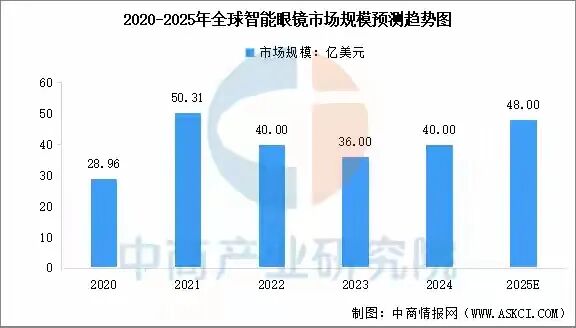
According to some institutions, the global smart glasses market is expected to reach $4.8 billion in 2025. IDC's 'Quarterly Global Smart Glasses Market Tracker' reports that China's smart glasses market shipments are projected to reach 2.846 million units in 2025, a year-on-year increase of 116.4%. Among them, audio and audio-recording glasses shipments are expected to reach 2.202 million units, up 183.2% year-on-year; AR/VR device shipments are projected at 644,000 units, up 19.8% year-on-year.
Another significant force in the market comes from the alliance of investors and entrepreneurs. Additionally, the influx of policies and capital has further accelerated the integration of large models and smart glasses, shifting the industry's competitive focus from hardware parameter competition to a battle of integrated hardware-software capabilities.
The core of this transformation lies in a fundamental shift in the value proposition of smart glasses: Previously, the core competitiveness centered on clear vision and lightweight design; now, it focuses more on understanding users, usability, and solving real-world problems.
02 Lowered Hardware Barriers, Software Pursues Differentiation
This shift in value proposition has directly disrupted the industry's competitive logic, setting the stage for upcoming changes in the industry landscape.
As large model integration becomes an industry standard, the hardware barriers for smart glasses are rapidly diminishing, with software capabilities emerging as the core battleground for differentiation. Meanwhile, the upper limits of software capabilities remain inseparable from hardware foundation support.
First, consider the lowering of hardware barriers, primarily driven by the full maturity of the supply chain.
At the optical solution level, leading domestic supply chain enterprises have achieved mass production of BirdBath and array waveguide modules, with core technological breakthroughs driving continuous cost reductions. By 2025, waveguide solution costs have dropped by over 40% year-on-year.
According to Counterpoint Research's supply chain report, the bill of materials (BOM) cost for entry-level AR smart glasses in 2025 has decreased by 42% compared to 2023. High-end AR glasses, once priced at tens of thousands of yuan, now cost under 3,000 yuan for similarly configured products, with some manufacturers offering entry-level models below 1,000 yuan.
At the computing chip level, Qualcomm's Snapdragon AR series chips have undergone multiple iterations, while domestic firms like Unisoc and Horizon Robotics have also launched chips specifically designed for AR glasses. Small and medium-sized manufacturers can now access mature, stable computing solutions without heavy R&D investments.
Supply chain maturity has also directly led to hardware parameter homogenization.
Currently, mainstream consumer-grade smart glasses on the market show no significant differences in core hardware parameters like weight, display clarity, battery life, and basic computing power.
For products in the same price range, hardware configurations are nearly identical, making it difficult to attract users or build long-term competitive barriers based solely on hardware parameters.
Against this industry backdrop, software has become the core link connecting users and services, as well as the key to unlocking user data and achieving differentiation. Unique software features, such as multi-model switching, intelligent agent customization, and deep vertical scenario adaptation, can serve as core differentiators, helping manufacturers stand out in a homogenized market.
In the second half of 2025, Meta captured an 82% share of the global smart glasses market, driven primarily by the Ray-Ban Meta smart glasses—a benchmark product in this wave of AI smart glasses.
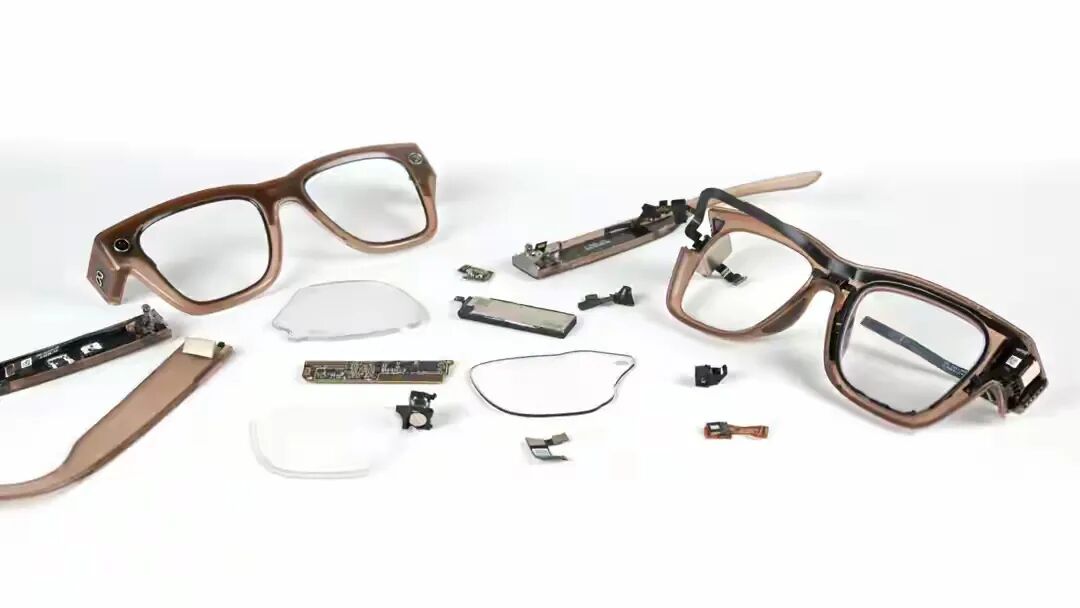
Why is this a successful product? It integrates Meta AI, enabling the glasses to support the Meta AI assistant function, which can be activated by saying 'Hey Meta.'
Although its hardware parameters are not industry-leading—weighing just 48.6 grams, comparable to ordinary sunglasses—its core advantage lies in its software system deeply bound to Meta's self-developed Llama large model.
According to reports, the latest Llama 4 features native multimodal capabilities with over 400 billion parameters, rivaling the performance of GPT-4 and Gemini Pro.
Based on this system, the product achieves full-scenario natural voice interaction. For example, while walking and wearing the glasses, users can simply ask about a streetside restaurant to receive information like store ratings, recommended dishes, and wait times.
As a result, the Ray-Ban Meta smart glasses quickly became a hit, with sales reaching an astonishing 2 million units in 2024, making it the undisputed sales champion.
Domestic leading manufacturers are also attempting to achieve rapid market share breakthroughs through software differentiation.
The Qianwen AI Glasses, launched on March 2, debut with two series—S1 and G1—powered by the latest Qianwen large model. They support high-precision multimodal understanding, real-time interaction, high-definition photography, AI translation, meeting recording, image and object recognition, and other core life and office scenarios. The Qianwen AI Glasses G1 also introduces a 'sunglasses' variant for the first time.
Notably, the Qianwen AI Glasses will fully integrate with the Qianwen APP, gradually introducing functionalities like food ordering, hotel booking, and ride-hailing, with the first batch of features expected to be available to users by late March.
Similarly, according to IT Home and KEDaily, industry insiders close to Rokid reveal that Rokid is collaborating with a 'leading domestic large model company' to develop a dedicated on-device multimodal model. Its next-generation AI glasses will focus on a new operating system and UI driven by generative AI and AI Agents.
Currently, Rokid glasses sell approximately 1,200 units daily, split evenly between online and offline channels.
Coincidentally, previous reports indicate that Rokid AI glasses deeply integrate multiple AI large models, including DeepSeek, Tongyi Qianwen, Doubao, and Zhipu, while establishing ecological partnerships with domestic players like Gaode Maps, Alipay, and JD Technology. Overseas, Rokid Glasses has collaborated with international giants like Google Maps and Microsoft Translator.
It is important to clarify that the implementation and experience of software functions remain constrained by hardware computing power, sensor configurations, and other foundational conditions.
Frankly, if AI hardware cannot meet the operational demands of software, even the richest software features will fail to deliver a satisfactory user experience.
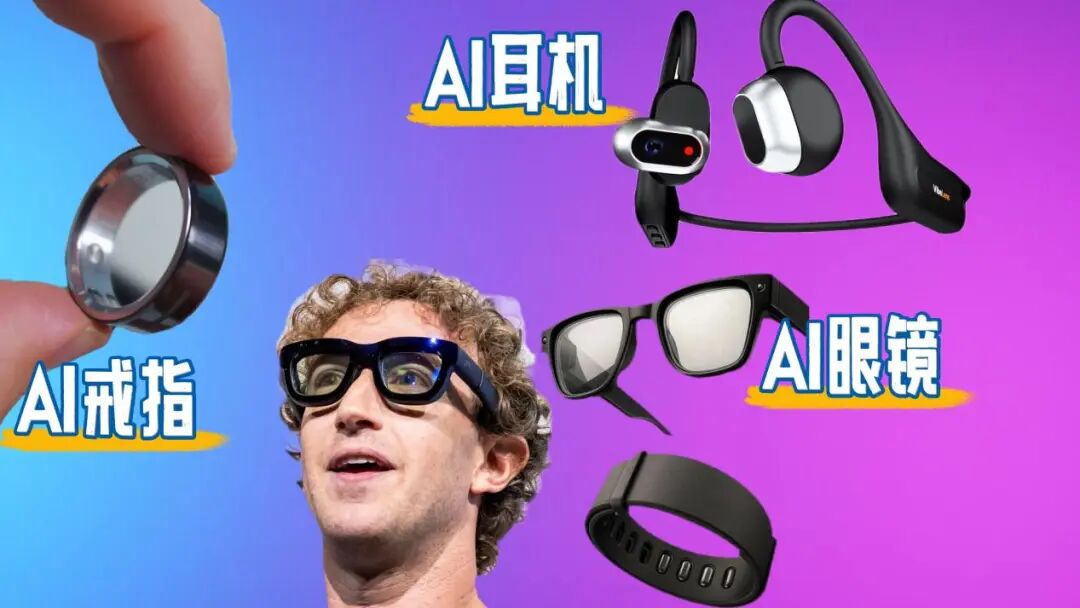
03 Smart Glasses Manufacturers Must Make Dynamic Balancing Choices
Without a qualified hardware foundation, even the most exceptional software functions lack implementation space; without differentiated software capabilities, even top-tier hardware configurations fail to create long-term user loyalty or competitive barriers. This is the industry reality all smart glasses manufacturers must confront.
In short: Hardware determines the minimum user experience threshold, while software defines the maximum product value.
For smart glasses manufacturers, the future does not lie in choosing between software and hardware but in building a closed-loop ecosystem that integrates both, achieving deep synergy between hardware and software, and finding their unique balancing act amid dynamically changing industry cycles.
Betting solely on hardware easily leads to a parameter arms race. With a highly mature supply chain, any hardware breakthrough can be quickly replicated by competitors.
In other words, if you achieve a 28g weight today, competitors can launch a 25g product next month; if you offer 1080P display clarity, competitors will soon match it. Relying solely on hardware makes it difficult to build a long-term moat, ultimately trapping manufacturers in a price war that erodes industry profits.
However, betting solely on software risks strategic bottlenecks. Without proprietary hardware, software implementation remains dependent on third-party devices, leading to high adaptation costs, limited optimization potential, and subpar user experiences.
Without core large model capabilities, merely integrating third-party models leaves manufacturers vulnerable. If cooperation ends or terms change, core product functions could be directly impacted, leaving no room for negotiation.
The development trajectories of many past smart hardware manufacturers prove that without proprietary hardware and core technologies, relying solely on software applications makes it difficult to sustain a presence in the consumer electronics sector.
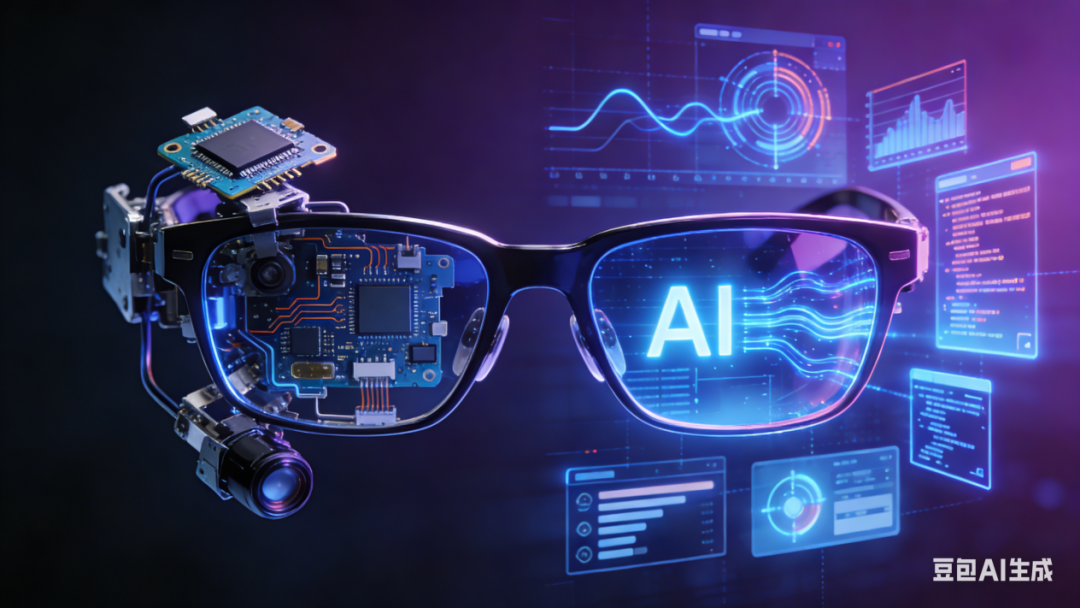
Therefore, what truly enables manufacturers to thrive in industry competition is a closed-loop ecosystem that integrates hardware and software, achieving deep synergy between the two. This synergy centers on building a virtuous cycle of hardware-data-software-experience.
Hardware serves as the data entry point, collecting user behavior, scenario characteristics, and preference data through sensors, cameras, and other devices. This data optimizes software algorithms, aligning AI models more closely with user habits and ensuring software functions better meet real needs. Improved software experiences attract more users and higher engagement, generating even more user data.
This data, in turn, guides hardware iteration. For example, based on high-frequency usage scenarios, manufacturers can optimize sensor configurations, adjust weight distribution, and eliminate rarely used functions, further enhancing core experiences while controlling costs.
In the AI-driven transformation of the consumer electronics industry, there are no permanent sector dividends—only eternal user value.
Written by R Star
(All uncredited images sourced from the internet)
-
![]()
Hardware is the skeleton, AI is the soul, and data integrates the two
-
![]()
China’s AI Industry: A Unified Pivot Towards Monetization?
-
![]()
New Progress! Infineon Completes Acquisition of ams OSRAM's Non-Optical Sensor Business
-
![]()
35 Million Bet on an Optical Future! Tengjing Technology Makes a Move in AR
-
![]()
Why World Models Get Stuck on Construction Roads in Autonomous Driving Applications
-
Alibaba Initiates Cultural Transformation: Is Jack Ma Making a Strategic Comeback?
-
Tianfeng Heads to Hong Kong for IPO with RMB 3.8 Billion in Funds: Xingyu's Cross-Border Foray into Embodied AI Faces Uncertain Future
-
![]()
Mengshi Auto’s High-End Aspirations Dashed: Huawei Partnership Fails to Revive Sales, New Model’s Entry Price Dips Below 300,000 Yuan