Zhou Yuefeng Assumes Role as CEO of Huawei Cloud: What Transformative Changes Await?
 12/05 2025
 763
763
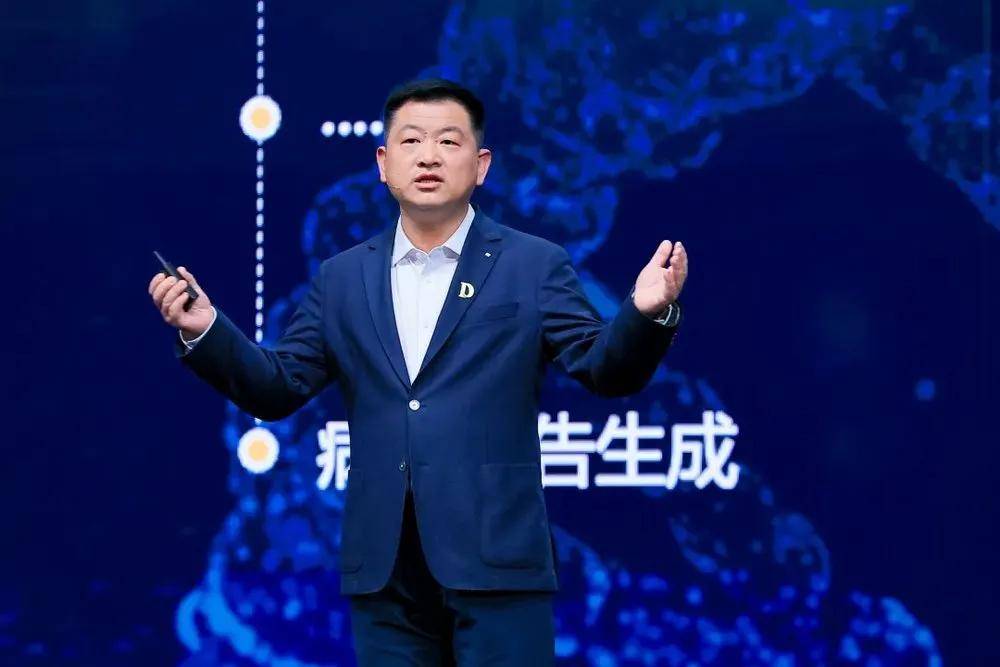
The cloud computing landscape is undergoing a profound transformation driven by AI.
As industry applications transition from the 'pilot verification' phase to 'large-scale deployment,' the demand for computing power has witnessed an exponential surge. Cloud computing is evolving from being 'resource-centric' to 'scenario-centric.' The focus has shifted from merely 'competing on resource scale' to delivering tangible industrial value.
At a pivotal moment as the industry delves deeper into this transformation, Huawei Cloud has announced a significant organizational reshuffle: Zhou Yuefeng, previously President of Huawei's Data Storage Product Line, has been appointed as the CEO of Huawei Cloud. The R&D division of Huawei Cloud has been restructured under the ICT organization, further solidifying Huawei Cloud's positioning as the 'fertile ground' for innovation.
Over the past week, discussions surrounding Huawei Cloud's organizational adjustments have intensified. One question that has captured widespread attention is: Why has Huawei Cloud entrusted the leadership reins to this tech-savvy visionary in the new industry cycle?
The answer lies in Zhou Yuefeng's remarkable track record of success.
01 Precision in Capturing Trends: Zhou Yuefeng, the Master of Turnarounds
Throughout his tenure at Huawei, Zhou Yuefeng has frequently emerged as a 'game-changer,' particularly in two instances where he was called upon during crises and achieved miraculous transformations, turning 'impossible' situations into 'industry benchmarks.'
The first instance was the 'resurrection' of wireless small cells.
Prior to 2013, small cells were considered a 'lukewarm' technology globally, characterized by high costs, ambiguous value propositions, and cautious attitudes from operators. The industry generally perceived them as having a 'limited future.'
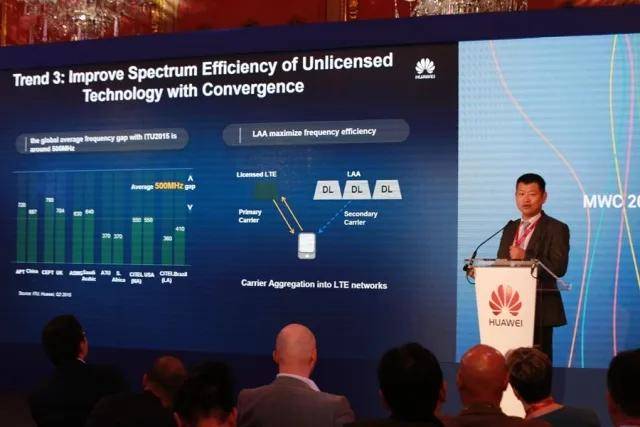
Zhou Yuefeng, then President of Huawei's Small Cell Product Line, accurately identified two subtle yet crucial signals: the exponential growth in mobile data traffic and the emergence of indoors as the primary battleground for mobile networks. From this, he deduced that a structural shift in indoor mobile network coverage was imminent.
Under Zhou Yuefeng's leadership, technological innovation and market expansion for wireless small cells flourished. The once-marginalized business gradually transformed into a growth engine for Huawei, establishing its leadership in 5G indoor coverage. The 'digital indoor coverage' concept proposed by Zhou Yuefeng became an industry standard in the mobile internet era, driving the global wireless network towards efficiency and intelligence.
From a business in need of rescue to a mainstream technological route in the industry, Zhou Yuefeng's approach was clear: dare to make strategic bets, invest boldly in technology, and possess strong product capabilities.
The second instance was the 'comeback' of data storage.
At that time, Huawei's storage business lacked a competitive edge. Domestic competition was fierce, and the overseas market was long dominated by foreign vendors. Breaking through this formidable challenge seemed daunting.
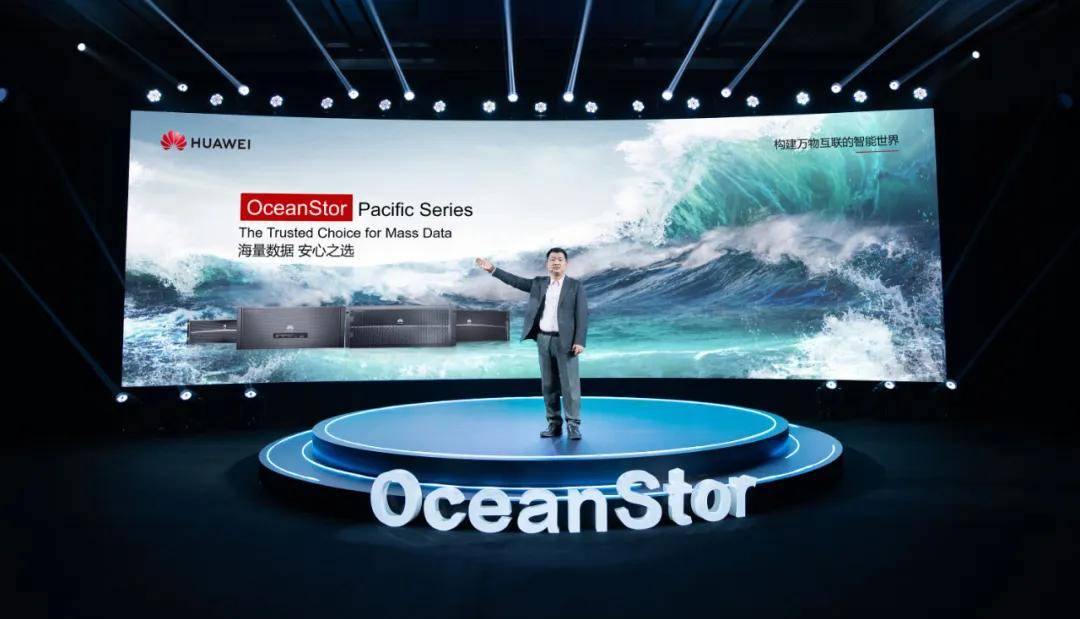
After being transferred to the IT department in 2019, Zhou Yuefeng took charge of the data storage business and made a series of pivotal decisions.
For instance, he spearheaded the launch of the OceanStor Pacific series storage system, fully embraced all-flash storage across all scenarios, and introduced the concept of 'data storage power.' Under the influence of 'data storage power,' the market's focus gradually shifted from hardware specifications to 'real data efficiency and value.'
Within just a few years, Huawei's data storage business achieved exponential growth, not only entering Gartner's Leaders Quadrant as the sole Chinese vendor in the global elite group but also maintaining overseas market growth rates exceeding 30% for multiple consecutive years, carving out a significant share from foreign vendors.
It is evident that Zhou Yuefeng is not a traditional 'management-oriented' leader but a tech-savvy individual with keen market insight, a belief in product excellence, and the ability to lead businesses to global leadership. These capabilities align perfectly with Huawei Cloud's emphasis on 'system-level innovation + industrial-level implementation,' forming the trust basis for leading Huawei Cloud through tough battles.
Of course, Zhou Yuefeng's contributions in the AI technology field are also noteworthy. In 2025 alone, he presided over the release of two key AI technologies:
One is UCM (Unified Computing Memory), which reduces the first-token latency of AI inference by 90% and increases system throughput by 22 times through multi-level caching technology.
The other is Flex:ai container technology, which enhances GPU/NPU computing power utilization by 30% through intelligent scheduling, directly reducing enterprise AI application costs and promoting 'AI democratization.'
As industries embrace intelligence and AI moves beyond the 'toy stage' into production processes, Zhou Yuefeng, who has repeatedly driven exponential growth in key businesses and possesses both strategic and technological acumen, naturally becomes the ideal helmsman for Huawei Cloud in the AI era.
02 The Most Tech-Savvy CEO: What Will Zhou Yuefeng Bring to Huawei Cloud?
Having established the fit between Zhou Yuefeng's personal capabilities and Huawei Cloud, the question arises: How will this CEO with a distinct tech label shape Huawei Cloud's future path?
At the Huawei Cloud China Sales Partner Policy Announcement held in Dongguan on November 29, Zhou Yuefeng appeared on stage as both 'CEO of Huawei Cloud' and 'Director of the Cloud Business Product Line Management Committee,' unveiling Huawei Cloud's new strategic directions to the outside world.
The main ideas can be encapsulated in three sentences:
First, cultivate a more fertile 'fertile ground.'
Second, adopt a more open and pragmatic attitude to foster a thriving ecosystem on the fertile ground.
Third, recognize cloud business as a key strategic pillar for Huawei's future development.
Huawei Cloud's positioning and focus are already clear, but the crucial question at this stage is how to implement these strategic directions?
Currently, two approaches are evident:
One is to integrate the R&D system and build system-level combat capabilities for the AI era.
The core of Huawei Cloud's organizational transformation lies in 'system upgrade.' The R&D organization is fully integrated into ICT, and five cloud R&D product lines have been established in areas such as infrastructure cloud services, Data&AI cloud services, database cloud services, security cloud services, and HCS.
Essentially, it's about achieving 'system-level innovation' through software-hardware synergy, incorporating technologies like networking, communications, computing, storage, and operating systems into a cohesive system engineering.
The reasons are not hard to fathom.
The digital foundation of the AI era is no longer a competition of individual components but an efficiency battle of chain collaboration, involving computing power utilization, data access speed, inference latency, training throughput, energy consumption costs, and more. Given Zhou Yuefeng's experience in software-hardware integration in wireless and storage businesses, it implies that Huawei Cloud will accelerate the construction of system-level combat capabilities suitable for the AI era.
The second approach is to emphasize product competitiveness and focus strategic resources rather than 'spreading them thin.'
In addition to his role as CEO of Huawei Cloud, Zhou Yuefeng will concurrently manage five major product lines. Huawei Cloud and the product lines will adopt a 'buyer-seller relationship,' where only competitive products can enter Huawei Cloud to create value for customers and partners, ensuring strategic resource focus.
Zhou Yuefeng has publicly stated: The core issue to address in clarifying productivity and production relations is product competitiveness. Products developed by the product lines must pass the acceptance test of the Huawei Cloud BU business department before being launched to the market, ensuring that limited sales and service resources are allocated to competitive products.
Zhou Yuefeng also has a clear strategy for R&D management.
On one hand, he focuses on frontier sectors, concentrating on experimental products with high requirements, such as embodied intelligence and large models, to innovate and seize technological opportunities. On the other hand, he concentrates resources on breaking through core products with the potential for large-scale replication, solidifying the foundation for growth. Meanwhile, Huawei Cloud will adopt a more open and pragmatic attitude to foster a thriving ecosystem on the fertile ground.
At the partner policy announcement, Zhou Yuefeng stated that Huawei Cloud welcomes more capable PaaS and SaaS development teams and service providers to collaborate. If Huawei cannot create a differentiated advantage of 'unique when others don't have it, superior when others do,' it may abandon the self-developed model and adopt an open stance to efficiently fill gaps.
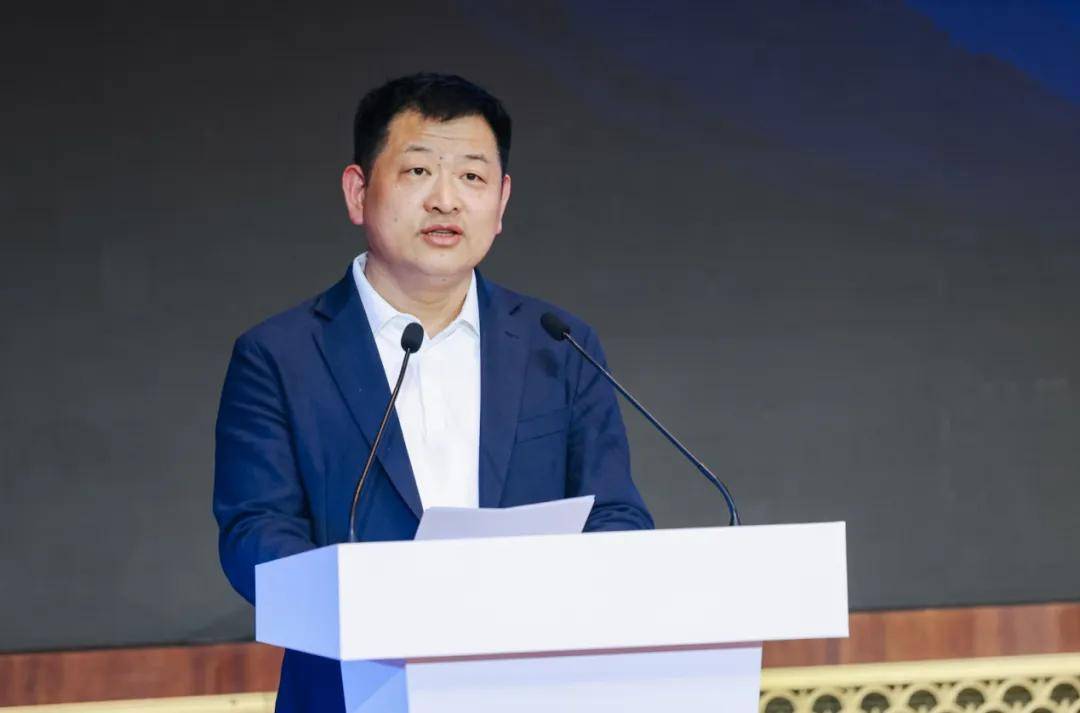
From an industry trend perspective, AI development is still in its early stages, and the window of opportunity is far from closed. Huawei Cloud's strategic core remains technological breakthroughs, and the high hopes placed on Zhou Yuefeng are still for him to 'fight tough battles' while being more open and pragmatic in the ecosystem.
Making a bold prediction, Huawei Cloud under Zhou Yuefeng's leadership may break through along three main lines:
1. Continue to strengthen the public cloud main track. Monetize Huawei's long-term accumulated software and hardware innovation capabilities on a service-oriented and large-scale basis. This not only solidifies the foundation of the 'fertile ground' but also serves as a moat for Huawei Cloud to build differentiated competitiveness.
2. Firmly position AI as the core growth engine. Whether it's continuously refining the Pangu foundation model, building an AI Agent system, or creating an AI data platform for all scenarios, the essence is to industrialize and productize complex technologies, driving AI to truly succeed in the industry.
3. Leverage the structural advantages of the R&D system. Continuing the approach of 'penetrating the market with products' from businesses like Small Cell and data storage, Huawei Cloud will drive its transformation from a 'follower' to a 'definer' by creating a series of benchmark products with cutting-edge attributes.
03 Conclusion
More answers will unfold over time.
As AI fully enters the industrial deep waters, what industry dividends will Huawei Cloud's 'system-level innovation' release?
Can Zhou Yuefeng drive Huawei Cloud to achieve exponential growth in the AI era?
What is certain is that the opportunities presented by the AI wave for cloud vendors far outweigh the challenges.
Amidst the multiple resonances of technological, commercial, demand, and capital cycles, cloud computing is embarking on its second growth curve. Zhou Yuefeng's appointment coincides with this cyclical intersection—a strategic relay in sync with the cycle and a key breakthrough to seize the window of opportunity.
-
Who Can Challenge SpaceX: Global Commercial Rockets Enter a New Phase of Differentiation
-
![]()
Could BYD Achieve the Title of 'World's Largest Automaker' by 2030?
-
![]()
Tencent Backs Another Robot IPO Despite Over 1 Billion Yuan in Cumulative Losses
-
![]()
AI Leads the Way, Cars Follow Suit: How AIVA's Visionary Slogan Unlocks New Horizons
-
![]()
Final Verdict: 2026 China Automotive Chongqing Forum Takes a High-End Stance and Highlights Core Issues
-
![]()
DingTalk Leadership Overhaul: Wu Zhao's 'Triumphs and Trials,' Chen Yusen's 'Challenge'
-
Challenges Loom for Amazon and Meta's Free Cash Flow: Is There an AI Bubble?
-
![]()
With Zhang Xiaolong Leading the Charge, Can WeChat’s AI Agent Secure Another Win?