Kodak Fell, but Fujifilm Staged a Miraculous Transformation of 'Rising from the Ashes'
 03/13 2026
 729
729
Introduction: Over two decades, Fujifilm evolved from a film-selling company into a technology conglomerate spanning medical, semiconductor, and cosmetic sectors.

Wang Jian/Author Lishicommercial Review/Producer
In January 2012, traditional film giant Kodak filed for bankruptcy due to the impact of digital cameras. Its market value plummeted from a peak of $31 billion to $175 million, evaporating by over 99%.
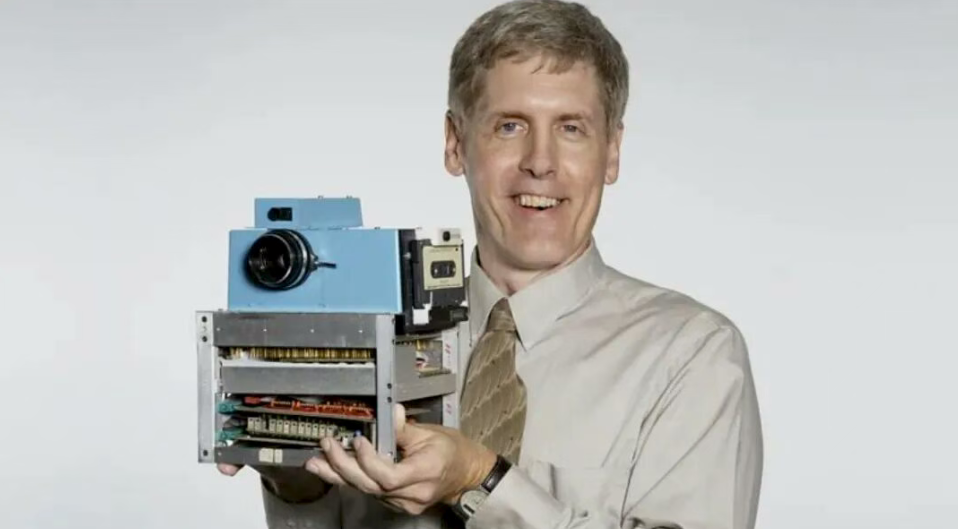
Ironically, the world's first digital camera was invented by a Kodak engineer in 1975.
In other words, Kodak itself forged the weapon that could overthrow its own empire but ultimately exited with regret due to its inability to break free from past success and lack of resolve for self-revolution.
However, amid the same industry apocalypse, another film giant—Fujifilm—not only survived but successfully transformed into a Fortune Global 500 enterprise with annual sales nearing $20 billion.
Today, its business spans medical, cosmetics, high-performance materials, and semiconductors, becoming a leader in numerous fields.
Why did one company end while the other achieved rebirth amid the same era and impact (same impact)?
The answer lies hidden in that film roll nearly forgotten by time.
1
Twilight of an Empire
To understand Fujifilm's transformation, one must first grasp the depth of its predicament.
In 2000, film accounted for 60% of Fujifilm's total sales and two-thirds of its profits. This highly profitable, heavily fortified business was largely monopolized globally by Kodak and Fujifilm.
That same year, Fujifilm's sales reached $12.59 billion, entering the Fortune Global 500.
From this vantage point, the view was excellent.
Yet Fujifilm's then-president, Shigetaka Komori, remained vigilant despite the prosperity, sensing impending risks.

Komori's alertness dated back much earlier.
As early as the 1980s, when he was merely a department head, he sensed danger. Watching digital technology mature, he repeatedly submitted warning reports to senior management: the end of film was inevitable.
Unfortunately, no one listened seriously.
After all, it's hard for a company at its peak to accept that 'all this will disappear.'
By 2000, when Komori became president, the crisis loomed large.
He made a then-heretical decision: secretly establishing an internal project called the 'Second Development Room' ( Second Development Room だいにかいはつしつ).
This project had one mission: systematically dissect everything about Fujifilm's film.
The core goal wasn't to think about 'how else we can sell film' but to completely dismantle the film product and uncover the core technologies behind it.
The dissection results shocked the engineers.
They discovered that Fujifilm had accumulated an immense technological system over decades in film: precision chemical synthesis, nanomaterial coating, optical imaging algorithms, collagen processing...
These technologies were independent yet interconnected, each holding immense industrial value when isolated.
In other words, 'film' was merely a carrier; the true value lay in the underlying capabilities hidden behind it.
Komori later called this discovery 'Technological Lego'—each brick seemed unremarkable alone but could construct entirely different things when reassembled.
Of course, discovery was one thing; transformation demanded real sacrifices.
From 2000 to 2010, Fujifilm's film sales plummeted from ¥156 billion to ¥33 billion, while photo processing shrank from ¥89 billion to ¥33 billion.
This wasn't a slow decline but a rapid avalanche.
When the avalanche struck, Fujifilm's first move wasn't to embrace new opportunities but to stop the bleeding.
In 2006, Komori ordered a global restructuring of the film business: closing production lines, laying off employees, and withdrawing from unprofitable distributor operations.
This consolidation directly cut 5,000 jobs—one-third of the film division's workforce at the time.
Komori's words to employees were brutally cold: 'The company is bleeding. If we don't remove the necrotic tissue, everyone will die.'
Without stopping the bleeding, no transformation could follow. The sequence couldn't be reversed.
Meanwhile, Kodak chose to wait in place during the same avalanche, hoping the market would improve and that its brand influence would sustain it.
By the time Kodak realized transformation was necessary, it was too late.
Kodak ultimately laid off 47,000 workers, closed 13 factories, and incurred $3.8 billion in restructuring costs—nearly ten times Fujifilm's.
In 2004, Komori formally launched the 'VISION75' mid-term management plan covering 2000–2009, establishing three paths: structural reform, new growth strategies, and consolidated management.
This marked Fujifilm's first official declaration: 'We are no longer just a film company.'
So, what did it aim to become?
2
Film in the Skin
Let's ask a question: Why do photographs fade?
The answer lies in basic physics—ultraviolet light from sunlight destroys the chemical structure in photos, causing the film's colors to oxidize and decompose slowly.
Thus, for decades in the film era, Fujifilm studied how to prevent photos from fading, hoping vibrant colors could endure years longer.
They developed over 4,000 antioxidant compounds, building a sophisticated chemical protection system.
One day, engineers in the 'Second Development Room' suddenly realized: Doesn't human skin also 'fade'?
Biologically, the core mechanism of human skin aging is oxidation.
Free radicals erode collagen, cells gradually lose vitality, wrinkles appear, and dark spots form. This chemically resembles photo fading.
More critically, the gelatin used in Fujifilm's film was essentially hydrolyzed collagen. Coincidentally, 70% of human skin is also collagen.
In other words, what Fujifilm studied for decades shared deep chemical homology with human skin. This wasn't a forced analogy but genuine technological resonance.
Of course, discovering similarities was just the first step.
The real challenge: How could active ingredients in skincare penetrate the skin barrier to reach where needed?
This brought them back to another Fujifilm expertise—nanocoating technology.
This capability originated from film manufacturing's extreme demands: precisely and uniformly coating up to twenty layers of functional chemicals on an ultra-thin base, each layer requiring nanometer-level precision.
Applying this precision coating control to skincare enabled 'targeted penetration' technology for active ingredients.
Antioxidation, collagen, and nano-penetration—these three technologies led Fujifilm to a new direction: skincare.
Thus, in 2007, Fujifilm officially launched its skincare brand Astalift (Chinese name: ' Ashiti '), targeting the high-end anti-aging market.

This move seemed absurd at the time—a film company selling skincare?
Consumers were initially confused, and media reports were filled with mockery.
But the challenges went beyond public perception.
A deeper issue: Fujifilm's previous clients were all B2B—film distributors, photo labs, industrial enterprises.
It had never faced consumers directly, unsure how to build channels, tell brand stories, or convince ordinary women that 'skincare from this film company actually works.'
Moreover, technological success and commercial success are two different things.
Astalift launched in Japan in 2007 but only entered China in 2012—taking five full years to take this step. By consumer goods standards, this expansion was slow.
Yet it persevered.
With genuine technological backing, Astalift not only gained a foothold in Japan's competitive skincare market but also grew into a significant global anti-aging brand.
More importantly, Fujifilm didn't just focus on 'selling skincare.'
It transformed its cosmetic technology accumulations into upstream supply for the entire industry.
Today, Fujifilm is Japan's largest cosmetic ingredient manufacturer, with many Japanese skincare products relying on core ingredients from this 'film company.'
This transformation merits reflection.
Fujifilm didn't pursue a 'crossover celebrity' path—relying on a single story for temporary attention. Instead, it built a 'technology supply chain,' turning core capabilities into infrastructure for others before establishing its brand.
The former is a one-time gimmick; the latter is a sustainable moat.
But this was just the first Lego brick in Fujifilm's technological arsenal.
Two others lay deeper and more unexpectedly.
3
Nanotech Beyond Cosmetics
The cosmetics line was relatively understandable.
After all, both skincare and film deal with 'oxidation,' sharing similar principles—not overly surprising.
But Fujifilm's next moves truly baffled observers.
The company began venturing into pharmaceuticals and semiconductors.
First, pharmaceuticals.
In 2008, Fujifilm acquired Toyama Chemical for about $1.2 billion, officially entering the biopharmaceutical field.
The external reaction mirrored that of cosmetics: 'Is this company lost?'
But Fujifilm knew this wasn't a crossover but technological migration, rooted in decades of accumulation.
Film development is essentially a nanoscale precision chemical reaction: precisely controlling different substances' penetration depths and reaction speeds on an ultra-thin base.
This underlying capability of nanoscale material behavior control, once freed from film's physical constraints, held infinite possibilities.
Applying this to drug development created 'nanocarrier' technology—enabling drug molecules to precisely reach target cells like pre-programmed entities, avoiding side effects from 'wandering' in the body.
In other words, Fujifilm's 'nanoscale hands,' honed over decades, proved equally effective in laboratories.

For Fujifilm, acquiring Toyama Chemical was just the start.
Over the next decade, Fujifilm doubled down on medical and pharmaceuticals, investing over $4.5 billion in CDMO (Contract Development and Manufacturing Organization) fields, ranking 20th globally in medical device hundred lists.
By 2024, Fujifilm's healthcare business reached ¥1.0226 trillion ($7.12 billion) in annual revenue—nearly double its digital imaging business (¥469.7 billion, $3.26 billion).
A former film company had built a bigger business in pharmaceuticals than cameras.
Now, semiconductors.
This line represents the most direct technological homology among the three transformation stories.
Photoresist is the core material for chip manufacturing, involving coating a photosensitive material on silicon wafers, exposing circuit patterns with light, and etching lines through chemical corrosion.
Notice a familiar term—photosensitive material.
Yes, film is also photosensitive material.
Photoresist and film share highly overlapping technological DNA. Fujifilm's decades of expertise in photosensitive chemistry—formula systems, precision coating processes, and chemical stability control—could be seamlessly transferred to semiconductor material R&D.
Today, Fujifilm commands about 15–20% of the high-end semiconductor photoresist market and dominates TAC film—a key raw material for LCD polarizers.
Japanese companies collectively hold over 80% of the global photoresist market, with Fujifilm as a major player.
This explains why Japan's material companies are indispensable in semiconductor supply chain discussions. Those technological barriers weren't built overnight but naturally extended from decades of specialization.
Viewing all three lines together, one truth becomes clear:
Fujifilm's transformation wasn't about chasing trends or blind diversification. Every step landed on ground it had already prepared.
4
The Hunter of Core Capabilities
Management theory has a term: 'core competence.'
Companies have overused this phrase, mentioning it in nearly every strategic discussion.
Yet few truly grasp its essence.
Fujifilm's story might be the best illustration.
Let's glance backward.
Kodak wasn't technologically destitute. It invented the world's first digital camera, held numerous digital imaging patents, and even produced an internal report accurately predicting digital cameras would replace film around 2006—off by just three years.
Kodak's dilemma was that it clearly foresaw the future but remained shackled by its glorious past.
The primary shackle was its film business, which once exceeded 70% profit margins—a textbook 'cash cow.'
In contrast, the company lost about $60 per digital camera sold in 2001. For any management team, aggressively promoting digital business meant strangling the 'cash cow' nourishing the entire empire.
Thus, resistance permeated the organization from strategy to execution.
This suppression of disruptive innovation had a symbolic footnote: the Kodak engineer who invented the world's first digital camera received internal feedback saying, 'This is cute, but don't tell anyone.'
In 1999, Kodak's CEO publicly admitted: 'Kodak views digital photography as the enemy.'
This wasn't retrospective analysis but Kodak's explicit choice at the time.
A more fatal blow came in 2007 when Kodak sold its profitable medical imaging division for $2.35 billion to fund its loss-making consumer digital business. Medical imaging represented a high-end application of chemical imaging technology and a natural extension of Kodak's core competence.
Kodak voluntarily severed its strongest root to sustain a barren branch bearing no fruit.
The final bill was brutal: when Kodak filed for bankruptcy in 2012, its total liabilities approached $6.8 billion.
What about Fujifilm? During the same period, it proactively slashed restructuring costs by approximately $2.5 billion while consistently investing 5%-7% of its annual revenue into R&D—without missing a beat.
When placed side by side, the numbers speak for themselves: the cost of proactive transformation was nearly identical to the cost of passive decline.
Yet one led to rebirth, the other to oblivion.
Often, transformation is never a choice made because 'it's cheap.' The real question is not 'how much will transformation cost?' but rather, 'can you afford to lose without transforming?'
Kodak's understanding of its core competence remained anchored to the product of 'film,' believing it was solely in the business of selling film. So when everything collapsed around film, it collapsed too.
Fujifilm's self-perception was different.
Komori Shigetaka and his 'Second Development Division' first asked not 'what else can we sell?' but rather, 'what are we truly good at?'
These are two fundamentally different questions.
The answer to the first question is a product; the answer to the second is a capability.
Products become obsolete; capabilities do not.
The 'technology Lego' that Fujifilm disassembled—antioxidant chemistry, collagen processing, nano-coating, photosensitive materials... none of these were products, but capabilities. They did not depend on film for existence; film was merely their former 'host.' When the host perished, the capabilities themselves did not vanish.
This was Fujifilm's true starting point for transformation: not 'I want to make cosmetics,' but 'my antioxidant technology is equally valid in skincare.'
Not 'I want to enter semiconductors,' but 'my photosensitive chemistry is the fundamental logic of photoresist.'
Every step began with capabilities, seeking new application scenarios, rather than spotting a trend and then scrambling to assemble capabilities.
The sequence makes all the difference.
Today, many corporate transformations follow a different path: seeing new energy is hot, they build batteries; seeing AI is hot, they pursue large models. The rationale is 'the market is big enough,' not 'I have an advantage.'
Such transformations essentially amount to competing bare-handed against incumbents who have deep cultivation ed the field for years. Success is rare; most end up retreating after a futile effort.
Fujifilm's logic is the reverse: first ask what weapons you possess, then find battles where those weapons can prevail.
Komori Shigetaka once said, 'Behind every peak lies a dangerous valley.'
This quote is frequently cited by the media, but what deserves attention is that he said this in 2000, when Fujifilm had just achieved record-high sales and was at the height of its glory.
You must understand: the hardest time for a company to question itself is at its peak. Yet Fujifilm did just that—and made a critically important choice.
From a business strategy perspective, transformation is never an option reserved only for desperate times. By the time you feel 'desperate,' you often lack the time and capital to resist.
Kodak is a case in point. By the time it realized it must change, its debt had already crushed its room to maneuver.
It's worth noting that Kodak didn't truly 'die.' Today, in the field of digital printing, its Nexpress and Prosper series remain highly competitive in commercial printing.
One could say that the extra decade of preparation time Fujifilm had was forcibly extracted by Komori while the company was at its most profitable.
Such clarity of purpose is exceedingly rare.
5
A Mirror Worth Emulating
Fujifilm's 'rebirth' is not merely the story of one Japanese company.
Across Japan's manufacturing sector, countless companies following the same logic have also undergone 'rejuvenation.'
Shin-Etsu Chemical started with calcium carbide, expanded into silicon wafers and photoresist, becoming a hidden hegemon in semiconductor materials; Nitto Denko began with insulating materials, followed a precision coating technological path, and became a global leader in polarizers; Nissha Printing evolved from inks and printing technologies to become a core supplier of touchscreen modules.
Nearly all these Japanese companies follow the same model: success did not come from 'spotting a trend,' but from decades of honing a core capability, then naturally growing new businesses at the intersection of that capability and new demands.
Behind this lies a unique corporate culture, known in Japanese as 'monozukuri'—the way of crafting things.
The essence of this term is not scale, not speed, but an extreme focus and long-termism toward a single pursuit.
A company might spend decades perfecting one type of material, one process, or one technology, doing it so well that no one globally can bypass them.
It is this culture that has spawned countless 'hidden champions' whose names you may not recognize, but whose absence would cripple global supply chains.
Conversely, what does Fujifilm's mirror reflect?

Over the past two decades, China has produced a wealth of outstanding companies. Our rise in internet, e-commerce, new energy, and consumer electronics has captured global attention.
Yet our strength seems to lie in taking a proven market and pushing it to extremes with lower costs, greater speed, and stronger execution.
This is genuine expertise and should not be underestimated.
But Fujifilm's story reminds us of something else: beyond speed and scale lies another form of competitiveness called deep technological accumulation.
When a company has dug deep into a technology for thirty or fifty years, it builds not just product advantages but a 'knowledge density' that others cannot replicate quickly. This density is the true moat.
Today, Chinese manufacturing stands at a critical crossroads.
Labor cost advantages are narrowing, competition in low-end production is intensifying, and moving upward has become imperative.
As for how to ascend, Fujifilm offers a reference answer: don't rush to ask 'what's the next trend?' First ask clearly, 'what are we truly good at?'
Core capabilities are a company's most stable foundation. Find them, hold them, and let them regrow in new soil.
Over two decades, Fujifilm transformed from a film seller into a technology conglomerate spanning healthcare, semiconductors, and cosmetics.
It did not predict the future; it simply understood itself thoroughly.
This sounds simple but is not easy to achieve.
References:
Chinese References:
[1] Fujimoto Takahiro, translated by Li Aiwen. The Management of Manufacturing Products [M]. Beijing: China Renmin University Press, 2014.
[2] Fan Xiaodong. 'From Film to Pharmaceuticals: An Analysis of Fujifilm's Diversification Strategy' [J]. Enterprise Management, 2019(8): 76-80.
[3] Tsinghua Business Review. Fujifilm's Second Founding: Technology Lego and Capability Migration [J]. Tsinghua Business Review, 2018(5): 86-93.
English References:
[1] Komori, Shigetaka. Innovating Out of Crisis: How Fujifilm Survived (and Thrived) As Photography Went Digital [M]. Berkeley: Stone Bridge Press, 2015. ISBN: 978-1-61172-023-6.
[2] Fujifilm Holdings Corporation. Annual Report 2024 [R/OL]. Tokyo: Fujifilm Holdings Corporation, 2024.
[3] Eastman Kodak Company. Voluntary Petition for Chapter 11 Bankruptcy [Z]. Case No. 12-10202 (ALG). U.S. Bankruptcy Court, Southern District of New York, January 19, 2012.
[4] 'The last Kodak moment?' [N]. The Economist, January 14, 2012.
[5] 'Kodak files for Chapter 11 bankruptcy protection' [N]. The Wall Street Journal, January 19, 2012.
-
![]()
The Unstoppable Rise of 'Optical Progress and Copper Decline': Sunny Optical’s Strategic Vision for the Next Decade
-
![]()
AI + Going Global in the Second Half: No Intermission for Robot Vacuum Cleaners
-
![]()
The Suffering Endured in E-commerce, Walmart Doesn't Want to Repeat in AI
-
![]()
What Does the Doubling of New Energy Vehicle Exports Mean?
-
![]()
Ghosn: 'Only I Can Save Nissan'
-
![]()
Volkswagen Lays Off 100,000 Employees, The Elephant Sits Down
-
![]()
Expanding Production Capacity! Yutong Optics Acquires Approximately 1.5 Hectares of Industrial Land in Chang'an, Dongguan
-
![]()
Why Is Nokia Making a Comeback in the AI Era?