Google Initiates TPU Sales, as Industry Leaders Eye AI Chips for 'Cost-Effective Tokens'
 06/25 2026
 340
340
Optimal, Not Necessarily the Most Powerful, Computing Performance
Recently, Google announced its decision to commence direct sales of its proprietary TPU chips, along with accompanying AI computing hardware, to third-party data centers and clients. Previously, TPUs, Google's 'secret weapon' in the AI arena, were only accessible through cloud data center rentals. Contrary to industry expectations that Google would keep these chips exclusive, the welcome news of their availability broke in June this year.
So, what exactly is a TPU? Standing for 'Tensor Processing Unit,' it is a specialized chip designed explicitly for 'matrix and tensor mathematical operations' in AI computing, excelling in handling such calculations with remarkable efficiency, distinct from CPUs and GPUs.
Does it sound like an auxiliary chip? Not quite. Current AI large model technology essentially involves complex mathematical operations (primarily matrix multiplications) on vast datasets. Google has leveraged this by integrating thousands of TPUs into a supercomputing cluster, orchestrated by CPU hosts for task distribution and data conversion, creating a highly efficient AI computing hub.
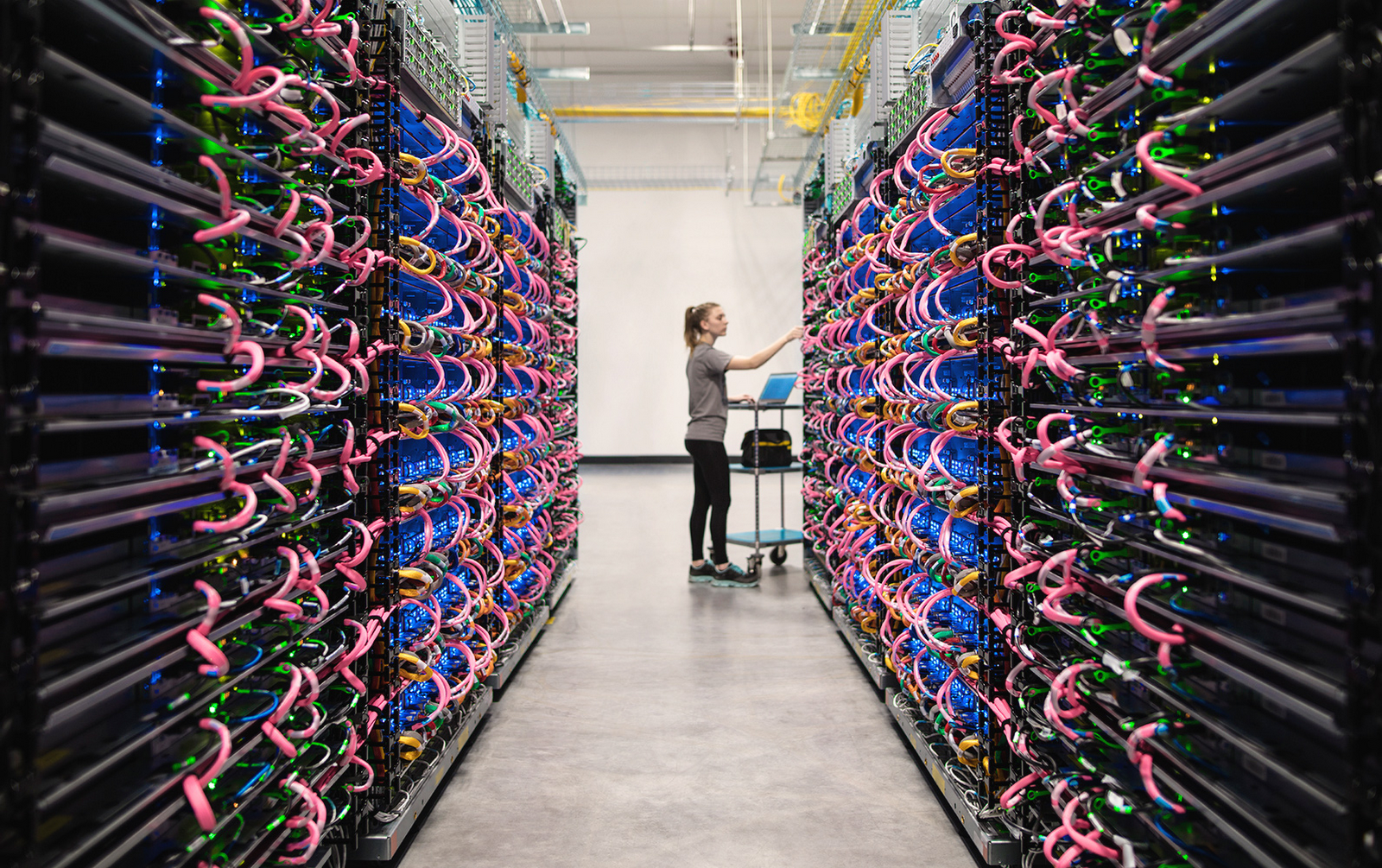
Image Source: Google
This strategic move enables Gemini to aggressively attract user groups from competitors like OpenAI with lower subscription fees and higher usage quotas. Even when considering token prices alone, Gemini stands out among overseas AI products, offering lower pricing for its flagship models and pricing for mainstream models comparable to domestic manufacturers like DeepSeek.
Furthermore, TPUs excel in managing massive computational demands from daily users, making them an ideal fit for the future AI ecosystem. Consequently, these chips have long been coveted by the industry. Following the sales announcement, Google also unveiled a $5 billion agreement with renowned private equity firm Blackstone to jointly construct a large computing power center, initially planned at 500 megawatts.
Lei Technology (ID: leitech) speculates that this news has likely prompted many companies to seek quotes or partnerships with Google, particularly those aiming to establish their own computing power centers. While some might assume Amazon should be concerned, as this encroaches on cloud services, the real challenge lies with NVIDIA.
Is Google Challenging NVIDIA's Dominance?
First, a question for Lei: Why has NVIDIA emerged as a pivotal player in the AI era? If your answer is merely 'powerful GPU computing,' you're only partially correct.
NVIDIA's true strength lies in its comprehensive ecosystem, encompassing not just GPUs but also CUDA, NVLink, DGX, InfiniBand networking, AI software libraries, developer ecosystems, server partnerships, and cloud provider adaptations. This ecosystem forms NVIDIA's competitive moat.
When you purchase an NVIDIA computing card, you're not just buying hardware but an entire, industry-validated AI ecosystem. For most companies, NVIDIA's CUDA ecosystem eliminates the need to 'reinvent the wheel,' saving significant effort and cost.
This is why many AI companies, despite the high cost of NVIDIA GPUs, continue to use them. During the AI boom, cost was secondary to staying ahead of competitors. However, as AI large models become mainstream, efficiency and cost-effectiveness have become paramount.

Image Source: Lei Technology
Google recognizes this shift and is betting on TPUs, packaging them into a complete solution. The goal is not to outperform NVIDIA in raw computing power but to offer a cloud service capability that integrates Google's years of experience in chips, data centers, networking, storage, orchestration, and model training, directly purchasable by enterprises.
Here, Google is 'learning from NVIDIA' by selling systems and ecosystems, transforming hardware components into 'productivity' for customers. This approach holds significant appeal for companies seeking to maintain in-house computing power centers.
Should NVIDIA be worried? Not necessarily, but the challenge is real. While flagship computing cards remain profitable, demand for more cost-effective alternatives will grow. Google's TPU solution is poised to impact NVIDIA's market share in this segment.
However, NVIDIA remains the most recognized general-purpose standard in the AI computing power market, and the CUDA ecosystem's status won't be easily shaken by a few generations of chips. Many teams have already accumulated extensive experience around NVIDIA's ecosystem, and switching platforms carries significant risks.
Take DeepSeek, for example. Its recent model announcement highlighted the ability to train using Huawei's Ascend chips, but this was achieved after several iterations and deep cooperation between Huawei and DeepSeek.
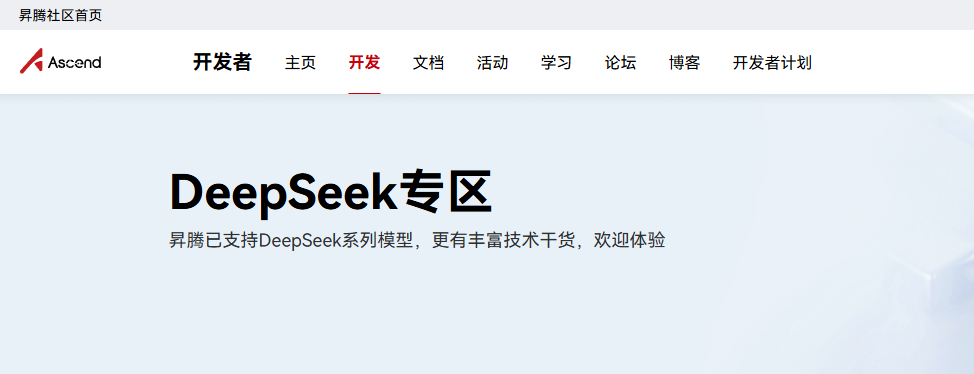
Image Source: Ascend
From Google's perspective, it doesn't need to replace NVIDIA in all scenarios. Capturing a portion of enterprise customers and proving higher efficiency than other computing ecosystems is sufficient to carve out a niche in the AI infrastructure market.
Especially during the inference phase, Google's TPU computing servers clearly have the advantage. As token consumption rates soar, cases like Uber burning through a year's budget in four months and a mysterious company spending $500 million on token fees in a month underscore the importance of cost-effective computing.
As AI becomes more prevalent across various fields, token costs will be key to future AI competition. Lower token costs enable wider AI adoption across business lines, capturing users and markets.
Computing Power as a Fundamental Resource: Opportunities for Cloud Providers
Lei finds a netizen's analogy apt: Training models is like buying cars, while inference services are like daily gasoline consumption. Even wealthy households can't afford premium fuel for all their cars every day. Google's computing power is like regular gasoline—less powerful but cheaper and sufficient for daily tasks.
Lei previously wrote about the industry consensus: AI computing power is increasingly becoming a fundamental resource like electricity, water, and broadband.
For users, the production process of 'computing power' is irrelevant; they care about the price, just like utility bills. This 'user' can be an individual, a company, a city, or even a country.
In the future AI market, NVIDIA will remain crucial for high-performance chips. However, as computing power demand becomes a long-term, stable, and scaling fundamental resource, the influence will gradually shift to cloud service providers.
This is why cloud providers like Google, Microsoft, Amazon, Alibaba Cloud, and Huawei Cloud are no longer satisfied with being mere 'resellers' of NVIDIA GPU computing power. They're building their own computing ecosystems, not to stop procuring NVIDIA GPUs but to diversify and gain influence.
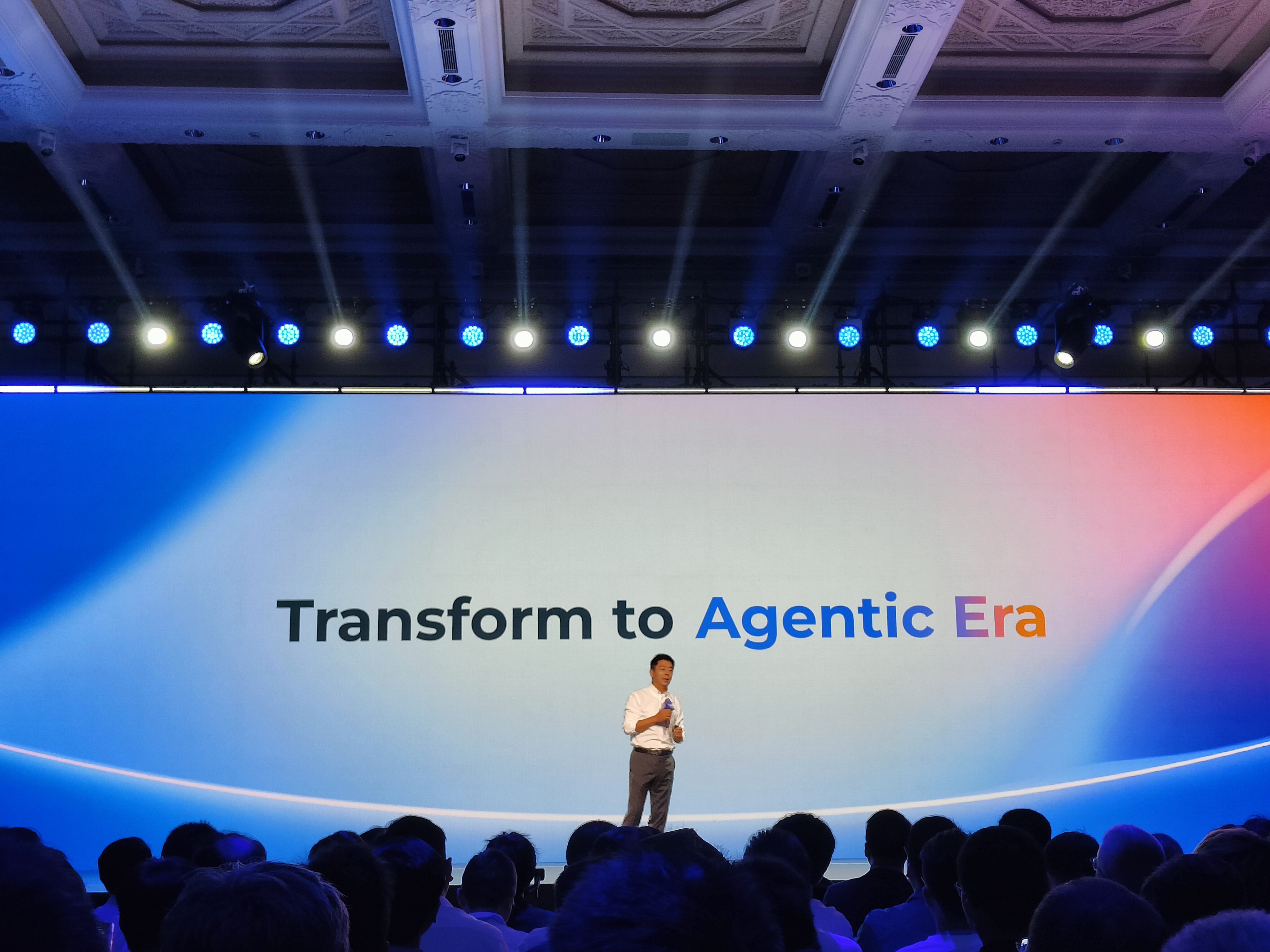
Image Source: Lei Technology
Their true development focus will inevitably shift to their own ecosystems. NVIDIA must remain vigilant, as its current market value is largely based on its role as the 'AI foundation.' Losing grip on the non-top-tier computing card market could gradually revert it to its gaming graphics card market position from five years ago: top-tier but not indispensable.
Domestically, similar changes are underway. Previously, discussions on domestic AI computing cards focused on performance comparisons with top-tier cards. While performance is important, focusing solely on it overlooks another key aspect: Domestic cloud providers are transforming chips, clusters, cloud platforms, model services, and industry solutions into a complete AI production system, which is the core competitiveness of domestic AI.
This isn't just Lei's opinion; it's what core cloud service providers like Huawei Cloud and Alibaba Cloud are doing. Take Huawei's Ascend Cloud services, for example. While Ascend chips often steal the spotlight, Huawei has built a cloud-based toolchain, super-node clusters, model migration, training and inference optimization, and industry implementation capabilities around Ascend computing power.
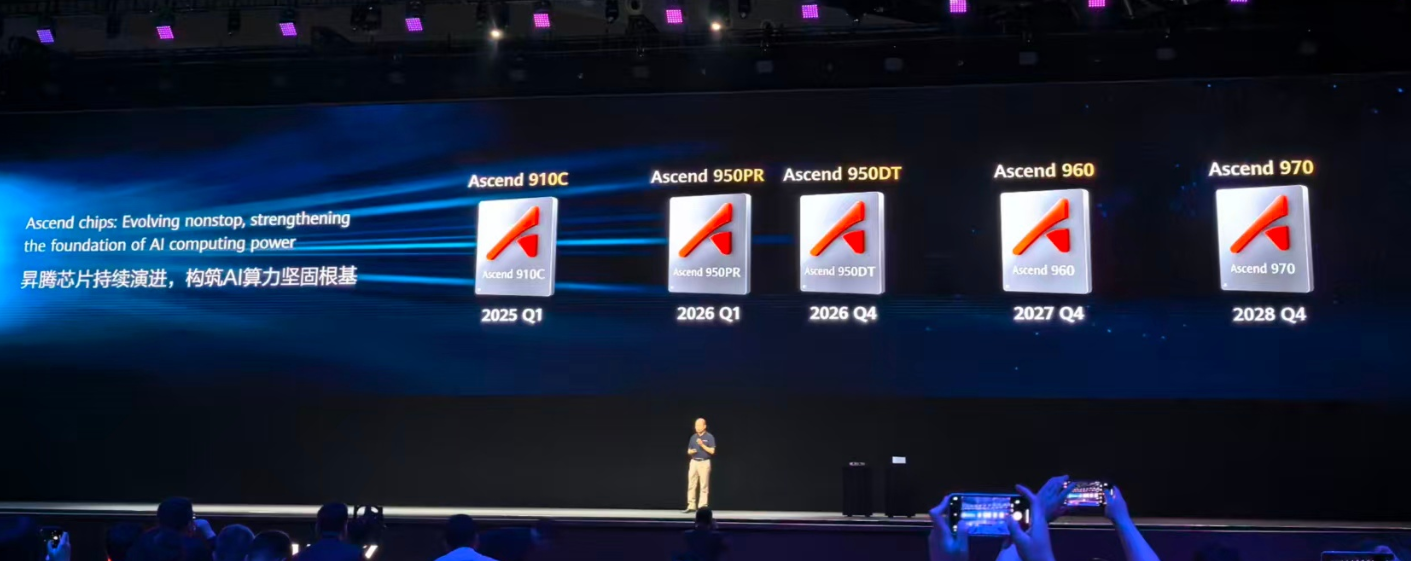
Image Source: Weibo
Moreover, Huawei is promoting this computing ecosystem to more domestic AI companies. Besides DeepSeek, leading AI giants like Baidu, iFLYTEK, Zhipu, and MiniMax are also on board. Huawei has gradually built its own computing ecosystem and aims to capture the market with lower token prices.
Alibaba Cloud is following suit. In May this year, they released the Zhenwu M890 training and inference integrated AI chip. Before that, the Zhenwu 810E had already been deployed at scale in Alibaba Cloud's Lingjun Intelligent Computing Platform. At this year's Alibaba Cloud Summit, Alibaba Cloud announced that the cumulative shipments of its Pingtouge Zhenwu series AI chips had reached 560,000 units, with annualized revenue scaling into the tens of billions.
When it comes to learning from NVIDIA, domestic cloud service providers are not only moving faster but also started earlier.
The Strongest Computing Power? No, the World Needs 'Optimal Computing Power'
Of course, NVIDIA won't suddenly lose its core position in the AI era just because Google starts selling TPUs.
For the foreseeable future, GPUs, CUDA, and the developer ecosystem will remain indispensable standards for the entire AI industry. Especially in large model training, high-performance computing, and general-purpose AI development scenarios, NVIDIA is still the most mature and industry-recognized choice.
However, the AI computing power market is entering its next phase.
Previously, the competition centered on 'whose chips are stronger.' Now, companies truly care about 'who can make computing power cheaper.' This is where cloud service providers like Google, Huawei Cloud, and Alibaba Cloud excel: They have massive personal and enterprise customers, data, applications, and scenarios, and are better at packaging hardware components into a directly usable productivity system.
In other words, what's truly scarce in the AI era is not just chips but the systemic capability to turn chips into productivity.
As computing power increasingly resembles fundamental resources like water, electricity, and broadband, the company that ultimately wins may not necessarily have the strongest single-card performance but the one that can deliver AI computing power to customers at lower costs and higher efficiency.
In Lei Technology's view, Google's decision to sell TPUs is a signal reminding the entire industry: The competition for AI infrastructure is no longer just a chip war but a system war.
Alibaba Cloud, Huawei Cloud, TPU, AI Chips, Cloud Computing
Source: Lei Technology
Images in this article come from: 123RF Royalty-Free Image Library Source: Lei Technology
-
![]()
NVIDIA-Backed AI Unicorn Secures $1.5 Billion Funding: Revenue Soars 2000%
-
![]()
Doubao Pro is Here: How Can Seed 2.1 Be Integrated into Real Processes?
-
"PCB Juice" Sees Four Consecutive Declines: Even Computing Power Material Suppliers Can't Lift This "Old Stock"
-
![]()
Potential 'Seismic Shift' in the U.S. TV Industry: Competition Shifts from Hardware Sales to Traffic Entry Points
-
![]()
Audi A6L's Defense in the Luxury C-Class Market: Following Huawei's Smart Driving Integration, Is Large-Battery HEV the Next Move?
-
![]()
Zhipu VS Minimax: A Chinese Reflection of Anthropic PK OpenAI
-
![]()
Dialogue with Trooly.AI: AI is Just the Pathway to Connect Authentic User Voices Directly to Brands
-
![]()
From January to May, New Energy Battery-Swap Heavy Truck Sales Surge 29% Year-on-Year, with Geely, XCMG, and Foton Daimler Leading the Pack