Why Did Zhang Yiming Personally Voice His Opinions This Time?
 08/09 2026
 507
507
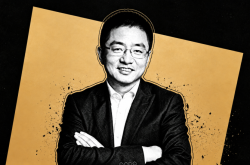
Zhang Yiming, the founder of ByteDance, has long espoused the principle of "delayed gratification" for over ten years.
In a 2016 exclusive interview, he identified it as his foremost characteristic. When asked about the type of young people he admires, his response consistently comprised the same five words. Over the years, Toutiao's decision to eschew immediate profits in favor of investing in recommendation algorithms, as well as Douyin's steadfast commitment to launching TikTok overseas despite facing pressure, have all adhered to the same underlying strategy across various domains. While seemingly sacrificing small, immediate gains, these moves actually aimed at capturing greater long-term opportunities. On August 6, this strategy persisted.
At an internal meeting of the Seed team, the usually reticent Zhang Yiming set a resolute tone, stressing that model development should be guided by long-term vision and delayed gratification: "Rather than leveraging others' outputs for short-term ranking boosts." According to reports, ByteDance has drawn a firm line against the use of open-source models, strictly prohibiting reliance on external third-party model distillation and even implementing API detection to prevent teams from privately utilizing other large models. On the same day, ByteDance CEO Liang Rubo acknowledged at the mid-year all-hands meeting that the gap between ByteDance and leading overseas models had widened, but he added: "We accept short-term setbacks, persist in long-term optimization, and the most crucial aspect is to remain steadfast in our approach."
It is unusual for the founder and CEO of a company to emphasize the same point so emphatically at nearly the same time, which is a rarity at ByteDance.
I. Zhang Yiming's Uncommon Public Pronouncement
According to reports, in response to competitive pressure from the rapid advancement of domestic open-source models, ByteDance founder Zhang Yiming stated that model development should be guided by long-term vision and delayed gratification, rather than relying on others' outputs for temporary ranking gains.
In the realm of artificial intelligence technology, "distillation" is a prevalent technique employed in various research endeavors by AI labs worldwide. It typically involves transferring the reasoning logic and output characteristics of a more powerful, larger model to a smaller one.
Consequently, the smaller model retains approximately 70-80% of the larger model's effectiveness while reducing computational consumption, enhancing operational speed, and improving deployment flexibility, gradually becoming a viable shortcut for latecomers to catch up.
However, Zhang Yiming believes that relying solely on external third-party model distillation can hinder genuine long-term technological breakthroughs. The reason is that external "distillation" involves training one's own model using the answers, reasoning paradigms, and knowledge distributions of others' large models, which merely replicates superficial capabilities and inflates evaluation scores. Yet, this approach fails to delve into the pre-training data systems, foundational architecture designs, underlying alignment algorithms, and computational training methodologies of the opposing models.
After Zhang Yiming's statement, ByteDance CEO Liang Rubo also directly addressed external doubts about ByteDance's lagging large models, stating that the company must mentally prepare for a period of being behind in large language models.
Faced with the gap, what should be done? Liang Rubo's response was to remain steadfast in the approach. He said that ByteDance would persist in self-development, focus on fundamentals, "accept short-term setbacks, and persist in long-term optimization." He specifically refuted rumors, saying: "Yesterday, I saw external reports claiming that we persist in self-development due to external pressure, which is pure speculation. The real reason is that we hope our team will delay gratification and build a robust technical foundation, which is crucial for achieving AGI in the long run."
It is evident that Zhang Yiming and Liang Rubo imply that true long-term technological breakthroughs must be built upon a complete, self-owned ecosystem of pre-training, evaluation, and data loops. Blindly replicating others' outputs will only result in being a passive follower, incapable of generating foundational original technologies or truly leading technological trends.
This undoubtedly charts the course for ByteDance's AI sector at a strategic level. Meanwhile, ByteDance's recent organizational restructuring answers the question of how its AI strategy will be executed.
II. Heading to the Frontlines: A Sense of Urgency
In late June this year, ByteDance CEO Liang Rubo sent an all-hands letter late at night. In the letter, Liang Rubo clarified the company's development path in the AI era, restructured four management philosophies, and incorporated the new version of the 10 leadership principles into manager promotion assessments.
Notably, Liang Rubo mandated that middle and senior management regularly engage with the frontlines, avoid formalism, not just remain confined to offices, and maintain a sense of urgency.
This is seen as another significant adjustment in ByteDance's all-in approach to AI, reflecting the management's strategic resolve. The fundamental reason is that since Liang Rubo became Group CEO, he has publicly issued complete all-hands letters roughly three times.
The first was in November 2021, when Liang Rubo announced a major organizational restructuring after taking over as CEO, splitting ByteDance's business into six major segments (Douyin, Dali Education, Feishu, Volcano Engine, Nuverse, TikTok), with Toutiao and Xigua Video merged into Douyin. Many interpretations marked this as ByteDance temporarily bidding farewell to the Zhang Yiming era and fully entering the BU business unit system led by Liang Rubo. Liang Rubo's first public letter began reshaping the group from five major aspects: power transition, organization, strategy, business, and management, profoundly influencing ByteDance's development over the next five years.
The second letter was sent in June 2022. At the time, ByteDance had over 100,000 internal employees, and after the six BU splits, issues such as cross-departmental barriers and process redundancies—typical of large companies—became prominent, which Liang Rubo referred to as the "negative scale effect" and "resource curse."
At that time, ByteDance faced external pressures—domestic regulatory tightening in education and the internet, and geopolitical compliance challenges for TikTok overseas. Additionally, the short-video industry had moved beyond its wild expansion phase, with the entire sector collectively entering a cost-cutting and efficiency-enhancing cycle.
Thus, Liang Rubo elevated "always in startup mode" as the top principle, aiming to combat bureaucratization in large companies and resolve conflicts between domestic and overseas teams.
If the first all-hands letter represented organizational system reform at ByteDance, the second letter directly addressed ideological and cultural reshaping. The content of Liang Rubo's letter unified behavioral standards for over 100,000 employees, attempting to address large-company maladies from mindset, work methods, talent relations, and global management, laying a cultural foundation for the company's subsequent business contractions, refined operations, and global development.
From this perspective, ByteDance's third all-hands letter can also be seen as the overall guideline for its transformation in the AI era. More crucially, just a week before this all-hands letter, the rarely public Liang had already set an unusual tone for all ByteDancers. At the Volcano Engine Force Conference, he did not delve into product details but repeatedly mentioned several keywords: "scale the heights," "focus," and "trust." Recently, Liang Rubo once again clarified ByteDance's three core business lines: AI, information platforms, and transaction services, indicating that a comprehensive focus on AI has become ByteDance's established long-term direction. The first letter reformed the organization, the second letter purified the ideology, and the third letter drove transformation, forming a layered and progressive trajectory over several years. As management aligns strategy with assessments, the transformation in the AI era is first practiced within the organizational structure.
III. Narrowing the Scope, Focusing on Fundamentals
Not long ago, ByteDance initiated a restructuring of its AI business, merging the Feishu product team with the Doubao product team to form a new Doubao product team under the unified management of Zhao Qi.
Feishu's original marketing, sales, and customer service systems were integrated into Volcano Engine to form a new enterprise services organization. The biggest change in this adjustment is that Feishu has been integrated into ByteDance's AI ecosystem and will no longer develop as an independent business. This is also one of ByteDance's structural focusing strategies, narrowing the scope of its AI business while doubling down on foundational layers.
The reason is twofold. First, ByteDance has adopted a strategy of streamlining and integrating consumer-facing AI applications. According to industry sources, in April last year, Liang Chenqi, the former head of the social companion AI product Maoxiang, left ByteDance. The new head of Maoxiang was taken over by Xiyuan, the former head of the Xinghui product. Meanwhile, the Xinghui team planned to merge into Doubao, to be jointly managed by Lu You, the head of the Doubao App.
Second, regarding AI hardware, while ByteDance has conducted multiple rounds of organizational adjustments for its VR brand PICO in recent years, some sectors within ByteDance's AI ecosystem have not contracted but have instead unprecedentedly begun to double down. For example, in foundational large models, ByteDance released the new-generation base model Seed 2.0 in 2026, continuously expanding recruitment for algorithm, reasoning, and multimodal R&D personnel, with talent investment doubling.
For instance, in computing power, self-developed chips, and intelligent computing centers, according to previous Bloomberg reports, ByteDance is discussing a significant increase in capital expenditures to up to $70 billion in 2026, primarily for building large-scale data centers and other AI infrastructure. This $70 billion investment level is roughly equivalent to the combined AI expenditures of Tencent, Alibaba, and Baidu and approaches the average level of the four major U.S. cloud providers.
Additionally, ByteDance has also begun a comprehensive expansion of its core AI products. Doubao's monthly active users in China have surpassed 345 million, with all the capabilities of the contracted niche AI tools being integrated into Doubao, continuously expanding the scale of the main entry point. Overall, ByteDance's AI strategy is not a contraction but a clear-cut prioritization, actively cutting inefficient side projects and consolidating resources to focus on the main trunk. If one only looks at scattered consumer-facing small products and hardware side projects, it might seem like the portfolio is contracting. However, if one looks at foundational computing power, base models, enterprise clouds, and core AI products, the company's AI ecosystem is rapidly expanding.
This prioritization strategy, implemented by Liang Rubo, has its roots in Zhang Yiming's core business philosophy that has guided Toutiao and Douyin's development: abandoning short-term shortcuts, persisting in delayed gratification, and building a complete self-developed ecosystem.
The current series of business adjustments and strategic prioritizations at ByteDance may just be the prelude and microcosm of a reshuffling in China's AI industry. The wave of AI industrial transformation is far more tumultuous than the industry anticipated, and ByteDance's AI transformation continues. However, the company's development approach has shifted from past multi-point expansion to a focused allocation of resources.
-
![]()
Comparing Domestic Open-Source Large Models Zhipu, Minimax, and Kimi: Which Excels in Coding, Multimodality, and Long-Text Processing?
-
Let's Discuss DeepSeek's Price Increase: Low Prices Are a Strategy, Not a Goal
-
No Fear of Backlash: Wei Jianjun Calls Out Marketing Hype in China’s Auto Industry
-
Why Did Zhang Yiming Personally Voice His Opinions This Time?
-
![]()
Wang Huiwen, Former Meituan Executive, Achieves 20-Fold ROI, Supports 24 AI Startups
-
![]()
Another AI Computing Power Unicorn Launches IPO! Founded by a Changjiang Scholar
-
![]()
OFILM Holdings Secures Zhongke Daojing, Marking a Significant Leap in the Optical Communication Industry!
-
What Will Be the Next Key Battleground for Large Models After AI Coding?