No Fear of Backlash: Wei Jianjun Calls Out Marketing Hype in China’s Auto Industry
 08/09 2026
 530
530
By Qiaofu
People • Cars • Industry Insights
Witnessing the Growth of China’s Auto Sector Together
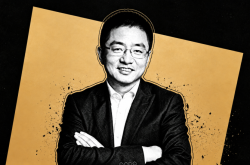
Wei Jianjun is known for his candid remarks and sharp insights. This time, he openly criticized the prevailing marketing hype within China’s auto industry, once again putting others in an awkward position.
"Some people make simple things sound complex, when in reality, those technologies are straightforward. A car is a durable good, not a tech gadget," Wei Jianjun stated bluntly.
He pointed out that certain individuals in the auto industry tend to overcomplicate matters, creating an air of mystery around basic concepts.
So, does such behavior exist in the auto circle? Most likely, yes.
Elaborating on simple issues unnecessarily and turning straightforward points into lengthy discussions is often a tactic to generate marketing buzz.
To be frank, traditional automakers like the one Wei Jianjun represents are relatively inexperienced in modern marketing strategies. They have traditionally relied on technological innovation to win market share. However, with the entry of cross-industry players into the auto sector, these traditional automakers have realized that marketing can be approached in diverse ways.
Great Wall Motors, for instance, has invested heavily in technology, aiming to gain a competitive edge through technological superiority. Yet, they have found that technology alone is insufficient, and their marketing efforts have fallen short. It’s no wonder Wei Jianjun voices his frustrations and exposes the gimmicks employed in auto industry marketing.
Wei Jianjun did not specify who these individuals are. So, who is the "Hamlet" in his narrative?
Some might point to Lei Jun, given his reputation for creating marketing buzz, such as generating hype around a cup through "15 meetings." Indeed, Lei Jun is a marketing maestro. In his view, everything from small accessories like phone holders and umbrella storage to major features like customizable airbag colors can be turned into unique selling points.
Lei Jun is also skilled at creating selling points by managing expectations.
For example, he has claimed that while sun protection, car paint, and wheel hubs are challenging areas, Xiaomi has successfully tackled them. Extended-range vehicles with flat floors are also difficult, but Xiaomi has achieved it.
These seemingly simple yet technically demanding tasks, when explained by Lei Jun, suddenly become technologically sophisticated. Xiaomi has made significant strides in these niche areas over its four-plus years in the auto industry.
Nevertheless, if asked whether he is referring to Lei Jun, Wei Jianjun would likely respond with a clever retort, "I'm talking about a puppy; whoever feels addressed is the one."
Of course, some might argue that the Hongmeng series also excels in marketing. However, while Hongmeng Zhixing may talk big, it often delivers tangible technological advancements.
As Wei Jianjun emphasized, cars are durable goods. Success in the auto industry hinges on technological innovation rather than marketing hype.
If an automaker neglects technological R&D and merely seeks to capitalize on industry advancements, its products will always remain at the industry average in terms of technological content. Ultimately, it can only highlight its products through minor, albeit caring, selling points that are not essential.
For Great Wall Motors, its technological R&D has its strengths, particularly the HI4 technology. However, superior technology does not guarantee market success.
From a societal perspective, the HI4 technology may not yet have gained widespread market acceptance. Nevertheless, China’s vast market can accommodate different companies exploring various technological paths.
The automotive race is a marathon; reaching the finish line is what counts.
-
![]()
Comparing Domestic Open-Source Large Models Zhipu, Minimax, and Kimi: Which Excels in Coding, Multimodality, and Long-Text Processing?
-
Let's Discuss DeepSeek's Price Increase: Low Prices Are a Strategy, Not a Goal
-
No Fear of Backlash: Wei Jianjun Calls Out Marketing Hype in China’s Auto Industry
-
Why Did Zhang Yiming Personally Voice His Opinions This Time?
-
![]()
Wang Huiwen, Former Meituan Executive, Achieves 20-Fold ROI, Supports 24 AI Startups
-
![]()
Another AI Computing Power Unicorn Launches IPO! Founded by a Changjiang Scholar
-
![]()
OFILM Holdings Secures Zhongke Daojing, Marking a Significant Leap in the Optical Communication Industry!
-
What Will Be the Next Key Battleground for Large Models After AI Coding?