Google AI Sees Personnel Turmoil: Full-Stack as a Moat, but Also a Source of Conflict
 08/14 2026
 407
407
Author|Xiao Yuan
Editor|Key Point
Google's AI narrative has taken another turn.
The development of Gemini 4 has fallen short of expectations, leading to two consecutive delays in its release. Gemini 3.5 Pro, which was initially highly anticipated, has also missed its scheduled launch windows in June and mid-July.
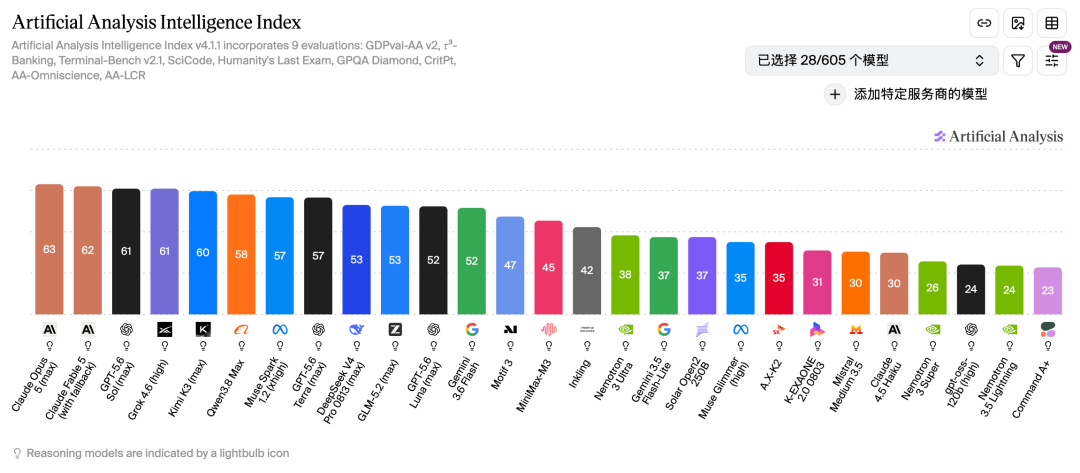
Meanwhile, Google launched Gemini 3.5 Flash and Gemini 3.6 Flash in May and July, respectively. However, neither version has significantly matched or surpassed the capabilities of concurrent cutting-edge models from Anthropic, OpenAI, or even Kimi, Qwen, and DeepSeek.
The outside world quickly realized that Google, which once prompted OpenAI to urgently assemble a "Red Code" team, is lagging behind again.
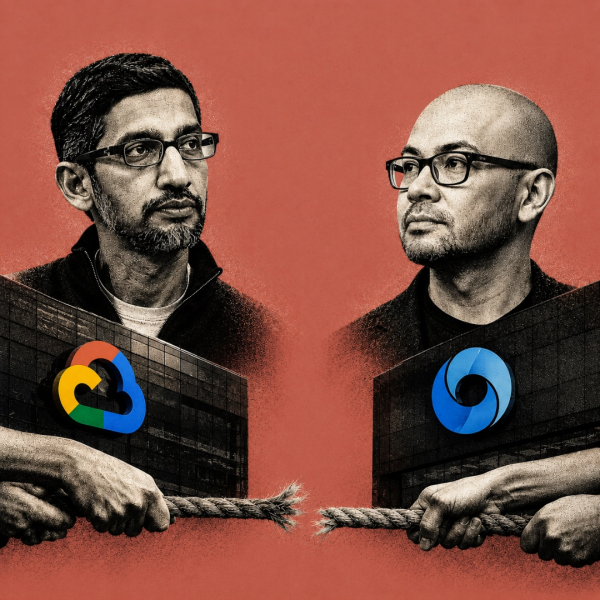
Accompanying the model delays has been a series of personnel turmoil within Google AI's core ranks. The CEO position at DeepMind remains vacant; former Chief Scientist Jeff Dean has left with several top researchers to start a new venture; Hassabis has stepped down as CEO of DeepMind; Koray Kavukcuoglu has been promoted from CTO to Senior Vice President, taking over daily operations and reporting directly to Google CEO Pichai.
Both technological setbacks and personnel turmoil point to long-standing organizational conflicts within Google.
Google's full-stack strategy requires layout [layout] across chips, cloud, frameworks, models, applications, and hardware, all at the cutting edge.
DeepMind, which was supposed to serve as the "engine" for search, cloud, and other businesses, has consistently faced multiple competitions with these departments, especially Google Cloud, in terms of products and resources.
DeepMind is also the most unique department within this system. As a research institution acquired by Google, it has its own mission, culture, and has long revolved around strong scientists like Hassabis. Google once needed this uniqueness, but as Gemini becomes the infrastructure for the entire company, this uniqueness has started to create increasing friction.
Inevitable Personnel Turmoil
The recent series of personnel changes at DeepMind are the result of escalating internal conflicts.
Jeff Dean left with three top researchers from Google to establish Discovery Loop. Their goal for the new company is to use AI to automatically solve important problems in machine learning, science, and engineering.
Does DeepMind have the capability to conduct such research? Of course, it does. The question is how much space it has to do so today.
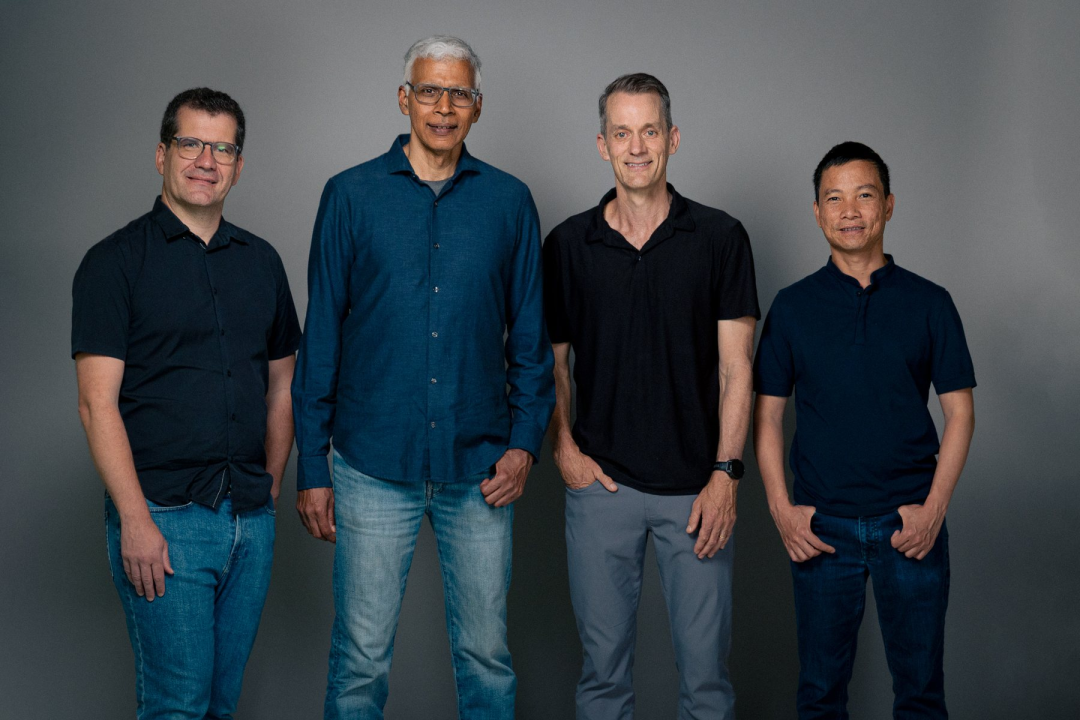
Note: The founding team of Discovery Loop, from left to right, are Oriol Vinyals, Sanjay Ghemawat, Jeff Dean, and Quoc Le.
In a recent open letter from the CEO, Pichai stated that DeepMind would be "highly focused on areas that still need improvement."
This "focus" refers to enhancing model capabilities and achieving a tighter integration between models and products. Limited researchers and compute resources need to be directed toward Gemini's most urgent capability gaps and Google's most important products.
Jeff Dean's departure may be a loss for DeepMind, but it is not necessarily so for Google Cloud or the parent company's investment department. Alphabet became the founding investor of Discovery Loop, and Google Cloud provides it with computing infrastructure.
DeepMind's own power structure is also changing simultaneously.
Hassabis is no longer the CEO of DeepMind but has become its Chairman and Alphabet's Chief Scientist, remaining in London. The former CTO, Koray Kavukcuoglu, has been promoted to Senior Vice President, responsible for daily operations, based in California, and reporting directly to Pichai.
Google has retained Hassabis's scientific authority while revoking his management authority over DeepMind.
Personnel turmoil is definitely not something Hassabis wants to see.
In an interview with Fortune earlier this year, Review [reflecting on] the success of Gemini 3, Hassabis said that it took them a year to a year and a half to finally enable DeepMind to find a way of working as the "engine room" for the entire Google: DeepMind is responsible for building the engine and then handing it over to other departments within the company for use.
He repeatedly emphasized three words at the time: speed, focus, and minimal conflict.
Half a year later, DeepMind has slowed down, and conflicts have increased.
Strong figures are leaving, but in Pichai's eyes, this may be the inevitable price to pay for reshaping this organization. A more controllable, focused, and product-oriented DeepMind may be more important than retaining the original DeepMind.
Full-Stack as a Moat, but Also a Source of Conflict
Google's proud moat is its full-stack approach. From chips, data centers, and cloud to models, development frameworks, applications, and hardware, Google covers every layer of the AI technology stack.
However, these businesses share compute resources, models, and customers while having their own revenue, products, and competitive goals. Full-stack has thus also become a source of conflict.
During Alphabet's Q2 earnings call, an analyst asked Pichai: In the new model war, what is Google's moat? Even with the same model capabilities, where does the advantage lie to sustain growth?
Pichai's answer was full-stack. "One of the values of the full-stack approach is here: when customers come to us, they usually buy a complete solution," Pichai added, "Models are just part of the solution."
He then emphasized the full-stack capabilities and strong demand of the cloud business: "Of course, having our own models allows us to optimize these solutions more deeply and provide more integrated products. But at the same time, we will also offer models from other companies in these solutions and integrate infrastructure capabilities."
While Gemini's leadership is important, Google's commercial success does not entirely hinge on Gemini always being ahead.
The interests of DeepMind and Google Cloud have directly collided over compute allocation.
According to The Information, Google established a new compute allocation committee in December last year: the heads of cloud, DeepMind, search and advertising, along with the CFO, sit together to decide who should be prioritized for limited compute resources.
Compute allocation has always been an old issue for large companies, but AI has pushed it to an unprecedentedly severe level. Google is currently clearly short of compute resources. It plans to invest $91 billion to $93 billion in capital expenditures this year, nearly double that of 2024; however, data center construction and chip manufacturing take time, and the compute resources available today largely depend on investments made years ago. Additional spending now can only alleviate future issues, not solve current ones.
From a market trend perspective, the growth in inference workloads is surpassing that of training workloads. In other words, when models are truly integrated into products and called upon by a large number of users, they may consume more compute resources than the model development process itself. Google not only has billions of user products like Search, YouTube, and Gmail but is also a major cloud provider, precisely accommodating this structural change.
At the same time, Google Cloud is also the infrastructure supplier for other AI model companies. Anthropic extensively uses Google Cloud and TPUs. For Google Cloud, allocating compute resources to these customers means clear contracts, revenue, and growth expectations: if a major customer is willing to sign a multi-year contract, even if Google needs to bear high costs for a few months, the calculation is straightforward.
DeepMind's calculations are not as straightforward. Training the next generation of Gemini is undoubtedly important, but there is no stable relationship between the input and output of cutting-edge research.
This competition trickles down to ordinary researchers. According to The Information, DeepMind requires researchers to concentrate most of their time on one main project, with the organization allocating compute resources to that project. Once the project's quota is used up, researchers may need to "borrow" compute resources from other teams and repay them with future favors, debugging support, or other resources.
The competition between cloud and DeepMind goes far beyond just vying for compute resources.
Google Cloud is also the most important commercial outlet for the Gemini model. Developers can purchase API quotas in Google AI Studio, a product managed by DeepMind, but the model still runs on Google's cloud infrastructure. In the enterprise market, Gemini's packages, pricing, compliance, and sales systems are more directly controlled by Google Cloud.
Thus, an unequal relationship has emerged: Google Cloud can compete with Gemini for compute resources and sell those resources to Gemini's competitors; DeepMind, however, cannot bypass Cloud to freely sell Gemini on competitors' clouds.
Among North American major cloud providers, only Oracle has successfully partnered with Google Cloud to natively support the Gemini series of models; even Amazon and Microsoft, which do not develop their own models, do not natively support Gemini in Amazon Bedrock and Microsoft Foundry.
Moreover, this inequality may not ease in the future. According to Google's latest appointments, DeepMind's leader, Koray, is responsible for Gemini model development, cutting-edge AI research, and the Gemini app and developer teams; however, model-related enterprise businesses still belong to Google Cloud.
This separation between the "model team" and "model products" may lead to more issues.
DeepMind is no longer just a model development department: foundational models, the Gemini App, and developer tools like Antigravity, which competes with Claude Code, are all managed by DeepMind; applications derived from Gemini, such as NotebookLM and Google Flow, are located in Google Labs; while the enterprise-side Gemini Enterprise Agent Platform (formerly VertexAI) and Gemini Enterprise belong to Google Cloud.
This means that Gemini's foundational models, personal products, developer products, and enterprise applications are not fully consolidated within the same department or even under the same person.
In comparison, Anthropic and OpenAI have more centralized product offerings. Claude App, Claude Code, and enterprise products evolve around the Claude model, and product feedback can more directly flow back to the model and tool teams.
These fractures may also be one of the reasons why Google lags behind in Coding and Agentic capabilities.
To improve the experience of Coding Agents like Claude Code, continuous feedback from enterprise developers is needed, such as how they operate codebases, where they fail, and how to integrate Agents into real workflows. However, these enterprise customers and data are mostly controlled by Google Cloud, while DeepMind, responsible for models and developer products, struggles to obtain timely access.
DeepMind is Losing Research Autonomy
When conflicts between DeepMind and other departments cannot be resolved by increasing compute resources or enhancing collaboration, Google can only transform DeepMind organizationally.
Google needs DeepMind to be more focused, closer to products, more submissive to the company's resource allocation and release schedules, and more directly integrated under Pichai's management line. The recent talent drain has also occurred during this transformation process.
However, the DeepMind that Google initially needed was precisely an organization that was "not very Google-like."
During their initial honeymoon period, DeepMind provided a capability that Google's internal teams found difficult to replicate: a "research institution" organized around the AGI mission, led by strong scientist-founders, capable of continuously turning high-risk research into iconic breakthroughs.
This is why Google, after acquiring DeepMind in 2014, long tolerated its relative autonomy. Demis Hassabis could attract top global researchers with narratives about AGI, scientific breakthroughs, and long-termism, and have them collaborate on projects with uncertain short-term returns.
At the time, Google needed an AGI lab that could not be replicated internally, so it could tolerate its autonomy, sense of mission, and Hassabis's strong personal authority.
But the more successful Gemini becomes, the harder it is to maintain DeepMind's original ethos and working style.
When Gemini was still a research project, Google could let researchers decide the exploration direction; however, once Gemini became the shared infrastructure for search, cloud, and other businesses, decisions about when to release the model, how much compute resources to allocate, and which capabilities to prioritize could no longer be made solely by the research team. It had to adapt to the update rhythm of search products, satisfy cloud's enterprise customers, and respond quickly when competitors released new models.
In a public letter titled The next chapter of our AI momentum, Pichai emphasized that DeepMind must stay at the forefront while being "highly focused on areas that still need improvement."
With the model competition window shrinking, Google must concentrate limited researchers and compute resources on the most critical directions.
However, it should also be noted that Pichai's new expectation for the model team to be "more focused" may push Gemini further away from being a leading model.
During the Q2 earnings call, Pichai said, "Accelerating the pace to release models nearly monthly has become part of the roadmap for Gemini 4."
This will certainly keep the company updated and align with the shrinking model lifecycle, but it may well be a false goal.
Improving a new model's capabilities can be tracked with benchmarks. Anyone who has done research and product development knows that raising scores in Coding, reasoning, or long-context understanding a bit more is enough to justify a release.
However, leading-edge model research requires moments of inspiration, exploration without a calculable cost, and researchers spending time on things that may not yield direct output for a while.
As Google's demands on DeepMind become increasingly "focused," this space for exploration is shrinking.
Google may achieve a more stable release cadence, a more manageable R&D process, and models that can be integrated into products more quickly; however, it may also lose the most precious capability that DeepMind originally possessed—allowing some individuals to deviate from the main path and ultimately find a route that no one had anticipated.
-
Will WeChat Agent Replicate the Bidding Ranking Model, Bypassing Search?
-
![]()
Did Zhong Shanshan Make a Mistake?
-
![]()
Flash Charging and 'Celestial Eye': Standard Features in Qin MAX, Positioned to Challenge B-Class Sedans
-
![]()
Wey's Quandary: Can't Afford to Lose Blue Mountain, Yet V Series Struggles to Gain Ground
-
![]()
Google AI Sees Personnel Turmoil: Full-Stack as a Moat, but Also a Source of Conflict
-
![]()
Lenovo Group is Making Big Moves: Server Business Takes Off, AI Server Backlog Orders Reach 360 Billion Yuan!
-
![]()
WPS: A Future Plugin in the Making?
-
![]()
Zhang Xue Motorcycle Secures Sole Investment from Sequoia China, Valuation Soars to 6 Billion Yuan Post-Investment