Did Zhong Shanshan Make a Mistake?
 08/14 2026
 385
385
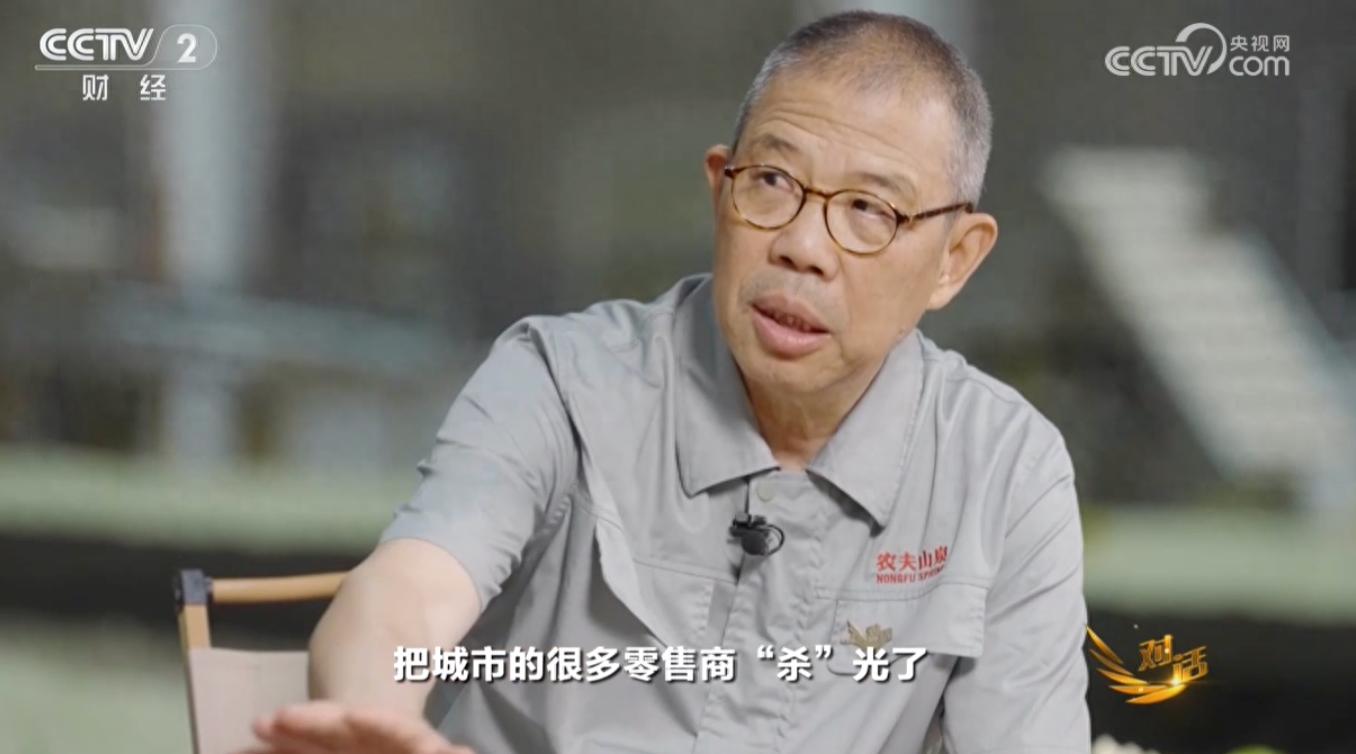
On August 8, during CCTV's "Dialogue" program, Zhong Shanshan fired another salvo.
"E-commerce is a middleman set in stone" and "Platform power must be restricted"—these were his sixth public criticism of e-commerce platforms in two years, with increasingly fierce rhetoric and a clearer stance each time.
Let's examine what he said this time.
His core argument boils down to three points: E-commerce platforms control merchants' pricing power, squeezing the survival space of offline brick-and-mortar retailers; operating profits for small and medium-sized merchants are opaque and unsecured; platform power must be restricted.
He added: "What China needs to worry about most now is competing on price, not on quality, not on high standards, not on premium levels."

(Image source: CCTV Finance's "Dialogue" program)
The legal system has already responded to the platform issues he criticized.
The "Internet Platform Pricing Behavior Rules," implemented in 2026, explicitly prohibit platforms from forcing merchants to sell below cost or interfering with pricing through tactics like traffic restriction or demotion.
The newly revised Anti-Unfair Competition Law also includes provisions banning platforms from coercing or indirectly coercing merchants to sell below cost.
The problems he pointed out do exist, but exaggerating "some issues" into "all issues" and labeling the "accelerator" as the "root cause" is another matter.
The decline of offline entities results from a combination of economic downturn, weak consumer confidence, and deteriorating cost structures.
E-commerce is merely a mirror reflecting pre-existing structural problems offline.
Zhong Shanshan's opposition to e-commerce is rooted in tangible commercial interests.
Nongfu Spring has approximately 5,000 distributors nationwide, covering over 3 million retail outlets. This forms a massive offline interest consortium.
He mandates that e-commerce revenue not exceed 5% of the company's total, asking, "Otherwise, how will small offline stores survive?"
In its 2025 annual report, Nongfu Spring stated:
By controlling the sales share of e-commerce channels, we have better stabilized pricing order within the distribution system.
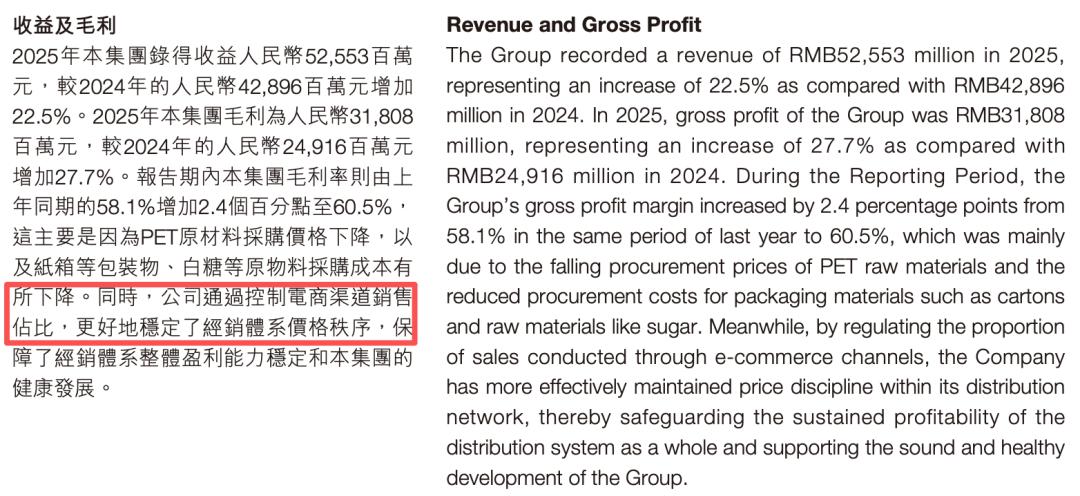
(Image source: Nongfu Spring's 2025 annual report)
In short: E-commerce pricing impacts not just industry ecology but also the price system and channel profits on which Nongfu Spring relies. His criticism of e-commerce protects the "walls" he built over decades.
This is understandable, but one cannot equate personal business interests with social welfare.
Was Zhong Shanshan wrong to criticize e-commerce?
Not entirely.
Platforms leverage rule advantages to control pricing, continuously compressing merchant profits. Some merchants told media that to achieve 300,000 yuan in monthly sales, they must spend 60,000 yuan on promotions—with platforms earning six times the merchant's profit from that transaction.
If unchecked, such power can distort markets.
However, he overlooks how e-commerce eliminates old middlemen while creating new value and jobs.
It breaks down geographical barriers, enabling farmers to directly reach national consumers, opening incremental markets for niche agricultural products, and forcing standardization upgrades.
Over the past 30 years, from small commodities to supermarkets to platforms to community economies, each commercial revolution has brought immense opportunities.
E-commerce platforms have issues, but this does not justify negation (negating) the entire ecosystem.
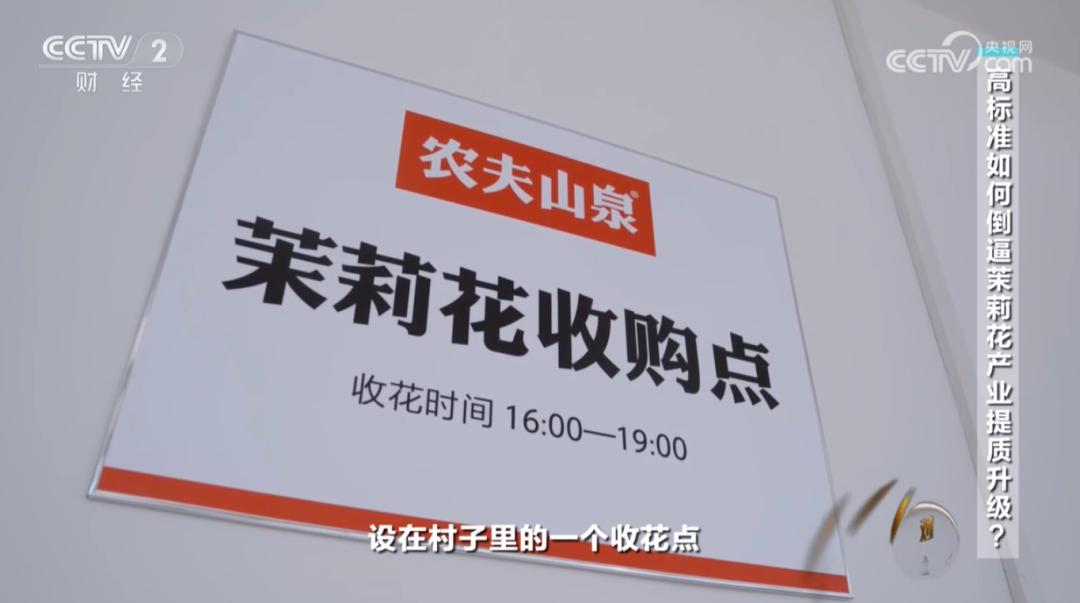
(Image source: CCTV Finance's "Dialogue" program)
As for Zhong Shanshan, his views contain rationality (reasonableness) but also one-sidedness (one-sidedness).
He identifies real problems but attributes all issues to e-commerce, packaging his business anxieties as social justice—a stance that inevitably sparks controversy.
When a traditional entrepreneur repeatedly frames commercial demands as "protecting farmers" or "protecting physical stores," his anxiety becomes a public issue.
But consumers care less about the richest man's anxieties than about who offers better products and fairer prices.
This is precisely the reality Zhong Shanshan refuses to face.
-
![]()
What If the AI Bubble Bursts Completely...
-
![]()
Why is Robot Phone important to Honor?
-
![]()
Why is Robot Phone important to Honor?
-
Will WeChat Agent Replicate the Bidding Ranking Model, Bypassing Search?
-
![]()
Did Zhong Shanshan Make a Mistake?
-
![]()
Flash Charging and 'Celestial Eye': Standard Features in Qin MAX, Positioned to Challenge B-Class Sedans
-
![]()
Wey's Quandary: Can't Afford to Lose Blue Mountain, Yet V Series Struggles to Gain Ground
-
![]()
Google AI Sees Personnel Turmoil: Full-Stack as a Moat, but Also a Source of Conflict