Wey's Quandary: Can't Afford to Lose Blue Mountain, Yet V Series Struggles to Gain Ground
 08/14 2026
 349
349
For Wey, 2025 was poised to be a watershed moment. Annual sales soared to 102,000 units, marking an impressive 86.29% year-on-year surge. This achievement marked the first time since 2018 that Wey had surpassed the 100,000-unit annual sales milestone, a feat largely attributed to the dual flagship models: Blue Mountain and Gaoshan. In the final quarter of 2025, Wey's monthly sales stabilized at approximately 12,000 units, with Blue Mountain consistently selling over 5,000 units per month and Gaoshan exceeding 10,000 units.
However, the tide turned dramatically in 2026.
In the first seven months, domestic registrations for Blue Mountain plummeted to just 3,726 units, with zero registrations recorded in both June and July. Compared to the same period last year, domestic registrations in the first half of the year plummeted by over 83%.
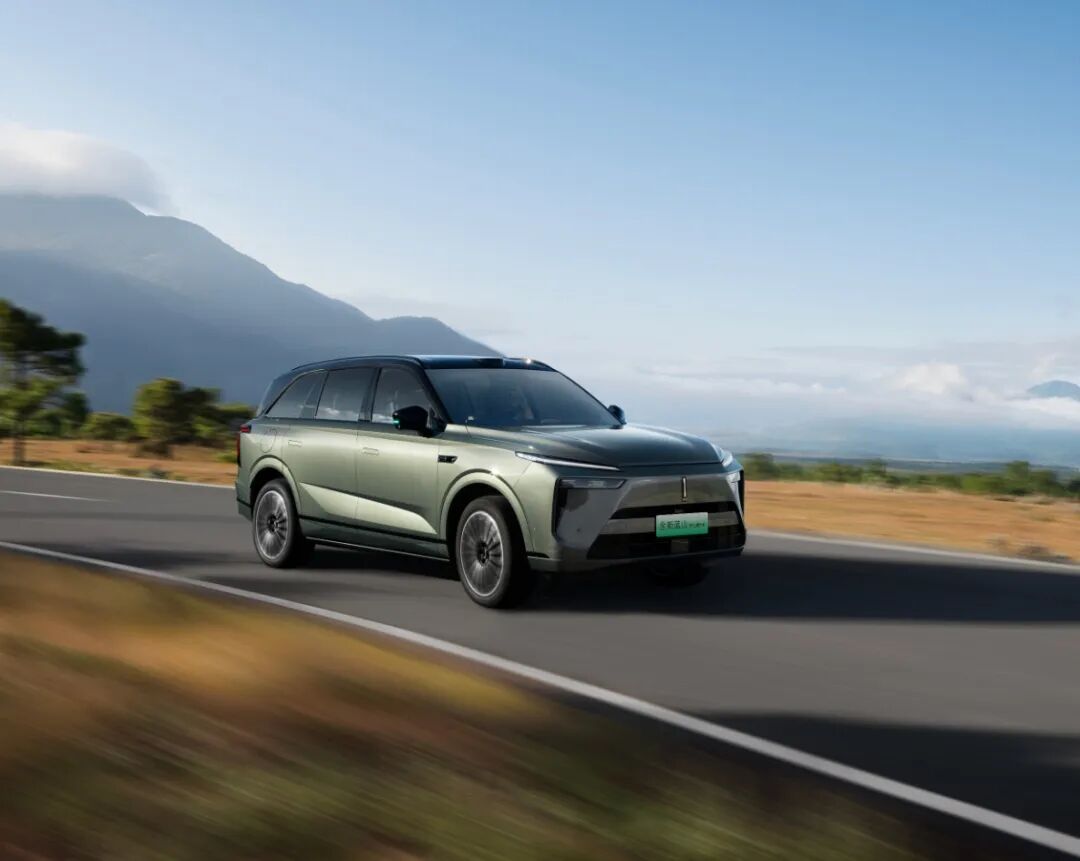
Amidst the sales slump and the absence of new registrations, rumors swirled about the discontinuation of Blue Mountain. Recently, Wey's CEO, Zhao Yongpo, stepped in to personally address these concerns. On his social media platform, he unequivocally stated, “Blue Mountain remains a cornerstone of Wey's SUV lineup, chosen and highly regarded by hundreds of thousands of users. The model has not been discontinued, nor is there any plan to do so.” He further revealed that Blue Mountain is performing well in overseas markets and that product updates and iterations are underway for the domestic market, with a brand-new Blue Mountain model slated for launch in the fourth quarter of 2026.
Despite the upcoming new Blue Mountain model, its current market performance is far from satisfactory. So, why persist with Blue Mountain? A significant factor lies in Wey's newly launched V Series this year.

V9X: Impressive Specs, Lackluster Market Response
If part of Blue Mountain's decline can be attributed to making way for new models, then the V9X's performance has been a major letdown.
On May 18, Wey's V9X officially entered the market. This model represents Great Wall Motors' most significant resource allocation in recent years. It is not only Wey's new flagship and the inaugural model in the V Series but also the first mass-produced vehicle on the Guiyuan S platform.
The V9X, refined over six years, boasts a full 800V high-voltage platform, a 2.0T Super Hi4 plug-in hybrid, dual-chamber air suspension, and ±10° rear-wheel steering. Wei Jianjun, Chairman of Great Wall Motors, personally endorsed the model as its founder for the first time, shooting promotional videos and proclaiming, “Wey, your trusted choice.”
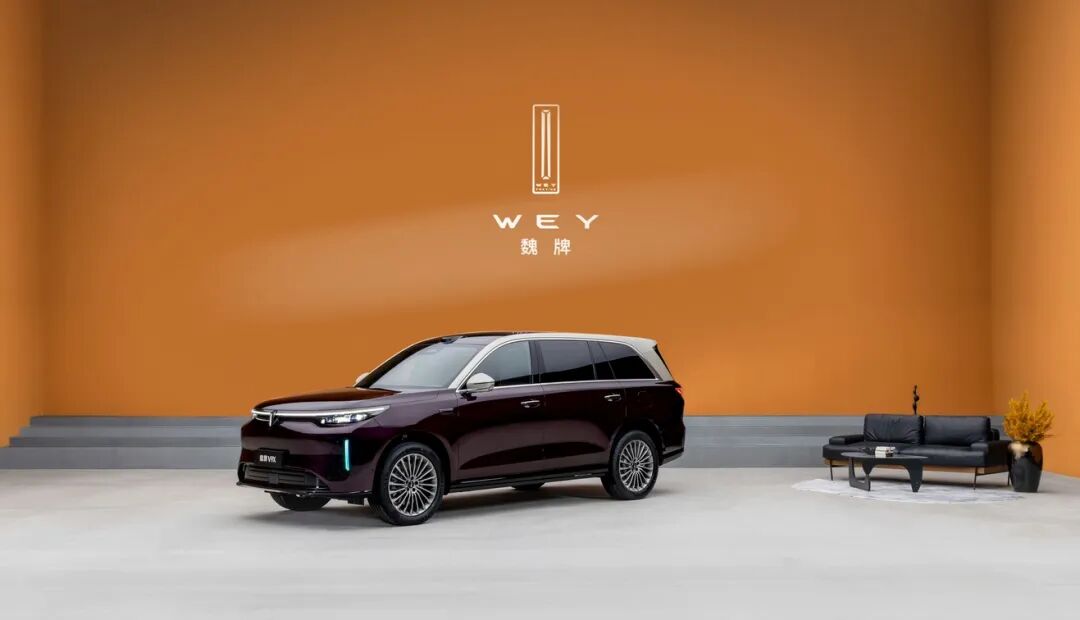
However, the V9X managed to sell only 1,018 units in its debut month in May. In the subsequent two full delivery months of June and July, sales failed to surpass 2,000 units. In the competitive landscape of flagship 9-series SUVs, the V9X's current market performance is far from satisfactory.
At the V9X launch event, Wei Jianjun publicly criticized the marketing team, expressing his “extreme dissatisfaction” with their promotion of the V9X, believing they failed to effectively communicate the product's technological strengths to the market. However, market feedback suggests that the V9X's issues extend beyond marketing.
Thin Product Lineup: Can't Afford to Lose Any Model
The core challenge facing Wey can be summarized as “can't afford to lose one model, yet two can't hold up.”
From a product lineup perspective, Wey's current offerings primarily consist of Blue Mountain, Gaoshan, and V9X. Gaoshan remains the sales mainstay, but its performance has significantly declined compared to the monthly average of 10,000 units in the fourth quarter of the previous year. Blue Mountain's sales have nearly dried up, while the V9X sells just over a thousand units per month. Although sales in the first seven months increased by nearly 8,000 units year-on-year, Wey's sales in July were 7,725 units, a year-on-year decline of 23.1%, the largest drop among Great Wall's five major brands.
Despite being established for a decade, Wey's product lineup remains relatively thin. Excluding the Mocha New Energy, which consistently sells in double digits, Wey had two main models last year and added one this year. This pales in comparison to other luxury-positioned autonomous brands established over five years, such as NIO, Li Auto, Zeekr, and Aito, which offer a significantly broader range of models. Consequently, any underperformance by a single model leads to sharp fluctuations in overall sales. Currently, two out of three models are underperforming.
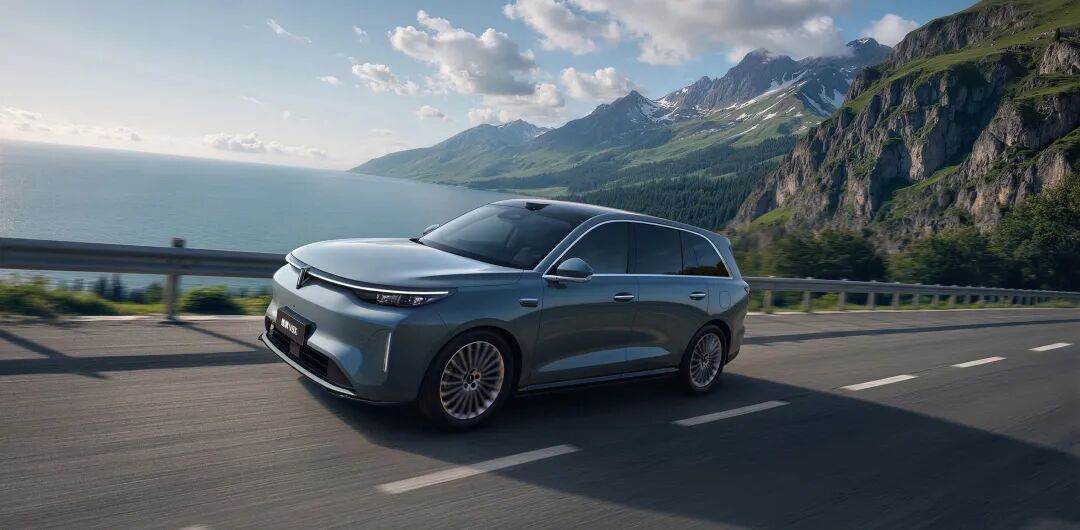
Looking ahead, Wey plans to introduce a pure electric version of the V9X, the V8X, and a facelifted Gaoshan. The V8X is positioned as a large five-seat SUV, with an estimated price range of 270,000 to 290,000 yuan. However, a challenge arises: Blue Mountain's current official suggested retail price (MSRP) ranges from 299,800 to 326,800 yuan, with terminal discounts of around 30,000 yuan. This means that if Blue Mountain continues to be updated under its current positioning, its price range will significantly overlap with that of the V8X.
Moreover, the two models lack distinct positioning in terms of off-road and urban capabilities, differing only in seat configuration (five vs. six seats). Thus, achieving a synergistic 1+1>2 effect is challenging. Lowering the price could anger existing Blue Mountain owners.
If the V8X introduces a six-seat version in the future to cover Blue Mountain's current market, it would be the most cost-effective approach for Wey. However, Wey has already confirmed that Blue Mountain will continue to receive updates. Coordinating the positioning and pricing of Blue Mountain and V8X poses a significant challenge for Wey.
A Decade-Old Brand at a Crossroads
Analyzing Blue Mountain's fluctuations and the V9X's lukewarm reception over a longer timeframe reveals a deeper issue: Wey's brand positioning remains unstable.
Its product lineup has evolved from the VV Series to the Coffee Series, and from Blue Mountain and Gaoshan to the current V Series. Each adjustment represents a reconfiguration of the brand's direction, diluting accumulated market perceptions. It remains unclear whether Wey targets hardcore tech enthusiasts with performance-oriented vehicles or families seeking flagship models. While Wey's technological prowess is undeniable, it struggles to translate this into recognition of its “luxury value.”
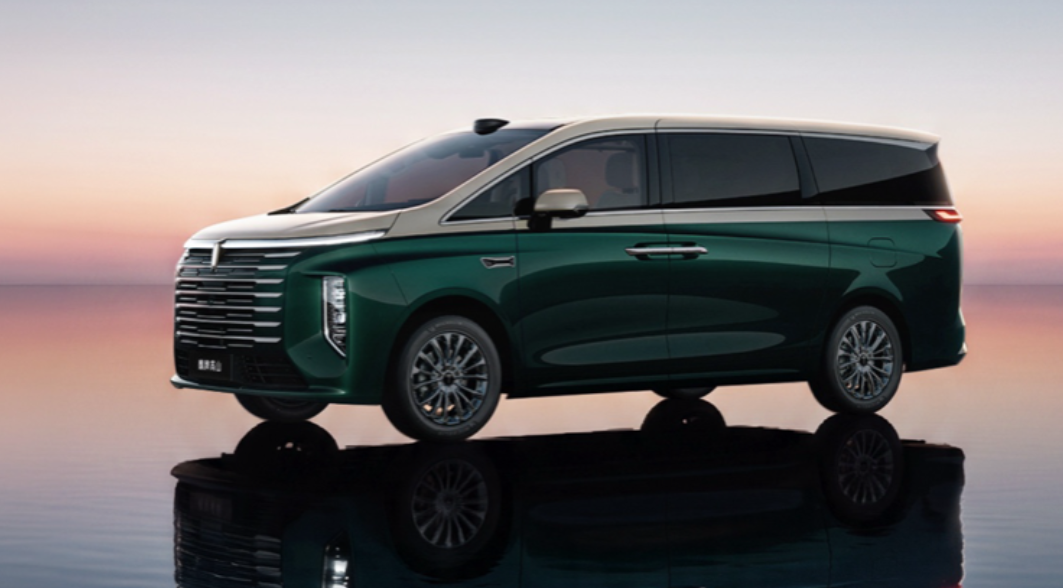
Thus, Blue Mountain cannot be abandoned, as it forms the foundation of domestic consumers' perception of Wey in the SUV segment and serves as a crucial pillar in overseas markets. However, Blue Mountain cannot remain stagnant. The launch of an all-new Blue Mountain model in the fourth quarter could mark the starting point for Wey's new adjustments and transformations.
Meanwhile, with the upcoming launch of the V8X and the facelifted Gaoshan on the horizon, both adopting Wey's new family-style front design, the brand image becomes more unified. Additionally, breaking from “tradition,” Wey is introducing a pure electric large SUV to cater to broader user needs, raising expectations for its market performance in the second half of the year.
However, for Wey, the immediate priority is not only to expand its product lineup but also to streamline its product logic. It must clearly differentiate between Blue Mountain and V8X, enable the V Series to truly “gain traction,” and ultimately help consumers redefine “who Wey is.”
-
Will WeChat Agent Replicate the Bidding Ranking Model, Bypassing Search?
-
![]()
Did Zhong Shanshan Make a Mistake?
-
![]()
Flash Charging and 'Celestial Eye': Standard Features in Qin MAX, Positioned to Challenge B-Class Sedans
-
![]()
Wey's Quandary: Can't Afford to Lose Blue Mountain, Yet V Series Struggles to Gain Ground
-
![]()
Google AI Sees Personnel Turmoil: Full-Stack as a Moat, but Also a Source of Conflict
-
![]()
Lenovo Group is Making Big Moves: Server Business Takes Off, AI Server Backlog Orders Reach 360 Billion Yuan!
-
![]()
WPS: A Future Plugin in the Making?
-
![]()
Zhang Xue Motorcycle Secures Sole Investment from Sequoia China, Valuation Soars to 6 Billion Yuan Post-Investment