Xingyun Technology’s Remarkable Surge Over the Past Six Months
 08/14 2026
 356
356
Author | Gao Linglang Editor | Ai Qingshan
On August 13, Xingyun Technology’s stock price soared to an intraday high of 41 yuan, marking a new peak since its listing. However, the rally faltered, and the stock eventually closed at 35.35 yuan, down 3.15%, with a total market capitalization of 32.8 billion yuan.
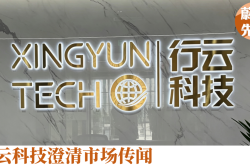
Two days earlier, rumors of “computing power cards being held up at customs” had sent the company’s stock plummeting by 9% in a single day. Xingyun Technology issued a clarification announcement that evening, refuting the rumors and stating that it had reported the matter to the police. The next day, the stock rebounded by 4.5%.
Since the beginning of the year, Xingyun Technology’s stock price has surged by over 600%. This company, now hailed as the “new powerhouse in computing power,” was once Youkeshu, a cross-border e-commerce enterprise that suffered massive losses exceeding 4 billion yuan and narrowly avoided delisting.
After completing bankruptcy reorganization in late 2024, Wang Wei, a veteran of the cross-border e-commerce sector, took the helm and pivoted the company into the computing power leasing business. Within six months, the company secured several large-scale orders worth billions of yuan in succession.
As the stock price skyrocketed, questions arose about the authenticity of these orders, the company’s equity structure, and its financial resilience.

Looking back, Xingyun Technology has undergone several transformations. Originally named Tianze Information, it was listed on the ChiNext board in 2011, focusing on Internet of Vehicles (IoV) information systems.
In 2019, the company acquired Youkeshu, a cross-border e-commerce enterprise, and in 2022, it even changed its stock ticker to Youkeshu, fully shifting its core business to cross-border trade.
The good times were short-lived. In 2021, Amazon launched a sweeping crackdown on account suspensions, leading to the closure of many of the company’s stores and the freezing of funds. Coupled with fading industry dividends, the company accumulated losses exceeding 4 billion yuan over the four years from 2020 to 2023, prompting the exchange to issue a delisting risk warning.
In September 2024, the company entered judicial reorganization due to insolvency. In December of the same year, Shenzhen Tianxingyun Supply Chain led the reorganization, making Wang Wei the company’s de facto controller. In February 2026, the company changed its stock ticker to Xingyun Technology, with computing power leasing becoming its new strategic focus.
According to Xingyun Technology’s announcements, in March of this year, the company invested 10.2 million yuan to establish a subsidiary, Xingyun Storage and Computing, in partnership with several institutions, including Weilai Investment and Yuying Investment, to venture into the construction of intelligent computing centers.
In April, Xingyun Technology announced plans to invest no more than 7 billion yuan in server equipment procurement and simultaneously signed a server leasing agreement with a central state-owned enterprise customer. In June, its wholly-owned subsidiary, Shenzhen Xingyun, signed a computing power service agreement worth approximately 1 billion yuan with another customer.
In early July, Hainan Xingyun, a controlled subsidiary of Xingyun Technology, secured a five-year order worth 5.508 billion yuan. That same month, the company also signed a computing power service contract with a state-owned supplier, with a total tax-inclusive amount of approximately 300 million yuan, along with a separate framework agreement outlining future intentions.
Xingyun Technology disclosed that after the initial equipment delivery and acceptance for several core orders, customers actively requested price increases. The rent for a central state-owned enterprise customer was raised by 79%, while the order amount for a leading large-model customer surged by over 201%. As of the end of July, the total scale of long-term framework orders for computing power in Xingyun Technology’s portfolio exceeded 15 billion yuan, with contract terms generally ranging from 3 to 5 years.

As these orders were sequentially signed, the figures in Xingyun Technology’s semi-annual report underwent significant shifts.
In the first half of this year, Xingyun Technology reported revenue of 254 million yuan, up 497.11% year-on-year. Net profit attributable to the parent company was 12.015 million yuan, up 540.15% year-on-year. Net profit after deducting non-recurring items swung from a loss of approximately 9 million yuan in the same period last year to a profit of 6.717 million yuan.
However, a closer look reveals that the cross-border e-commerce segment still accounts for the majority of revenue, with 152 million yuan in the first half, up nearly 25-fold year-on-year, but with a gross margin of only about 11%.
The newly acquired server business remains relatively small in scale, with revenue of approximately 67 million yuan, but it boasts a high gross margin of 98%. Company executives described this strategy as a “bilateral flexible business model”: downstream, relying on customer price increases and high penalties for order cancellations to secure revenue floors; upstream, negotiating profit-sharing with suppliers to convert rigid procurement costs into flexible ones.
Another set of figures in the semi-annual report also hints at underlying pressures from this expansion. As of the end of June, the company’s monetary funds balance was 642 million yuan, down about 27% from the end of last year. Short-term borrowings surged more than sevenfold year-on-year to 349 million yuan. Accounts payable also increased by 1.186 billion yuan within six months, primarily consisting of payables for engineering equipment.
Xingyun Technology responded that it had applied for 18.024 billion yuan in comprehensive credit facilities, of which 10.264 billion yuan had been approved. Combined with the approximately 1 billion yuan raised through bankruptcy reorganization and about 2 billion yuan from equity incentive issuances, the company believes its proprietary funds over the next three years should support order fulfillment and capacity expansion.
Beyond equity and funding, Xingyun Technology has also undergone significant governance upheavals in the past two years.
In September 2025, Wang Wei, former de facto controller Xiao Siqing, and Shenzhen Tianxingyun were all investigated by the China Securities Regulatory Commission for suspected failure to disclose material information as required. This incident was later mentioned in the delayed third-quarter report, which was disclosed three months late.
In October of the same year, the power struggle for control ended, with all seven director candidates nominated by Wang Wei being elected, leading to the full departure of Xiao Siqing and the original management team.
In May of this year, Wang Wei resigned from his positions as director and member of the nomination committee. The company explained that it aimed to introduce more directors and management with a technological background, with Wang Wei stepping back to the shareholder and board levels to oversee strategic direction.
According to Xingyun Technology’s previous statements, in addition to the central state-owned enterprise orders for which revenue has already been confirmed, the initial equipment for the other two customers is expected to complete acceptance in August. Upon passing, revenue will begin to be recognized monthly, marking a critical milestone for observing whether these orders can truly materialize.
Disclaimer: The content of this article is for reference only. The information or opinions expressed herein do not constitute any investment advice. Readers are advised to make investment decisions cautiously.
-
![]()
Seed has its own sense of mission
-
![]()
After 600 Days at the Helm, Li Jian Leads Honor to Launch a Phone Beyond Huawei’s Realm
-
![]()
The 'Lin Junyang Phenomenon' in AI Venture Capital
-
![]()
JD's Profit Increases While Revenue Stagnates: What is Liu Qiangdong After?
-
![]()
Creating "Liquid Lenses" with 70-Millisecond Focal Length Switching: Is XR Headset Zooming on the Horizon?
-
![]()
Xingyun Technology’s Remarkable Surge Over the Past Six Months
-
![]()
Chery Enters Korean Market with $75 Million Investment: A Strategic Model Combining Defense and Offense
-
![]()
JD Delivers an 'Above Expectations' Earnings Report, but the Market Doesn't Buy It