Creating "Liquid Lenses" with 70-Millisecond Focal Length Switching: Is XR Headset Zooming on the Horizon?
 08/14 2026
 474
474
At the AWE (Augmented World Expo) that concluded in June, a startup named Oxford Optical Labs (OOL) garnered significant attention with its adjustable focus liquid lens technology.
This technology is seen as a crucial step toward realizing zoomable headsets in the future, with the potential to completely resolve the vergence-accommodation conflict that has long plagued the VR/AR industry.
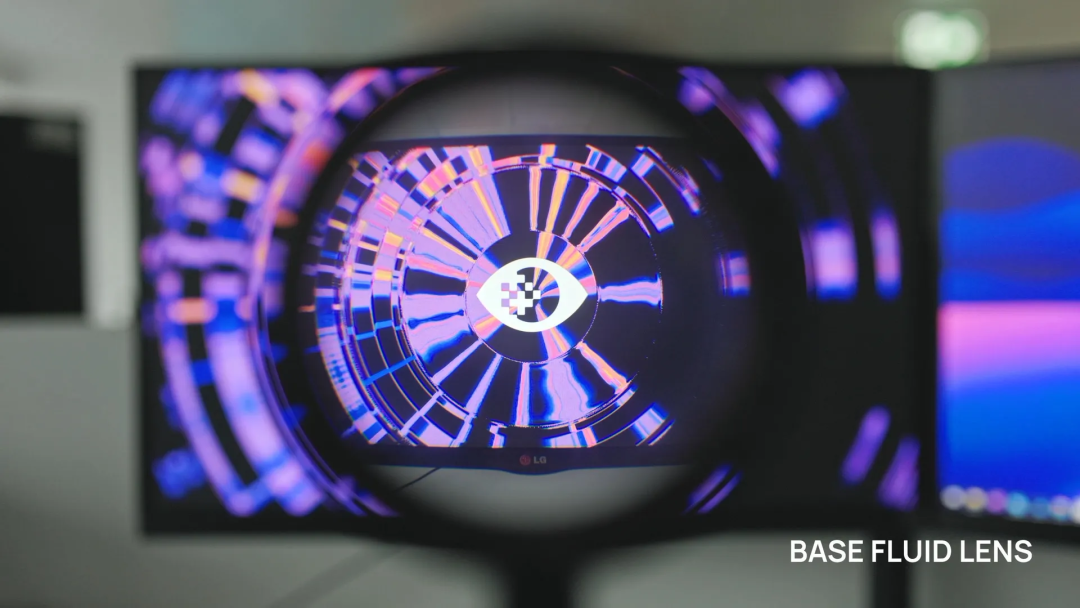
Image Source: OOL
Unveiling the Cutting-Edge Tech: "Deformable" Liquid Lenses
OOL's core technology is an adjustable focus liquid lens that has been under development for over 20 years. Unlike traditional glass lenses, these lenses are made of flexible membranes filled with liquid. By altering the pressure applied to specific points on the lens, its optical parameters can be precisely changed, enabling the correction of myopia, hyperopia, and even astigmatism on the same lens.
At the expo, reporters personally experienced these lenses. The front material is soft, similar to a water-filled stress ball, yet reportedly highly durable. Some lenses in the lab have maintained performance for over 15 years, with the internal liquid being non-toxic and safe. Even more remarkable is the ability to rapidly change the lens's optical properties using an external "deformer."
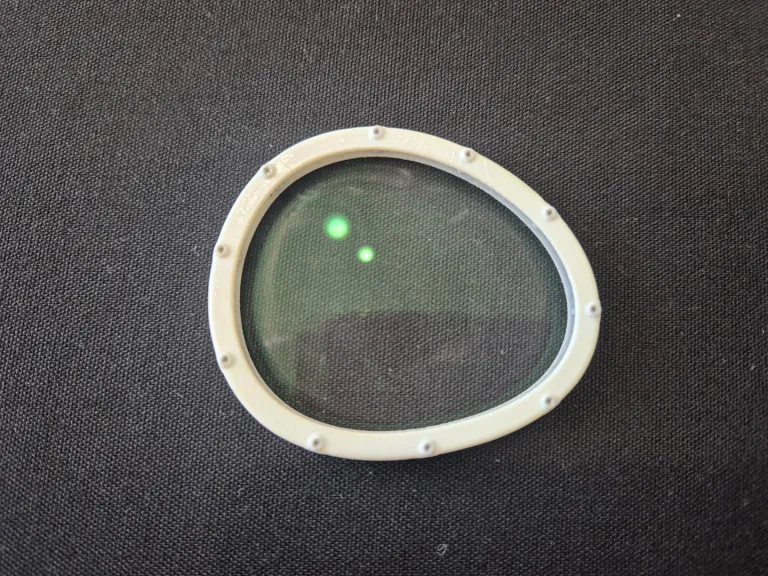
Image Source: The Ghost Howls
Reporters demonstrated how, after snapping the lens onto a magnetic ring with specific protrusions, the lens's optical parameters instantly changed. This means a single base lens can be adapted to various refractive needs by simply changing different pressure attachments.
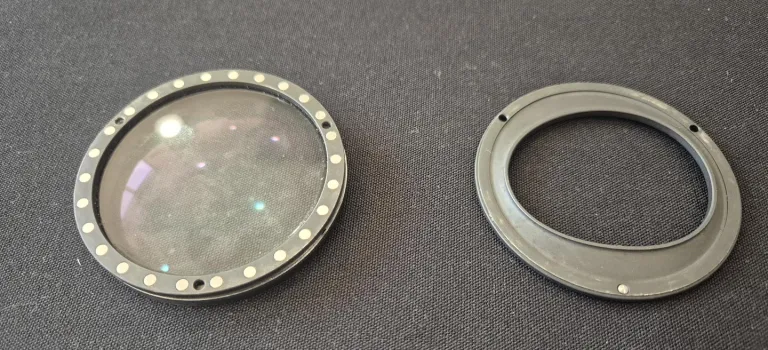
Image Source: The Ghost Howls
From Correction to Zooming: A Three-Step Strategy
OOL's ultimate vision is to create truly zoomable headsets, but the company is taking a gradual approach:
Step 1: Customized Eyewear Services
Providing adjustable lens inserts for public venues like museums and VR experience centers. Staff can use specialized equipment to read users' optometry data and adjust the pressure distribution via precision screws on the lens edge, instantly fitting the lens to the current user. This eliminates the need for a large inventory of spare lenses in different prescriptions.
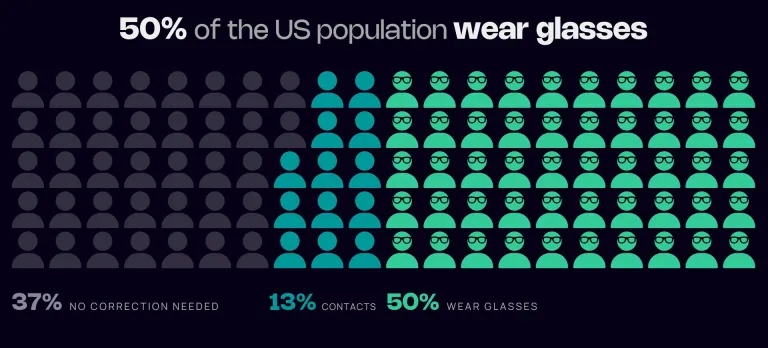
Image Source: OOL
Step 2: Integration into Headset Devices
Collaborating with headset manufacturers like Meta and Pico to integrate liquid lenses directly into headsets, with built-in simple adjustment bases. In the future, users might be able to easily adjust their refractive power on the device themselves, just like setting interpupillary distance, without the need for expensive additional magnetic lenses.
Ultimate Goal: Achieving Dynamic Zooming
Resolving the vergence-accommodation conflict in VR/AR, allowing users' eyes to naturally focus on virtual objects at different distances, just as in the real world. This would mean the zooming dream demonstrated by the Oculus Half-Dome prototype could become a reality.
How Does the Zooming Technology Work? Leveraging the "Visual Blind Spot"
Achieving dynamic zooming requires close coordination between eye-tracking technology and rapid lens adjustment mechanisms. The system must predict in real-time where the eyeball will move (i.e., the object the user is about to focus on) and utilize the "blank period" (usually longer than 100 milliseconds) when the brain ignores visual signals during saccades to quickly adjust the lens in about 70 milliseconds. Subsequent fine-tuning ensures precise focusing, with the entire process smooth enough to avoid user discomfort.
On-Site Experience: Manually Adjustable Prototype Validated
Reporters experienced an AR prototype combined with a waveguide display. In manual mode, using a mini keyboard for control, they could clearly see the lens focusing on objects at near, medium, and far distances, with virtual labels and corresponding physical objects at each distance remaining sharp simultaneously.
This demonstrated the technical feasibility of OOL's lenses in AR zooming applications.
However, reporters also noted that the current prototype is still very rough, with zooming speeds far from reaching 70 milliseconds and accompanied by significant mechanical noise. There is still a long way to go from a working prototype to a mature consumer product.

Image Source: The Ghost Howls
Outlook: Challenges and Opportunities Ahead
OOL's fluid lens technology already meets various ANSI (American National Standards Institute) requirements, with clear application prospects in adjustable prescription lenses, especially attractive for B2B scenarios with frequent user changes.
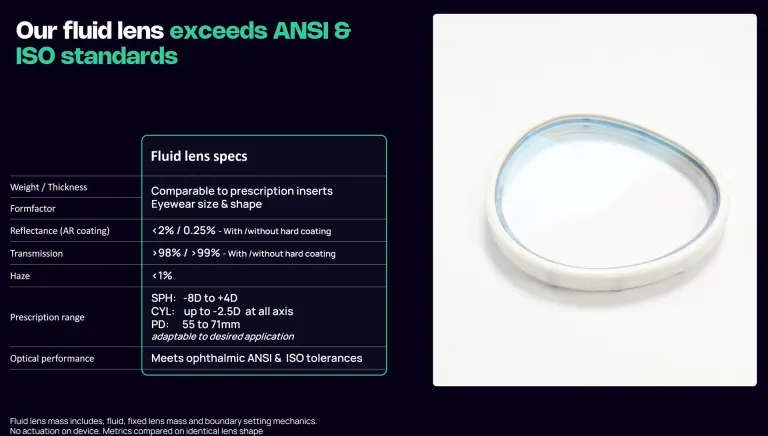
Image Source: OOL
However, reporters remain cautiously optimistic about achieving consumer-grade headset zooming. While theoretically feasible, transforming it into a stable, reliable, quiet, and cost-effective mass-produced product may still take several years. Additionally, it must compete with other technological approaches (such as electrically controlled liquid crystal lenses).
Nevertheless, OOL's showcase at AWE undoubtedly points to an exciting direction for the XR industry. This "cutting-edge tech" from Oxford, UK, is steadily moving toward making the visual experience in virtual worlds more natural and human-centric.
Note: This article is compiled and edited based on the on-site hands-on experience of Skarredghost, the creator of the overseas XR website The Ghost Howls and a well-known XR reviewer. The content has been abridged and edited.
-
![]()
Seed has its own sense of mission
-
![]()
After 600 Days at the Helm, Li Jian Leads Honor to Launch a Phone Beyond Huawei’s Realm
-
![]()
The 'Lin Junyang Phenomenon' in AI Venture Capital
-
![]()
JD's Profit Increases While Revenue Stagnates: What is Liu Qiangdong After?
-
![]()
Creating "Liquid Lenses" with 70-Millisecond Focal Length Switching: Is XR Headset Zooming on the Horizon?
-
![]()
Xingyun Technology’s Remarkable Surge Over the Past Six Months
-
![]()
Chery Enters Korean Market with $75 Million Investment: A Strategic Model Combining Defense and Offense
-
![]()
JD Delivers an 'Above Expectations' Earnings Report, but the Market Doesn't Buy It