Can Pallas-1 Propel Galactic Energy to Secure the Third IPO Slot?
 08/18 2026
 332
332
In late August, barring any unforeseen circumstances, Galactic Energy's Pallas-1 is poised to embark on its inaugural voyage.
This rocket has been in the making for numerous years.
It harnesses the power of liquid oxygen and kerosene propellants, featuring seven Cangqiong-50 engines operating in parallel on its first stage, all designed with reusability in mind. By July of this year, the Cangqiong-50 engines had collectively undergone 57 hot-fire tests, amassing a total test duration of 20,088 seconds. On July 1st, the engine successfully completed its 163rd routine hot-fire test.
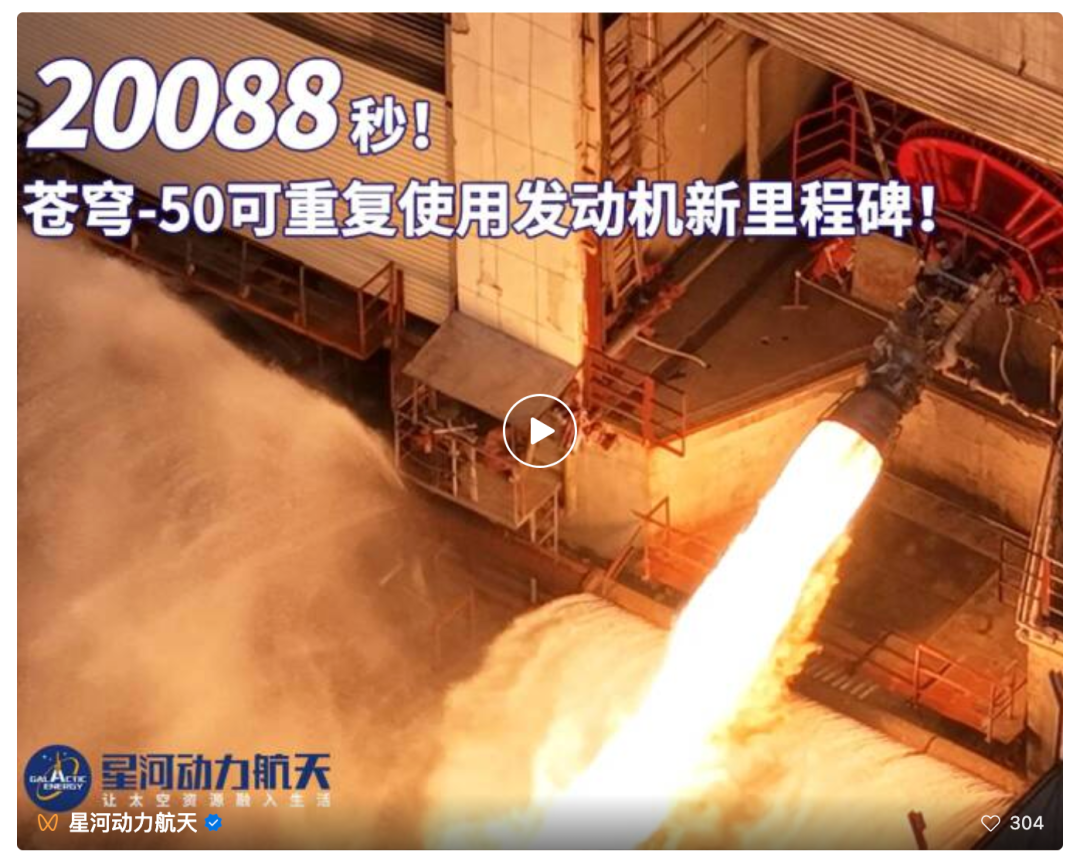
The power systems for both the first and second stages of Pallas-1 have also undergone extensive ground testing. Much of the verification that can be conducted on the ground has been accomplished; now, it's the flight that will provide the definitive answers.
For Galactic Energy, this flight holds significant importance.
Galactic Energy entered IPO counseling in October 2025, following in the footsteps of LandSpace and CAS Space, which have already had their IPO applications accepted by the SSE STAR Market and are currently under review. A clear hierarchy has emerged in the capital market race for commercial rockets.
The so-called 'third IPO slot' does not imply that the Shanghai Stock Exchange has earmarked only three positions for the industry. Rather, it reflects a practical ranking: LandSpace and CAS Space have entered formal review, while Galactic Energy, Space Pioneer, and i-Space are still in the counseling phase. The question remains: which commercial rocket company will be next to submit its application?
Galactic Energy's confidence in vying for the 'third slot' largely stems from its launch track record accumulated over the past few years.
In September 2025, Galactic Energy secured a D-round financing of 2.4 billion yuan, primarily earmarked for the development of the Pallas series, Ceres-2, and related production, testing, and launch capabilities. A month later, the company embarked on IPO counseling. By the end of July this year, Beijing authorities revealed that Galactic Energy had successfully conducted 21 launches, deploying 89 commercial satellites into predetermined orbits for 27 clients.
These experiences have endowed Galactic Energy with a client base and launch mission expertise that are challenging for peers to replicate in a short span.
However, when confronted with the fifth set of criteria for the SSE STAR Market, past launch counts have distinct limitations.
Late last year, the Shanghai Stock Exchange issued specific guidelines for commercial rocket companies applying under the fifth set of listing criteria on the SSE STAR Market, imposing stringent requirements for interim achievements: At the time of application, the company must have at least achieved the first successful orbital launch of a medium-to-large launch vehicle utilizing reusable technology. Additionally, the review will take into account factors such as independent research and development of core technologies and key components, launch capacity, multiple satellite launch capability, reliability, cost, industry standing, market space, and commercialization plans.
No matter how many times Ceres-1 has taken to the skies, it cannot assist Pallas-1 in surmounting this hurdle.
Ceres-1 is a light-to-small solid launch vehicle, whereas Pallas-1 signifies Galactic Energy's foray into medium-to-large reusable liquid rockets. Under the fifth set of criteria, they represent achievements from different stages.
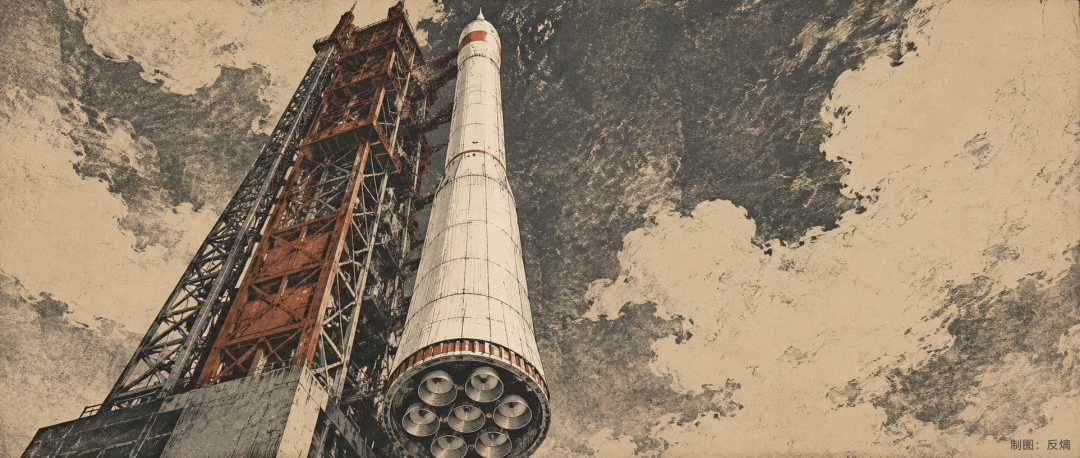
If Pallas-1 successfully delivers its payload into orbit this time, Galactic Energy will attain a key interim flight achievement explicitly mandated by the fifth set of criteria. The current guidelines do not necessitate simultaneous first-stage recovery in this launch; the interim achievement is defined as 'the first successful orbital launch of a medium-to-large launch vehicle using reusable technology.' The final determination of this achievement and whether Galactic Energy meets the complete application conditions will still be subject to the exchange's scrutiny and judgment.
The commercial aerospace industry can be unforgiving at times. While automotive companies can introduce new models leveraging mature platforms, supply chains, and production systems, and internet companies can adopt grayscale releases and rapid iteration for new products, rockets do not enjoy such leniency. Dozens of flights of older models can reduce the probability of errors but cannot substitute for a real flight of a new model.
Ceres-2's experience in January served as a stark reminder to Galactic Energy. As an upgraded model in the Ceres series, it failed in its maiden flight test on January 17th and passed the fault resolution review in June. Despite Ceres-1's extensive successful mission history, it could not guarantee the successful maiden flight of the next solid rocket model.
Pallas faces an even greater technological leap.
Over the past few years, one of Galactic Energy's most valuable assets has been its 'extensive flight experience.' Experience in client adaptation, mission organization, quality control, supply chain management, and post-failure resolution will not vanish. However, the capital market ultimately needs to ascertain whether these capabilities belong to the mature Ceres-1 model or have been internalized as Galactic Energy's own abilities.
Kodak invented the digital camera but failed to capitalize on its technological lead in the digital imaging era. Nokia produced the world's best-selling mobile phones but could not sustain that advantage into the smartphone era. The experience garnered from a successful product only truly belongs to the company if it continues to hold true in the next generation of products.
Pallas-1 represents Galactic Energy's current litmus test.
Transitioning from small solid rockets to medium-to-large liquid rockets, Galactic Energy confronts far more complex power, propellant management, multi-engine parallel, and rocket-ground coordination systems. If Pallas can successfully reach orbit, it will at least demonstrate that the research, development, and organizational capabilities accumulated in the past have not remained stagnant with the previous generation's product, Ceres-1.
This would be sufficient to propel it forward in the competition for the 'third IPO slot.'
However, even with a successful maiden flight, the 'third slot' can only be considered half-secured.
Because China's commercial rocket industry currently abounds with 'next-generation models.'
LandSpace and CAS Space have already entered IPO review, while companies trailing behind are also advancing their new-generation liquid rockets. In the future, the capital market will likely encounter a batch of companies all emphasizing medium-to-large size, low cost, reusability, and constellation networking. By then, successful orbital entry will be closer to a basic condition for competition, and differences between companies will ultimately hinge on their products and operations.
The Shanghai Stock Exchange has been quite candid about this. Commercial rocket companies need to formulate clear, explicit, and feasible commercialization plans for their products' transition from technical verification to scale operations, while avoiding major issues that could significantly impact sustained operational capabilities, such as clearly inadequate expectations for commercial production and sales. The fifth set of criteria allows high-quality commercial rocket companies 'that have not yet achieved a certain scale of revenue' to go public but does not directly equate technological milestones with commercial prospects.
This also represents the more arduous path ahead after Pallas's maiden flight.
If the maiden flight succeeds, the market will swiftly shift its attention to subsequent missions. Domestic commercial liquid rockets are expanding towards greater launch capacity; the actual demand that Pallas's capacity range can meet will gradually emerge through subsequent launches.
The same applies to reusability. Pallas-1 has set a design goal of no fewer than 25 reuses, but until recovery and reflight are accomplished, this number cannot directly translate into cost advantages. Only when the same stage truly undertakes another mission will the economic value of reusability have a verifiable basis.
Therefore, if Pallas-1 successfully reaches orbit, Galactic Energy will emerge as one of the strong contenders for the 'third IPO slot.'
It already possesses the launch and client track record accumulated by Ceres over the years. If Pallas achieves successful orbital entry, Galactic Energy will simultaneously boast the mission experience of a mature model and the flight proof of a new-generation liquid rocket, which is more persuasive than a just-completed maiden flight of a new model.
However, the maiden flight can only clear the most pressing technical hurdle at present. Beyond that, regulators and investors will shift their focus to whether Pallas can establish sustained missions and the ultimate operational results this rocket can bring to the company.
Only if Pallas-1 succeeds in its flight will Galactic Energy truly enter the latter half of this IPO race. The final attainment of the third slot depends on who can first translate a single model's success into the long-term capabilities of a commercial rocket company.
-
![]()
[In-depth Report] Building a Solid Foundation of Quality to Lead the New Development of the New Energy Vehicle Industry
-
![]()
VOYAH Pursuit S Seeks to Outshine YU7? VOYAH Aims for Top 3 in BEV Market with Spiral Growth Strategy | Mingjingpro
-
![]()
6 Years, 7 Models, 2 Generations, 3 Major Categories: VOYAH Is Not Missing Any Battle
-
![]()
Will Gasoline Vehicle Owners Opt for Electric Vehicles with a 1,000-Kilometer Range?
-
![]()
Musk’s Ex-Chinese Executive Spends $500 Million on Silicon Valley Mansion: Is AI Fueling a New Era of Wealth Creation?
-
![]()
How Can the Charging Industry Overcome the Challenge of Inefficient Competition in the Era of Vehicle-Energy Integration?
-
![]()
The First Person in the World to Be 'Fired by AI' Has Appeared, but This AI Boss Made Me Laugh
-
![]()
What’s the Cost of Remaking ‘Cow Comes’ Using MiniMax Design?