Farewell to Marketing Kings, Embrace Tech Geeks: Leadership Reshuffle at vivo Amid Industry Race
 03/11 2026
 569
569
By Heng Xin
Source: Bowang Finance
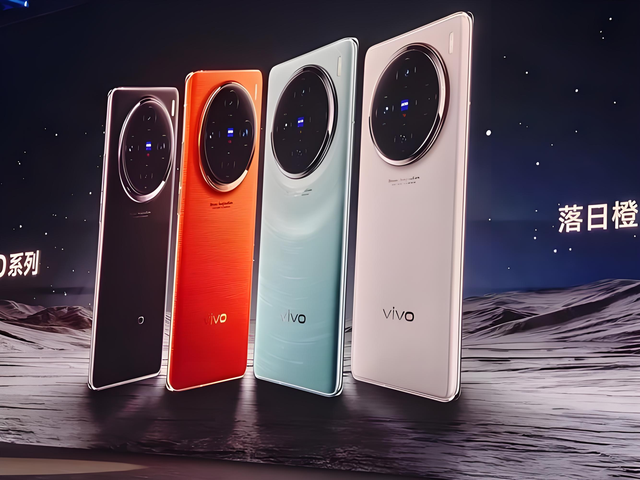
Recently, multiple media outlets reported that vivo, a leading Chinese smartphone manufacturer, announced a major reshuffle in its core management team. Founder and CEO Shen Wei will no longer serve concurrently as president. Instead, Hu Baishan, a technical veteran with over 20 years of service at vivo and executive vice president, will take over as president while continuing to serve as chief operating officer.
Meanwhile, operational divisions such as China business and public administration will now report to Hu Baishan, while the finance system will continue to report directly to Shen Wei.
On the surface, this appears to be a routine optimization of a mature corporate governance structure, achieving a separation of powers and responsibilities where 'the CEO manages strategy, and the president manages operations.' However, when viewed through the lens of the global smartphone industry entering a phase of deep stock game (inventory competition) and technological paradigms facing generational shifts, vivo's leadership change is far from a simple personnel rotation.
It resembles a clear strategic declaration, marking the giant—which has topped China's market sales for four consecutive years—as it attempts to shed its old label of 'marketing-driven,' fully betting on 'technological breakthroughs,' and anxiously seeking to establish and solidify its 'second growth curve' amid concerns over plateauing smartphone business growth.
01
Leadership Logic: Governance Evolution from 'Consolidation' to 'Breakthrough'
The core of this management reshuffle lies in constructing a clearer, more future-competitive dual-layer governance structure.
Founder Shen Wei stepping back from daily operations to focus on long-term strategy, capital operations, and ecological layout (ecosystem layout ) aligns with the general evolution of founder roles in large tech companies. Entrusting the president and COO roles to Hu Baishan represents a highly targeted personnel arrangement.
Hu Baishan is no outsider; his career is deeply intertwined with vivo's technological advancements over the past decade.
A graduate of Zhejiang University's Electronics Department who joined vivo in 2000, he led the establishment of the company's Central Research Institute, internally dubbed the 'lighthouse,' building a foundational technology R&D system. He also drove and implemented a global imaging strategic partnership with Zeiss, establishing vivo's distinct imaging brand in the premium market. In 2025, he personally spearheaded the creation of the 'vivo Robotics Lab,' explicitly positioning household robots as a future strategic direction, while also overseeing the launch of vivo's first MR headset, the vivo Vision.
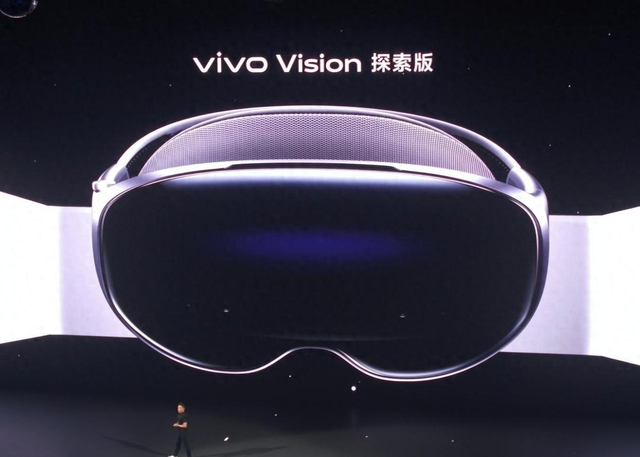
Hu Baishan once stated, 'Let technology step out of the lab and into users' real lives.' His promotion sends a clear signal that vivo is elevating this philosophy to the core of its strategic execution.
The adjustment in reporting lines further reinforces this logic.
Senior Vice President Cheng Gang of the China region and Public Administration head Xie Xiaolin now report to Hu Baishan, enabling end-to-end closed-loop management of products, R&D, marketing, sales, operational deployment, and even administrative support, aiming to enhance frontline decision-making efficiency and resource coordination.
Meanwhile, CFO Luo Futai continues to report to Shen Wei, ensuring the safety of financial lifelines and strategic investments, forming a balanced mechanism of 'front-line decentralized operations and back-end centralized control.'
This combination of 'strategist + technical doer' represents vivo's proactive realignment in response to today's complex market environment.
02
Real Pressures: Double Anxiety Amid Eroding Dominance and Industry Red Ocean
Behind vivo's strategic reshuffle lies severe real-world pressure.
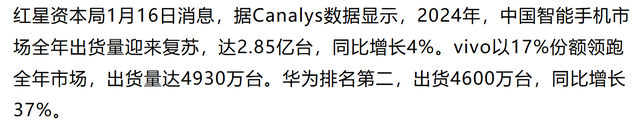
According to Canalys data, despite securing a 17% market share and shipping 49.3 million units to remain China's top brand in 2024—achieving a 'four-peat' among domestic brands—vivo's lead is rapidly narrowing, and crises are emerging.
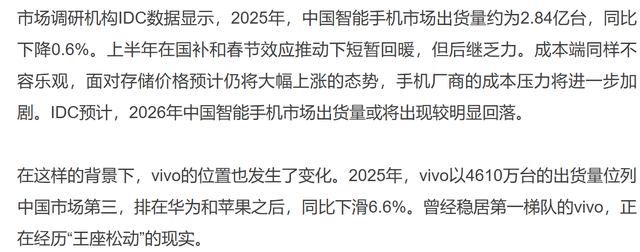
Market research firm IDC data shows that China's smartphone market shipped approximately 284 million units in 2025, a slight 0.6% year-on-year decline, indicating sluggish growth. Against this backdrop, vivo's market position shifted significantly: its 2025 China shipments fell to 46.1 million units, a 6.6% year-on-year drop, with its market share slipping to third place behind Huawei and Apple. Its once-secure 'throne' is now shaky.
Deeper industry challenges fuel collective anxiety among all manufacturers.
First, cost pressures have surged. Since early 2026, DRAM memory prices have skyrocketed, and due to AI industry demand competing for production capacity, this trend is expected to persist for one to two years. This directly erodes already thin hardware profits, particularly impacting mid-to-low-end product lines, even driving marginal brands like Meizu out of the market.
Second, the competitive landscape has intensified. China's market now features a six-way battle among 'Huawei, Apple, vivo, Xiaomi, OPPO,' with minimal share gaps between top players—the difference between first and fifth place may span just a few million units, leaving no room for respite.
Finally, growth engines have stalled. The smartphone market has long entered a replacement-driven phase, with users extending replacement cycles and morphological innovations like foldables slowing down. The industry desperately needs disruptive technologies to stimulate demand.
Meanwhile, competitors have already opened new fronts: Huawei is building a full-scenario ecosystem, Xiaomi has ventured into car manufacturing with initial success, and Honor has boldly announced its entry into humanoid robots. In contrast, vivo's business remains relatively singular; while it has built a reputation in imaging, it urgently needs to prove its hard power in deeper tech competitions like AI large models, operating systems, and cross-device ecosystems.
Shen Wei's 2025 annual meeting remark—'bet less, bet heavy'—reflects this urgency to concentrate resources on core areas and seek breakthroughs.
03
Future Bets: MR and Robotics—Can Technology Drive vivo's Rebirth?
Amid pressure on its main smartphone business, vivo is placing its future bets on MR and household robots, two cutting-edge sectors. Hu Baishan's full ascension aims to streamline the entire chain from technological R&D to product commercialization, accelerating this strategy.
This choice reflects vivo's pragmatic strategic thinking. Unlike Xiaomi's capital-intensive dive into car manufacturing, vivo's selected MR and robotics sectors align more closely with its existing technical strengths.
Hu Baishan views MR as a bridge connecting the physical and digital worlds, serving as the future robot's 'eyes' and 'brain.' This means vivo can leverage its deep expertise in mobile imaging algorithms, AI investments, and chip design capabilities to spill over into XR and robotics products, attempting to build differentiated technological barriers.

However, this transformation path is fraught with challenges.
First, new sectors carry extreme uncertainty. MR devices remain in early market education stages, with consumer-grade application scenarios not yet fully developed; household robots face Multiple tests (multiple challenges) of technological maturity, cost control, and user acceptance. Both require sustained, massive R&D investment with long return cycles.
Second, the art of balance. Hu Baishan shoulders a dual mission: ensuring stability in vivo's core smartphone business, which ships tens of millions of units annually, against fierce competition from Huawei, Apple, and others; while allocating precious resources to nurture unprofitable new ventures. Amid industry-wide contraction expectations, this balancing act will be exceptionally difficult.
Finally, ecosystem construction. Neither MR nor robots are standalone hardware products; their success hinges on overall development of operating systems, developer ecosystems, content applications, and service systems. Whether vivo can build an attractive new ecosystem beyond Android remains a massive question mark.
Notably, just before his promotion, Hu Baishan Resolutely stop it (decisively halted) vivo's half-year-prepared AI glasses project, reasoning that 'significant differentiation is hard to achieve currently.'
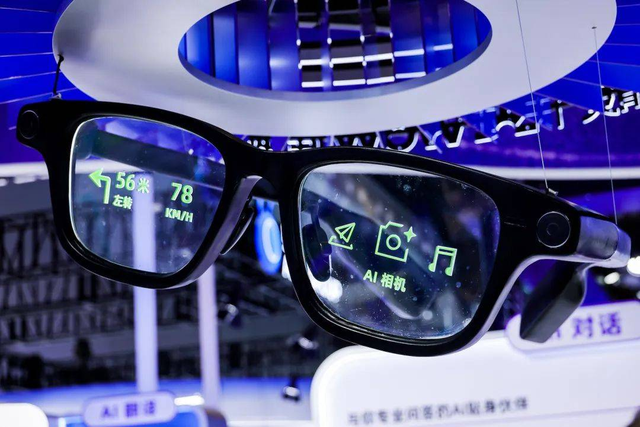
This exemplifies the technical leader's calmness and focus—'bet less, bet heavy,' avoiding blind trend-following and instead concentrating firepower on evaluated core battlefields.
04
Conclusion: The Second Half Begins, Incremental Innovation Faces Ultimate Test
vivo's leadership change is far from a founder's retreat; it represents a proactive power transition and strategic focus for the future.
It marks vivo's official entry into the 'second half': the first half saw it dominate China's market through channel deepening, marketing innovation, and imaging differentiation; the second half demands reliance on foundational technology R&D, ecosystem construction, and cross-scenario innovation to defend its smartphone base while exploring more imaginative new frontiers.
The reshuffle's advantage lies in clearer decision-making chains and enhanced collaboration efficiency. A technology-backed leader may more acutely capture technological trends and drive tighter coupling between R&D and markets. However, risks are equally apparent: strategic transformation during an industry downturn is like sailing against the current, testing the company's financial reserves, strategic resolve, and execution resilience. Whether MR and robotics sectors can evolve into a 'second growth curve' supporting vivo's expansion, rather than becoming 'cost centers' draining resources, will directly determine this leadership change's success.
From a broader perspective, vivo's transformation mirrors China's smartphone industry shifting from scale expansion to technological deepening.
As demographic dividends vanish and hardware innovation becomes increasingly competitive, the essence of competition returns to fundamental technological strength. vivo has chosen a seemingly steady path of incremental innovation—consolidating its smartphone base while extending into highly relevant frontier fields.
Whether this path succeeds concerns not only vivo's fate but also provides crucial practical references for the entire industry's breakthrough in a stock era (inventory era). The 2026 leadership change has just begun; answers will gradually emerge through fierce market competition in the coming years. Bowang Finance will continue to monitor developments.
-
![]()
Hardware is the skeleton, AI is the soul, and data integrates the two
-
![]()
China’s AI Industry: A Unified Pivot Towards Monetization?
-
![]()
New Progress! Infineon Completes Acquisition of ams OSRAM's Non-Optical Sensor Business
-
![]()
35 Million Bet on an Optical Future! Tengjing Technology Makes a Move in AR
-
![]()
Why World Models Get Stuck on Construction Roads in Autonomous Driving Applications
-
Alibaba Initiates Cultural Transformation: Is Jack Ma Making a Strategic Comeback?
-
Tianfeng Heads to Hong Kong for IPO with RMB 3.8 Billion in Funds: Xingyu's Cross-Border Foray into Embodied AI Faces Uncertain Future
-
![]()
Mengshi Auto’s High-End Aspirations Dashed: Huawei Partnership Fails to Revive Sales, New Model’s Entry Price Dips Below 300,000 Yuan